
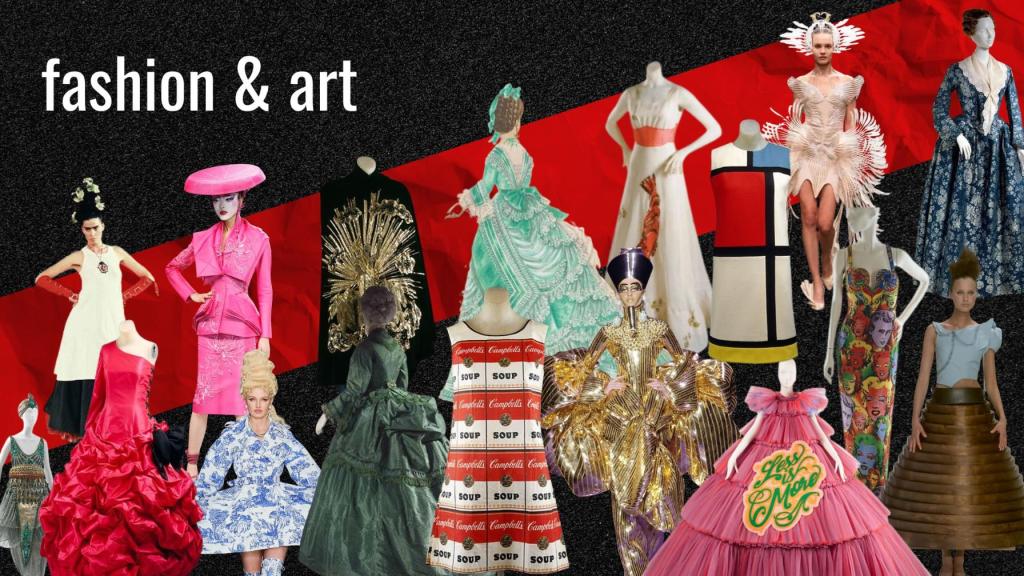
Walk into any major museum today and you’re just as likely to find a Metropolitan Museum of Art Costume Institute exhibition as you are a Renaissance painting. That wasn’t always the case. For a long time, fashion lived outside museum walls, dismissed as decorative, commercial, or just not serious enough.
Now it’s front and center. Exhibitions are being placed in prime gallery spaces, positioned alongside sculpture and painting, and framed as cultural artifacts with real intellectual weight.
So why does fashion belong in museums? And why does that still make some people uncomfortable?
Let’s get into it.
Fashion Is More Than Clothes. It’s Cultural Evidence
At its core, fashion is one of the most immediate ways we understand people, time periods, and social structures. Clothes hold information. They tell you about class, gender, politics, religion, technology, and even rebellion.
Museums already collect objects that document human life, from pottery to paintings. Fashion fits right into that system. In some ways, it’s even more direct. A garment has been worn. It has existed on a body. It has moved through real life.
A painting might show you what a society valued. A garment shows you how people actually lived within that system.
Think about something like corsetry or power dressing. These aren’t just trends. They’re physical expressions of control, restriction, authority, or freedom. You can literally see how a body was shaped by its time.
That alone makes fashion museum-worthy.
Fashion Is Visual Language. So Is Art
One of the strongest arguments for fashion in museums is simple. It works exactly like art.
It uses form, color, texture, proportion. It communicates ideas without needing words. It reflects culture while also pushing against it.
Designers are constantly referencing history, architecture, sculpture, film. The process is not that different from how artists build work.
Exhibitions are starting to lean into this more openly. Institutions like Museum at FIT have built entire shows around the dialogue between fashion and art, not as separate categories but as overlapping ones.
Even in traditional museums, garments are now being displayed next to paintings or objects from the same period. Not as accessories to history, but as part of it.
So it’s not really about fashion trying to become art. It’s about recognizing that it’s been operating in that space all along.
The Museum Space Changes How We See Fashion
There’s something about placing a garment behind glass that changes everything.
On a runway, fashion is fast. It’s about movement, trend cycles, what’s next. In a museum, it slows down. You start noticing construction, detail, intention.
A dress stops being something to wear and starts becoming something to study.
Curators have played a huge role in shaping this shift. Figures like Diana Vreeland transformed fashion exhibitions into immersive experiences, where emotion and storytelling mattered just as much as the clothes themselves.
That shift is important. It reframes fashion from something you consume into something you consider.
And that’s exactly what museums are meant to do.
Fashion Exhibitions Are Pulling In New Audiences
Let’s be honest. Fashion brings people into museums in a way few other disciplines do.
The Met Gala has turned museum exhibitions into global cultural moments. It’s not just about celebrities. It’s about visibility.
People who might never step into a gallery suddenly become interested in themes, references, and historical context because fashion is the entry point.
And museums are aware of this.
Fashion exhibitions are often some of the most visited shows. They make institutions feel less intimidating and more connected to everyday life.
That accessibility is not a weakness. It’s actually one of fashion’s strongest arguments for being there.
Fashion Is Deeply Conceptual (Even When It Looks Commercial)
One of the biggest misconceptions about fashion is that it’s purely commercial. And yes, it exists within an industry. But so does art.
What matters is the thinking behind the work.
Designers like Alexander McQueen and Rei Kawakubo have created collections that explore identity, the body, mortality, and distortion. These are not just clothes. They are ideas, translated into form.
Modern exhibitions are reflecting this. They’re less about showcasing “beautiful garments” and more about asking questions.
What does this say about power? About gender? About the human body?
When fashion is presented this way, the argument that it lacks depth starts to fall apart.
So Why Do People Still Push Back?
Even with all this progress, the debate isn’t completely settled. There’s still resistance, and it usually comes down to a few recurring concerns.
“Fashion Is Too Commercial”
Unlike traditional art, fashion is tied to selling. It’s seasonal. It responds to markets. Critics argue that bringing it into museums risks turning cultural spaces into extensions of brands.
And sometimes, that concern isn’t entirely wrong. Some exhibitions do blur the line between curation and promotion.
But the same could be said for parts of the art world too. The presence of commerce doesn’t automatically cancel out cultural value.
“It’s More Entertainment Than Scholarship”
Fashion exhibitions are often visually dramatic. Big sets, lighting, immersive design.
That spectacle can work against them.
Some critics feel these shows prioritize visuals over depth, becoming more about taking pictures than engaging critically.
It raises a fair question. Are visitors learning something, or just consuming aesthetics in a different setting?
The answer really depends on how the exhibition is curated. Strong shows balance both. They look good, but they also make you think.
Gender Bias Still Plays a Role
This part doesn’t get talked about enough.
Fashion has historically been linked to femininity, and that association has contributed to it being taken less seriously in academic and museum spaces.
Calling fashion “frivolous” often says more about cultural bias than about the discipline itself.
It’s not just about clothes. It’s about what kinds of creative work are considered valuable.
The “Is It Art?” Debate Won’t Go Away
Even now, people still ask the same question. Is fashion actually art?
But maybe that’s the wrong question.
Fashion doesn’t need to fit neatly into the category of fine art to deserve a place in museums. It operates across multiple spaces at once. Cultural, commercial, artistic, personal.
Trying to force a clear label might miss the point entirely.
The Line Between Art and Fashion Is Already Blurred
At this point, the boundary people are trying to defend doesn’t really exist.
Artists collaborate with designers. Designers create installations that function like artworks. Exhibitions mix garments with film, sculpture, sound.
Even historically, clothing has always been part of visual culture. Look at portrait paintings. The clothing is never just background. It carries meaning, status, identity.
So separating fashion from art starts to feel artificial.
Museums are starting to reflect this reality by collapsing categories instead of reinforcing them.
Fashion Makes Museums Feel Alive
There’s also something more immediate about fashion.
You wear it. You relate to it. You imagine yourself in it.
That connection makes museum experiences feel more personal. Less distant. Less abstract.
Fashion doesn’t sit quietly on a wall. It interacts with your sense of self.
And in a time where museums are trying to stay relevant, that kind of engagement matters.
The Real Question Isn’t “Does Fashion Belong?”
Fashion is already in museums. It’s not waiting to be accepted.
The real question is how it’s being presented.
Are exhibitions thoughtful or just visual? Are they critical or promotional? Are they expanding the conversation or just repeating familiar narratives?
Because when fashion is curated with intention, it does exactly what art is supposed to do.
It makes you think. It reflects culture. It challenges assumptions.
So Where Do We Land?
Fashion belongs in museums because it documents human life, operates as a visual language, and carries conceptual depth that goes far beyond clothing.
The resistance to it isn’t completely baseless, but a lot of it comes from outdated ideas about what counts as serious culture.
And maybe the tension itself is part of the reason fashion works so well in museum spaces.
Fashion has always existed between things. Art and commerce. surface and meaning. individuality and mass production.
Putting it in a museum doesn’t resolve that tension. It just makes it visible.
And that’s exactly why it deserves to be there.
We do not own the rights to any of these images and they have been used in good faith. Every effort has been made to ensure that all images are used with proper credits. If you are the rightful owner of any image used on our site and wish to have it removed, please contact us at ayerhsmagazine@gmail.com and we will promptly remove it. We are a non-commercial, passion-driven, independent fashion blog and do not intend to infringe any copyright. Thank you for your understanding.
 Ayerhs Magazine