
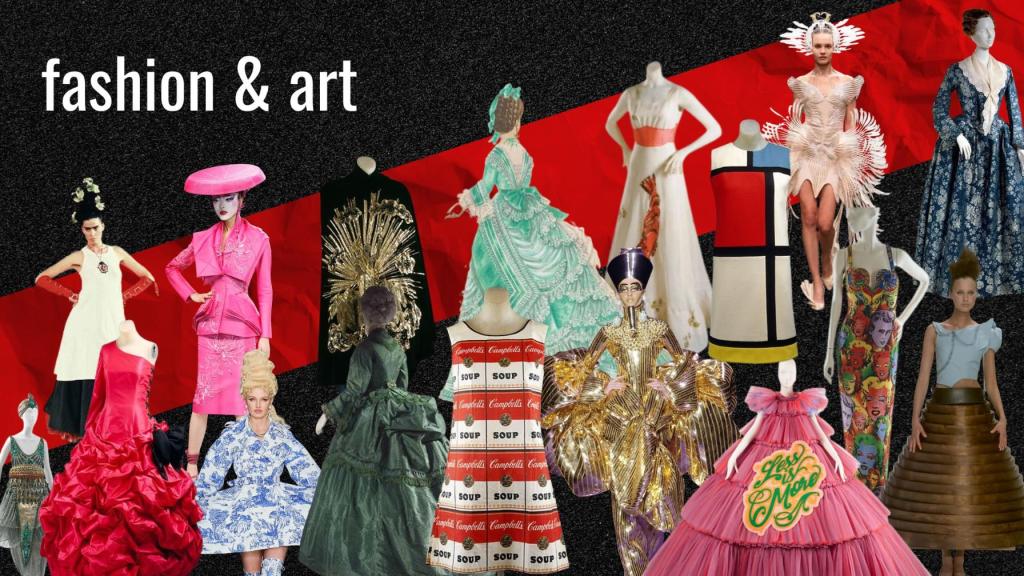
There was a time when fashion and art felt like two different worlds. One lived in museums, quiet and distant. The other moved fast, seasonal, always chasing what’s next. But somewhere along the way, those lines started to blur. Now, it’s hard to talk about high fashion without talking about contemporary art too.
You see it on runways, in campaigns, in collaborations that don’t feel like marketing stunts but actual conversations. Designers are not just making clothes anymore. They are building ideas, moods, and sometimes entire worlds. And artists are not staying in galleries either. They are stepping into fashion, letting their work exist on bodies, not just walls.
This intersection is not new, but it feels more intentional now. More self-aware. And honestly, more interesting.
Fashion has always borrowed from art
If you look closely, fashion has always had a quiet relationship with art. Designers have referenced paintings, sculptures, and movements for decades. Think about how silhouettes shift with cultural moods, or how color palettes mirror what’s happening in visual art at the time.
But today, it’s less about subtle references and more about direct dialogue.
Take Louis Vuitton working with Yayoi Kusama. That wasn’t just about putting polka dots on bags. It was about bringing Kusama’s entire universe into fashion. Her obsession with repetition, infinity, and self-expression translated into something you could wear. It made people interact with her art in a completely different way.
Or Dior collaborating with Kenny Scharf. The clothes didn’t just feature his work. They carried his energy. Bright, chaotic, playful. It changed how the collection felt.
These moments matter because they go beyond aesthetics. They shift how we experience both fashion and art.
Runways as moving galleries
Runway shows are starting to feel more like installations than presentations.
Designers are thinking about space, sound, and storytelling in a way that feels closer to contemporary art exhibitions. It’s not just about the clothes walking down a straight line anymore. It’s about creating an environment where the clothes make sense.
When Alexander McQueen was designing shows, he wasn’t just showing collections. He was creating emotional experiences. There was tension, drama, sometimes discomfort. It felt like performance art.
More recently, Iris van Herpen continues that idea in a different way. Her work sits somewhere between fashion, sculpture, and technology. The pieces don’t just fit the body. They transform it. Watching her shows feels like watching a living exhibition.
This shift makes sense. In a world where everything is online and instantly visible, designers need to create something that feels immersive. Something that stays with you. Art has always known how to do that. Fashion is catching up.
Clothes as canvas
One of the clearest ways fashion and contemporary art intersect is through the idea of clothing as a canvas.
Instead of treating garments as finished objects, designers are treating them like surfaces for expression. Prints, textures, and shapes become ways to tell stories.
Comme des Garçons is a strong example of this. Under Rei Kawakubo, the brand often challenges what clothing is supposed to be. Some pieces look more like sculptures than wearable items. They question beauty, structure, and even comfort.
At that point, you start asking yourself, is this fashion or is this art? And maybe that question doesn’t even matter anymore.
Because when a garment makes you feel something, or makes you think differently, it’s doing what art is supposed to do.
The business side of the crossover
Let’s be real for a second. This intersection is not just creative. It’s also strategic.
Collaborations between fashion houses and contemporary artists bring attention. They create hype. They attract audiences who might not usually care about fashion or art.
When Supreme worked with Damien Hirst, it wasn’t just about creativity. It was about merging two cultural spaces. The result felt collectible. Almost like owning a piece of art, but in a more accessible form.
The same goes for Prada and their ongoing relationship with art spaces and artists. It builds a certain image. It tells people that the brand is not just about clothes, but about culture.
That said, not every collaboration works. Sometimes it feels forced. Like two names put together without a real connection. People can tell the difference. When it’s genuine, it resonates. When it’s not, it fades quickly.
So while the business side is important, it only works when there’s real creative alignment.
Contemporary art influencing how we see fashion
It’s not just about artists entering fashion. Contemporary art is also changing how we look at fashion itself.
There’s a stronger focus on concept now. On meaning. On the idea behind the piece, not just how it looks.
You see collections that explore identity, politics, technology, or even personal memory. They are not always easy to wear, but they are interesting to think about.
Virgil Abloh played a big role in this shift. He treated fashion like a cultural conversation. His work at Off-White and later at Louis Vuitton often referenced art, architecture, and design. He blurred boundaries in a way that felt natural.
For a lot of younger audiences, this approach makes fashion more engaging. It’s not just about trends anymore. It’s about ideas.
And that’s something contemporary art has always been about.
Social media changed everything
If we’re being honest, this intersection also grew because of how we consume visuals now.
Platforms like Instagram made everything more visual, more immediate. A runway look can go viral in seconds. An art piece can reach millions overnight.
This pushes both industries to create work that stands out instantly.
Bold shapes, unexpected textures, strong concepts. Things that make you stop scrolling.
Fashion borrowed this urgency from contemporary art. And art borrowed fashion’s sense of accessibility.
The result is something that feels more connected to everyday life. Even if the pieces themselves are still exclusive, the ideas are not.
The emotional side of it all
At its best, the intersection of high fashion and contemporary art creates something emotional.
It’s not just about looking good or being visually interesting. It’s about feeling something.
A show that makes you uncomfortable. A garment that challenges your idea of beauty. A collaboration that makes you see an artist’s work in a new way.
These moments stay with you.
That’s why people keep coming back to this space. Not just for the clothes, but for the experience.
Where it gets complicated
Of course, not everything about this intersection is perfect.
There’s always a risk of over-commercializing art. Turning it into something purely decorative. Stripping it of its meaning.
When art becomes just a print on a luxury item, it can lose some of its depth.
At the same time, fashion can sometimes take itself too seriously in this space. Trying too hard to be seen as art instead of just being honest about what it is.
The balance is tricky.
The best work usually comes from designers and artists who are not trying to prove anything. They are just exploring ideas in a way that feels natural to them.
That’s when it clicks.
So where does this leave us
Right now, the intersection of high fashion and contemporary art feels less like a trend and more like a shift in mindset.
Fashion is no longer just about clothing. And art is no longer limited to galleries.
They are meeting in the middle, creating something that feels more fluid, more open.
For you as a viewer, or even as someone interested in fashion, this is actually a good thing.
It means there’s more to engage with. More to think about. More to feel.
You can look at a collection and see references, ideas, and emotions layered into it. You can wear something that carries a story, not just a label.
And you don’t have to fully understand it to appreciate it.
Final thoughts
The intersection of high fashion and contemporary art is not about deciding which one is more important. It’s about what happens when they come together.
Sometimes it creates something beautiful. Sometimes something confusing. Sometimes something that stays in your head longer than you expect.
And that’s kind of the point.
Because when fashion starts behaving like art, it stops being just about consumption. It becomes about expression.
And when art steps into fashion, it becomes part of everyday life in a new way.
Somewhere in that overlap, you get something that feels real. Not perfect, not always easy, but worth paying attention to.
We do not own the rights to any of these images and they have been used in good faith. Every effort has been made to ensure that all images are used with proper credits. If you are the rightful owner of any image used on our site and wish to have it removed, please contact us at ayerhsmagazine@gmail.com and we will promptly remove it. We are a non-commercial, passion-driven, independent fashion blog and do not intend to infringe any copyright. Thank you for your understanding.
 Ayerhs Magazine