
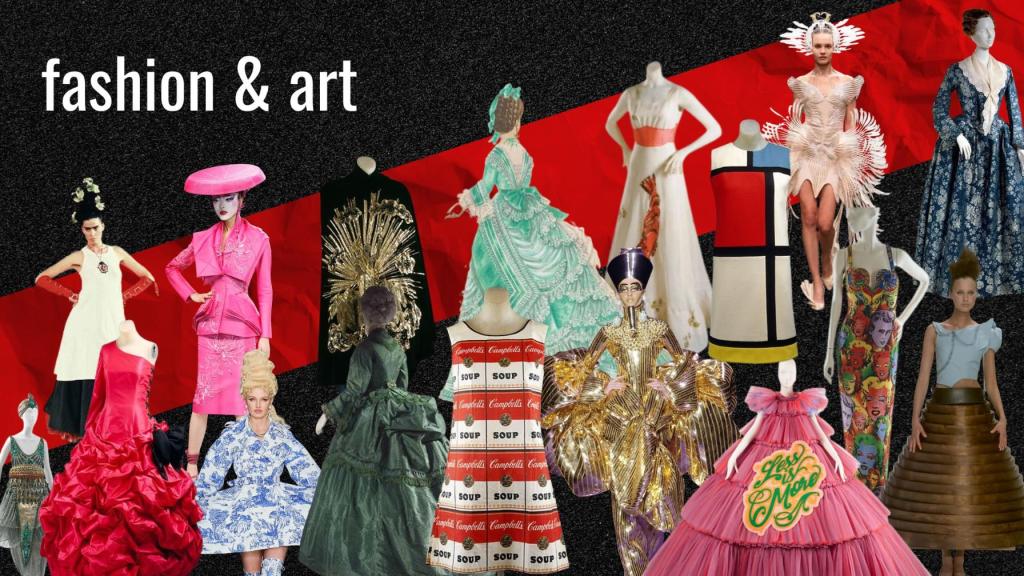
There is this quiet tension in fashion that people do not always talk about. Everyone wants something new, but nothing really comes from nowhere. Every collection, every silhouette, every detail has a trace of something that existed before. A painting, a memory, a film, a decade, a feeling. Designers are constantly looking, collecting, absorbing. The real skill is not avoiding references. It is knowing how to use them without becoming predictable.
Originality in fashion is often misunderstood. It is not about creating something that has never been seen before. That kind of purity is almost impossible. What actually feels original is when something familiar is reworked in a way that feels personal, specific, and alive in the present moment. That is where references come in. Not as shortcuts, but as starting points.
When you look closely at how strong designers work, you start to see a pattern. They do not just pick references. They build relationships with them.
It usually begins with instinct. A designer might be drawn to a particular image, maybe an old photograph, a sculpture, or even something as simple as the way light hits a fabric. At this stage, it is not about analysis. It is about attraction. Why does this feel interesting? Why does it stay in your mind? That pull is important because it carries emotion. And emotion is what eventually separates something original from something that feels copied.
The mistake a lot of people make is stopping at the surface. Taking a reference and translating it too literally. If a designer sees a 90s slip dress and recreates it almost exactly, that is not really interpretation. That is replication. It might still look good, but it does not say anything new.
Designers who maintain originality go deeper. Instead of asking “what does this look like,” they ask “what does this feel like.” That shift changes everything. A reference stops being visual and becomes emotional, conceptual, even atmospheric.
Take something like nostalgia. Two designers might reference the same era, say early 2000s fashion, but the outcomes can feel completely different. One might focus on the glamour and excess, while another might focus on the awkwardness and vulnerability of that time. The clothes reflect those different readings. Same reference, different story.
That idea of storytelling is where originality really starts to build. References are not used alone. They are layered. One idea sits on top of another, sometimes in unexpected ways. A designer might combine historical tailoring with futuristic materials, or mix something delicate with something industrial. The contrast creates tension, and that tension creates interest.
You can see this especially in collections that feel hard to categorize. They do not point to one clear source. Instead, they feel like a mix of influences that have been filtered through a very specific perspective. That perspective is what holds everything together.
Personal perspective is often overlooked, but it is probably the most important part of originality. Two designers can use the same reference, but their lived experiences, their taste, their instincts will shape the outcome differently. That is why fashion still feels fresh even when it keeps circling back to similar ideas.
Designers who stay original tend to trust their point of view. They are not trying to prove that they know every reference. They are not trying to impress. They are editing. Choosing what matters and letting go of what does not.
There is also a certain amount of distance involved. Good designers do not rush from reference to final product. They let ideas sit. They revisit them. Sometimes they even forget them for a while. That gap allows the reference to shift in their mind. Details blur, but the feeling stays. And when they come back to it, they are not recreating the original image. They are recreating their memory of it, which is already more abstract and personal.
That process naturally introduces originality because memory is never perfect. It edits, exaggerates, softens. What comes out at the end is influenced by the reference, but not controlled by it.
Another thing that keeps references from becoming too literal is experimentation. Designers test things out. They drape, cut, distort, layer. Sometimes they push an idea until it almost breaks. That kind of play is important because it moves the design away from the source material. It forces new decisions.
Fabric plays a huge role here. Changing the material can completely shift the meaning of a reference. A classic shape in an unexpected fabric can feel new again. The same goes for color. Even small adjustments can change the entire mood.
Then there is context. Where and how a piece is presented matters. Styling, casting, music, set design. All of these elements shape how a reference is perceived. A look that might feel familiar on its own can feel completely different when placed in a new environment.
This is why runway shows often feel more original than individual pieces seen in isolation. The full picture gives the reference a new narrative.
It is also worth mentioning that not all references are visual. Some are conceptual. A designer might be inspired by a feeling like isolation, or a theme like transformation. These kinds of references are less obvious, which often makes the final work feel more original. You are not immediately able to trace it back to one source.
Even when references are more direct, what matters is how they are used. There is a difference between borrowing and building. Borrowing is taking something and placing it into your work without much change. Building is using something as a base and then adding, subtracting, and reshaping until it becomes something else.
Designers who build are not afraid to lose parts of the original reference. They are not trying to stay loyal to it. They are trying to make it work within their own vision. That willingness to let go is what keeps the work from feeling stuck in the past.
There is also a level of awareness involved. Designers know that audiences are more informed than ever. People can recognize references quickly. That changes the way designers approach them. It is not enough to reference something. You have to do something with it.
This is where subtlety can be powerful. Sometimes the best references are the ones that are not immediately obvious. They sit quietly in the background, shaping the design without announcing themselves. It makes the work feel richer because there is more to discover.
At the same time, being too obscure can disconnect the audience. There is a balance. The reference should add depth, not confusion. It should enhance the experience, not make it harder to understand.
Originality also comes from consistency. Designers who have a clear identity can reference different things across collections, but it still feels like their work. There is a thread that connects everything. Maybe it is the way they cut garments, the way they use color, or the way they approach proportion. That consistency acts as a filter for any reference they use.
Without that filter, references can feel scattered. With it, they feel intentional.
It is also interesting to think about how designers reference themselves. Over time, they build their own archive. They revisit past ideas, but with new context. That kind of self-referencing can feel very original because it shows growth. It is not about repeating. It is about evolving.
At its core, using references without losing originality comes down to transformation. Not just visually, but conceptually. The reference should go through a process. It should be questioned, adjusted, sometimes even challenged.
If a designer is too protective of a reference, it can limit the work. But if they are open to changing it, even distorting it, something new can emerge.
There is also something to be said about restraint. Not every reference needs to be obvious. Not every idea needs to be fully explained. Leaving space can make a design feel more thoughtful. It allows people to interpret it in their own way.
That openness is part of what makes fashion feel like art. It is not just about what is there, but what is suggested.
At the same time, originality is not always about being complex. Sometimes it is about clarity. Taking a reference and simplifying it until only the essential part remains. That kind of editing can make a design feel very strong.
In a way, originality is less about what you add and more about what you choose to keep.
Designers who understand this are not chasing newness for the sake of it. They are focused on meaning. They use references as tools, not crutches. They know when to hold on and when to let go.
And maybe that is the most important thing. Originality is not about avoiding influence. It is about having enough confidence in your own perspective to reshape that influence into something that feels like yours.
Because at the end of the day, references are everywhere. They are part of how creativity works. The difference is in how you use them.
Some people repeat what they see.
Others translate it. And a few manage to transform it into something that feels completely their own.
We do not own the rights to any of these images and they have been used in good faith. Every effort has been made to ensure that all images are used with proper credits. If you are the rightful owner of any image used on our site and wish to have it removed, please contact us at ayerhsmagazine@gmail.com and we will promptly remove it. We are a non-commercial, passion-driven, independent fashion blog and do not intend to infringe any copyright. Thank you for your understanding.
 Ayerhs Magazine