
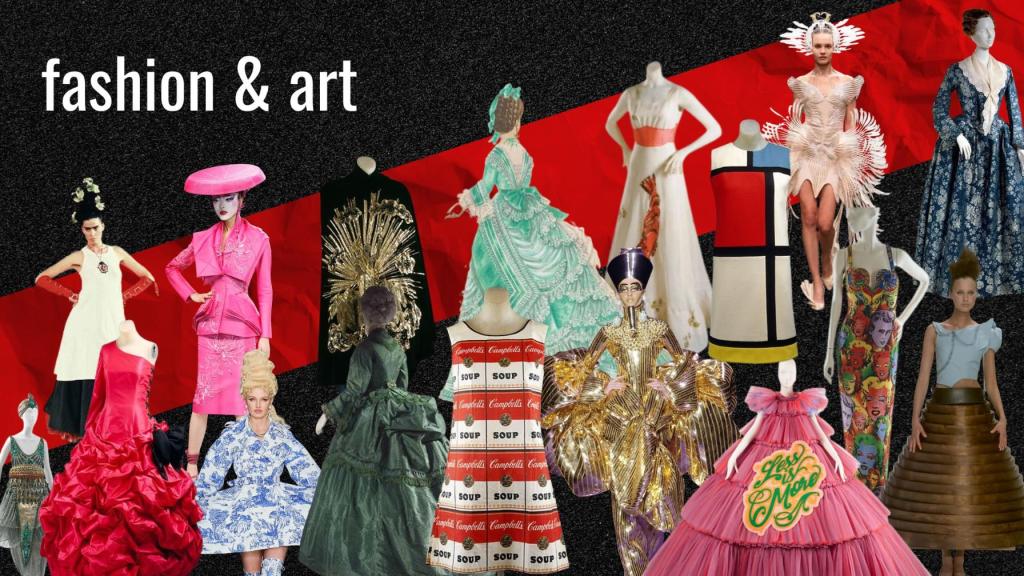
There was a time when fashion and fine art lived in completely different worlds. One was seen as practical, seasonal, and tied to trends. The other was considered timeless, intellectual, and meant to last. Fashion was worn. Art was observed. Fashion moved fast. Art stayed still.
That gap does not feel as clear anymore.
Right now, fashion is stepping into spaces that used to belong to art, and art is borrowing from fashion’s language of image, identity, and presence. The line between the two is not just fading, it is actively being redrawn in real time.
If you look closely, it is not even a subtle shift. It is happening on runways, in galleries, on social media, and even in how we personally think about getting dressed.
Fashion is no longer just about clothes. And art is no longer limited to frames and pedestals.
When Clothes Stop Being Just Clothes
At its simplest level, fashion exists to be worn. But a lot of contemporary fashion is not designed with practicality as the main goal anymore. Some pieces are uncomfortable, exaggerated, or even impossible to wear in real life.
And that is the point.
Designers are increasingly using garments as a way to express ideas rather than just create outfits. A dress might explore themes of identity. A collection might reflect political tension. A silhouette might challenge traditional ideas of beauty or gender.
At that point, the garment is doing what art has always done. It is communicating something beyond its physical form.
You see this especially during fashion weeks, where certain looks feel less like products and more like statements. They are not asking “would you wear this?” but rather “what does this make you think or feel?”
That shift changes how we experience fashion. Instead of just evaluating whether something looks good, we start reading it, almost like we would read a painting or a sculpture.
Runways as Performances, Not Just Presentations
Fashion shows used to be straightforward. Models walked, clothes were shown, and buyers placed orders. Now, many shows feel closer to performances or installations.
Some designers build entire worlds around their collections. The set, the music, the casting, and the pacing all work together to create a specific mood or narrative. The clothes are still central, but they are part of a bigger story.
This is where fashion starts to overlap with performance art.
A runway can feel like a live exhibition. You are not just looking at clothes, you are stepping into an idea. Sometimes the experience matters as much as the garments themselves.
It is also why certain shows stay in your mind long after they end. You remember how they made you feel, not just what was shown.
Museums Are Taking Fashion Seriously
One of the clearest signs of this shift is how museums have started embracing fashion.
Major exhibitions are now dedicated to designers, collections, and even specific garments. These shows are curated with the same care as traditional art exhibitions. Lighting, placement, and storytelling all play a role in how the work is presented.
When a garment is placed behind glass, it changes how we see it. It is no longer just something to wear. It becomes something to study, to analyze, to appreciate from a distance.
This shift also challenges old ideas about what deserves to be in a museum. If a painting can represent culture and history, why not a dress? Both reflect the time they were created in. Both carry meaning beyond their surface.
Fashion in museums is not about elevating it artificially. It is about recognizing that it already holds artistic value.
Designers as Artists, Not Just Creators of Product
The role of the designer has also changed.
Earlier, designers were often seen as skilled creators working within an industry. Now, many are viewed as artists with distinct perspectives and voices.
You can recognize a designer’s work the same way you recognize an artist’s style. There is a signature. A point of view. A consistent way of seeing the world.
Some designers approach collections like a series of artworks. Each look contributes to a bigger concept. The collection becomes a cohesive body of work rather than just a set of items to sell.
This approach brings fashion closer to fine art, where the idea behind the work is just as important as the final outcome.
The Influence of Art on Fashion
Of course, this relationship is not one-sided.
Fashion has always borrowed from art. Designers look at paintings, sculptures, and movements for inspiration. You can see references to surrealism, minimalism, pop art, and more in different collections.
Sometimes the connection is direct, like prints inspired by famous artworks. Other times it is more subtle, like using color, texture, or form to echo a certain artistic movement.
What has changed is how openly this connection is acknowledged. Instead of hiding inspiration, it is often highlighted and celebrated.
Fashion is not just inspired by art. It is in conversation with it.
The Role of Image Culture
Social media has played a huge role in blurring the line between fashion and art.
Platforms are built around visuals. Every outfit, every campaign, every runway moment becomes an image that can be shared, saved, and reinterpreted.
This constant circulation turns fashion into something closer to visual art. People engage with it the same way they engage with photographs or digital artwork.
At the same time, art itself has become more image-driven. Artists think about how their work will appear online, how it will be photographed, how it will move across platforms.
Fashion and art now exist in the same visual ecosystem. They are consumed in similar ways, often side by side.
Wearable Art and the Question of Function
One of the biggest questions in this conversation is functionality.
Art does not need to be functional. Fashion traditionally does. But when a piece of clothing prioritizes concept over wearability, where does it sit?
Some designers create garments that are clearly not meant for everyday use. They might be too delicate, too structured, or too experimental.
These pieces exist somewhere between clothing and sculpture.
They can still be worn, technically, but their main purpose is expression rather than practicality.
This does not mean everyday fashion disappears. It just means that the spectrum has widened. On one end, you have functional clothing. On the other, you have pieces that operate almost entirely as art.
The Commercial Reality
It is important to stay grounded here.
Fashion is still an industry. It is tied to production, sales, and business in a way that fine art is not, at least not in the same structure.
Even the most conceptual collections often exist alongside more wearable pieces that actually drive revenue.
So while fashion can act like art, it is also navigating commercial realities. That tension is part of what makes it interesting.
Designers balance expression with practicality. They create moments that feel artistic while still operating within a system that requires products to sell.
This dual nature sets fashion apart. It lives between creativity and commerce, and that space is not always comfortable.
Why This Blur Matters
This shift is not just about labels or categories. It changes how we engage with fashion in our daily lives.
When you start seeing fashion as a form of art, getting dressed becomes more intentional. It is not just about trends or fitting in. It becomes a way of expressing something personal.
At the same time, it opens up fashion to deeper conversations. It allows it to be taken seriously as a medium that reflects culture, identity, and emotion.
It also makes the industry more open to experimentation. When fashion is not limited to function, it can explore ideas more freely.
Where Things Are Heading
The line between fashion and fine art will probably never disappear completely. There are still differences in how they are created, consumed, and valued.
But the space between them is only getting more fluid.
We are likely to see more collaborations, more exhibitions, and more designers pushing their work into conceptual territory. At the same time, artists will continue to engage with fashion as a way to explore identity and presence.
The interesting part is not deciding whether fashion is art or not. That question feels a bit outdated.
What matters is recognizing that fashion can operate as art when it chooses to. And right now, it often does.
A More Personal Way to Look at It
If you step away from the industry and think about your own experience, this shift is already part of everyday life.
The way people style themselves, document outfits, and build visual identities online feels very close to artistic practice.
Outfits are curated. Images are composed. Personal style becomes a kind of ongoing project.
In that sense, the blur between fashion and art is not just happening at the top level with designers and institutions. It is happening on an individual level too.
People are not just wearing clothes. They are creating images, moods, and narratives through what they wear.
Final Thought
Fashion and fine art used to be easy to separate. One belonged to the body. The other belonged to the gallery.
Now, they overlap in ways that feel natural rather than forced.
Fashion can be expressive, conceptual, and emotional. Art can be wearable, accessible, and part of everyday life.
Instead of trying to draw a clear line between them, it makes more sense to accept that the line is moving. And maybe it always has been.
What we are seeing now is just a clearer version of something that has been building for a long time.
Fashion is not trying to become art. It is simply allowing itself to be more than what it used to be.
We do not own the rights to any of these images and they have been used in good faith. Every effort has been made to ensure that all images are used with proper credits. If you are the rightful owner of any image used on our site and wish to have it removed, please contact us at ayerhsmagazine@gmail.com and we will promptly remove it. We are a non-commercial, passion-driven, independent fashion blog and do not intend to infringe any copyright. Thank you for your understanding.
 Ayerhs Magazine