
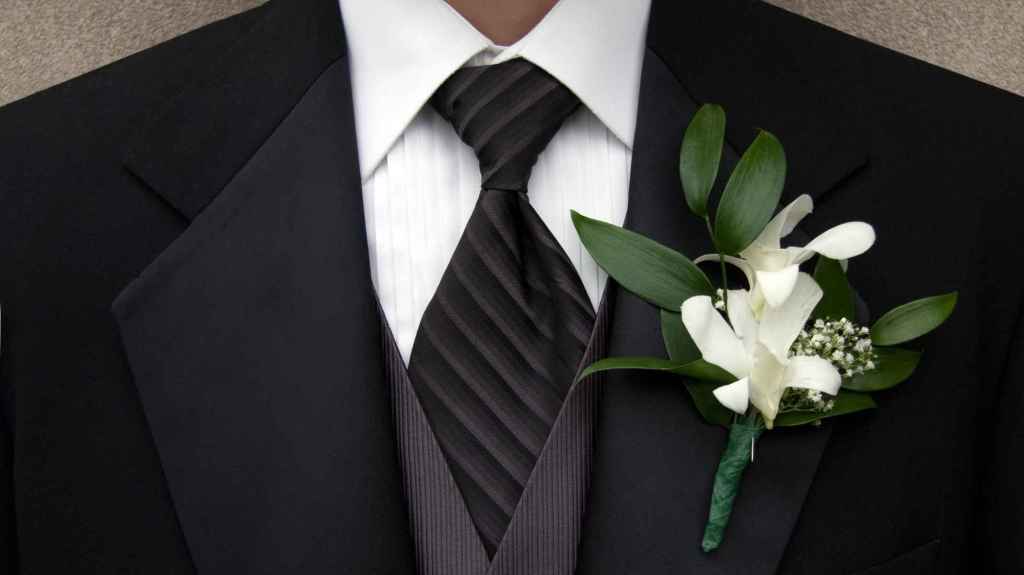
There are few garments in the history of fashion that carry as much cultural weight while saying so little. The tuxedo doesn’t shout. It doesn’t need to. A black jacket, satin lapels, a crisp white shirt, a bow tie — and suddenly a person looks like they belong somewhere important. That quiet authority didn’t happen by accident. The tuxedo’s journey from a rebellious shortcut to the most recognizable formalwear on the planet is a story about comfort, class, rule-breaking, and Hollywood glamour all colliding into a single, enduring silhouette.
Before the Tuxedo: The Age of Tails
To understand why the tuxedo mattered, you have to understand what it replaced. Through most of the 19th century, formal evening dress for men meant the tailcoat — a stiff, elaborate garment with a cutaway front and long coattails, paired with a white waistcoat and cravat. It was the uniform of aristocracy and old money, designed less for comfort than for signaling status. Every layer, every fold, every accessory was a small performance of wealth and propriety.
Men’s fashion at the time operated on rigid codes. What you wore told the room exactly who you were, what class you belonged to, and how seriously you took social convention. The tailcoat wasn’t just clothing — it was armor for the aristocracy, a way of drawing a visible line between those who belonged in formal spaces and those who didn’t.
The Birth of a Rebellion
The story of the tuxedo’s origin is part fact, part legend, but most fashion historians trace it back to the 1880s and a small, wealthy enclave in New York called Tuxedo Park. The area was home to an exclusive country club favored by some of America’s richest families, and it’s here that the garment gets its name.
The most repeated version of the story involves Griswold Lorillard, a young heir to a tobacco fortune, who reportedly showed up to the club’s autumn ball in 1886 wearing a short black jacket instead of the customary tailcoat. It was scandalous. It was also, crucially, more comfortable. The tailless jacket had been inspired by a similar style worn in England, where the Prince of Wales — later King Edward VII — had commissioned a shorter, more relaxed jacket from Savile Row tailor Henry Poole & Co. for informal dinners at his country estate.
Whether Lorillard was genuinely defying convention or simply importing an idea from British aristocracy, the effect was the same: a shorter, simpler jacket that kept the formality of black-tie dress while shedding the fussiness of the tailcoat. Tuxedo Park lent the garment its name, and the informal alternative to full evening dress had, almost overnight, become a genuine fashion movement.
From Scandal to Standard
What’s remarkable about the tuxedo’s rise is how quickly it moved from “shocking” to “acceptable” to “expected.” By the early 20th century, the tuxedo — often called a dinner jacket in Britain — had become the standard for semi-formal evening events, occupying a sweet spot between the extreme formality of white tie and the everyday nature of a lounge suit.
Its popularity tracked closely with a broader cultural shift. The early 1900s saw the old aristocratic order start to loosen its grip on fashion, and men, especially in America, wanted clothing that reflected status without demanding the theatrical stiffness of previous generations. The tuxedo offered exactly that: elegance with breathing room.
By the 1920s, the tuxedo had shed nearly all of its rebellious connotations and become the default choice for formal evenings among the upper and upper-middle classes. Design elements we now consider classic — the satin shawl or peak lapel, the single button closure, the black silk bow tie — solidified during this period into what became known as “black tie” attire, a term that persists today as shorthand for a specific, universally understood dress code.
Hollywood’s Golden Touch
If Tuxedo Park gave the garment its name, Hollywood gave it its glamour. The rise of American cinema in the 1930s and ’40s turned the tuxedo into something aspirational on a massive scale. Leading men like Cary Grant, Fred Astaire, and later Sean Connery wore the tuxedo not as a costume, but as an extension of their on-screen charisma — cool, composed, effortlessly commanding.
Fred Astaire in particular became something of a walking advertisement for relaxed formality. He was known for slightly unbuttoning his jackets, wearing his tuxedo with a looseness that suggested confidence rather than obligation. This mattered enormously. It reframed the tuxedo from a garment of obligation — something worn because etiquette demanded it — into a garment of choice, something a stylish man wore because he wanted to look his best.
James Bond cemented this even further decades later. Connery’s tuxedo in the Bond films wasn’t just formalwear; it was a character trait. Sharp, controlled, a little dangerous. The tuxedo became shorthand for sophistication with an edge, a visual language that action heroes and leading men alike would borrow from for the rest of the century.
The Democratization of Black Tie
As the 20th century progressed, the tuxedo slowly moved beyond the exclusive domain of the very wealthy. Rental businesses expanded rapidly in the postwar decades, making formal dress accessible for weddings, proms, and galas to men who would never have owned tailored eveningwear otherwise. This was a significant shift — the tuxedo went from being a marker of who belonged to old money, to something almost anyone could step into for a single important night.
This democratization didn’t dilute the tuxedo’s prestige; if anything, it strengthened its symbolic power. The tuxedo became less about inherited class and more about occasion — a visual cue that said “this moment matters,” regardless of who was wearing it or how they got it.
Reinvention Through the Decades
The tuxedo has never been static. Each era has reshaped it slightly while keeping its core identity intact.
The 1960s and ’70s brought bold experimentation — colored velvet jackets, ruffled shirts, wider lapels, and a general loosening of the rules that had governed black tie for nearly a century. Designers like Yves Saint Laurent challenged gender norms directly with “Le Smoking,” a tuxedo suit designed for women that debuted in 1966. It was a radical statement: the tuxedo, long a symbol of masculine authority, could be reclaimed and reworked as a symbol of power for women too. That single design opened a door that fashion has walked through many times since, with designers regularly reinterpreting the tuxedo across genders.
The 1980s and ’90s saw a return to more traditional silhouettes, while the 2000s onward brought slimmer cuts, mixed fabrics, and a willingness to break from strict black-and-white color schemes. Contemporary designers now regularly experiment with midnight blue, textured fabrics, and unconventional cuts, while still respecting the essential formula that made the tuxedo work in the first place: contrast, simplicity, and a silhouette that flatters almost any build.
Why the Tuxedo Endures
What makes the tuxedo remarkable isn’t just its longevity — it’s how little its fundamental appeal has changed. The satin lapel catching the light. The clean lines that create an instant sense of occasion. The way it manages to feel both timeless and, somehow, personal to whoever is wearing it.
Part of its staying power comes from restraint. Unlike trends that rise and fall with the seasons, the tuxedo’s design has always prioritized clarity over decoration. It doesn’t rely on logos, statement prints, or exaggerated shapes. Instead, it leans on proportion and material — satin against matte wool, white against black — to do the work.
The tuxedo also endures because of what it represents emotionally. Weddings, award ceremonies, proms, galas — these are moments people remember, and the tuxedo has become inseparable from the feeling of stepping into something significant. It signals transition: from ordinary to formal, from everyday to memorable.
From a country club scandal in 1880s New York to red carpets and royal weddings, the tuxedo’s evolution reflects a broader story about how fashion negotiates between tradition and rebellion. It began as a quiet act of defiance against stiff aristocratic convention, and more than a century later, it remains one of the few garments that can still make an entrance simply by walking into the room.
 Ayerhs Magazine