
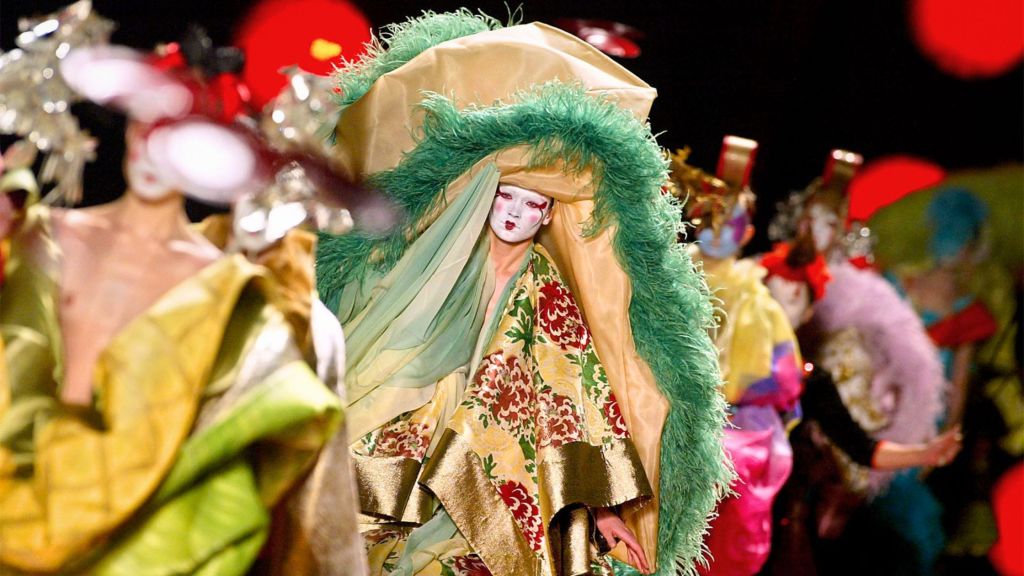
Why Haute Couture Still Matters in the Age of Fast Fashion
Walk into any mall today and you’ll find a $15 dress that looked, just six weeks ago, like something spotted on a runway in Paris or Milan. Fast fashion has made trend-chasing instant, cheap, and disposable. So it’s fair to ask: in a world where clothing is manufactured, shipped, and discarded at breakneck speed, does haute couture — garments that can take hundreds of hours and tens of thousands of dollars to produce — still have a reason to exist?
The answer is yes, and not merely out of nostalgia. Haute couture survives because it does something fast fashion structurally cannot: it preserves craft, sets the visual language the rest of the industry borrows from, and offers a different relationship between people and the things they wear.
What Haute Couture Actually Is
The term itself is legally protected in France. To call a house “haute couture,” it must be certified by the Fédération de la Haute Couture et de la Mode, which requires a made-to-order approach for private clients, a Paris atelier employing a minimum number of staff, and the presentation of a collection each season with a set number of original designs. Only a small handful of houses — Chanel, Dior, Schiaparelli, Jean Paul Gaultier’s atelier under Glenn Martens, Giambattista Valli among a few guest members — currently hold this status.
This isn’t a marketing label. It’s a guild-like standard, largely unchanged since the 19th century, when Charles Frederick Worth established the model of the designer as artist rather than anonymous tradesperson. Every couture piece is built directly on a client’s body through multiple fittings, hand-finished, and often never repeated in exactly the same form for anyone else.
The Economics Fast Fashion Cannot Touch
Fast fashion’s entire business model depends on speed and volume: cheap materials, overseas labor, synthetic fabrics, and a supply chain optimized to get a trend from sketch to shop floor in weeks. Couture inverts every one of those variables. A single embroidered gown might require a Lesage atelier artisan hundreds of hours of hand-beading. A structured jacket might involve dozens of hidden interior seams that no one but the wearer and the tailor will ever see, existing purely so the garment moves and sits correctly on one specific body.
This isn’t inefficiency for its own sake. It’s a different value proposition entirely. Fast fashion sells access — the ability to participate in a trend cycle at low cost. Couture sells irreproducibility: a garment that could not be bought, copied, or mass-produced even if someone wanted to. In an economy increasingly built on scarcity as the last true luxury, that irreproducibility is worth more, not less, than it was decades ago.
Couture as the Industry’s Research and Development Lab
One of the most underappreciated functions of haute couture is technical. Because couture ateliers aren’t constrained by manufacturability, cost-per-unit, or seasonal turnaround, they become spaces for experimentation that eventually filters down into ready-to-wear and, from there, into the mass market.
Structural innovations, unusual fabric treatments, and construction techniques often debut on the couture runway years before appearing in accessible forms. A silhouette or draping technique that seems avant-garde and impractical on a couture runway today may quietly reshape the cut of ready-to-wear blazers or the fit of mainstream dresses within a few seasons. Fast fashion brands, whatever they might publicly say about their own creativity, are frequently working several steps downstream from ideas that originated in a couture workroom.
Without a couture tier at the top of the industry, ready-to-wear design would lose much of its source material. The trickle-down effect is real, even if it’s rarely credited by the time a silhouette reaches a fast fashion retailer.
The Argument From Sustainability
It might seem counterintuitive to bring up sustainability alongside an industry built on rare fabrics and elaborate embellishment, but the comparison is worth making carefully.
Fast fashion is responsible for a significant share of textile waste, water consumption, and carbon emissions tied to the apparel industry, driven largely by overproduction and the assumption that garments are disposable after a handful of wears. Couture, by contrast, produces almost nothing that isn’t already sold, generally to a single named client, and is built to be altered, repaired, and worn for years or even generations. A couture gown is closer in spirit to a piece of furniture passed down in a family than to a t-shirt bought for a single event and discarded.
This doesn’t make haute couture a sustainability solution at scale — it serves far too small a clientele for that. But it does model an alternative philosophy: clothing designed for longevity and made to justify its own resource cost, rather than clothing engineered to be replaced.
Craft as Cultural Memory
There’s also a case for haute couture that has nothing to do with economics or environmental impact. It has to do with the preservation of skill.
Hand embroidery, feather work, specialized pleating, and certain forms of tailoring exist today largely because couture houses continue to commission them. Ateliers like Lesage (embroidery), Lemarié (feathers and flowers), and Massaro (shoes) — many now owned outright by major fashion houses specifically to keep them alive — represent generations of accumulated technique that would likely disappear without a market willing to pay for the time they require.
Fast fashion, by design, has no place for this kind of labor. Its economics punish anything that can’t be automated or radically simplified. If haute couture didn’t exist, many of these crafts would have no commercial home left, and the knowledge behind them — often passed down through apprenticeship rather than formal documentation — would erode within a generation or two.
A Different Kind of Relationship With Clothing
Perhaps the least quantifiable but most human reason couture still matters is the relationship it creates between a person and their clothing. A couture client is fitted, in person, multiple times. The garment is adjusted to their actual body, not an averaged size chart. The result is clothing that fits a specific person rather than a demographic.
Fast fashion, optimized for speed and standardization, can’t replicate that. It offers style, often skillfully and cheaply. What it can’t offer is the sense of a garment made, deliberately and repeatedly, for one person’s body and no one else’s.
Conclusion
Haute couture isn’t in competition with fast fashion, even though headlines sometimes frame it that way. They serve different functions in the same ecosystem. Fast fashion democratizes trend access; couture preserves craft, drives innovation, and models a slower, more intentional relationship with clothing. As long as there’s value in things that cannot be copied, mass-produced, or replaced in six weeks, haute couture will have a reason to exist — not despite the age of fast fashion, but arguably because of it.

