
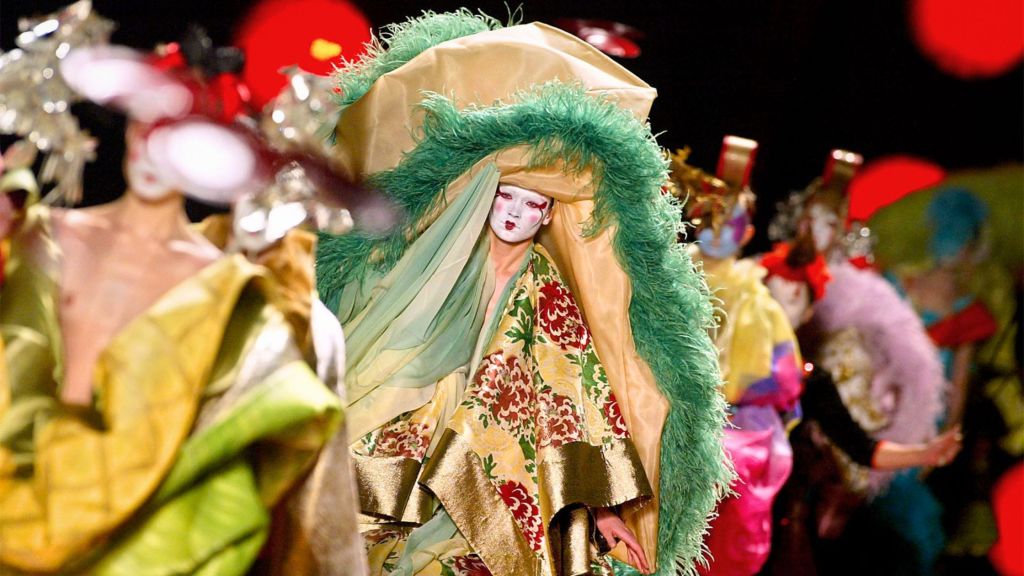
Haute couture has always existed in a world of its own. The clothes are beautiful, dramatic, highly detailed and often completely impractical for everyday life. A couture gown can take hundreds of hours to make, involve multiple artisans and cost more than a luxury car. For most people, the obvious question is: why?
Why does a dress need to cost tens or even hundreds of thousands of dollars?
The answer is not simply that couture brands are charging for a famous name. Haute couture is expensive because it is an extremely labor-intensive form of fashion built around craftsmanship, personalization and techniques that are increasingly rare.
What Actually Makes Haute Couture Different?
Before getting into the price, it helps to understand what haute couture actually means.
Haute couture is not just a fancy term for expensive clothing. In France, the term is legally protected and refers to fashion houses that meet specific criteria set by the Fédération de la Haute Couture et de la Mode. Couture pieces are made to order, created specifically for individual clients and produced largely by hand.
Unlike ready-to-wear collections, where a designer creates garments in standard sizes for production, couture is much closer to having a piece of art made specifically for you.
Measurements are taken with extraordinary precision. Patterns are adjusted to the client’s body. Fittings can happen several times. Embroidery, embellishment and finishing are often completed by hand.
That amount of individual attention naturally comes with a much higher price.
The Sheer Amount of Time
One of the biggest reasons couture costs so much is simple: it takes a long time.
A couture garment can require hundreds of hours of work. Complex evening gowns, heavily embroidered pieces and highly structured designs can take even longer.
Imagine a gown covered in thousands of beads, sequins, crystals or embroidered motifs. Each detail needs to be carefully positioned and attached. Some techniques are so intricate that a single artisan may work on the same section of a garment for days or weeks.
This is where couture becomes very different from ordinary luxury fashion.
A luxury ready-to-wear dress may be produced in a factory using highly efficient processes. Couture is deliberately slower. The goal is not to make hundreds of pieces as efficiently as possible. The goal is to make one exceptional piece correctly.
Time is part of the price.
The Artisans Behind the Clothes
When you see a couture gown walking down a runway, it is easy to focus on the designer’s name. But couture is really the work of an entire network of highly trained artisans.
There are embroiderers, feather specialists, milliners, lace experts, pleaters, tailors, corset makers, flower makers and other craftspeople who specialize in techniques that can take years to master.
Many couture houses work with specialist ateliers in Paris and elsewhere to create these details.
These artisans are not simply sewing clothes together. They may be recreating techniques passed down through generations.
A couture garment can therefore represent the combined labor of dozens of people.
That matters because hand craftsmanship is expensive. Skilled labor takes time, and specialized skills cannot simply be replicated overnight by a machine.
Fabrics Are Another Major Cost
The fabric used in couture is rarely basic.
Couture houses may use custom-developed textiles, rare lace, hand-painted fabrics, embroidered tulle, silk, velvet, feathers and other high-quality materials. Some fabrics are modified specifically for a particular design.
A couture garment can also involve multiple layers of fabric underneath the visible surface.
For example, an elaborate gown might contain silk layers, internal corsetry, boning, lining, structure and other hidden elements that help create its shape.
The final price, therefore, is not only about what you can see.
A dress might look simple on the outside while containing an enormous amount of technical work underneath.
Embroidery Can Take Couture to Another Level
If there is one detail that immediately explains couture pricing, it is embroidery.
Haute couture embroidery is often extraordinarily complex. Threads can be combined with beads, sequins, crystals, pearls, metal elements, feathers or other materials.
Some designs are first drawn by hand and then carefully translated onto the fabric.
There are couture ateliers that specialize almost entirely in embroidery, and their work can take months.
Imagine attaching thousands of tiny embellishments to a garment one at a time. Now imagine doing it while maintaining perfect spacing, symmetry and precision.
That is not something you can mass-produce in the same way as a standard high-street garment.
The Garment Is Made for One Person
Another reason couture is expensive is personalization.
A couture garment is not designed around an anonymous size 6, 8 or 10 customer. It is created around a specific person.
The garment needs to account for their exact proportions, posture and body shape.
That often means multiple fittings.
The designer and atelier may adjust the garment repeatedly to make sure it sits exactly where it should. Sleeves are altered. Waistlines are repositioned. Lengths are changed. Structures are refined.
This is one reason couture can have a very different fit from even high-end ready-to-wear.
You are not simply buying a dress.
The dress is being built around you.
Couture Is Also About Experimentation
There is another part of the price that is less visible: research and development.
Haute couture gives designers room to experiment.
Designers can explore unusual silhouettes, new fabric treatments, sculptural construction and complex hand techniques without worrying about whether the garment will work as a commercial product for thousands of shoppers.
A couture show might feature dresses that are technically difficult, extravagant or even impossible to reproduce on a large scale.
These collections can become laboratories for fashion.
Ideas developed through couture can eventually influence a brand’s ready-to-wear collections, accessories, fragrances and overall visual identity.
So while a couture gown may never be produced in large quantities, the creative process behind it can have a much wider impact.
The Price of Exclusivity
Of course, there is also the luxury factor.
Part of couture’s value comes from the fact that very few people can own it.
Exclusivity has always been central to luxury fashion. Haute couture takes that idea to its extreme.
A couture house might produce only a handful of a particular type of garment, and every client receives something that has been made specifically for them.
There is no mass availability.
You cannot simply walk into a store and buy most couture pieces off the rack.
That scarcity adds to their perceived and actual value.
The Designer’s Name Matters Too
It would also be unrealistic to pretend branding has nothing to do with the price.
A couture dress made by an internationally recognized fashion house carries the reputation of that house.
Decades of history, creative influence, celebrity associations, fashion shows and cultural relevance all contribute to the value of the label.
Buying couture is partly buying craftsmanship and partly buying into the heritage of a fashion institution.
This is similar to how collectors value a painting not only for the materials used to create it, but also for the artist who created it and the history attached to the work.
Couture Is Closer to Art Than Mass Fashion
Perhaps the easiest way to understand couture prices is to stop comparing couture to ordinary clothing.
A $100 dress and a $100,000 couture gown are not really competing products.
One is designed primarily as clothing. The other can function as clothing, craft, art and cultural expression at the same time.
A couture gown may exist as a one-of-a-kind piece, photographed for archives, displayed in exhibitions or preserved as part of fashion history.
In many cases, its value goes far beyond its practical purpose.
That is why asking whether a couture dress is “worth” its price can be tricky.
From a purely functional point of view, obviously, most people do not need a six-figure dress.
But couture has never been about necessity.
Why Couture Still Matters
In an era of fast fashion, mass production and increasingly automated design processes, haute couture represents almost the opposite philosophy.
It is slow. It is highly personal. It values craftsmanship over efficiency and individuality over scale.
That does not automatically make everything about couture perfect or accessible. The industry remains deeply exclusive, and its prices make it unavailable to the overwhelming majority of consumers.
But couture preserves skills that could otherwise disappear.
Hand embroidery, traditional tailoring, intricate draping and specialized textile techniques survive partly because couture houses continue to invest in them.
And that may be one of the most important reasons haute couture remains relevant.
So, Is It Really Worth the Price?
For most people, probably not in the practical sense.
But couture is not priced like ordinary clothing because it is not produced like ordinary clothing.
The cost reflects hours of handwork, rare materials, highly trained artisans, repeated fittings, experimentation, personalization, exclusivity and the heritage of the fashion house.
A couture garment is essentially a meeting point between fashion and craftsmanship.
You are paying for the fabric, but also for the people who worked on it. You are paying for the design, but also for the hours behind it. And you are paying for a piece that may never exist again in exactly the same form.
That is ultimately why haute couture is so expensive.
It is not just about wearing something expensive.
It is about owning something that was made almost entirely for you, by people who spent years learning how to make it.
 Ayerhs Magazine