
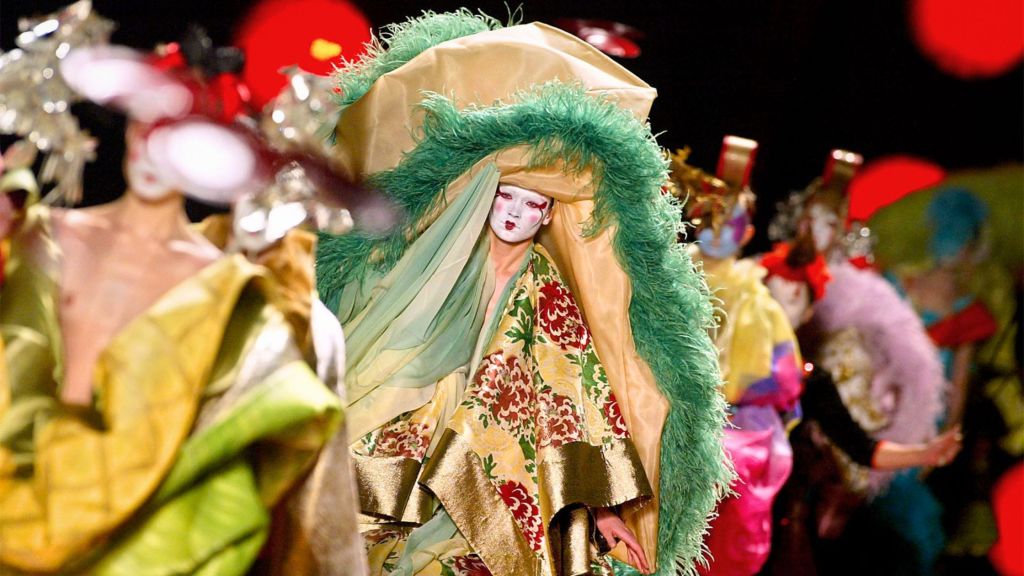
Haute Couture vs. Ready-to-Wear: What’s the Difference?
Step into any conversation about high fashion and you’ll eventually hear these two terms tossed around: haute couture and ready-to-wear. They’re often used loosely, sometimes interchangeably, by people outside the industry — but to designers, ateliers, and fashion insiders, the distinction is enormous. One represents the absolute pinnacle of craftsmanship, exclusivity, and artistic expression. The other represents accessibility, commerce, and the clothes that actually fill our closets. Understanding the difference isn’t just useful trivia; it explains why a single gown can cost as much as a house, while a nearly identical-looking dress hangs on a department store rack for a few hundred dollars.
What Is Haute Couture?
“Haute couture” is French for “high sewing” or “high dressmaking,” and it refers to the creation of exclusive, custom-fitted clothing made by hand from start to finish. This isn’t a marketing term a brand can slap on a collection whenever it likes. In France, “haute couture” is a legally protected designation, regulated by the Chambre de Commerce et d’Industrie de Paris through its Fédération de la Haute Couture et de la Mode. To earn the right to call their work haute couture, a fashion house must meet strict criteria set by the French Ministry of Industry, including designing made-to-order pieces for private clients with one or more fittings, maintaining a workshop (atelier) in Paris with a minimum number of full-time staff, and presenting a collection of a required minimum number of both day and evening garments to the press twice a year.
The result of these rules is a rarefied world. Houses like Chanel, Dior, Givenchy, Valentino, and Schiaparelli produce couture collections that are shown on runways in Paris but are never sold in stores. Each garment is built specifically for an individual client’s body, often requiring dozens of hours — sometimes hundreds — of hand embroidery, beading, draping, and stitching. It’s not unusual for a single couture gown to take over a thousand hours of skilled labor to complete, involving specialized artisans for embroidery, featherwork, or pleating who may work in ateliers that have served fashion houses for generations.
Because of this level of labor and exclusivity, haute couture garments are extraordinarily expensive, often costing anywhere from $10,000 to well over $100,000 per piece. Clients are typically an elite, invitation-only list of clients worldwide, and the entire process feels more like commissioning a work of art than shopping. In fact, many in the industry describe couture as fashion’s laboratory — a space where designers can experiment without the commercial pressure of mass production, pushing silhouettes, techniques, and materials to their limits. Ideas born on the couture runway often trickle down, in simplified form, into ready-to-wear collections years later.
What Is Ready-to-Wear?
Ready-to-wear, often called by its French name “prêt-à-porter,” is the polar opposite in terms of production philosophy, even though it can still be luxurious and expensive. These are garments manufactured in standard sizes and produced in multiples, meant to be bought off the rack rather than custom-built for one person. Ready-to-wear encompasses everything from fast-fashion basics to high-end designer collections shown during fashion weeks in Paris, Milan, New York, and London.
Within ready-to-wear, there’s actually a wide spectrum. At the top sits luxury ready-to-wear — collections from houses like Gucci, Saint Laurent, or Prada — which still use quality materials and thoughtful design, but are produced in batches using patterns sized to fit a general range of bodies, not one specific person. Below that sits contemporary and mid-range fashion, and at the bottom is mass-market and fast fashion, where speed and low cost drive nearly every decision.
The key characteristics of ready-to-wear are standardization and scalability. A single design might be produced in the hundreds or thousands, cut from patterns using industrial machinery, and finished with far less hand-detailing than couture. This doesn’t mean ready-to-wear is inherently low quality — many designer RTW pieces involve excellent tailoring, high-quality fabric, and skilled construction. It simply means the economics are different: a brand needs to make a profit by selling many units, not one extraordinary piece to one extraordinary client.
Key Differences at a Glance
Production process. Couture is made by hand for an individual, often over weeks or months, involving multiple fittings to perfect the fit on that specific body. Ready-to-wear is produced in batches using standardized sizing, with construction methods designed for efficiency and repeatability.
Exclusivity. A couture piece is typically one of a kind, or made in an extremely limited run for a small handful of clients. A ready-to-wear piece might be produced anywhere from a few hundred to hundreds of thousands of times.
Cost. Couture prices reflect the sheer number of hours of skilled human labor involved and can run into six figures. Ready-to-wear spans an enormous price range but is fundamentally priced for a market of many buyers, not one.
Regulation. In France, the term “haute couture” is legally protected and only a small number of houses are certified to use it each season. “Ready-to-wear” carries no such legal restriction — any brand can describe its clothing that way.
Purpose. Couture often functions as artistic statement and brand prestige-builder as much as it does as a commercial product; many houses run their couture divisions at a financial loss, treating it as a marketing and innovation investment. Ready-to-wear is a house’s primary revenue driver, along with licensed products like perfume and accessories.
Why Couture Still Matters in a Ready-to-Wear World
Given that so few people will ever own a couture garment, it’s fair to ask why the practice persists at all. The answer lies in what couture represents for a fashion house’s identity and creative direction. Couture collections generate enormous press coverage and cultural cachet that elevate the entire brand, making even a mass-produced handbag or lipstick feel connected to artisanal excellence. It’s also where techniques are refined and reinvented, feeding a stream of innovation that eventually reaches ready-to-wear lines, red carpets, and eventually, in diluted form, into mainstream fashion trends.
There’s also a preservation element. Many of the specialized ateliers that produce embroidery, feathers, pleating, and other couture techniques exist because couture houses continue to commission their work. Without demand from haute couture, some of these centuries-old artisanal crafts risk disappearing entirely, along with the specialized knowledge passed down through generations of craftspeople.
The Bottom Line
Haute couture and ready-to-wear serve fundamentally different purposes within the fashion ecosystem, even though the two constantly influence each other. Couture is about individual artistry, exclusivity, and craftsmanship taken to its highest extreme — clothing made for one person’s body and no one else’s. Ready-to-wear is about accessibility, scale, and the practical reality that most of us need clothes we can actually buy and wear the same week we see them. Neither is “better” than the other; they simply answer different questions. One asks how beautiful and intricate a garment can possibly be when cost and time are no object. The other asks how that same spirit of design can be translated into something real people can wear to work, to dinner, or to a wedding — without needing an appointment at a Parisian atelier to get it.
 Ayerhs Magazine