

WEDDING SEASON 2026-27 · Our series on dressing the Indian wedding season, from the couture house to the guest list.
The Indian wedding season is about to start. Chaturmas, the four months in which weddings are traditionally not held, ends on Dev Uthani Ekadashi on 20 November 2026, and according to Drik Panchang’s list for New Delhi and Hyderabad the first wedding dates fall on 21, 24, 25 and 26 November. December has seven more, all by 12 December, and then there is a gap until mid-January. Muhurat lists vary by panchang, region and community, so treat these as the shape of the season, not a fixed timetable. Either way, the calendar is tight, which is why the designer you choose matters so much now. Here are sixteen worth knowing, from the houses every bride has heard of to the newer, lighter names, with who they are, what they are showing now and who each one suits.
1. Sabyasachi
Best for: the bride who wants an heirloom, with old-world drama and a lot of red. Official site: sabyasachi.com


Sabyasachi Mukherjee graduated from NIFT Kolkata and launched his label in 1999 with a team of three. He made his runway debut in 2002 with a collection called Kashgar Bazaar, and the house has since grown into one of India’s biggest luxury names. Aditya Birla Fashion and Retail has held a 51 per cent stake since 2021, and there has been a New York flagship since 2022. Business Standard describes it as a nearly ₹500 crore brand.
What a Sabyasachi bride gets is dense hand embroidery, rich heritage fabrics, antique-gold detailing and jewellery layered with confidence. The house treats red as a permanent fixture of its bridal collections rather than a seasonal colour, and the Royal Bengal tiger on its belts, bags and jewellery is its best-known emblem. This year the house also made news outside bridal. On 15 September 2026 it showed its Spring/Summer 2027 collection, Bengal Byzantine Broadway, at New York Fashion Week, its first runway there since 2009, mixing Indian and Western references. Sabyasachi’s studios are among the busiest, and buying guides warn of waits of six months or more in peak season, so if your date is close, ask early about what is available now.
2. Manish Malhotra
Best for: maximum glamour and a red-carpet entrance. Official site: manishmalhotra.in


Born in Mumbai in 1966, Manish Malhotra spent decades dressing Bollywood before his name became synonymous with the film-star wedding. His bridal work is cinematic: heavy sequins, rich velvets, metallic embellishment and dramatic sheer dupattas. His label now covers couture, ready-to-wear, menswear, high jewellery and accessories.
2026 has been a big year for the house. He closed Dubai Fashion Week on 8 February with Inaya: The India Story, and made his official debut at Paris Haute Couture Week on 8 July with Maa. The Inaya collection moves beyond predictable red and gold, adding dusty plum, coral, aqua, lime, mustard, powder blue, ivory and soft blush, alongside lighter, more fluid silhouettes. The brand also makes men’s pieces and a high-jewellery line to go with it, which makes it a realistic one-stop house for a couple dressing together.
3. Tarun Tahiliani
Best for: the bride who prefers structure and drape to volume. Official site: tarun-tahiliani.com


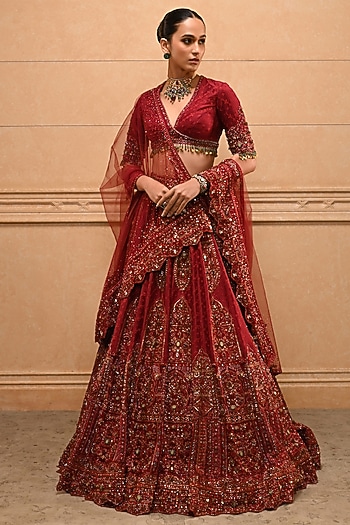
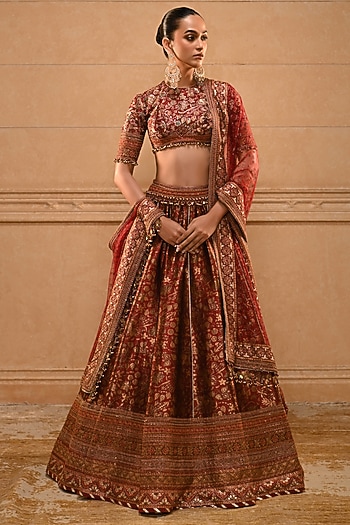

Tarun Tahiliani co-founded Ensemble, which is described as India’s first multi-designer boutique, and was the first Indian designer to show at Milan Fashion Week. His “India Modern” idea mixes Indian craft with European tailoring: corset-style blouses, concept saris and carefully engineered drapes. He marked thirty years in fashion in 2025 with the Quintessence bridal collection, which favoured lightness over opulence.
This season he chose to do things differently. At India Couture Week 2026 he skipped the traditional runway and held an off-site presentation, Navaratna, at Bikaner House in Delhi, with just one bridal look among about eighteen to twenty more directional pieces. His Autumn/Winter 2026 collection keeps corsetry at the centre, now with a sculptural feel beneath fluid drapes. Alia Bhatt wore an ivory Chanderi dhoti-skirt corseted gown by him at Cannes in 2026, which is a good indication of the mood: quiet, crafted and modern.
4. Anamika Khanna
Best for: the fashion-forward bride who is bored of the standard lehenga. Official site: anamikakhanna.in


Anamika Khanna works in layers, capes, off-beat blouses, hand-painted motifs and intricate lacework, and her clothes are more art-driven than most bridal couture. She opened India Couture Week 2026 with Moonlit Palace at the Taj Falaknuma Palace in Hyderabad, the first time the week’s opening show was held outside Delhi. The collection used ivory, gold and deep sapphire, with fluid silhouettes and hand-embroidered drapes inspired by Mughal court dress, made with women artisans from Barmer in Rajasthan and Kalighat in West Bengal.
It is a good house to look at if you want a wedding look that does not follow the usual rules but still feels deeply Indian in its craft.
5. Rahul Mishra
Best for: brides who see embroidery as art and want something that tells a story. Official site: rahulmishra.in


Rahul Mishra is a regular at Paris Haute Couture Week, and his work treats embroidery as storytelling, with dimensional florals, handcraft and textile innovation. In July he showed Devi in Paris, inspired by the stone figures in ancient Indian temples and cave sanctuaries. He then brought it home to close India Couture Week 2026 on 29 July, in a gallery-style presentation alongside a new Festive Couture line with floral motifs, zardozi, hand-painted textiles and sculptural surfaces. Sobhita Dhulipala was the closing-show showstopper.
His bridal pieces are softer than the genre’s norm and carry a lot of detail, which suits brides who want symbolism and craft over sparkle.
6. Gaurav Gupta
Best for: the bride who wants to break convention completely. Official site: gauravguptacouture.com
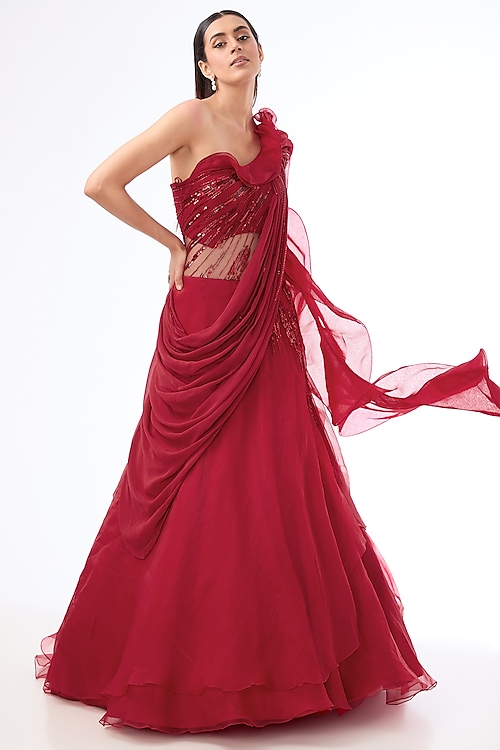
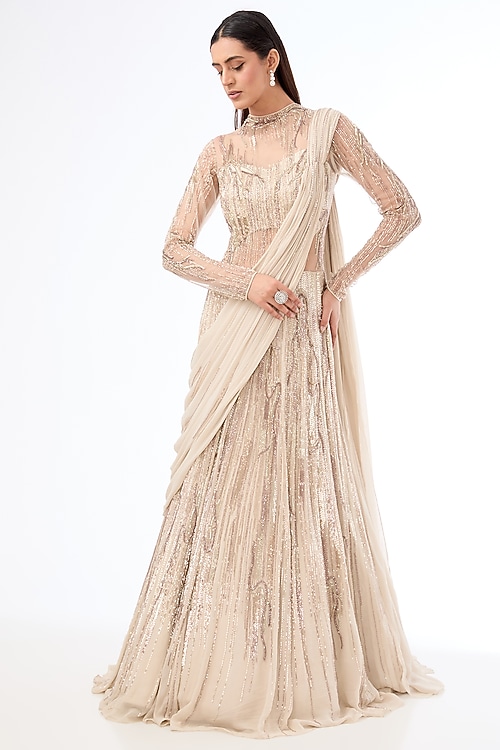
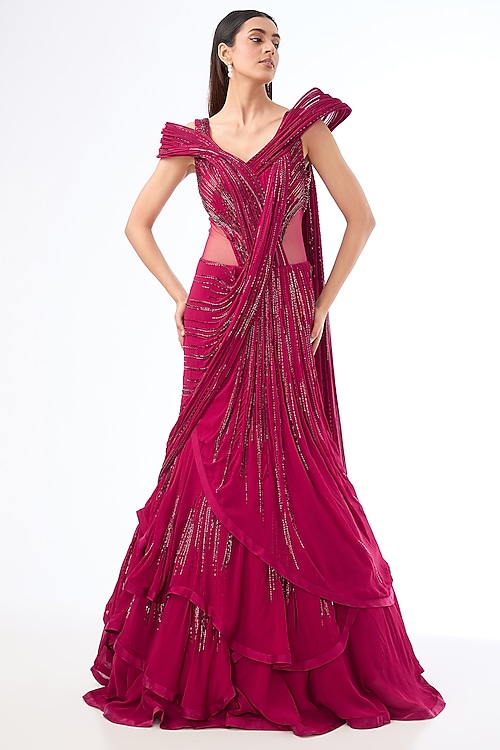
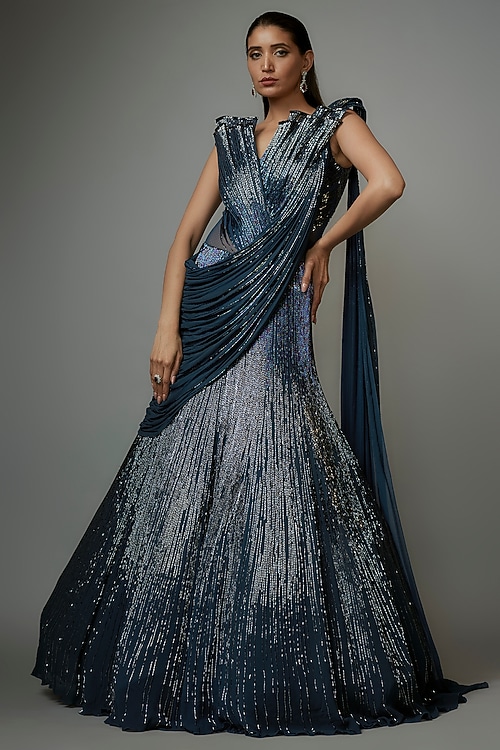
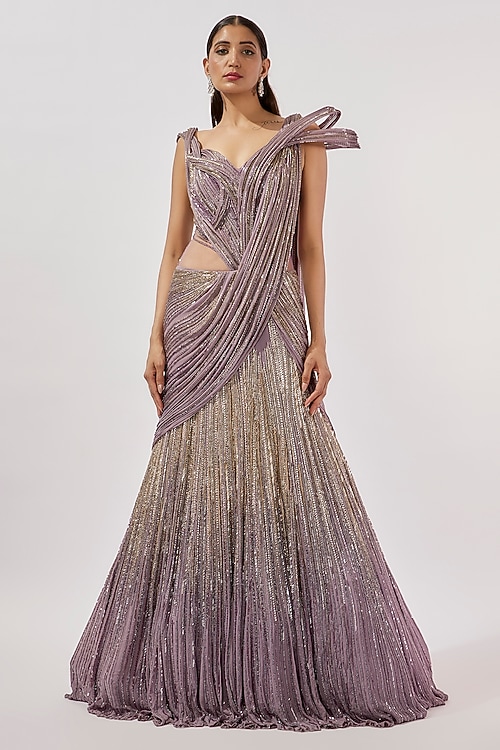
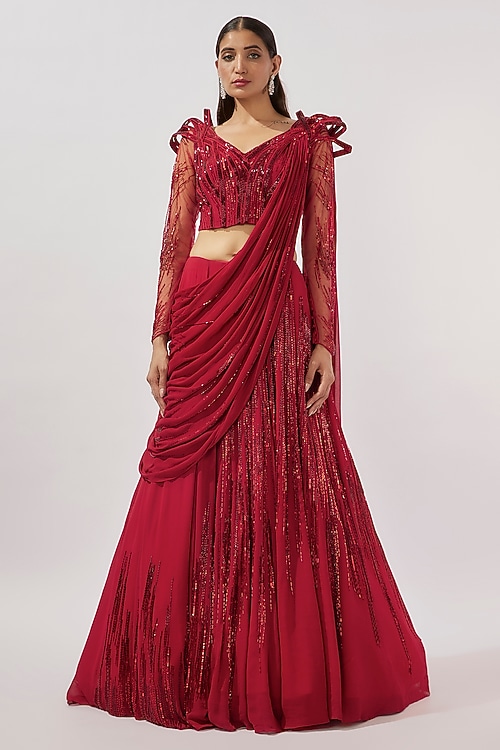
Gaurav Gupta is the futurist of this list. His work is built from architectural drapes, metallic constructions and sculptural silhouettes, and it is regularly seen on red carpets at events such as the Grammys and Cannes. In a wedding context, that means gowns, sculpted saris and reception looks that feel nearer to a gallery than to a mandap. He is a strong pick for a cocktail, sangeet or reception, or for a couple whose wedding is part Indian, part something else.
7. Abu Jani Sandeep Khosla
Best for: theatre, tradition and a lot of handwork. Official site: abujanisandeepkhosla.com


The duo are celebrated for chikankari, resham and mirror work and for rich hand embellishment, often in bold, statement silhouettes. The look is celebratory and theatrical, and it works well for brides, grooms and families who want an occasion to look and feel grand. Their craft-first approach makes them a safe choice for a traditional wedding that still wants a sense of spectacle.
8. Falguni Shane Peacock
Best for: bold, high-glamour brides. Official site: falgunishanepeacock.com
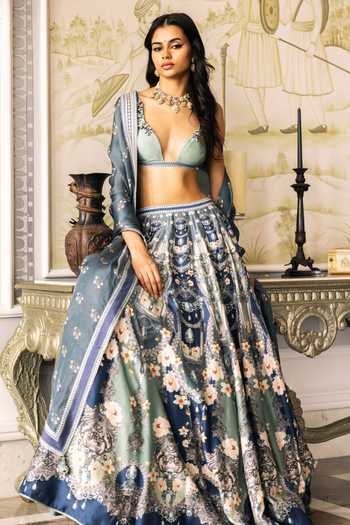
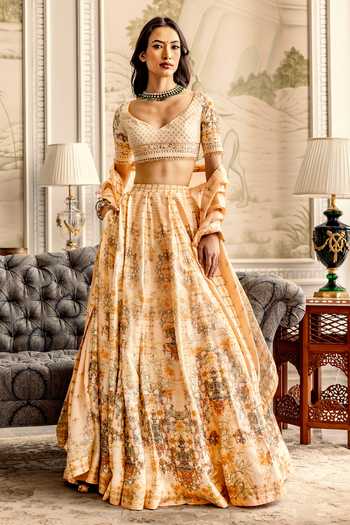
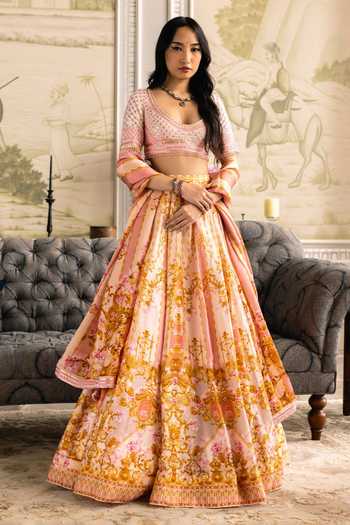
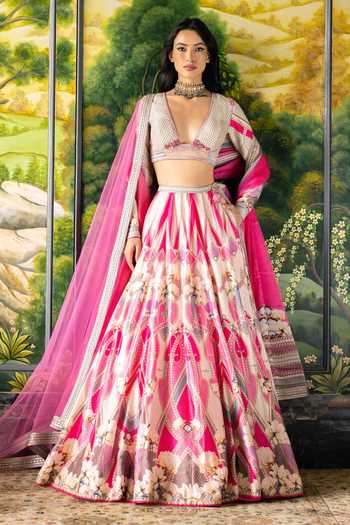
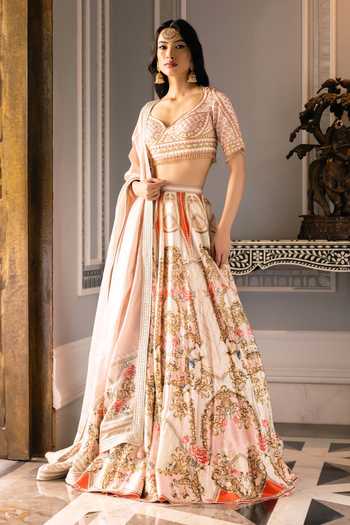
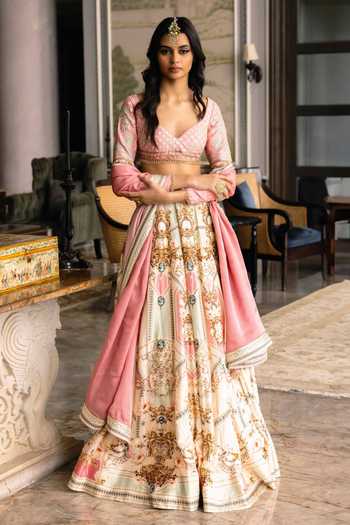
Falguni and Shane Peacock are known for crystal embellishment, dramatic trains and sculpted blouses. They opened India Couture Week 2026 with Le Grand Voyage, a collection about travel, architecture and artistry, with crystal-embellished bodices, feathers and jewel-toned palettes, and corsetry built like wearable sculpture. It was their first India Couture Week showing since a partnership with the RPSG Group. The collection also moved easily from traditional ceremonies to destination celebrations, so it suits a bride who is changing outfits for several events.
9. JJ Valaya
Best for: regal, structured grandeur. Official site: jjvalaya.com
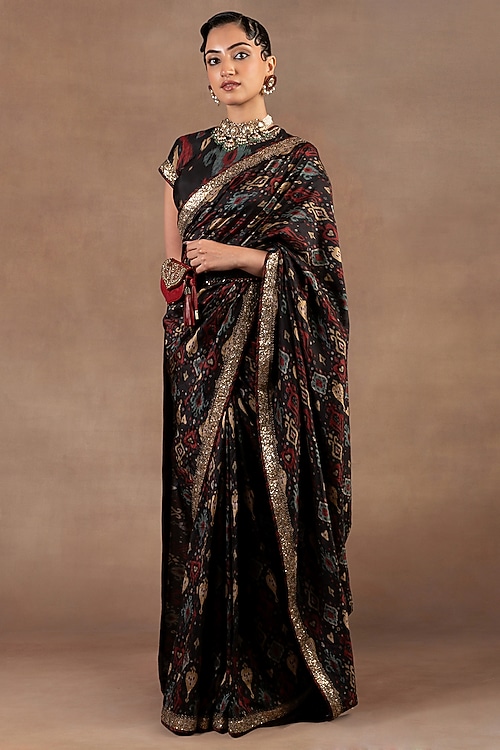
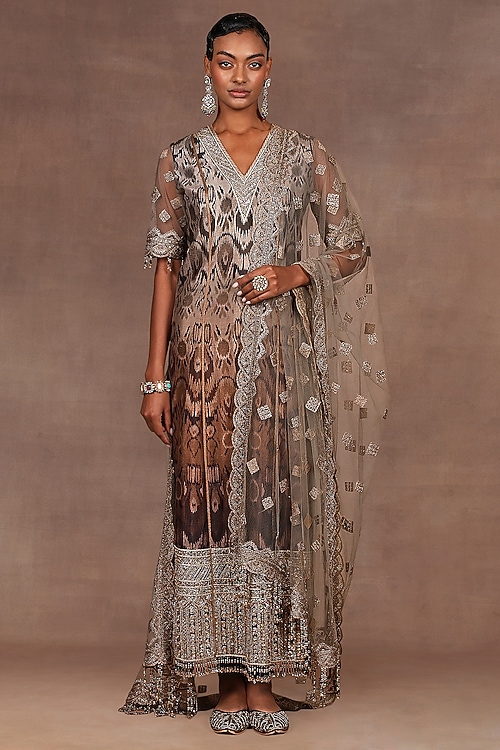
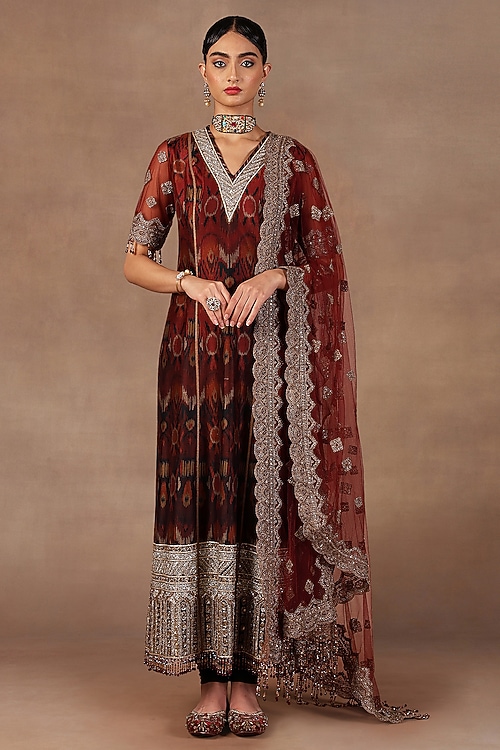
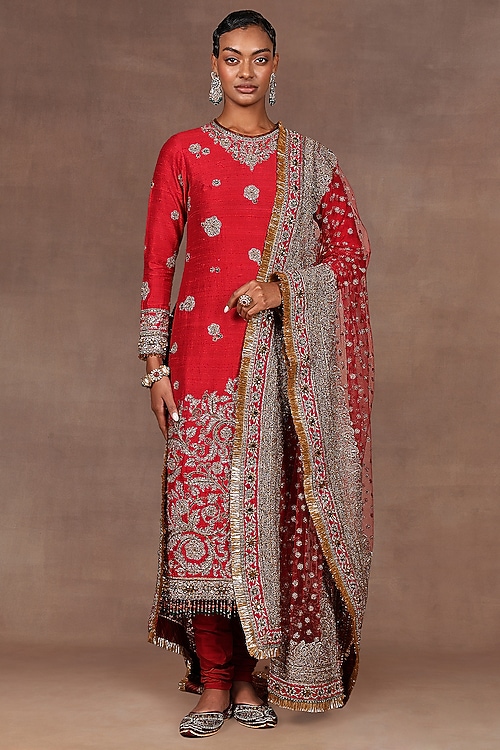
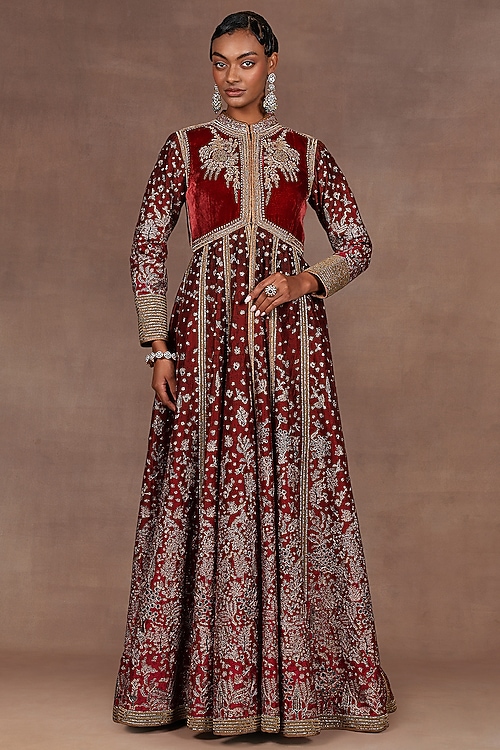
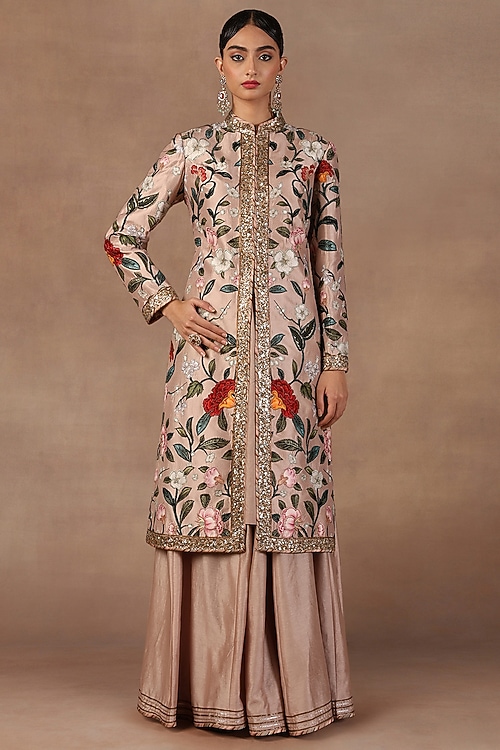
JJ Valaya’s work draws on historical and royal references: tailored, structured and richly ornamented. His Autumn/Winter 2026 collection, Siddi, was inspired by the Siddis of India and the mix of African origins with the many cultural influences absorbed over generations. It used burnished gold and deep jewel tones, and coverage of the show picked out a monotone red lehenga with a short face veil. It shows that a maximalist look can still feel precise.
10. Anita Dongre
Best for: day weddings, garden ceremonies, destination weddings and brides who want comfort. Official site: anitadongre.com
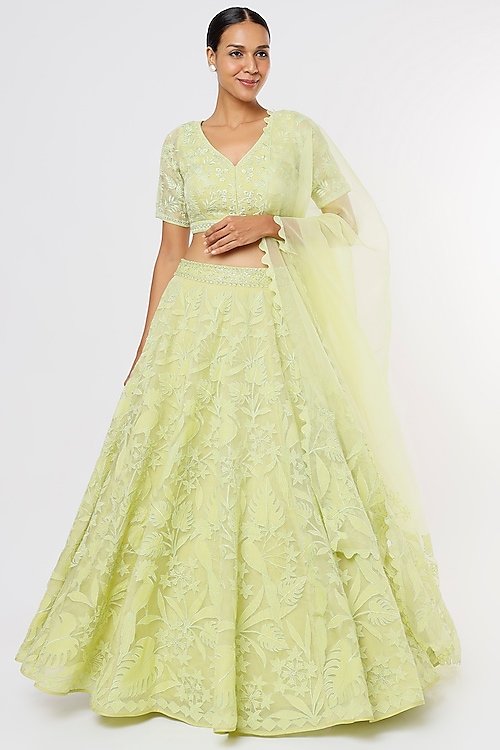
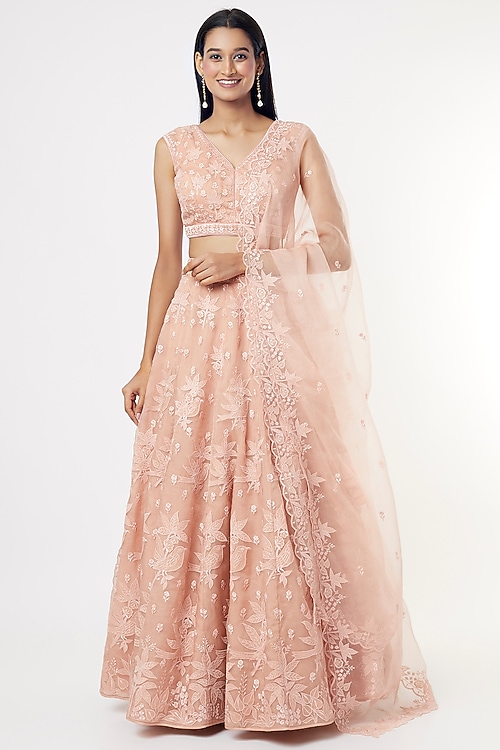
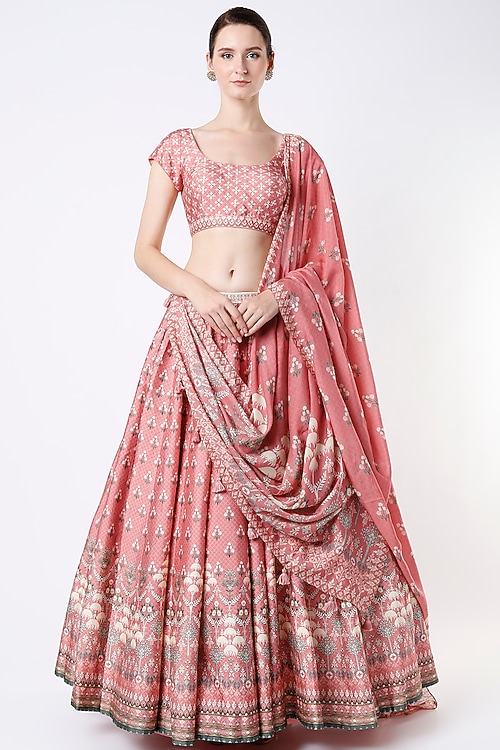
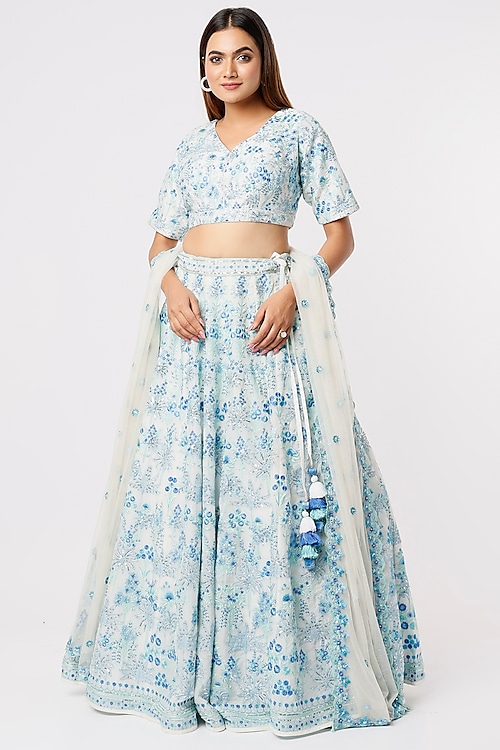
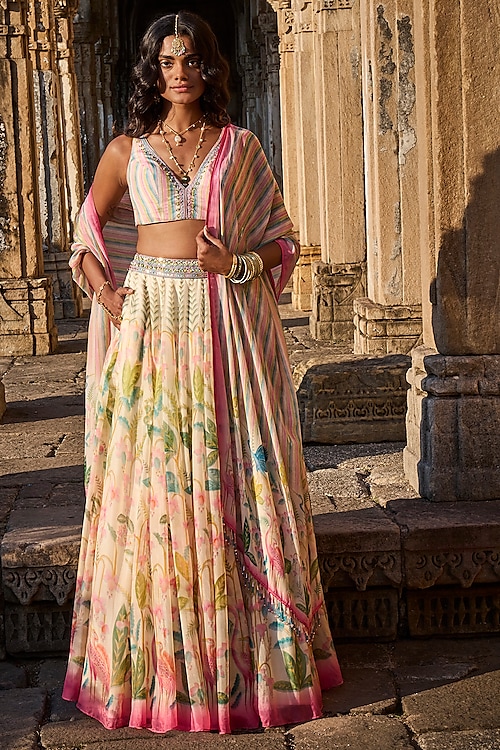
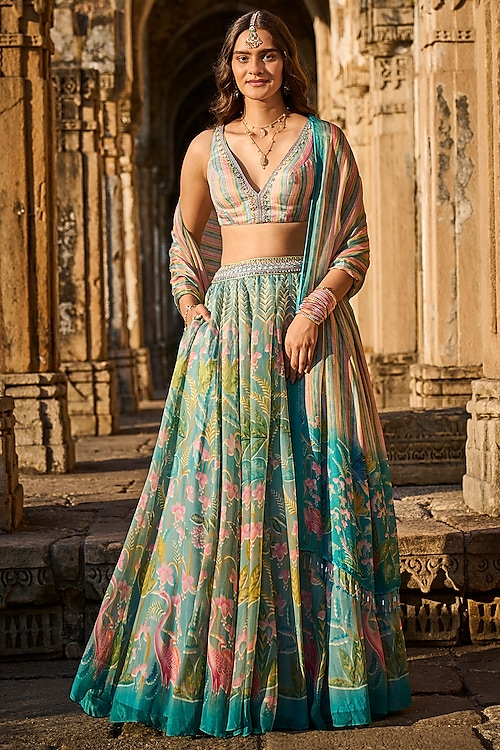
Anita Dongre is known for a soft, delicate approach: handwoven textiles, gota patti work, pastel palettes and lighter lehengas that are easier to wear for a long day. The label also has a sustainability focus, and many pieces are sold as separate blouses and skirts, so they can be mixed and re-worn after the wedding. If you are a guest, a sister of the bride or a bridesmaid, her pieces are among the easiest to wear again.
11. Abhinav Mishra
Best for: mirror work that looks modern. Official site: abhinavmishra.com
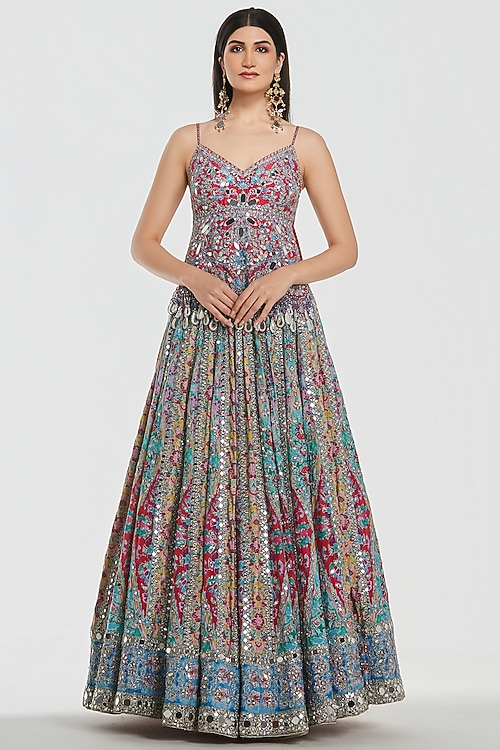
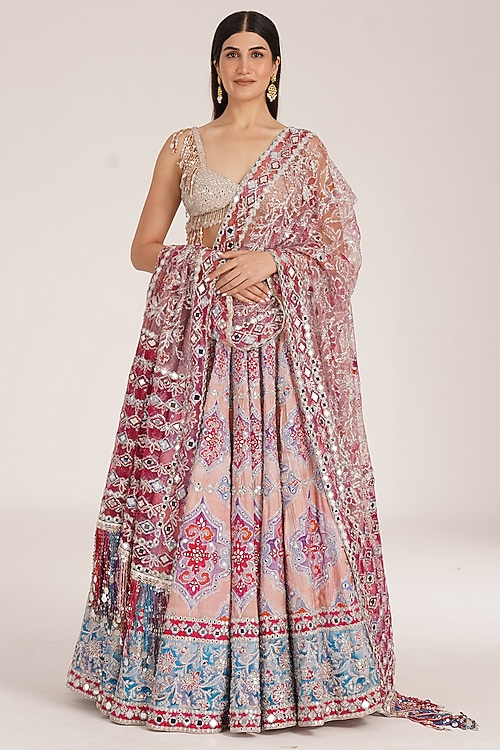
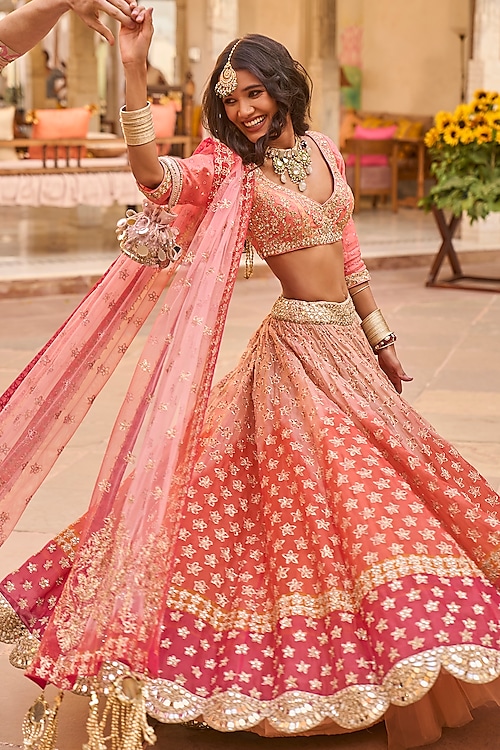
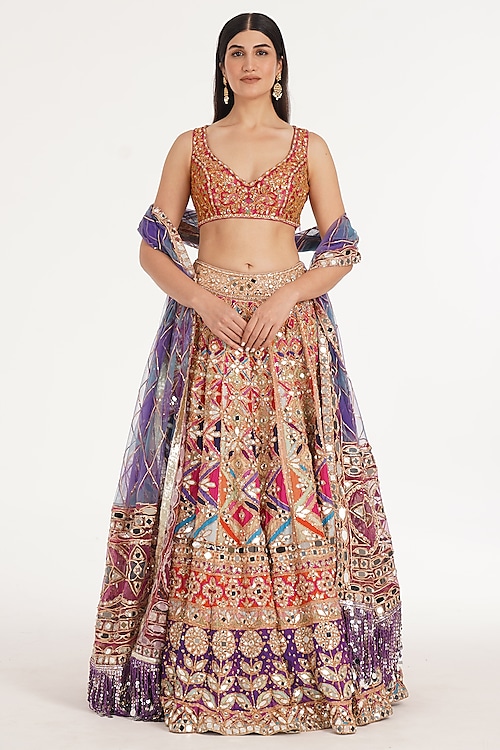
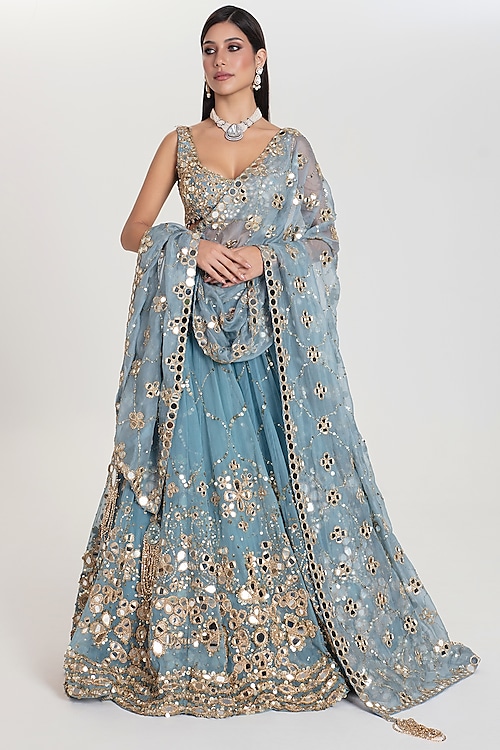
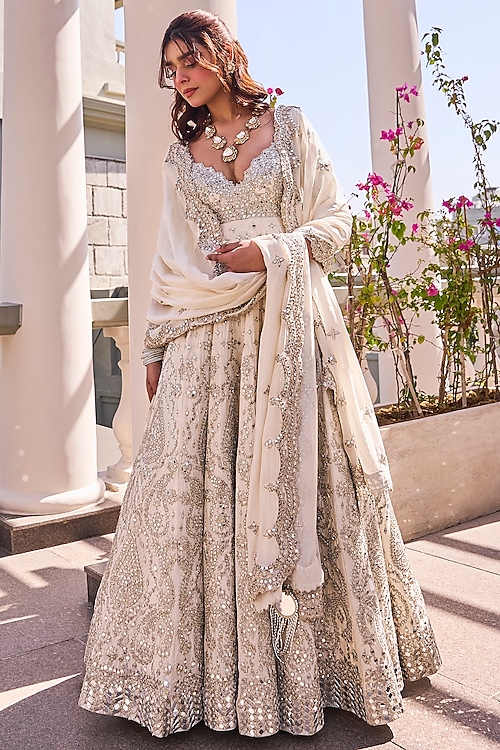
Few designers have made mirror work feel as current as Abhinav Mishra. His new bridal collection, Baradari, has expansive lehengas, structured blouses, fluid veils and bridal reds, with signature mirror work lifted by crystal detailing. Brides Today singled it out this year as cinematic and high-impact, which makes it a good option for a bride who wants a big look without the weight of heavy zardozi.
12. Masaba Gupta
Best for: brides who want joy, colour and personality. Official site: houseofmasaba.com


House of Masaba made its India Couture Week debut this year with its first bridal couture collection, Chardi Kala, named for a Punjabi phrase that means eternal optimism. The lehengas came in saffron, fuchsia and deep red, with exuberant embroidery that scaled up folk motifs. The official description talks about a bridal look that travels from sacred landscapes to the beaches of Antigua, in other words a bridal that doubles as resort wear. It is the clearest sign this season that bridal luxury is widening to include joy and cultural identity.
13. Arpita Mehta
Best for: haldi, after-parties, beach ceremonies and a resort-ready wardrobe. Official site: arpitamehta.com
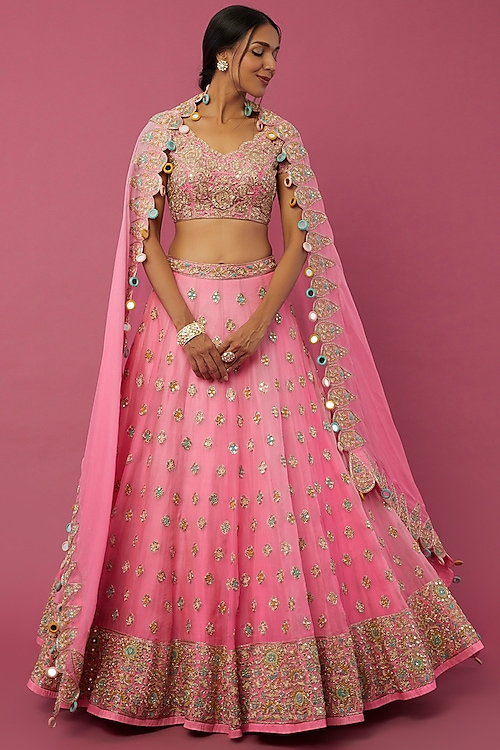
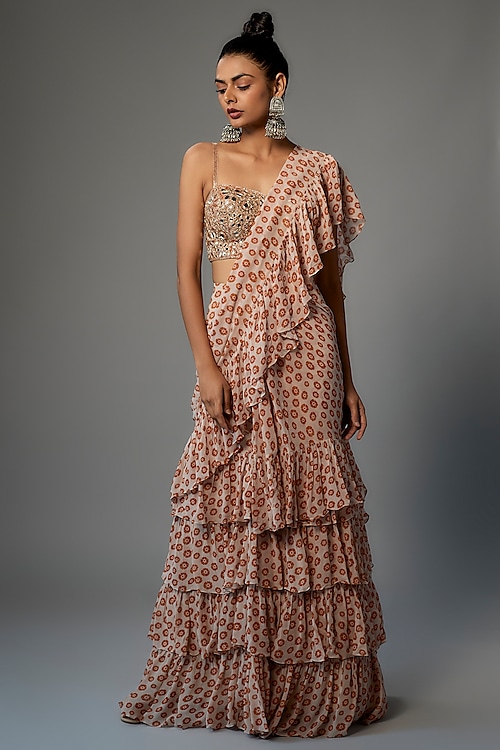
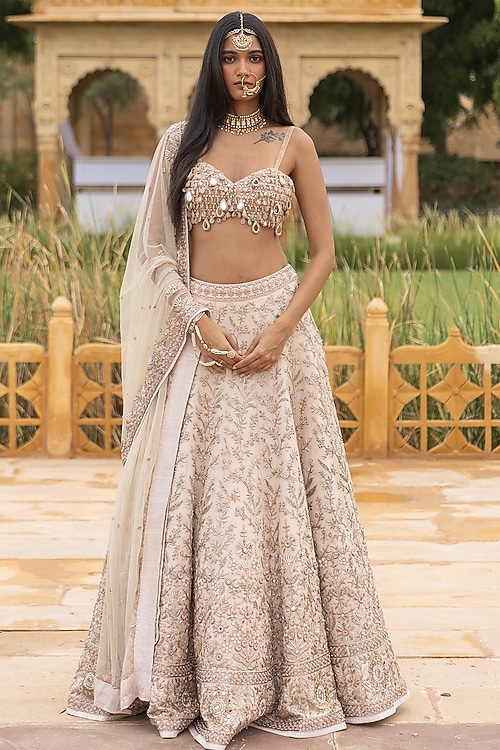
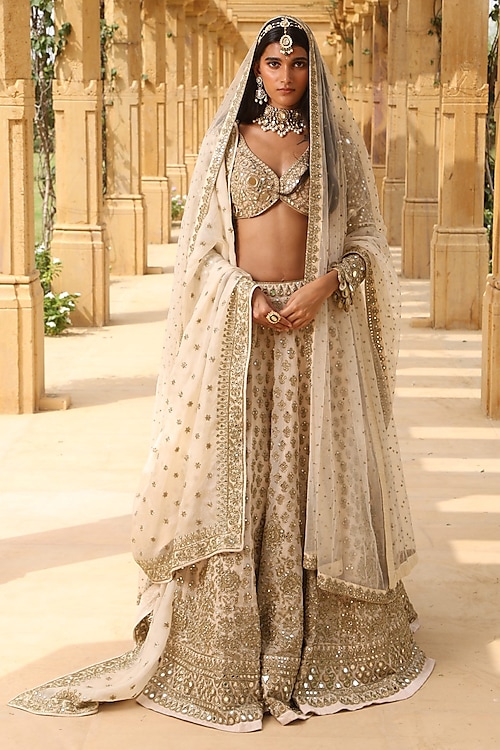
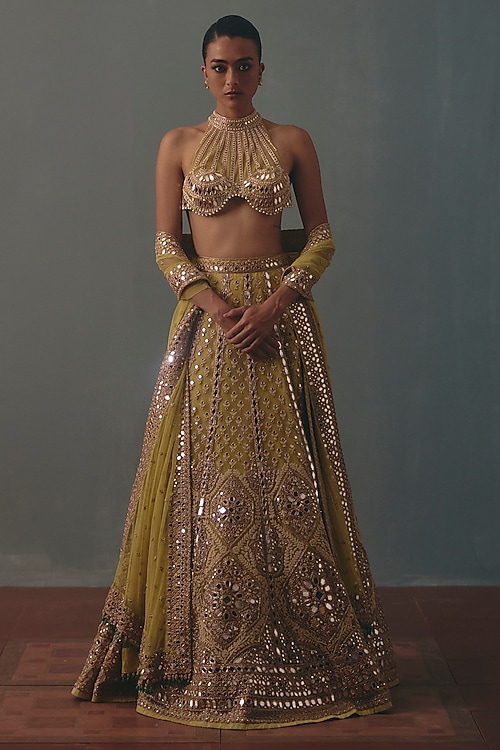
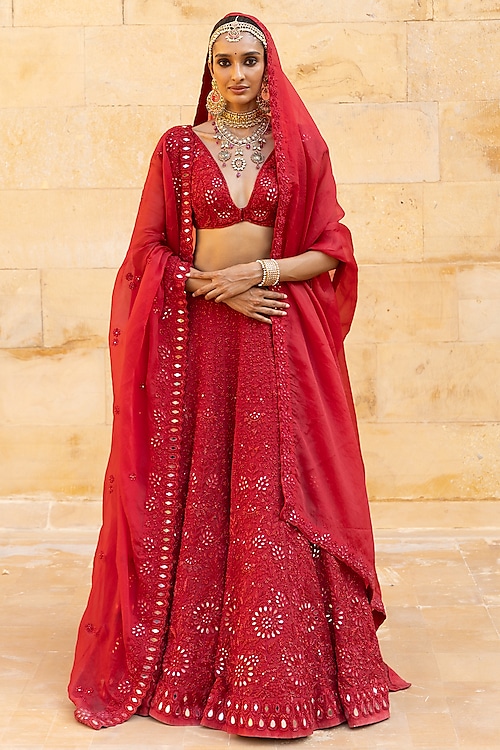
Arpita Mehta is known for mirror work, fluid silhouettes and playful colours, and she made her India Couture Week debut this year with Ceremonial. The collection reimagined Indian textile heritage with handcrafted embellishment that stayed light on the body. She is a natural choice for the less formal events around a wedding, and for a bride who wants to change often and keep dancing.
14. Rimzim Dadu
Best for: the bride (or guest) who wants something nobody else will have. Official site: rimzimdadu.com


Rimzim Dadu’s Inlae was India Couture Week’s most technically inventive show. She worked steel-wire textiles with mother-of-pearl, drawing on the Mughal inlay technique of parchin kari, to make structural garments with surfaces that catch and break up light as the wearer moves. It is a material-led, almost sculptural take on maximalism, best suited to a reception, a cocktail or a guest who wants to stand out.
15. Jayanti Reddy
Best for: brides drawn to heritage and architecture. Official site: jayantireddy.com
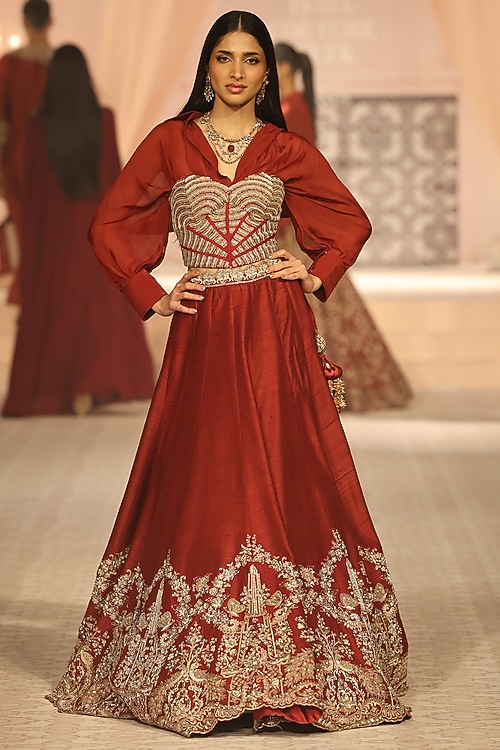
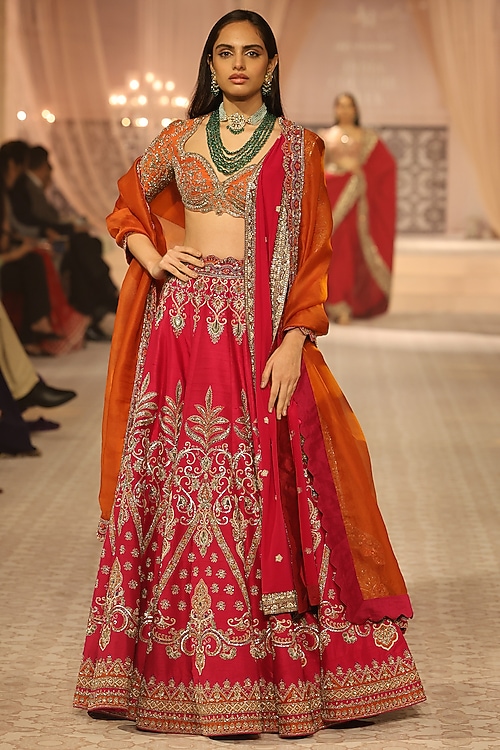
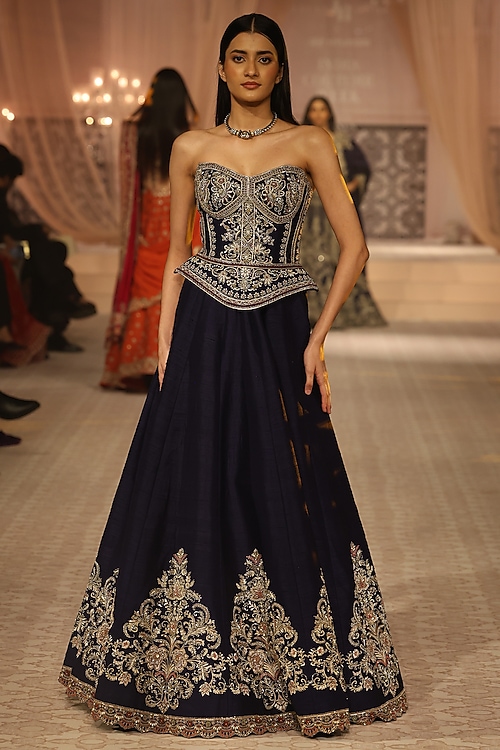
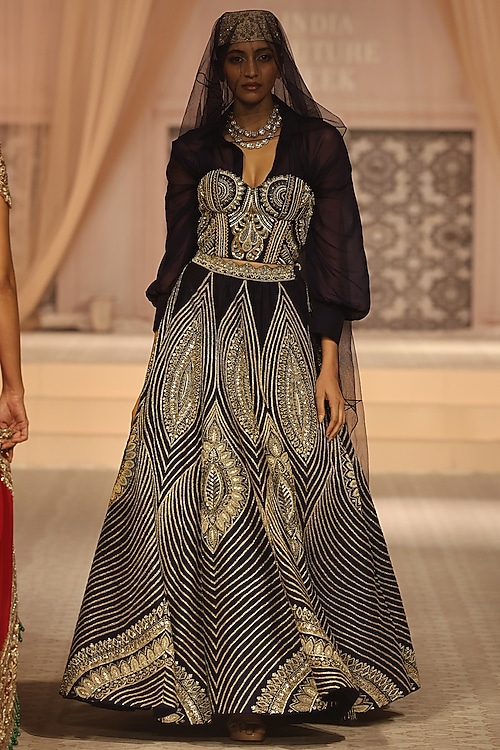
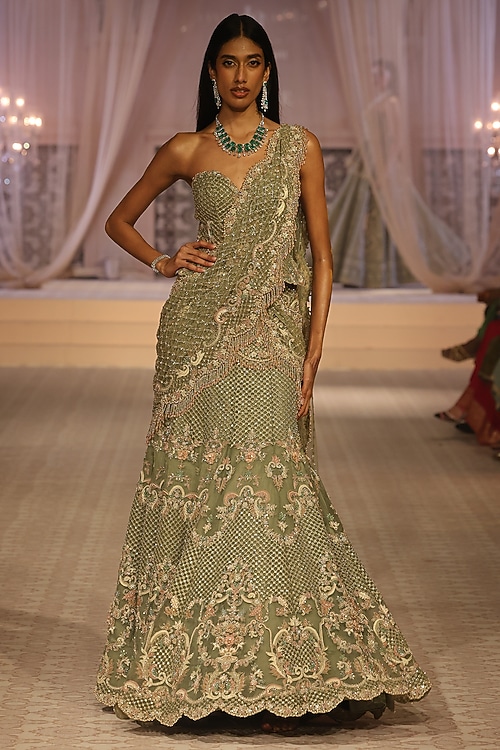
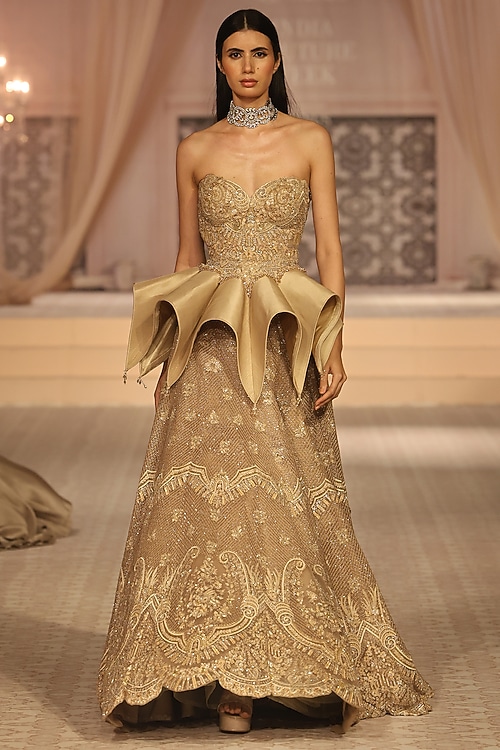
Jayanti Reddy’s The Gilded Era took Hyderabad’s Nizami architecture, including arches, jalis, carved stucco and palace interiors, and turned it into embroidery motifs and structured, vintage-inspired silhouettes. Aditi Rao Hydari and Siddharth appeared as showstoppers. It was one of the week’s most cohesive collections, and a good fit for a bride who wants her outfit to have a clear story behind it.
16. Papa Don’t Preach by Shubhika
Best for: cocktail nights, receptions and a bride with a sense of humour. Official site: papadontpreach.com


The label is playful and expressive, known for whimsical embellishment, corsetry, feathers, sequins and pop-culture-inspired glamour. Brides Today points to its cocktail-ready lehengas and reception looks, which makes it a useful name for the evening events of the wedding rather than the ceremony itself.
How to choose
Start with the event, not the name. For a traditional ceremony in a palace or a temple, look at Sabyasachi, Abu Jani Sandeep Khosla, JJ Valaya or Manish Malhotra. For something lighter or outdoors, look at Anita Dongre, Arpita Mehta or Abhinav Mishra. For a reception or cocktail, Gaurav Gupta, Falguni Shane Peacock, Papa Don’t Preach or Rimzim Dadu will give you the most distinctive look. For a bride who wants craft and a story, Rahul Mishra, Anamika Khanna and Jayanti Reddy are the ones to study.
Then check timing. Some of the busiest studios have long waits in peak season, and the window between the first muhurats and mid-December is short, so ask each house what is made-to-order, what is ready and what can be altered in time.
More from The Shopping List: See every list
An independent editors’ guide, not a shopping list: couture is made to order, so there are no shopping links, no designer pays to be included, Ayerhs earns nothing from this page, and waiting times, prices and availability should be checked with each house.
Where this comes from: Hyundai India Couture Week 2026 coverage (Harper’s Bazaar India, Open magazine, The Telegraph’s T2, Hollywood Reporter India and Aza Fashions’ show-by-show recap); Brides Today’s guide to Indian bridal couture houses (May 2026); ThePrint and Esquire India on Sabyasachi at New York Fashion Week; Business Standard on Sabyasachi; Aza Fashions’ designer profiles; Khaleej Times and Aashni + Co on Manish Malhotra; Deccan Chronicle on Tarun Tahiliani; Drik Panchang dates via HindUtone. Images: courtesy of the designers’ official websites (Sabyasachi, Manish Malhotra, Tarun Tahiliani, Anamika Khanna, Rahul Mishra, House of Masaba, Rimzim Dadu, Abu Jani Sandeep Khosla and Papa Don’t Preach by Shubhika) and of Pernia’s Pop-Up Shop and Aza Fashions (Gaurav Gupta, Falguni Shane Peacock, JJ Valaya, Anita Dongre, Abhinav Mishra, Arpita Mehta, Jayanti Reddy and two Tarun Tahiliani looks).


Leave a Reply