
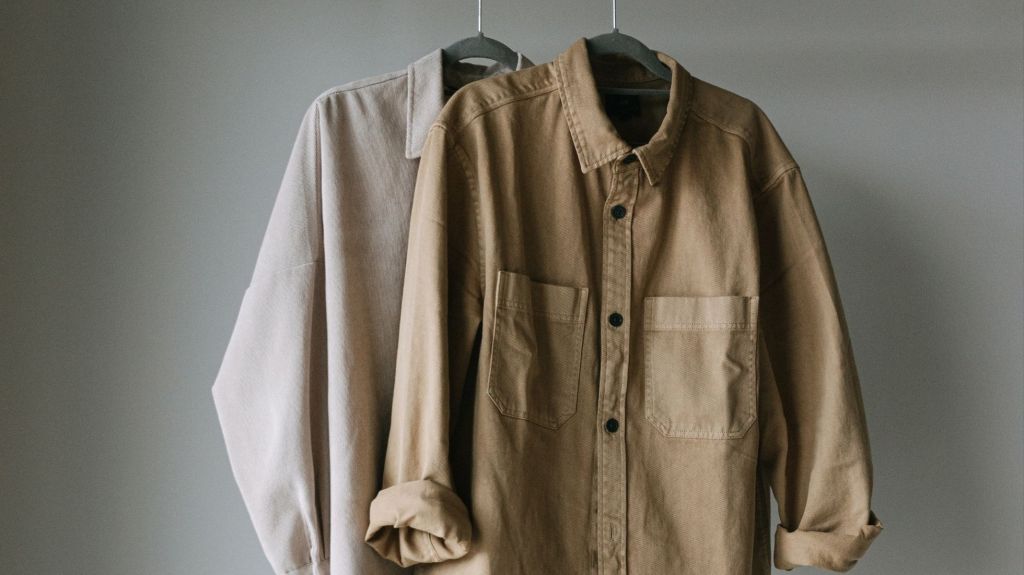
Few garments in the human wardrobe have traveled as far, or reinvented themselves as many times, as the shirt. Today it’s a billboard for streetwear logos, a boardroom uniform, a borrowed-from-the-boyfriend oversized staple, and a red-carpet showpiece. But for most of its history, the shirt wasn’t meant to be seen at all. It was underwear — a humble, practical layer whose entire job was to protect the body and, more importantly, to protect expensive outer clothing from the body. Tracing the shirt’s journey from hidden garment to fashion centerpiece says a lot about how we think about class, gender, hygiene, and self-expression.
The Shirt as Underwear
The shirt’s earliest ancestor was the “chemise” or “shift,” a simple, loose-fitting linen tunic worn next to the skin from the medieval period onward. Linen was prized for this purpose because it could be washed and boiled without falling apart, unlike wool or silk. In an age before regular bathing was common, this innermost layer absorbed sweat and body oils, sparing the far more expensive doublets, gowns, and jackets worn over it from staining and wear.
Crucially, this undergarment was not meant to be visible. A gentleman’s linen shirt might peek out slightly at the wrists or neckline, but showing your shirt in full was considered roughly equivalent to showing up in your underwear today — because, functionally, that’s exactly what it was. Wealth was signaled by the outer garments; the shirt underneath was a private, practical necessity, changed and laundered separately from the rest of the wardrobe.
Interestingly, the shirt was also one of the few garments considered nearly unisex in this basic form. Men and women alike wore a linen layer next to the skin, though the cut, length, and styling diverged over the centuries as fashion demanded.
The Slow Emergence from Under the Clothes
By the 17th and 18th centuries, the shirt began inching into view. Ruffled cuffs and jabots (frilly cravats at the neck) allowed a controlled glimpse of the shirt’s finer details, turning what was once purely functional into a marker of taste and refinement. Still, the body of the shirt itself remained tucked away, doing its unglamorous job of soaking up sweat.
The real turning point came in the 19th century. As tailoring became more structured and the three-piece suit emerged as the dominant male silhouette, the shirt collar and cuffs became visible, standardized elements of dress. Detachable collars and cuffs — starched separately and swapped out to keep the appearance of a fresh shirt without the labor of washing the entire garment — became a Victorian innovation born of practicality. A man could own just a few shirt bodies but many collars, projecting cleanliness and status on a budget. This is also when the color white became firmly associated with respectability: a pristine white collar signaled that its wearer didn’t do manual labor dirty enough to soil it.
The Shirt Steps Into the Light
The 20th century is where the shirt truly left its underwear origins behind and became outerwear in its own right. A few key shifts drove this:
The rise of ready-to-wear and mass production made shirts more affordable and varied, no longer solely bespoke items reserved for the wealthy.
Sportswear and leisure culture introduced the idea that a shirt could be worn alone, without a jacket over it. Short-sleeved and open-necked shirts, popularized in the interwar years for golf, tennis, and beach holidays, normalized the shirt as a visible, standalone garment rather than something hidden beneath a coat.
The button-down collar, credited to Brooks Brothers in the late 19th and early 20th century after founder John E. Brooks noticed polo players in England pinning down their collars to keep them from flapping, became an American classic. By the mid-20th century, the button-down oxford shirt was a symbol of Ivy League style and eventually corporate professionalism — a garment respectable enough to wear with a blazer, casual enough to wear without one.
Denim and workwear culture contributed another branch of the shirt family tree: the sturdy, practical work shirt, later adopted by youth subcultures and rock and roll as a symbol of rebellion against buttoned-up formality.
By the postwar decades, the shirt had fully split into distinct categories — the crisp dress shirt of business life, the casual polo and camp shirt of leisure, and the flannel or chambray shirt of workwear — each carrying its own coded meaning about class, occasion, and identity.
From Function to Fashion Statement
The late 20th and 21st centuries pushed the shirt even further from its modest beginnings, transforming it into a canvas for personal and cultural expression.
Fashion designers began treating the shirt as sculpture rather than utility, experimenting with exaggerated collars, dramatic sleeves, and unconventional proportions on the runway. The shirt was no longer just something you wore under a suit; it could be the outfit.
Streetwear and hip-hop culture popularized the oversized shirt — worn loose, unbuttoned over t-shirts, or styled with baggy fits that rejected the tailored silhouette of formal shirting entirely. What began as practical (borrowed sizes, workwear-inspired volume) became a deliberate aesthetic choice, eventually adopted by high fashion houses reissuing “oversized” as a premium silhouette.
Gender fluidity in fashion has also reshaped the shirt’s story. The button-down, once coded strictly masculine, is now a wardrobe staple worn by anyone, often oversized and unbuttoned as outerwear, tied at the waist, or styled as a dress. Designers increasingly market shirts without rigid gender categories, echoing — whether intentionally or not — the shirt’s originally unisex roots as a simple linen layer.
Prints, logos, and graphics turned the shirt into a form of communication. From Hawaiian shirts to band tees reimagined as button-ups, to logo-heavy fashion shirts from luxury streetwear labels, the shirt now often says something about the wearer’s taste, affiliations, or sense of humor — a complete reversal from its original job of staying invisible.
The Same Garment, A Different Purpose
What’s remarkable about the shirt’s evolution is that the basic construction — a body, two sleeves, and some kind of opening at the neck — has barely changed in centuries. What changed is everything around it: how visible it’s meant to be, what fabric and fit signal about status, and whether it’s meant to disappear under other clothing or announce itself as the main event.
The chemise that once quietly absorbed sweat under a nobleman’s doublet and the oversized fashion shirt strutting down a runway today share a direct lineage. Somewhere between hidden hygiene layer and personal style statement, the shirt stopped being something you wore under your identity and became a way of wearing your identity itself.
 Ayerhs Magazine