
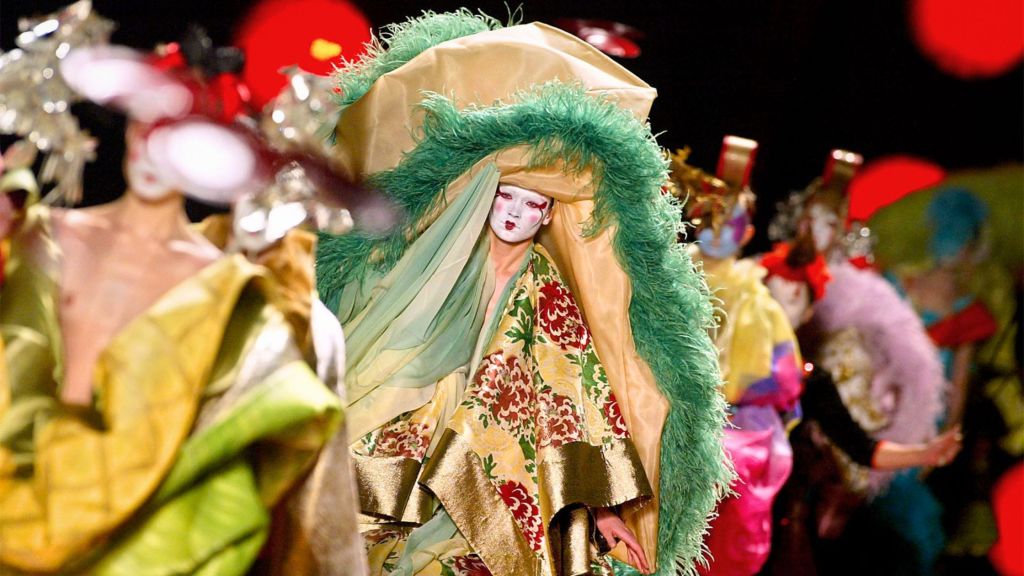
Twice a year, the world’s attention turns to Paris for one of fashion’s most extravagant rituals: haute couture week. Sequined gowns that took a thousand hours to embroider glide down runways, feathers that took an entire studio to source catch the light, and headlines breathlessly report price tags that run into six figures. Then the shows end, the images circulate on Instagram, and most of us go back to our lives without ever wondering who, exactly, is meant to buy any of it.
The truth is that haute couture was never designed for mass consumption, or even for the merely wealthy. It occupies a strange, almost anachronistic corner of the fashion industry — part art form, part marketing exercise, part genuine commercial enterprise for a vanishingly small number of people. Understanding who can actually buy it means understanding what haute couture is, legally and practically, and why it has survived in an age of fast fashion and instant gratification.
The Legal Definition Nobody Talks About
“Haute couture” isn’t just a fancy way of saying “expensive clothes.” It’s a legally protected term in France, regulated by the Chambre Syndicale de la Haute Couture, a branch of the Fédération de la Haute Couture et de la Mode. To call a collection haute couture, a fashion house must meet strict criteria: it must design made-to-order pieces for private clients, with one or more fittings; it must have a workshop (atelier) in Paris employing a minimum number of full-time staff; and it must present a collection of at least a set number of original designs to the press twice a year, in both day and evening wear.
This means the label isn’t up for grabs. Brands like Chanel, Dior, Schiaparelli, and Jean Paul Gaultier (now under new creative direction) hold official couture status, alongside a handful of guest and correspondent members. Even Valentino, though it has occasionally scaled back its couture calendar, has to earn and maintain that classification. A brand cannot simply put “couture” on a label and charge more; the term is protected the way “Champagne” is protected for sparkling wine from a specific French region.
The Price of Entry
So what does it actually cost to own a piece of haute couture? The numbers are almost abstract. A relatively simple daytime look might start around $50,000. An elaborately embroidered evening gown can run past $500,000. Some of the most extravagant showpieces — the kind built more for spectacle than sale — are never priced publicly at all, because they were never meant to be sold; they exist to demonstrate the maison’s technical mastery and to generate the images that sell everything else the brand makes, from lipstick to handbags.
But price alone doesn’t guarantee access. This is the detail that surprises most people: you cannot simply walk into a couture house with a black card and buy a gown off a hanger, because there is no hanger. Everything is made to order, for a specific body, over a period that typically spans weeks to months and involves multiple fittings, often requiring the client to travel to Paris in person.
The Real Gatekeeper: Relationships, Not Just Wealth
This is where haute couture diverges most sharply from luxury ready-to-wear. Buying a couture piece isn’t a transaction; it’s closer to being accepted into a private club. Fashion houses maintain lists of clients, and new clients are typically introduced through existing relationships — a stylist, a longtime client, a brand’s own client-relations team who has been cultivating the person for years. It’s not unheard of for a house to simply decline to make something for someone whose image doesn’t align with the brand, even if the money is there.
Because of this, the actual client base for haute couture is astonishingly small. Estimates over the years have put the number of women who buy couture regularly worldwide somewhere between a few hundred and two thousand, depending on how loosely you define “buys couture.” This is not a typo. In a world of eight billion people, the entire addressable market for the highest tier of fashion could fit inside a large theater.
Who are they? Historically, the clientele has included European aristocracy and old-money heiresses, but the center of gravity has shifted considerably over the past few decades. Wealth from the Middle East, particularly the Gulf states, now represents a significant share of couture spending, alongside collectors from East and Southeast Asia, Russia (with fluctuations tied to sanctions and geopolitics), and Latin America. Celebrities and their stylists have also become important, though most red-carpet couture gowns are loaned rather than purchased outright, worn for a single appearance and then returned to the archive.
So Why Does It Exist at All?
If almost nobody can buy it, why do fashion houses keep making it? The honest answer is that haute couture rarely turns a profit on its own, and everyone in the industry knows it. What it does instead is far more valuable to a brand’s bottom line: it functions as a laboratory and a billboard simultaneously.
The techniques developed for a couture gown — a particular draping method, an experimental fabric treatment, an embroidery technique — often filter down into ready-to-wear collections, accessories, and even the perfume bottles sold at airport duty-free shops. The imagery generated by couture week, meanwhile, is worth more in brand equity than the gowns themselves could ever be worth in direct sales. A photograph of a couture look circulating across fashion media reinforces the idea that the house is capable of extraordinary craftsmanship, which in turn justifies the price of a $6,000 handbag that has nothing to do with couture at all. In this sense, the couture client and the handbag client are both, in a roundabout way, paying for the same fantasy — one just gets to wear it.
A Shrinking, Strange, Enduring World
The number of true haute couture houses has actually declined over the past century, from dozens in the mid-20th century to a small handful officially recognized today. Rising labor costs, the sheer difficulty of finding artisans trained in increasingly rare handcraft techniques, and the shrinking pool of clients willing to spend at that level have all made the business harder to sustain, not easier.
And yet it persists, propped up by a combination of institutional prestige, brand marketing logic, and a very small number of very wealthy, very loyal clients who see couture not as clothing but as a form of patronage — supporting a centuries-old craft tradition much the way one might fund an opera house or an art museum.
So who can actually buy haute couture? Technically, anyone with the money and the right introduction. Practically, it’s a club so small and so quietly gatekept that most of the people funding its survival will never be photographed, tagged, or even publicly named. The runway show is for everyone. The clothes themselves are for almost no one at all.

