
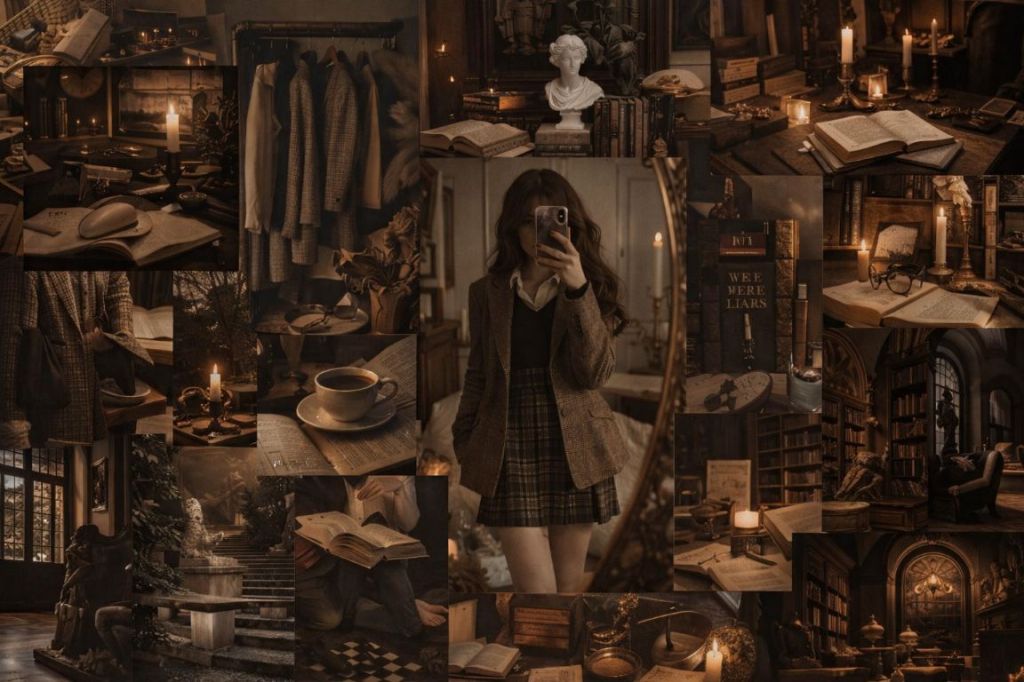
The dark academia aesthetic has built a strong presence over the past few years, but it has managed to stay relevant because it offers more than just a visual style. It creates a mood. One that feels introspective, slightly nostalgic, and rooted in a love for knowledge, literature, and quiet spaces.
At its core, dark academia is about atmosphere. It leans into muted tones, classic silhouettes, and a sense of depth that feels almost cinematic. It is not loud or attention-seeking, but it holds a certain intensity that makes it stand out.
Where it comes from
Dark academia draws heavily from traditional academic settings, particularly old universities and libraries. The visual references are clear. Think stone buildings, wooden desks, stacks of books, and dimly lit reading rooms.
Literature plays a major role in shaping the aesthetic. Novels like The Secret History are often associated with it, as they capture the intellectual and slightly mysterious tone that defines the look.
There are also influences from classic films and European academic culture, where fashion often leans towards timeless, understated pieces.
Rather than being tied to one specific era, dark academia blends elements from different time periods to create something that feels both old and current.
The color palette sets the mood
The color palette is one of the most recognisable aspects of dark academia.
It is built around deep, muted tones. Browns, charcoal, black, forest green, and burgundy are common. These colors create a sense of warmth while still feeling restrained.
There is very little use of bright or saturated shades. The focus is on colors that feel grounded and slightly aged.
Layering similar tones within one outfit is common. This creates depth without disrupting the overall mood.
The palette plays a big role in establishing the aesthetic’s quiet intensity.
The silhouette is classic and structured
Dark academia relies on timeless silhouettes that feel grounded and practical.
Tailored trousers, long coats, blazers, and knitwear are central pieces. These items are not overly fitted or exaggerated. Instead, they follow a natural structure that feels comfortable and refined.
Shirts, especially button-downs, are often layered under sweaters or vests. This layering adds both visual interest and a sense of depth.
Skirts, when included, are usually midi or longer, often in heavier fabrics like wool or tweed.
The overall silhouette is modest but intentional. It focuses on proportion and layering rather than statement shapes.
Fabric and texture add depth
Texture is essential in bringing the dark academia aesthetic to life.
Materials like wool, tweed, corduroy, and knit fabrics are commonly used. These fabrics not only align with the color palette but also add a tactile quality to the outfit.
Layering different textures within the same look creates a sense of richness. A wool coat over a knit sweater paired with tailored trousers, for example, feels complete without needing additional elements.
There is also a slight emphasis on pieces that look worn or lived-in. This adds to the nostalgic feel of the aesthetic.
Accessories are subtle but meaningful
Accessories in dark academia are minimal and functional.
Leather bags, simple watches, and understated jewelry are common choices. These pieces complement the outfit without drawing too much attention.
Scarves are often included, both for practicality and style. They add another layer and enhance the overall look.
Footwear usually consists of loafers, oxfords, or boots. These styles are classic and align with the academic influence of the aesthetic.
The focus is on pieces that feel timeless rather than trendy.
Hair and grooming reflect the mood
Hair and grooming are kept natural and understated.
Hairstyles are usually simple, whether it is loose waves, a low bun, or neatly combed hair. The goal is to look composed without appearing overly styled.
Makeup, if worn, is minimal. It often includes neutral tones that enhance natural features rather than transform them.
This approach keeps the focus on the overall aesthetic rather than individual elements.
More than just a visual style
What sets dark academia apart from many other aesthetics is its connection to a lifestyle.
It is often associated with reading, writing, studying, and engaging with art and philosophy. While these elements are not required, they contribute to the overall feeling of the aesthetic.
For many, it represents a slower, more thoughtful way of living. It values depth over speed and reflection over constant activity.
This connection to a mindset is what gives the aesthetic its lasting appeal.
The role of nostalgia
Nostalgia plays a significant role in dark academia.
The aesthetic often romanticises older academic environments and traditions. It creates an idealised version of intellectual life that feels both comforting and aspirational.
This nostalgia is not about accuracy. It is about capturing a feeling. One that is quiet, focused, and slightly removed from the present.
At the same time, the aesthetic adapts these ideas to fit modern life. It allows people to engage with this mood without fully stepping away from contemporary reality.
Why it resonates now
The popularity of dark academia can be linked to a broader desire for meaning and depth.
In a fast-paced, digital environment, there is a growing interest in slower, more intentional ways of living. The aesthetic reflects this shift.
Its emphasis on classic clothing also aligns with a move towards more sustainable fashion choices. Investing in timeless pieces rather than constantly following trends feels more practical and considered.
Additionally, the aesthetic offers a sense of identity that feels grounded. It provides a clear visual and emotional direction in a space where trends can often feel overwhelming.
How to approach the aesthetic
Adopting the dark academia aesthetic can start with a few key pieces.
A well-fitted blazer, a pair of tailored trousers, and a knit sweater are strong foundations. These items can be layered and styled in different ways.
Sticking to a muted color palette helps maintain consistency. It also makes it easier to combine different pieces.
Layering is important, but it should feel natural. The goal is to add depth without making the outfit feel heavy or complicated.
Choosing quality fabrics can also make a difference. Materials like wool or cotton tend to align better with the aesthetic.
Most importantly, the look should feel comfortable and authentic. It works best when it reflects a genuine sense of style rather than a strict set of rules.
Aesthetic or identity
There is often a question of whether dark academia is just a trend or something more lasting.
While it has gained popularity through social media, its foundation in classic fashion and intellectual culture gives it a level of longevity.
It is not dependent on seasonal trends or fast-changing styles. Instead, it builds on ideas that have been around for decades.
This makes it more adaptable and sustainable over time.
Closing thoughts
The dark academia aesthetic is defined by its balance of simplicity and depth.
It combines classic clothing with a strong sense of mood and atmosphere. It is quiet but impactful, understated but intentional.
Rather than focusing on bold statements, it builds its identity through subtle details and thoughtful choices.
In a fashion landscape that often prioritises speed and visibility, dark academia offers an alternative. It slows things down and places value on reflection, consistency, and quiet confidence.
It is not just about how you dress. It is about how you move through the world, with a sense of purpose and awareness.
 Ayerhs Magazine