
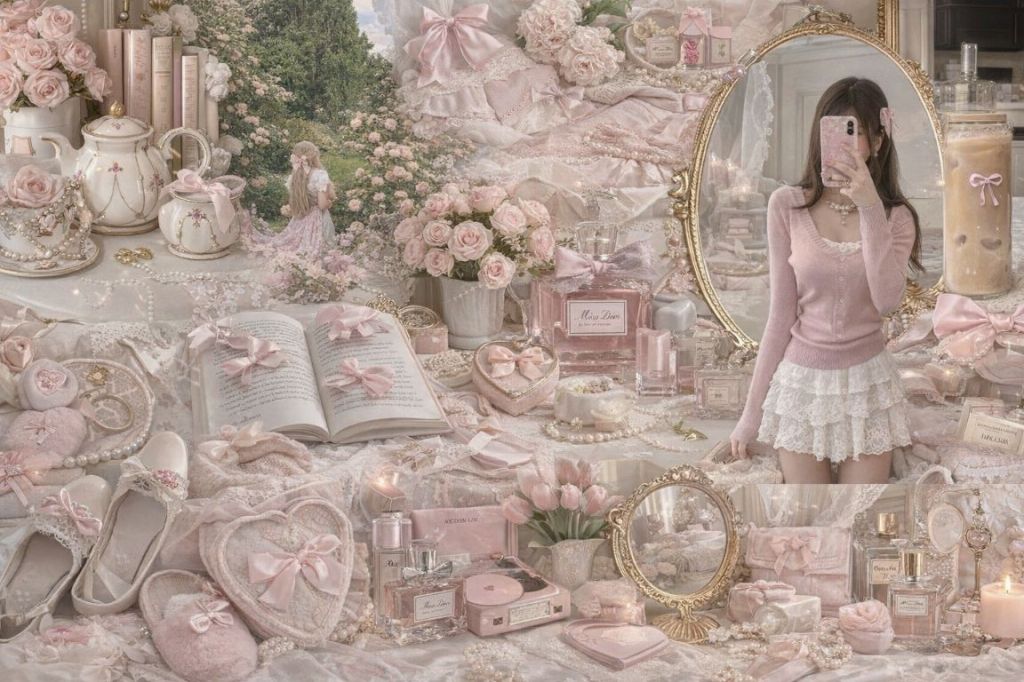
The coquette aesthetic has become one of the most recognisable soft fashion movements right now. It is delicate, feminine, and slightly nostalgic, but it carries a level of intention that keeps it from feeling overly sweet.
At first glance, it may seem like it is only about bows, lace, and pastel tones. But the appeal of coquette lies in how these elements are styled. It is not just softness for the sake of it. It is softness that feels controlled and thoughtfully put together.
This aesthetic leans into romance, but it does so with awareness. It knows exactly what it is doing.
Where it comes from
The coquette aesthetic pulls from a mix of historical and cultural references. There are clear influences from vintage lingerie, ballet styling, and romantic fashion from earlier eras.
It also draws from modern media and internet culture. Films like Marie Antoinette have shaped its visual identity, especially with their soft color palettes and detailed costume design.
At the same time, the aesthetic has grown through social platforms, where it has been refined into a distinct style language. It blends old-world femininity with a modern sense of self-awareness.
The color palette is light and expressive
Color plays a central role in defining the coquette aesthetic.
Soft shades dominate. Baby pink, ivory, cream, blush, and pastel tones create a light and airy feel. These colors are often layered together, which adds depth while keeping the overall look gentle.
White is especially important. It acts as a base that enhances the softness of other shades.
Occasionally, darker accents like black or deep red are introduced. These contrasts prevent the palette from feeling too uniform and add a slight edge.
The colors are romantic, but they are also carefully balanced.
The silhouette is delicate and fluid
The silhouette in coquette styling focuses on softness and movement.
Dresses are often fitted at the top and flow outward, creating a gentle shape. Skirts tend to be light and slightly voluminous, adding to the overall softness.
Tops may include details like lace trims, thin straps, or subtle ruching. These elements create visual interest without feeling heavy.
There is also a strong influence from lingerie-inspired pieces. Slip dresses, camisoles, and soft fabrics contribute to the aesthetic’s intimate feel.
The silhouette is not about structure. It is about ease and fluidity.
Details define the look
Details are what truly bring the coquette aesthetic together.
Bows are a key element. They appear in clothing, accessories, and even hairstyles. They are not oversized or dramatic, but placed in a way that feels intentional.
Lace, ribbons, and embroidery add texture and depth. These elements create a sense of craftsmanship and delicacy.
Buttons, trims, and small embellishments are also common. They may seem minor, but they contribute to the overall softness of the look.
Every detail feels considered, even when the outfit appears effortless.
Accessories complete the aesthetic
Accessories in the coquette aesthetic are soft and feminine.
Hair accessories are especially important. Ribbons, clips, and headbands are often used to enhance the overall look.
Jewelry tends to be delicate. Thin chains, small pendants, and subtle earrings are preferred over bold statement pieces.
Bags are usually small and understated, often in light colors or soft materials.
Shoes include ballet flats, Mary Janes, or low heels. These styles align with the gentle, romantic tone of the aesthetic.
Nothing feels heavy or overpowering. Everything supports the softness of the look.
Hair and makeup enhance the softness
Hair and makeup follow the same principles as the clothing.
Hair is often styled in soft waves, loose braids, or simple updos. The goal is to create a natural, slightly undone appearance that still feels polished.
Makeup focuses on a fresh, glowing base. Blush plays a key role, often placed higher on the cheeks to create a soft, flushed look.
Lips are usually kept in natural or pink tones, while eyes are defined in a subtle way.
The overall effect is light and romantic, without appearing overly styled.
Beyond aesthetics
While the coquette aesthetic is visually soft, it is not without depth.
There is a level of awareness in how it presents femininity. It plays with traditional ideas of softness and romance but does so in a way that feels intentional rather than passive.
For some, it is about reclaiming softness as a form of expression. For others, it is simply about enjoying a more delicate approach to dressing.
This flexibility is part of what makes the aesthetic appealing.
The role of nostalgia
Nostalgia is a strong element within the coquette aesthetic.
It references older styles and romantic imagery, creating a sense of familiarity. At the same time, it updates these ideas to fit modern tastes.
This combination of past and present gives the aesthetic its unique character. It feels timeless, but not outdated.
The nostalgic elements are softened and refined, making them easier to incorporate into everyday wear.
Why it resonates now
The popularity of the coquette aesthetic reflects a shift towards more expressive and personal fashion choices.
After periods where minimalism and neutral tones dominated, there is a renewed interest in detail and softness.
The coquette aesthetic offers a clear contrast. It is gentle, decorative, and emotionally expressive.
It also allows for individuality. The level of detail and variation within the aesthetic means it can be adapted in many ways.
This makes it accessible while still feeling distinct.
How to approach the aesthetic
Adopting the coquette aesthetic can start with small elements.
Incorporating a ribbon in the hair, choosing a lace-trimmed top, or wearing a soft pastel shade can introduce the look gradually.
For a more complete approach, focus on layering soft textures and maintaining a consistent color palette.
Balancing details is important. While the aesthetic includes many decorative elements, it works best when they are not overwhelming.
The goal is to create a cohesive look that feels natural.
A balance of softness and intention
One of the defining features of the coquette aesthetic is its balance.
It combines softness with structure, delicacy with control. It appears effortless, but it is carefully styled.
This balance is what prevents it from feeling overly sweet or repetitive.
It allows the aesthetic to feel modern, even as it draws from historical influences.
Closing thoughts
The coquette aesthetic is rooted in softness, but it is shaped by intention.
It uses delicate details, light colors, and fluid silhouettes to create a look that feels romantic and thoughtful.
At the same time, it reflects a broader shift towards more expressive and personal fashion.
It shows that softness can be strong, and that detail can be powerful when used with care.
In the end, the coquette aesthetic is not just about how something looks. It is about how it feels to wear it.
 Ayerhs Magazine