
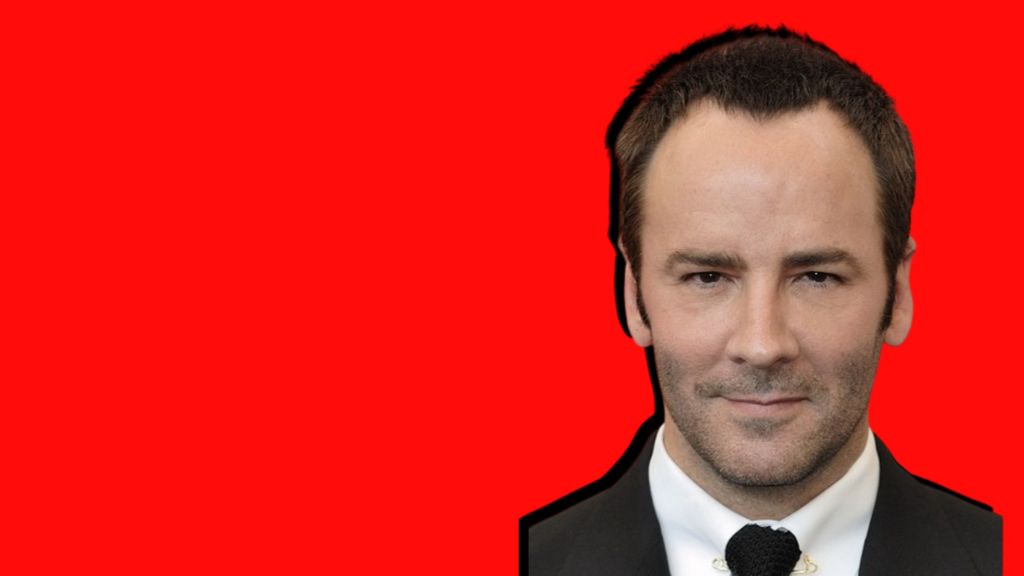
A — Austin
Tom Ford was born in Austin, Texas, in 1961. Though he later moved to Santa Fe, the duality of American landscapes shaped his early visual language, minimal yet sensual, structured yet indulgent.
B — Branding
Ford redefined what modern luxury branding could look like in the 1990s. At Gucci, he turned a near-bankrupt label into a cultural force by aligning product, image, and desire into one cohesive, highly controlled identity.
C — Cinema
Beyond fashion, Ford established himself as a serious filmmaker. His films A Single Man and Nocturnal Animals reflect his aesthetic precision, focusing on emotional restraint, visual composition, and quiet intensity.
D — Desire
Few designers have explored desire as explicitly. Ford’s work often revolves around power, sexuality, and control, pushing fashion into territory that feels provocative but calculated.
E — Eroticism
From Gucci’s infamous campaigns to his own label’s visuals, Ford has consistently blurred the line between luxury and erotic imagery, making sensuality a core part of his design language.
F — Fashion Authority
By the early 2000s, Ford wasn’t just a designer, he was the voice of fashion’s direction. His opinions on taste, elegance, and excess shaped industry standards.
G — Gucci
Ford joined Gucci in 1990 and became Creative Director in 1994. He transformed it with sleek tailoring, velvet suits, and bold sexuality, driving its valuation from near collapse to billions.
H — Hollywood
Ford’s relationship with Hollywood is both aesthetic and strategic. His designs have dressed major actors, while his films position him within a broader cultural conversation beyond fashion.
I — Image Control
Ford is known for obsessive control over visual output. Campaigns, store layouts, casting, even lighting are meticulously directed to maintain a singular, polished narrative.
J — Jet-Set Glamour
His work often references a hyper-curated, international lifestyle. Think private jets, polished surfaces, and a sense of untouchable luxury that feels aspirational but distant.
K — Karl Lagerfeld Exit
Ford succeeded the era following Karl Lagerfeld’s involvement at Chanel-adjacent luxury circuits, but more directly, he replaced a stagnant Gucci identity with something sharply modern and sexual.
L — Luxury Redefined
Ford shifted luxury away from heritage storytelling into something more immediate and visual. It became about impact, not just history.
M — Menswear
His tailoring is one of his strongest contributions. Sharp shoulders, precise cuts, and an emphasis on masculinity that feels deliberate rather than traditional.
N — Nocturnal Aesthetic
Much of Ford’s visual world exists at night. Dark palettes, reflective surfaces, and moody lighting define his campaigns and runway shows.
O — Opulence
Even when minimal, Ford’s work carries a sense of richness. Fabrics, finishes, and silhouettes are designed to feel expensive without appearing overly decorative.
P — Provocation
From controversial ad campaigns to explicit imagery, Ford understands how to use shock strategically. It is never random, always tied to brand positioning.
Q — Quiet Discipline
Despite the bold output, Ford is known for discipline behind the scenes. His work ethic and structured approach contrast with the excess his designs often suggest.
R — Ready-to-Wear Impact
Ford elevated ready-to-wear into something that felt as desirable as couture. His collections blurred the lines between accessibility and exclusivity.
S — Sexuality
Sex is not a subtext in Ford’s work, it is often the main narrative. He uses it to challenge, attract, and define the mood of a collection.
T — Tom Ford (Brand)
Launched in 2005, his eponymous label spans fashion, beauty, and eyewear. It reflects a more controlled and mature version of his earlier work at Gucci.
U — Uniform Dressing
Ford often returns to a personal uniform. Crisp shirts, tailored suits, tinted glasses. This consistency reinforces his brand identity.
V — Velvet
A recurring material in his collections, velvet embodies his approach to texture. It feels rich, tactile, and slightly indulgent.
W — Women’s Power Dressing
At Gucci and later his own label, Ford reimagined women’s tailoring. It was sharp, confident, and unapologetically commanding.
X — X-Factor
Ford’s success lies in his ability to create that intangible pull. His designs are not just seen, they are felt, often immediately.
Y — Yves Saint Laurent Era
Ford also served as Creative Director of Yves Saint Laurent during the Gucci Group era, though the tenure was more complex and less celebrated than his Gucci work.
Z — Zealous Perfectionism
His attention to detail borders on extreme. Every element, from stitching to campaign tone, is refined until it aligns with his exact vision.
 Ayerhs Magazine