
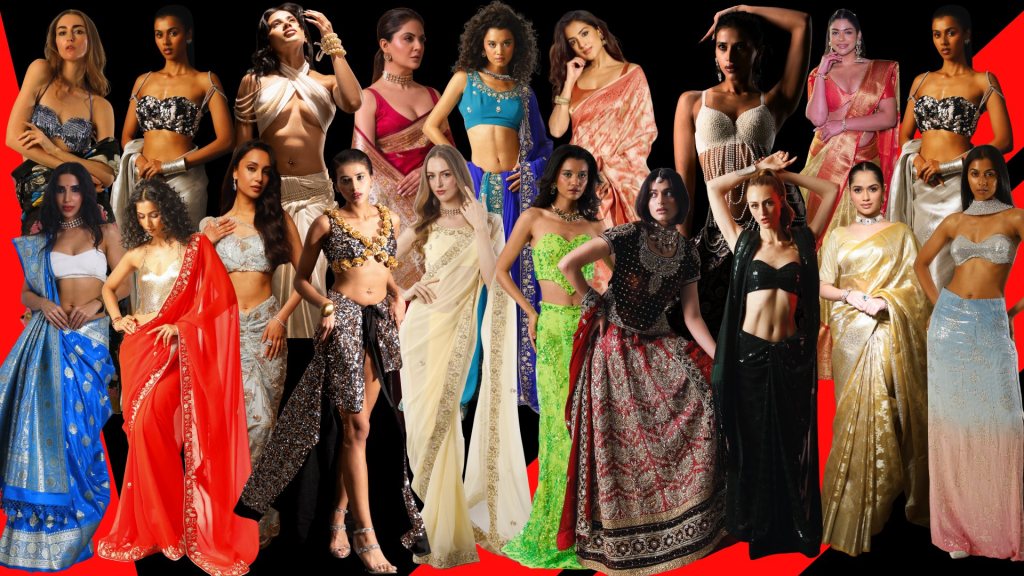
What makes an Indian fashion brand truly relevant today is not just how beautiful the clothes are, but how many women can actually see themselves in them. That’s where Label Nonita feels intriguing. It doesn’t lock itself into one version of the Indian woman. Instead, it opens up the idea of who she can be.
At a time when most Indian labels tend to sit firmly in one lane, bridal, festive, minimal, or trend-led, Nonita is building something more expansive. It feels less like a single aesthetic and more like a universe. One where an 18-year-old experimenting with fashion, a bride curating her trousseau, and a woman looking for something timeless and rooted can all find a place.
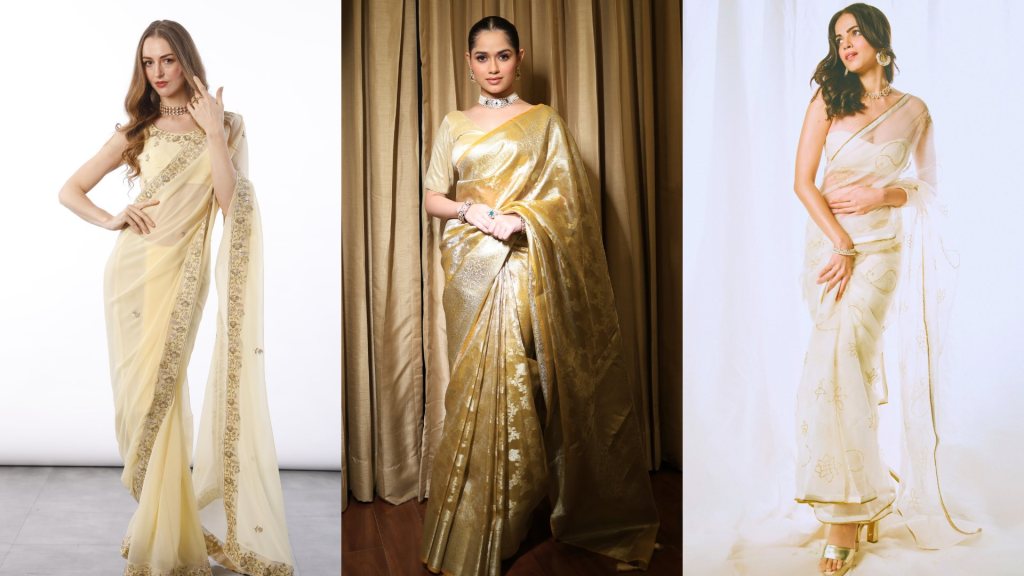
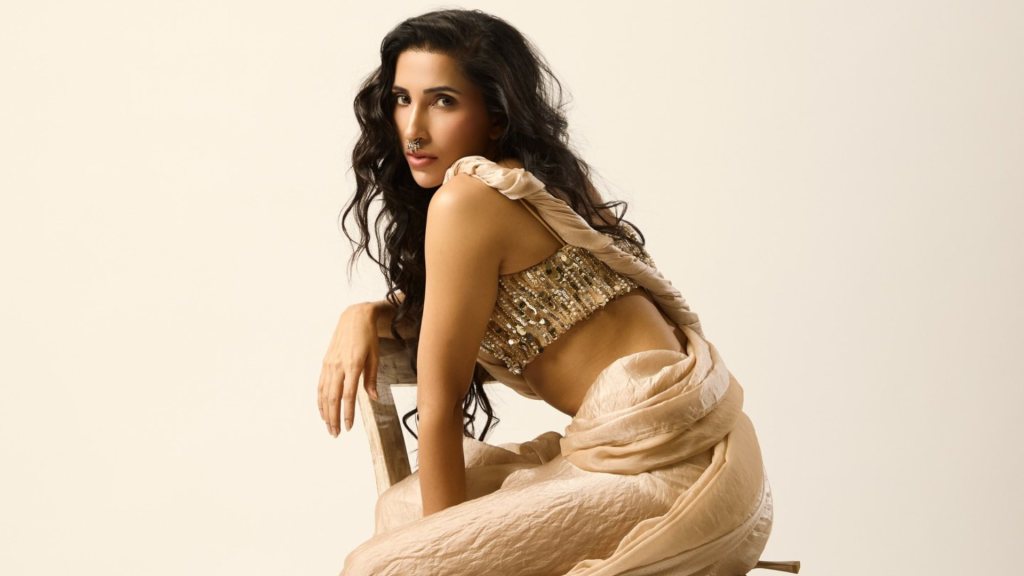
The foundation of the brand is clear. It is rooted in heritage, but not stuck in it. The design language draws heavily from traditional Indian textiles, especially Banarasi silks, and reworks them into silhouettes that feel current without trying too hard. There’s a strong sense of structure across the pieces, but it’s balanced with softness. Drapes are sculpted, they are architectural, and yet nothing feels rigid or costume-like.
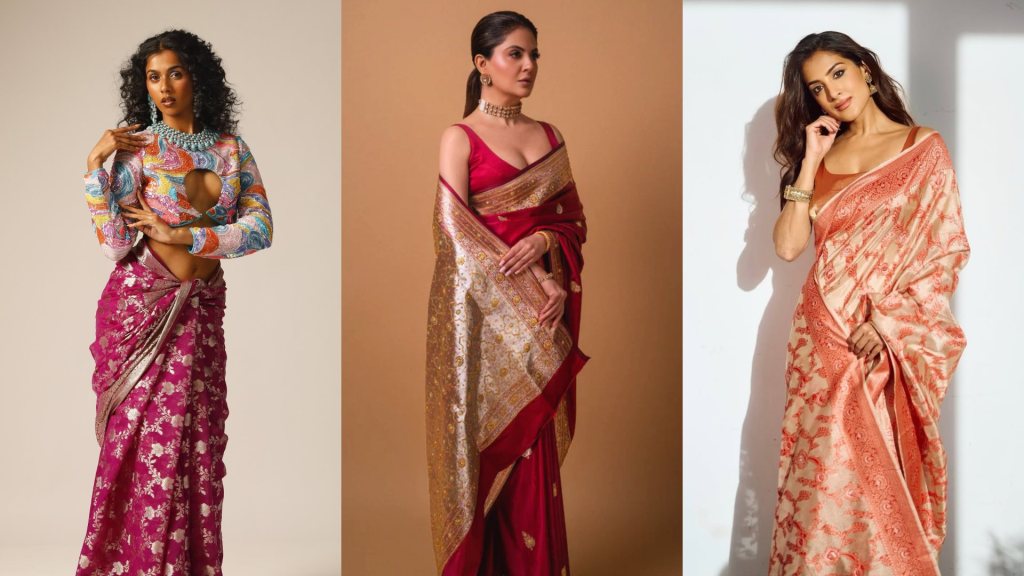
The saree is at the centre of it all. But instead of treating it as something ceremonial or occasional, Nonita approaches it as something that can evolve with the wearer. The idea seems to be less about reinventing the saree and more about restoring its place in everyday relevance. That intention comes through in the way the pieces are styled. You see traditional weaves paired with sharper blouses, fluid pallus that feel lighter, and silhouettes that move easily.
What stands out is the restraint. In a market that often equates luxury with excess, heavy embroidery, loud surfaces, obvious opulence, Nonita takes a different route. The focus is on fabric, proportion, and finish. Zari work is present, but controlled. Embroidery adds depth rather than distraction. Even the colour palette, often built around rich jewel tones, feels considered instead of overwhelming.
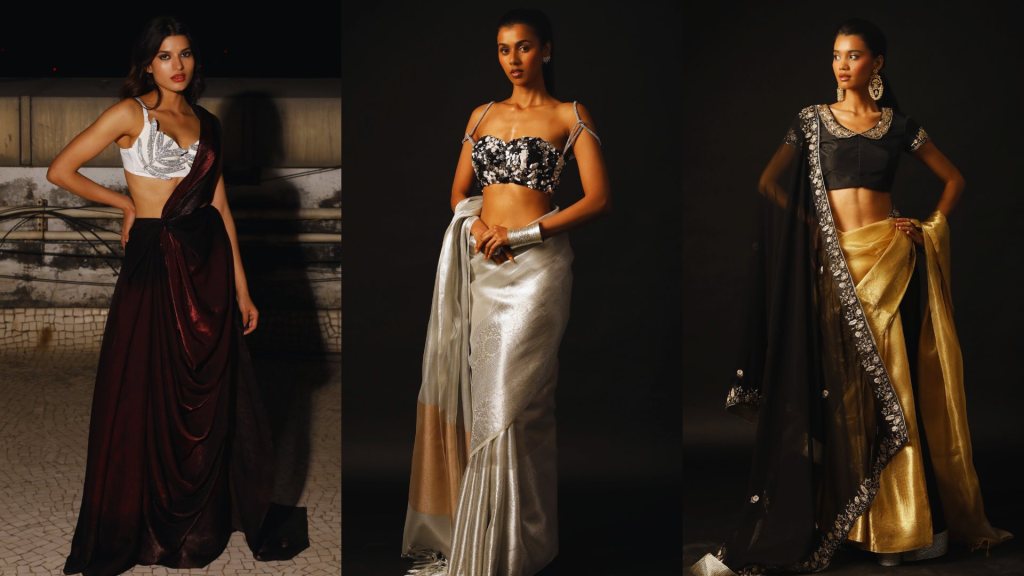
This ties back to the brand’s core idea that luxury is not about how much you add, but how intentionally you design. That thinking shows up across the collection. Nothing feels unnecessary. Every detail seems to have a reason to exist.
At the same time, the brand doesn’t feel exclusive in a limiting way. It’s positioned within the premium to couture space, but the emotional entry point feels broader. You can imagine a younger audience being drawn to the Indo-western pieces or lighter drapes, especially those who are navigating Indian wear through a more experimental lens. There’s a certain ease to these looks that aligns with how Gen Z is approaching occasion wear, less obligation, more personal expression.
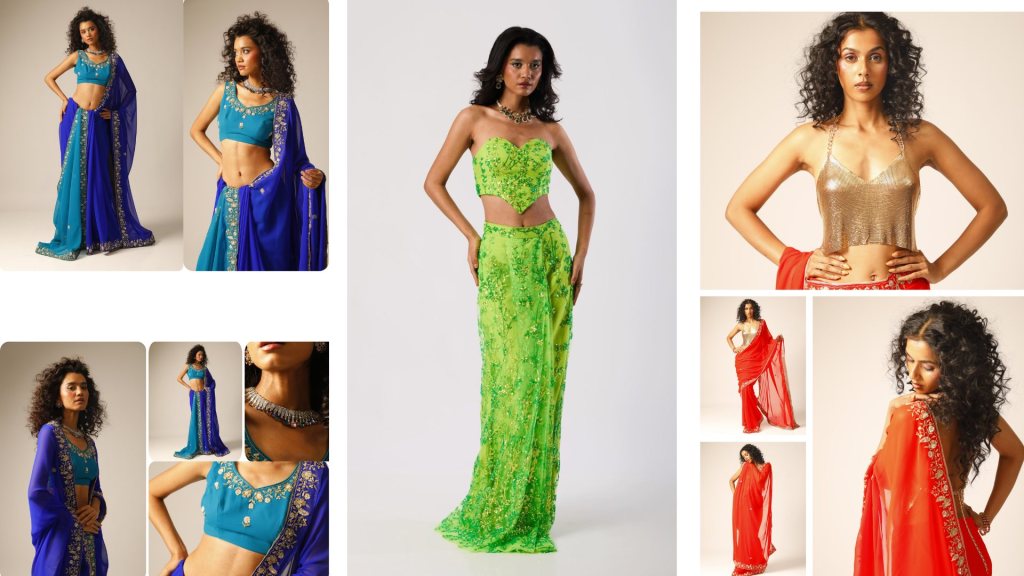
Then there’s the bridal and occasion side of things. Here, the craftsmanship really comes through. The handwoven silks, the finish of the garments, the attention to detail all point towards pieces that are meant to last. Not just physically, but emotionally. These are clothes you would hold onto, revisit, maybe even pass down.
And for women who are further along in their personal style journey, the appeal shifts again. The more classic sarees, the quieter pieces, the ones that don’t try to stand out but end up doing so anyway, feel particularly strong. There’s a sense of familiarity in them, but also a refinement that makes them feel current.
What connects all of this is a very clear understanding of the wearer. The Nonita woman is not defined by age as much as by mindset. She values craftsmanship. She is not dressing to perform for others. She is choosing pieces that feel aligned with her. That idea allows the brand to move across different categories without losing its identity.
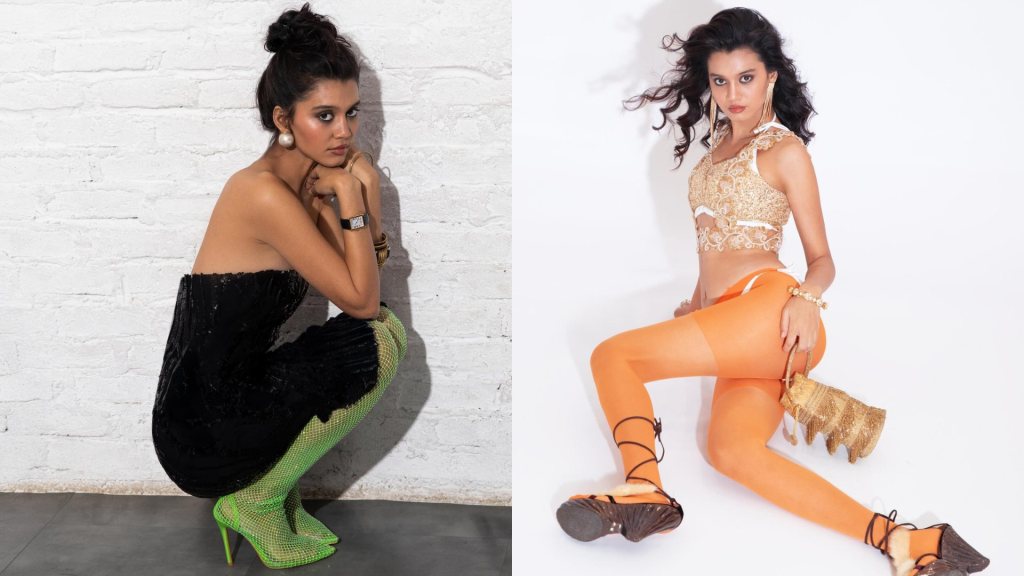
There’s also an interesting emotional layer to the brand. It draws from personal history, from lineage, from memories connected to how Indian women have worn sarees across generations. But instead of presenting that nostalgia in a heavy or overly romantic way, it keeps things light and wearable. The past is present, but it doesn’t overpower the now.
In terms of textures, the collection plays within a familiar but rich space. Silks, organzas, and tissues create a base that feels luxurious but not intimidating. The fabrics hold structure where needed and fall away where they should. This balance is important because it allows the garments to feel both elevated and easy.
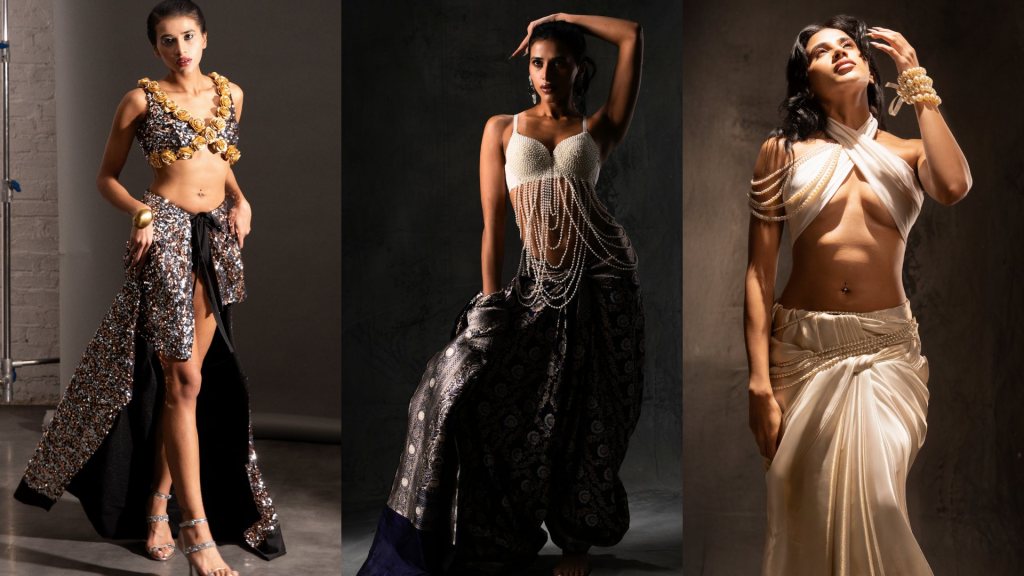
Styling also plays a key role in shaping the overall mood. It’s not overly styled or theatrical. The looks feel intentional but not overthought. There’s a quiet confidence in how everything is put together, which mirrors the kind of woman the brand is speaking to.
Founded by Sherina Kapany, a lot of this comes from her own perspective. It feels deeply personal but also very clear. There’s a sense that she is not designing for a trend cycle, but for a way of living. Her creative direction is shaped by both lineage and a global outlook, which shows in how the brand balances tradition with a more contemporary, wearable lens.
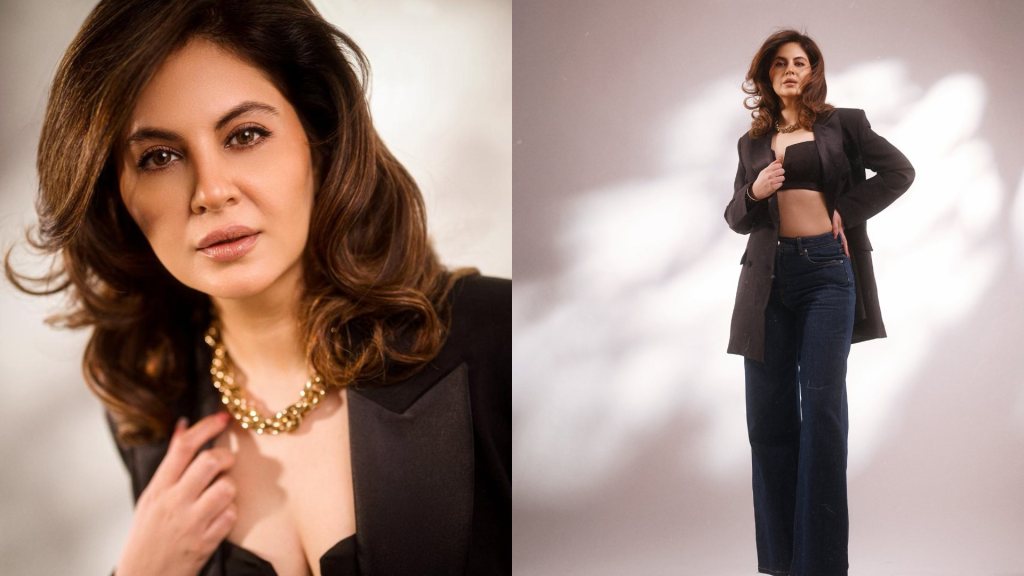
Overall, what Nonita is doing feels less about pushing products and more about building a pure desi core identity. One that can adapt, grow, and include. In a space where many brands become recognisable but also predictable, this approach is refreshing.
It’s not about being everything to everyone in a vague way. It’s about understanding that Indian women today are not one thing. They move between identities, occasions, and moods. And their wardrobes need to reflect that. Nonita seems to get that.
 Ayerhs Magazine