
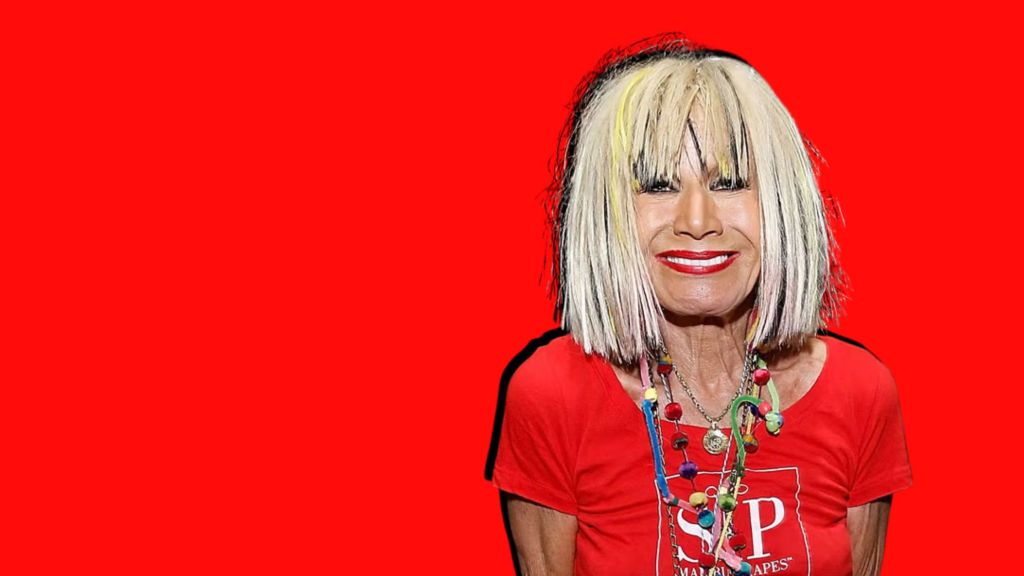
Betsey Johnson: Betsey Johnson: The Punk Princess Who Refused to Grow Up
Betsey Johnson built a fashion universe out of neon tulle, cartwheels, and chaos. At a time when American sportswear leaned practical and Paris couture leaned polished, she went in the opposite direction. She designed for girls who wanted to look loud, romantic, rebellious, and a little bit messy.
For more than five decades, she stayed recognizable in an industry obsessed with reinvention. Pink hair. Cartwheel at the end of every show. Body-con silhouettes covered in bows, hearts, and glitter.
But behind the sparkle was a serious career. Johnson survived bankruptcy, cultural shifts, and breast cancer. She navigated the fall of New York’s underground scene, the rise of mall culture, and the transformation of fashion into a global corporate machine.
This is the story of how she built a brand that felt like a party and endured like a business.
Early Life: From Dance Floors to Design Dreams
Growing Up in the Midwest
Betsey Johnson was born on August 10, 1942, in Wethersfield, Connecticut. She grew up largely in Terryville, a small town where fashion was not an obvious career path. Her mother encouraged her creative interests early on. Johnson loved dance and spent years studying ballet and modern dance.
Dance shaped her understanding of clothing. Movement mattered. Fabric needed to stretch, bounce, and respond to the body. That instinct later defined her body-conscious silhouettes and flirty skirts.
She also loved costumes. Recitals meant glitter, tutus, and stage presence. Theatricality entered her DNA long before she ever stepped into a design studio.
Discovering Fashion
As a teenager, Johnson devoured fashion magazines. She studied silhouettes and trends the way some kids studied sports stats.
She went on to attend Pratt Institute in Brooklyn before transferring to Syracuse University, where she graduated in 1964. By then, New York City was shifting culturally. The youthquake movement was taking shape. London was exploding with mod style.
Johnson was ready.
The 1960s: Youthquake and Underground Energy
Winning Mademoiselle and Entering the Industry
In 1964, Johnson won the guest editor contest at Mademoiselle magazine. The prize opened doors in Manhattan’s fashion world.
She soon began working at Paraphernalia, a boutique known for embracing youthful, experimental fashion. The shop was central to what journalist Diana Vreeland famously called the “Youthquake.” Young designers were no longer copying Paris. They were designing for their own generation.
Johnson’s early designs featured bold colors, graphic prints, and mod shapes. She wasn’t trying to dress society women. She was dressing girls who listened to rock music and went out at night.
The Edie Sedgwick Influence
The mid-1960s New York scene revolved around artists, musicians, and Warhol’s Factory. Johnson moved in those circles.
She dressed models and downtown personalities, including figures like Edie Sedgwick, whose gamine look influenced Johnson’s aesthetic. The short dresses, bare legs, and heavy eyeliner fit perfectly with Johnson’s emerging vision.
This was not couture. It was attitude.
Establishing a Name
By the late 1960s, Johnson was designing for Alley Cat, a label that fused rock culture with fashion. The brand thrived during the hippie and psychedelic era.
Her clothes reflected what young people actually wore to concerts and clubs. Fringe, suede, body-hugging silhouettes, and unconventional fabrics became part of her toolkit.
In 1971, she received the Coty Fashion Critics Award. She was only 29 years old.
The 1970s: Building a Brand and Facing Collapse
Launching Her Own Label
In 1978, Johnson officially launched her own label, Betsey Johnson. The timing was bold. The American fashion industry was consolidating. Designers were increasingly tied to investors and manufacturing partners.
Johnson leaned into individuality. She opened her first boutique in SoHo. The store felt less like a retail space and more like a pink fever dream.
She was never minimalist. Even in the 1970s, her aesthetic mixed punk references with girlish details. Think tight dresses with ruffles. Black lace with neon accents.
Punk Meets Playful
New York’s downtown scene was shifting again. Punk rock emerged as a raw counterculture movement. Johnson absorbed it without abandoning femininity.
Where others interpreted punk as stark and severe, Johnson filtered it through her own lens. She added bows. She added sparkle. She softened the aggression but kept the edge.
It was this ability to hybridize influences that kept her relevant.
Bankruptcy and Reinvention
Despite creative momentum, financial trouble hit hard. By the early 1980s, her company filed for bankruptcy.
The collapse was a wake-up call. Fashion is art, but it is also infrastructure. Production, distribution, retail partnerships, and capital matter.
Johnson regrouped. She partnered with new backers and rebuilt. The experience made her more pragmatic without changing her aesthetic core.
The 1980s: Neon, Excess, and Pop Culture Visibility
Owning the Decade
The 1980s were loud. Big hair, power dressing, consumer excess. Johnson fit the moment naturally.
Her designs amplified everything. Neon pinks, chartreuse, electric blue. Stretch fabrics that clung to the body. Puffed sleeves and mini skirts.
She leaned into the party-girl persona but maintained technical precision. Her dresses were engineered to move and fit tightly without restricting motion.
Expanding Retail
Throughout the 1980s, Johnson opened more boutiques. Each store was immersive. Pink walls, over-the-top décor, mannequins posed dramatically.
She understood branding before branding became corporate jargon. Walking into a Betsey Johnson store meant entering her universe.
The expansion positioned her label as both designer and lifestyle brand.
Celebrity and Cultural Crossover
Her pieces appeared on musicians, performers, and young Hollywood stars. While she was not a red-carpet traditionalist, her clothes resonated with performers who needed stage energy.
The fashion press sometimes treated her as eccentric. But eccentricity became her asset. In a market drifting toward luxury minimalism, she stayed unapologetically maximal.
The 1990s: Staying Relevant in a Minimalist Era
Against the Grain
The 1990s ushered in minimalism. Designers like Calvin Klein and Donna Karan promoted sleek, neutral palettes. Slip dresses and clean tailoring dominated runways.
Johnson did not pivot to beige. She doubled down on pink.
This resistance could have alienated buyers. Instead, it carved out a niche. For consumers tired of pared-down fashion, Johnson offered fantasy.
The Signature Cartwheel
During this period, her runway shows became known for one consistent moment. At the end of every presentation, Johnson performed a cartwheel, followed by a split.
It wasn’t just a gimmick. It communicated stamina, humor, and refusal to age quietly in an industry that sidelines women after a certain point.
By the 1990s, she was already a veteran. The cartwheel became symbolic of longevity.
Licensing and Accessories
Johnson expanded into accessories, shoes, and handbags. Her jewelry, often oversized and kitschy, brought her aesthetic to a lower price point.
This move widened her audience. Teenagers who could not afford a dress could buy a Betsey necklace.
Licensing strengthened revenue streams and increased global visibility.
The 2000s: Reality TV and Personal Challenges
A Recognizable Persona
By the early 2000s, Johnson herself became as recognizable as her designs. Pink hair became her signature. She leaned into a playful, hyper-feminine public image.
She also began appearing more frequently in media interviews and fashion retrospectives. Younger generations discovered her through pop culture references and magazine features.
Breast Cancer Diagnosis
In 1999, Johnson was diagnosed with breast cancer. She underwent treatment and went into remission.
She chose to speak publicly about her experience, incorporating breast cancer awareness into her shows.
The illness did not soften her aesthetic. If anything, it intensified her commitment to joy and spectacle. Survival added depth to the glitter.
Betseyville
In 2010, she starred in the reality TV series Betseyville. The show followed her personal and professional life, including her relationship with her daughter Lulu.
Reality television introduced her to a new audience. It also humanized her beyond the runway persona. Viewers saw the pressures of running a brand and maintaining relevance.
Financial Turbulence Again
The 2012 Bankruptcy
In 2012, her company filed for Chapter 11 bankruptcy protection. The economic downturn and retail shifts hit many independent brands. Johnson was not immune.
Over 60 stores closed. The industry landscape had changed dramatically with the rise of fast fashion and online shopping.
For many designers, this would have marked the end.
Acquisition and Continuation
The brand was acquired by Steve Madden Ltd.
This partnership allowed the Betsey Johnson name to continue through licensing and retail distribution. While she no longer owned the company outright, her aesthetic DNA remained central.
The transition reflected a broader trend in fashion. Designers increasingly operate within corporate structures to survive.
Later Years: Legacy in Motion
Cultural Reassessment
By the 2010s and 2020s, fashion entered a nostalgia cycle. Y2K aesthetics resurfaced. Playful, hyper-feminine styles regained popularity among Gen Z consumers.
Suddenly, Betsey Johnson did not feel retro. She felt prescient.
Platforms like TikTok embraced maximalism, camp, and individuality. Johnson’s decades of pink tulle looked current again.
Continued Appearances
Even into her seventies and eighties, Johnson continued to appear at fashion events. She never abandoned the cartwheel tradition.
Her longevity challenged fashion’s ageism. She remained physically active, energetic, and visible.
Few designers sustain both brand recognition and personal recognizability for that long.
Personal Life
Johnson was married multiple times and has one daughter, Lulu Johnson, who occasionally collaborated with her professionally.
Her personal life included both creative partnerships and turbulent periods. She navigated divorce, financial strain, and health scares publicly.
Unlike many designers who cultivate mystique, Johnson leaned into transparency. That openness became part of her cultural appeal.
Design Philosophy
Movement First
Her background in dance consistently influenced her silhouettes. Stretch fabrics, body-conscious cuts, and flirty hemlines allowed for freedom.
Even her most elaborate dresses rarely looked stiff. They invited motion.
Feminine but Not Fragile
Johnson’s work often centered on bows, lace, and pink. But the attitude was rarely passive. Her version of femininity was assertive, loud, and self-aware.
She merged punk aggression with girlish sweetness. The tension created visual energy.
Accessibility
Unlike designers who stayed exclusively in luxury spaces, Johnson embraced accessibility. Through licensing and mall distribution, she allowed a broader demographic to engage with her brand.
This democratization sometimes drew criticism from fashion purists. But it strengthened commercial longevity.
Industry Context and Influence
Johnson’s career spanned dramatic shifts in fashion.
She began in the boutique-driven youthquake of the 1960s. She survived the corporate expansions of the 1980s. She endured minimalism in the 1990s and fast fashion in the 2000s.
Her influence can be traced in designers who embrace camp and color. The unapologetic femininity seen in later labels owes something to Johnson’s refusal to tone herself down.
She proved that consistency can be a strategy. Reinvention is not the only path to relevance.
Glitter as Resistance
Betsey Johnson’s biography is not a straight line of uninterrupted success. It is cyclical. Rise, collapse, reinvention.
She navigated an industry that often discards women once they age out of trend cycles. She refused that script.
In a fashion system that frequently equates seriousness with minimalism, Johnson treated glitter as valid. She treated pink as powerful.
Her career demonstrates that staying true to an aesthetic can be radical. That playfulness can coexist with discipline. That spectacle can mask, but also reveal, resilience.
And every time she ran down a runway and flipped into a split, she made the message clear. Fashion is performance. Fashion is survival. Fashion, at its best, is fun.
 Ayerhs Magazine