
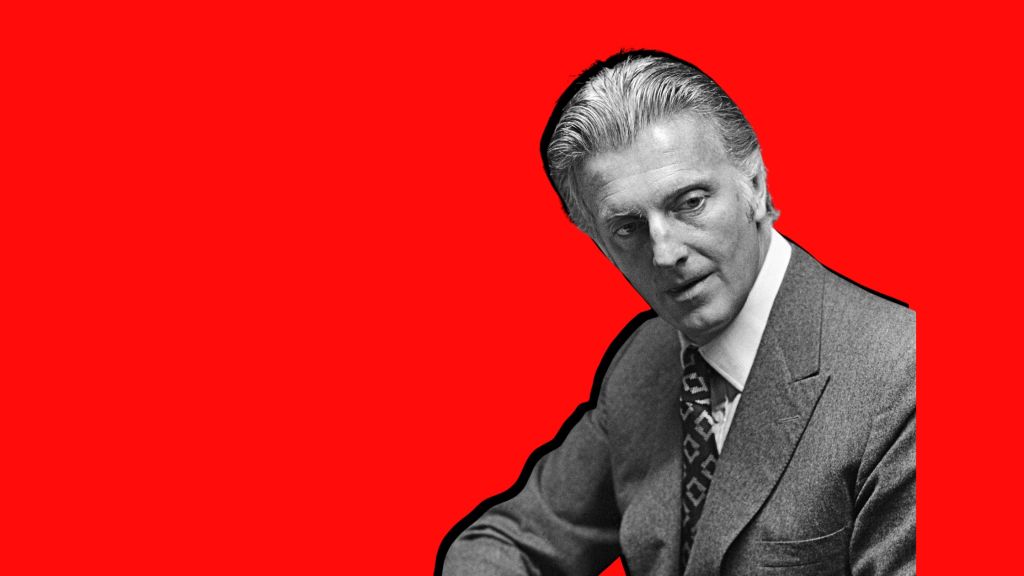
Hubert de Givenchy: The Couturier Who Defined Modern Grace
Early Life and Family Background
Hubert James Marcel Taffin de Givenchy was born on February 21, 1927, in Beauvais, a small city north of Paris. He was born into an aristocratic French family with deep regional roots. The Taffin de Givenchy name carried history and social standing, but by the time Hubert was born, the family’s financial position was no longer as secure as its title suggested.
His father, Lucien Taffin de Givenchy, died when Hubert was just two years old. He and his older brother, Jean-Claude, were raised by their mother, Béatrice, and their maternal grandmother. It was his grandmother who became one of the most influential figures in his early life. She owned a collection of fabrics, tapestries, and historical textiles, which she would show to her grandson with pride.
Those fabrics left a lasting impression. Hubert would later recall how the texture, weight, and craftsmanship fascinated him more than toys ever could. This early exposure to material culture shaped how he understood clothing. For him, fabric was not decoration. It was structure, movement, and identity.
As a child, he also spent time drawing. He was tall, shy, and observant. Rather than seeking attention, he preferred sketching dresses and imagining silhouettes. At the age of ten, a visit to the 1937 International Exposition in Paris changed everything. Seeing the work of leading couturiers displayed in the Pavilion of Elegance made fashion feel like a real career, not just a fantasy.
From that moment, he knew what he wanted.
Moving to Paris and Early Training
In 1945, at just seventeen, Hubert de Givenchy moved to Paris to study at the École des Beaux-Arts. It was the end of World War II, and Paris was slowly rebuilding its fashion industry. The great houses were reopening. Couture was reclaiming its status as the center of global style.
Givenchy did not waste time. He began working for the designer Jacques Fath, one of the rising stars of postwar fashion. Fath was known for glamour and modern silhouettes. Working in his studio exposed Givenchy to the fast pace of couture production and the demands of elite clients.
From Fath, Givenchy moved to the atelier of Robert Piguet. Piguet was refined, intellectual, and exacting. It was here that Givenchy learned restraint. Piguet believed elegance came from clarity of line and proportion. The lesson stayed with him.
He later worked for Lucien Lelong, whose house employed both Pierre Balmain and Christian Dior at different times. The collaborative energy of these ateliers gave Givenchy a broad education in construction, draping, and couture discipline.
The most formative apprenticeship, however, came under Elsa Schiaparelli. Known for her surrealist collaborations and bold aesthetic, Schiaparelli offered Givenchy a different creative environment. He became the artistic director of her boutique. From her, he learned how fashion could intersect with art and culture, how clothing could be both wearable and conceptual.
By the early 1950s, Givenchy had absorbed multiple philosophies of design. He was ready to define his own.
Founding the House of Givenchy
In 1952, at the age of twenty five, Hubert de Givenchy opened his own fashion house in Paris. It was a bold move. He was young and relatively unknown. But he had clarity about what he wanted to offer.
His first collection immediately stood out. Instead of stiff, heavily structured garments, he presented lightness. The silhouettes were fresh and youthful. One piece in particular captured attention: the “Bettina blouse,” named after model Bettina Graziani. Made of crisp white cotton with elaborate sleeves, it embodied relaxed sophistication.
This debut positioned Givenchy as part of a new generation. While Christian Dior’s New Look emphasized structured waists and voluminous skirts, Givenchy leaned into ease. He used fine separates that could be mixed and matched, an innovative concept in haute couture at the time.
His approach attracted younger clients who wanted refinement without rigidity. Within a year, the House of Givenchy became a recognized name in Paris.
Meeting Cristóbal Balenciaga
If there was one designer Givenchy admired above all others, it was Cristóbal Balenciaga. Balenciaga was already considered a master of couture, known for sculptural forms and architectural precision.
Givenchy saw him as a mentor from afar before they eventually met. When they did form a friendship, it became one of the most important relationships in his life. Balenciaga offered guidance, honesty, and technical insight. Their relationship was built on mutual respect rather than rivalry.
Balenciaga valued Givenchy’s discipline and seriousness. Givenchy admired Balenciaga’s independence and technical perfection. Over time, the two designers formed a close bond. Givenchy would later describe Balenciaga as his true teacher.
This mentorship reinforced Givenchy’s belief in purity of line. He became increasingly focused on silhouette and cut rather than embellishment.
Audrey Hepburn and a Defining Partnership
In 1953, Givenchy received a request from a young actress named Audrey Hepburn, who was preparing for her film Sabrina. Expecting Katharine Hepburn, he was initially surprised. Instead, he met Audrey, then relatively unknown.
The connection was immediate.
Although he had already completed his collection for the season, he allowed Hepburn to choose pieces from it for the film. The collaboration marked the beginning of a lifelong friendship and professional partnership.
For Sabrina, Givenchy designed elegant, modern garments that contrasted sharply with the film’s American wardrobe. The transformation scene, in which Hepburn appears in a black cocktail dress with bateau neckline, became iconic.
Their collaboration continued for decades. Givenchy dressed Hepburn both on and off screen, including in Breakfast at Tiffany’s. The simple black dress she wore in the opening scene became one of the most recognizable garments in film history.
What made their partnership work was alignment. Hepburn’s grace, minimalism, and quiet strength matched Givenchy’s aesthetic. He designed to complement her personality, not overpower it.
Through Hepburn, Givenchy’s work reached global audiences. Hollywood amplified his brand beyond couture salons.
Defining the Givenchy Silhouette
Throughout the 1950s and 1960s, Givenchy refined his visual language.
He favored clean lines, elongated shapes, and understated elegance. The sack dress, introduced in 1957, removed emphasis from the waist entirely. At a time when hourglass silhouettes dominated, this was radical.
He also developed the balloon coat, empire waistlines, and simple sheath dresses that skimmed the body. Rather than rely on corsetry, he focused on cut and proportion.
Givenchy believed that clothing should allow movement. He was tall himself, over six feet five inches, and he understood scale differently from many of his contemporaries. His garments often emphasized verticality.
Fabric selection remained central. He preferred luxurious yet structured materials that held shape without stiffness.
His work resonated with women seeking sophistication without excess.
Expansion into Ready to Wear and Fragrance
In 1954, Givenchy launched one of the first luxury ready to wear lines in Paris, called “Givenchy Université.” This move was forward thinking. Couture was still dominant, but he recognized the growing importance of accessible fashion.
By bridging couture and ready to wear, he expanded his clientele. The line maintained high standards while offering practical daywear.
In 1957, he introduced his first fragrance, L’Interdit, created for Audrey Hepburn. For years, it was exclusively hers. When it was finally released commercially, it became a success. The perfume extended the brand’s identity into beauty and lifestyle.
Throughout the 1960s and 1970s, the House of Givenchy grew internationally. Boutiques opened in New York and other major cities. The brand became associated with refined Parisian elegance.
The Changing Fashion Landscape
The 1970s and 1980s brought dramatic shifts to fashion. Youth culture, street style, and new economic realities challenged the dominance of traditional couture houses.
Givenchy adapted cautiously. He maintained couture while expanding ready to wear and menswear. His menswear line, launched in 1969, reflected the same clean tailoring that defined his womenswear.
In 1988, the fashion conglomerate LVMH acquired the House of Givenchy. This marked a turning point. Luxury brands were becoming corporate entities rather than family owned houses.
Givenchy remained at the helm for several years after the acquisition, but the industry was changing fast. Branding, marketing, and global licensing became increasingly central.
Retirement and Successors
Hubert de Givenchy retired in 1995 after more than four decades in fashion. His departure closed a chapter defined by personal relationships and couture craftsmanship.
After his retirement, the house appointed a series of high profile creative directors, including John Galliano and Alexander McQueen. Each brought a different energy, often more theatrical than Givenchy’s restrained style.
The contrast highlighted how distinct Givenchy’s own aesthetic had been. His work was never about spectacle. It was about line, proportion, and quiet authority.
Later Years and Death
After retiring, Givenchy withdrew largely from the spotlight. He devoted time to art collecting and cultural preservation. He served as president of the Cristóbal Balenciaga Foundation, honoring his mentor’s legacy.
He lived between Paris and the Loire Valley, maintaining privacy. Despite stepping away from fashion, his influence remained visible in exhibitions and retrospectives celebrating mid century couture.
Hubert de Givenchy died on March 10, 2018, at the age of ninety one.
His death marked the end of an era. He belonged to a generation of couturiers who built their houses from scratch, defined silhouettes through craftsmanship, and maintained direct relationships with clients.
Legacy and Cultural Impact
Hubert de Givenchy’s legacy rests on clarity. He refined modern elegance without excess. His partnership with Audrey Hepburn shaped fashion imagery for decades.
He helped transition couture into a global brand model while preserving artisanal standards. He understood that simplicity requires precision.
Today, his name remains synonymous with Parisian refinement. His work continues to be studied not for shock value, but for discipline.
In a fashion world often driven by speed and spectacle, Givenchy’s career offers a different model. One rooted in respect for fabric, line, and the woman wearing the garment.
That consistency defined him from his early sketches in Beauvais to his final years reflecting on a life spent shaping how elegance looks.
 Ayerhs Magazine