
A — Aristocracy
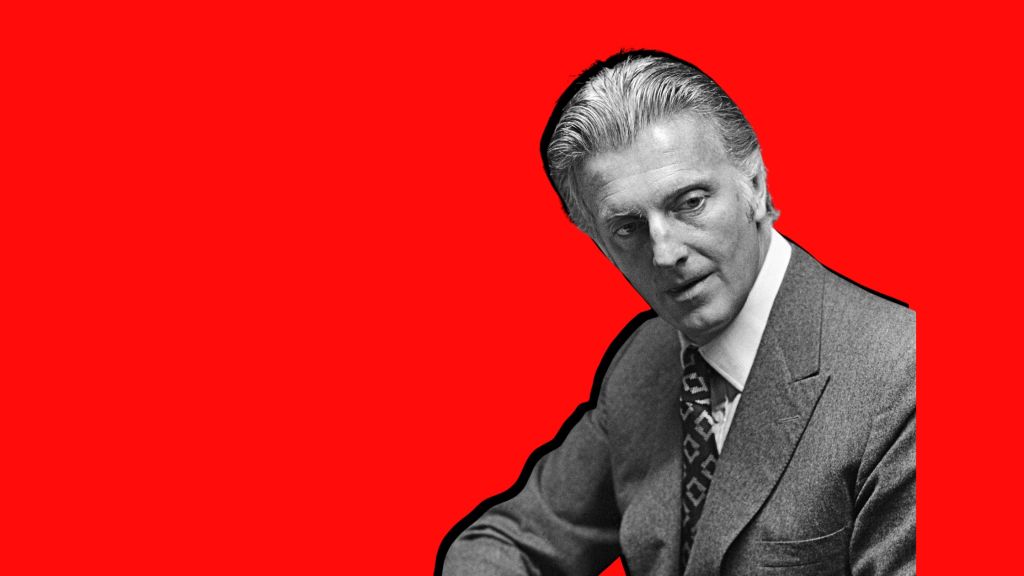
Hubert de Givenchy was born into an aristocratic French family, a background that shaped his lifelong appreciation for etiquette, restraint, and tradition. This upbringing gave him an instinctive understanding of elegance that was never flashy or forced. Rather than rebelling against his roots, Givenchy refined them, translating inherited notions of taste and discipline into a modern couture language.
B — Beauvais
Born in 1927 in Beauvais, a quiet town north of Paris, Givenchy grew up far from the fashion capital he would later define. The town’s pace and provincial calm contrasted sharply with Parisian glamour, reinforcing his preference for understatement. Beauvais also connected him to France’s decorative arts heritage, particularly through family ties to tapestry manufacturing.
C — Couture
Givenchy treated couture as a living practice rather than a museum tradition. While he respected its techniques and hierarchy, he stripped away unnecessary excess. His couture focused on line, proportion, and movement, offering garments that felt lighter and more wearable than many of his contemporaries. He believed couture should evolve alongside women’s lives, not remain frozen in ceremony.
D — Discipline
Discipline defined both Givenchy’s personality and his design process. He was known for calm fittings, precise instructions, and an aversion to drama. In an industry often fueled by ego, his quiet authority earned deep loyalty from ateliers and collaborators. This discipline translated into clothes that appeared effortless but were meticulously engineered.
E — Elsa Schiaparelli
Working for Elsa Schiaparelli in his early twenties exposed Givenchy to fashion as intellectual and artistic expression. While her surrealism differed from his own restraint, the experience taught him confidence and independence. Schiaparelli showed him that couture could be imaginative and modern, even if his own path would lean toward clarity rather than provocation.
F — Fabrics
Givenchy’s sensitivity to fabric came from childhood exposure to fine textiles and interiors. He selected materials that enhanced structure without stiffness. Cotton, wool, silk, and jersey were chosen for how they behaved on the body, not just their visual impact. Fabric was never secondary to silhouette; it was integral to how a garment lived.
G — Grace
Grace was not an abstract idea in Givenchy’s work but a practical goal. His clothes allowed women to move easily, sit comfortably, and exist naturally within them. This approach reframed elegance as something internal and behavioral, not imposed. Grace, in his world, came from confidence rather than ornament.
H — Hepburn, Audrey
His lifelong partnership with Audrey Hepburn shaped both his career and public image. Hepburn embodied his ideals of simplicity and refinement. Dressing her for film and real life allowed Givenchy to reach global audiences while refining his vision of modern femininity. Their relationship was rooted in friendship, not branding.
I — Innovation
Givenchy’s innovation was subtle. He introduced separates into couture, softened formal silhouettes, and embraced ready-to-wear earlier than many peers. Rather than shocking audiences, he quietly shifted expectations of luxury. His changes felt natural, which is why they endured and became absorbed into the mainstream.
J — Jackets
Givenchy’s jackets were studies in balance. Shoulders were structured but never aggressive, waists defined without restriction. His tailoring emphasized posture and ease, allowing garments to frame the body rather than dominate it. These jackets became essential pieces for women who wanted authority without severity.
K — Katharine Hepburn Confusion
When Audrey Hepburn arrived at his atelier, Givenchy initially believed he was meeting Katharine Hepburn. The misunderstanding became fashion folklore, but it marked the start of one of the most significant designer-muse relationships in history. The moment underscores how chance encounters can redirect creative legacies.
L — L’Interdit
L’Interdit, Givenchy’s first fragrance, was created for Audrey Hepburn before being released publicly in 1957. The scent extended his aesthetic beyond clothing, offering restraint and femininity in olfactory form. Perfume became a democratic gateway into the Givenchy world, allowing wider audiences to access the house’s identity.
M — Modernity
Givenchy’s greatest contribution was redefining what modern elegance looked like after World War II. He rejected heavy structures and excessive decoration, aligning fashion with contemporary life. His clothes suited women who worked, traveled, and moved freely, making modernity a lived experience rather than a visual statement.
N — Nobility
Though aristocratic by birth, Givenchy expressed nobility through behavior rather than status. He was known for courtesy, loyalty, and discretion. These qualities shaped his business relationships and creative collaborations, reinforcing a brand identity built on trust and respect rather than hype.
O — Ornamentation
Givenchy used ornament sparingly. Embroidery, embellishment, and detail were always secondary to cut. When decoration appeared, it was purposeful and restrained. This refusal to overdesign gave his work longevity and protected it from looking tied to a specific decade.
P — Proportion
Proportion was central to Givenchy’s design philosophy. He believed elegance came from harmony between garment and body. Every seam, hem, and neckline was adjusted to achieve visual balance. This architectural thinking made his clothes feel timeless, as they relied on fundamentals rather than trends.
Q — Quiet Luxury
Long before the term became fashionable, Givenchy practiced quiet luxury. His work communicated wealth and taste without logos or excess. This understated approach appealed to women who valued discretion and continues to resonate in contemporary fashion conversations.
R — Ready-to-Wear
In the 1950s, Givenchy embraced luxury ready-to-wear, recognizing that fashion needed to adapt to changing lifestyles. He approached it with the same rigor as couture, maintaining quality while increasing accessibility. This move helped future-proof the house and influence industry-wide shifts.
S — Simplicity
Simplicity was not minimalism for its own sake. Givenchy simplified silhouettes to clarify them. By removing distractions, he allowed fabric, cut, and wearer to speak. This philosophy required confidence and restraint, qualities he consistently embodied.
T — Technique
Behind every seemingly simple Givenchy garment was technical mastery. His ateliers were known for precision, hand-finishing, and structural intelligence. Technique allowed him to achieve lightness without losing control, a balance few designers manage successfully.
U — Understatement
Givenchy believed understatement was more powerful than excess. His designs rarely shouted, yet they left lasting impressions. This restraint distinguished him in an industry increasingly driven by spectacle and positioned his work as quietly authoritative.
V — Volume
When Givenchy used volume, it was controlled and intentional. Coats, dresses, and capes explored space without overwhelming the body. Volume became a tool for movement and elegance rather than drama, reinforcing his commitment to wearability.
W — Women
Givenchy designed with empathy. He listened to women and observed how they lived. His clothes supported independence and confidence, reflecting a deep respect for the wearer. This perspective made his work feel personal rather than prescriptive.
X — X-Factor
Givenchy’s x-factor was emotional intelligence. He understood how clothes made people feel and designed accordingly. This sensitivity cannot be taught and set him apart from technically skilled but emotionally distant designers.
Y — Youthfulness
Despite his aristocratic demeanor, Givenchy’s designs always retained a sense of youth. Clean lines, lightness, and ease appealed to younger clients and modern women. He avoided nostalgia, keeping his work forward-facing even as he aged.
Z — Zen Restraint
Givenchy’s legacy is defined by calm. In a world of fashion extremes, he practiced zen-like restraint. His work endures because it prioritised clarity, humanity, and craft. Rather than chasing relevance, he trusted proportion, discipline, and respect to carry his vision forward.
 Ayerhs Magazine