
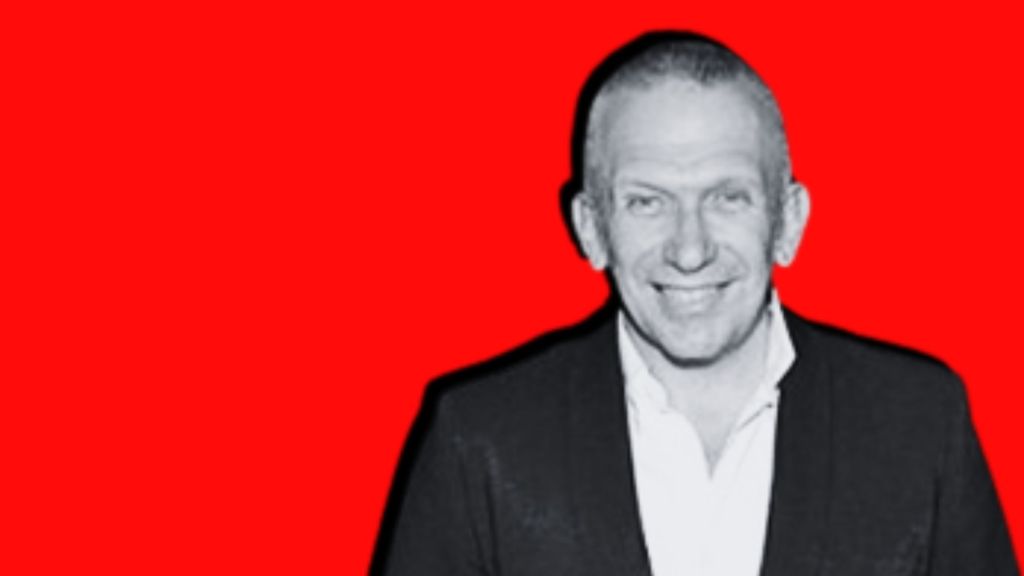
A — Arcueil
Born on April 24, 1952, in Arcueil, a working-class suburb of Paris, Jean-Paul Gaultier grew up outside the elite fashion circles that traditionally shaped French couture. Raised largely by his grandmother, he absorbed everyday clothing, lingerie, and domestic rituals early on. This environment grounded his later work in real bodies and lived experience rather than distant luxury ideals.
B — Bras and Bustiers
Lingerie became one of Gaultier’s most enduring signatures. By exposing bras, corsets, and boning as outerwear, he reframed garments traditionally associated with restriction into symbols of strength and self-possession. His use of bustiers was never decorative alone. It was structural, historical, and confrontational, challenging how femininity and power were visually coded in fashion.
C — Corsetry
Corsets fascinated Gaultier from childhood, influenced by his grandmother’s wardrobe. Rather than rejecting them as oppressive, he studied their construction and symbolism. In his work, corsetry became visible architecture, celebrating craftsmanship and bodily autonomy. By placing corsets on all genders, he detached them from moral judgment and reintroduced them as tools of expression.
D — Diversity
Long before diversity became an industry mandate, Gaultier cast models of different ages, sizes, ethnicities, and gender expressions. His runways included drag performers, older women, tattooed bodies, and unconventional faces. This was not a marketing strategy but a reflection of his belief that fashion should mirror society, not narrow it into a single ideal.
E — Eroticism
Eroticism in Gaultier’s work was direct but rarely gratuitous. He treated sexuality as a natural part of identity rather than something to soften or disguise. Through sheer fabrics, exposed underwear, and body-conscious silhouettes, he challenged the shame historically attached to desire, presenting eroticism as confident, playful, and self-directed rather than passive.
F — Film Costume
Gaultier’s approach to fashion translated naturally to cinema. His most famous film work, The Fifth Element (1997), demonstrated his ability to build entire visual worlds through clothing. Rather than dressing characters conventionally, he used costume to define personality, power, and narrative. Film allowed him to explore fashion as storytelling, not trend-making.
G — Gender Fluidity
Gender has never been fixed in Gaultier’s universe. From skirts for men to tailored power looks for women, his collections consistently dismantled binary dressing. He treated masculinity and femininity as interchangeable languages rather than opposing forces. Decades before gender-fluid fashion entered mainstream discussion, Gaultier made it central to his practice.
H — Haute Couture
Invited to present haute couture in 1997, Gaultier approached the discipline with both respect and irreverence. He mastered its technical demands while rejecting its elitism. His couture collections combined meticulous craftsmanship with theatrical references, humor, and cultural commentary, transforming couture into a space for experimentation rather than preservation alone.
I — Inclusivity
Inclusivity for Gaultier was instinctive, not strategic. His casting and themes reflected the communities he admired, particularly queer culture and underground scenes. Rather than sanitizing difference, he celebrated it visibly. This approach expanded fashion’s visual language and challenged the industry’s long-standing obsession with uniform beauty and exclusivity.
J — Jean Paul Gaultier Label
Founded in 1976, the Jean Paul Gaultier label emerged without financial security or institutional backing. Early collections struggled commercially but established a strong identity rooted in provocation and observation. Over time, the label became synonymous with boundary-pushing design, balancing radical ideas with technical mastery across ready-to-wear, menswear, and couture.
K — Kilts and Skirts for Men
Gaultier’s use of skirts and kilts in menswear challenged entrenched ideas of masculinity. Presented without irony, these garments emphasized movement, strength, and confidence. By historicizing skirts as male dress across cultures, he reframed them as powerful rather than transgressive, expanding the vocabulary of modern menswear.
L — Le Male
Launched in 1995, Le Male became one of fashion’s most successful fragrances. Its sailor-inspired bottle and marketing played with masculinity, nostalgia, and sensuality. Commercially transformative for Gaultier’s house, the fragrance allowed him financial independence while reinforcing his ability to merge branding with cultural storytelling rather than dilution.
M — Madonna
Gaultier’s collaboration with Madonna for the 1990 Blond Ambition Tour marked a defining moment in fashion and pop culture. The cone bra became an icon of sexual agency and performance. More than a costume, it symbolized shared values around provocation, reinvention, and control over one’s image, amplifying Gaultier’s global influence.
N — Nonconformity
Nonconformity runs through Gaultier’s entire career. He rejected fashion school, traditional beauty standards, and seasonal expectations. Rather than positioning himself against the system overtly, he worked within it while refusing to behave as expected. This tension between institution and rebellion defines much of his enduring relevance.
O — Outsider Perspective
Despite global success, Gaultier always positioned himself as an observer rather than an insider. Growing up outside Parisian elite culture shaped his sensitivity to marginal voices and everyday style. This outsider perspective allowed him to critique fashion from within, exposing its limitations while expanding its emotional and cultural scope.
P — Pop Culture
Gaultier understood pop culture as a serious creative force. His work intersected seamlessly with music, film, and television, dissolving boundaries between high fashion and mass media. Rather than resisting popularity, he embraced it as a platform for ideas, ensuring his designs reached audiences far beyond traditional fashion spaces.
Q — Queer Culture
Queer culture deeply informed Gaultier’s worldview. His collections reflected club scenes, drag performance, and alternative expressions of identity without caricature. At a time when queerness was marginalized in mainstream fashion, Gaultier offered visibility and respect, embedding queer aesthetics into the core of his creative language.
R — Ready-to-Wear
Gaultier’s ready-to-wear collections balanced experimentation with accessibility. While provocative in concept, they remained grounded in wearability and construction. He treated ready-to-wear as a space for cultural dialogue rather than trend replication, challenging the assumption that commercial fashion must be visually conservative.
S — Sailor Stripes
The Breton stripe became one of Gaultier’s most recognizable motifs. Rooted in French maritime tradition, he recontextualized it across genders, bodies, and eras. The stripe symbolized his ability to take familiar cultural references and reinvent them repeatedly without stripping them of meaning.
T — Television
Gaultier’s presence on French television made him unusually accessible for a fashion designer. His warmth and openness contrasted with industry mystique, helping demystify fashion for broader audiences. Television expanded his cultural reach and reinforced his image as a designer deeply connected to people rather than hierarchy.
U — Underwear as Outerwear
By placing underwear on the outside, Gaultier dismantled fashion’s long-standing codes of modesty. Bras, slips, and corsets became visible statements rather than hidden supports. This shift reframed intimacy as empowerment and influenced decades of designers who followed.
V — Versatility
From punk-inspired streetwear to Hermès-level refinement, Gaultier demonstrated rare versatility. His ability to move between provocation and restraint challenged reductive interpretations of his work. Versatility, for Gaultier, was not inconsistency but proof of technical and conceptual fluency.
W — Women’s Power
Gaultier’s portrayal of women rejected fragility. His designs emphasized strength, control, and autonomy through structure and silhouette. Even when overtly sexual, his garments positioned women as active participants in desire rather than passive subjects, reshaping fashion’s visual power dynamics.
X — X-Ray Silhouettes
Transparency and body-conscious design allowed Gaultier to explore what he called “x-ray” dressing. By revealing the body’s form and clothing’s structure simultaneously, he blurred lines between exposure and protection, encouraging viewers to reconsider how clothing mediates intimacy.
Y — Youth Culture
Gaultier consistently drew inspiration from youth movements, street style, and subcultures. Rather than appropriating trends, he treated youth culture as an ongoing dialogue. This kept his work visually current while maintaining a clear point of view rooted in observation rather than imitation.
Z — Zeitgeist
Jean-Paul Gaultier’s career aligns closely with cultural shifts around identity, sexuality, and representation. Rather than chasing trends, he anticipated them by responding honestly to the world around him. His work captured the zeitgeist not by mirroring it, but by pushing it forward.
 Ayerhs Magazine