
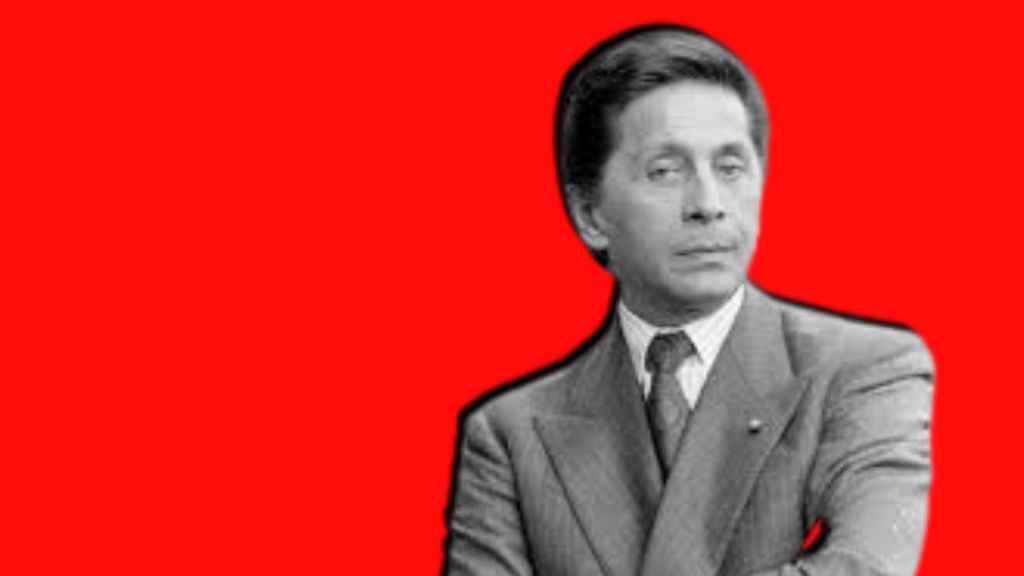
Valentino Garavani: Designing Elegance and the Art of Roman Couture
Early Life and Family Background
Valentino Garavani was born on May 11, 1932, in Voghera, a small town in northern Italy’s Lombardy region. His father, Mauro Garavani, was an electrical engineer, and his mother, Teresa de Biaggi, was a homemaker with a strong appreciation for beauty, cinema, and elegance. It was his mother who first encouraged Valentino’s fascination with clothes, fabrics, and visual harmony. From an early age, he showed an unusual sensitivity to color and form, often sketching dresses rather than playing conventional childhood games.
Voghera was far from the fashion capitals of Europe, but Valentino grew up surrounded by postwar Italian craftsmanship and the quiet discipline of provincial life. The contrast between restraint at home and the glamour he absorbed from magazines and films shaped his early imagination. Hollywood actresses of the 1930s and 1940s, particularly those dressed by Parisian couturiers, became his first informal education in style.
Discovering Fashion as a Calling
As a teenager, Valentino became convinced that fashion was not simply an interest but a vocation. His parents supported this ambition, sending him to Milan to study fashion illustration. Milan, already developing into an industrial fashion hub, exposed him to tailoring traditions and commercial design, but Valentino felt drawn to something more romantic and expressive.
At seventeen, he moved to Paris, enrolling at the École des Beaux-Arts and later studying at the Chambre Syndicale de la Couture Parisienne. Paris in the early 1950s was still the undisputed center of haute couture, and Valentino absorbed its traditions with seriousness and discipline. He studied draping, construction, and the unspoken codes of elegance that defined couture houses.
During this period, he worked as an apprentice at several prestigious ateliers, including those of Jean Dessès and Guy Laroche. These early professional experiences taught him the realities of couture work: long hours, meticulous craftsmanship, and absolute precision. He learned that fashion at the highest level was not about spontaneity alone but about control and refinement.
Returning to Italy and Early Struggles
In 1959, Valentino returned to Italy and opened his own atelier on Via Condotti in Rome. Rome at the time was experiencing a cultural renaissance fueled by cinema, wealth, and international attention. The city was home to Cinecittà Studios and a growing community of aristocrats and Hollywood stars. Valentino believed Rome could rival Paris as a couture destination.
His first collection, however, was not an immediate success. The costs of couture production were enormous, and Valentino lacked strong financial backing. Within a year, his business was facing serious difficulties. This period tested his resolve and forced him to confront the gap between creative vision and economic reality.
The turning point came in the early 1960s, when Valentino met Giancarlo Giammetti, a young architecture student who would become his lifelong business partner and personal companion. Giammetti brought structure, financial discipline, and strategic thinking to Valentino’s creative intensity. Their partnership transformed the house from a fragile atelier into a sustainable luxury brand.
Breakthrough and International Recognition
Valentino’s breakthrough moment arrived in 1962, when he presented his collection at the Pitti Palace in Florence, then Italy’s most important fashion showcase. The collection, dominated by white designs accented with his signature shade of red, captured international attention. Buyers and journalists recognized a distinct aesthetic that combined French couture discipline with Italian sensuality.
This moment established Valentino as a serious force in fashion. His work was praised for its balance of restraint and drama, precision and emotion. Unlike many designers of the era who chased novelty, Valentino focused on timeless elegance, believing that true luxury should transcend trends.
By the mid-1960s, Valentino’s clientele included European royalty, American socialites, and film stars. His gowns appeared at society balls, diplomatic events, and red carpets, reinforcing the image of the Valentino woman as poised, confident, and impeccably dressed.
The Creation of Valentino Red
One of the most enduring elements of Valentino’s legacy is his association with a particular shade of red, often referred to simply as “Valentino red.” The color was inspired by a moment he experienced as a young man in Barcelona, where he attended an opera and noticed how red dresses in the audience seemed to command attention and emotion.
Valentino developed his own interpretation of red, neither too dark nor too bright, designed to flatter a wide range of skin tones. Over time, this color became synonymous with his brand and appeared consistently in his collections. It was not merely a marketing device but a visual signature that expressed passion, confidence, and presence.
Valentino red became a constant reference point, anchoring collections that otherwise explored varied silhouettes and themes. It reinforced the idea that fashion, at its best, could be instantly recognizable without being repetitive.
Expansion of the House of Valentino
Throughout the late 1960s and 1970s, the Valentino expanded beyond couture into ready-to-wear, accessories, and menswear. This move reflected broader shifts in the fashion industry, as designers adapted to a growing global market and changing consumer habits.
Valentino approached ready-to-wear with the same seriousness as couture. Rather than simplifying his designs for mass production, he sought to preserve elegance and craftsmanship at a larger scale. This approach helped maintain the brand’s prestige while allowing it to grow commercially.
Rome remained the symbolic heart of the house, even as international boutiques opened in major cities. Valentino and Giammetti understood the importance of image and consistency, carefully controlling how the brand was presented across markets.
Dressing Icons and Cultural Influence
Valentino’s reputation was reinforced by the women who chose to wear his designs. Jacqueline Kennedy Onassis became one of his most famous clients, wearing Valentino for her wedding to Aristotle Onassis in 1968 and frequently afterward. Her endorsement linked the brand with discretion, refinement, and modern aristocracy.
Other notable clients included Elizabeth Taylor, Sophia Loren, Audrey Hepburn, and Princess Margaret. These women differed in personality and public image, but Valentino’s designs adapted to each without losing their core identity. This flexibility demonstrated his understanding of fashion as a dialogue between designer and wearer.
Valentino’s work also appeared in films and high-profile public events, further embedding his aesthetic into popular culture. His gowns became shorthand for a certain kind of formal elegance, one rooted in tradition but responsive to contemporary life.
The Valentino Aesthetic
At the center of Valentino’s work was a clear philosophy. He believed that fashion should enhance the wearer, not overpower them. His silhouettes emphasized the body without exposing it excessively, relying on line, proportion, and fabric rather than shock value.
He favored luxurious materials such as silk, chiffon, lace, and velvet, often sourced from Italy’s finest mills. Construction was meticulous, with particular attention paid to seams, hems, and internal structure. Even when designs appeared simple, they were supported by complex craftsmanship.
Valentino was cautious about trends. While he responded to changes in society and culture, he resisted radical experimentation. This consistency earned him criticism from some quarters but also ensured longevity. His clothes aged well, both physically and stylistically, reinforcing their value as investments rather than disposable fashion.
Navigating Change in the 1980s and 1990s
The fashion industry changed dramatically in the 1980s and 1990s, driven by globalization, media expansion, and the rise of designer celebrity. Valentino adapted carefully, expanding licensing agreements and strengthening the brand’s international presence.
In 1989, the company was sold to industrial group Fiat, though Valentino and Giammetti retained creative and operational control. This arrangement provided financial stability while preserving the house’s identity. Subsequent ownership changes followed, reflecting the increasing role of conglomerates in luxury fashion.
Despite these shifts, Valentino remained personally involved in design, maintaining the house’s couture collections and overseeing ready-to-wear lines. His commitment to quality served as a counterpoint to the accelerating pace of fashion cycles.
Haute Couture in a Changing World
Valentino remained a passionate advocate for haute couture at a time when its relevance was frequently questioned. He viewed couture as the foundation of fashion, a laboratory for ideas and techniques that influenced the broader industry.
His couture shows were known for their polish and restraint, often staged in historic Roman settings that reinforced a sense of continuity. While some contemporaries pursued provocation, Valentino focused on refinement, believing that beauty itself was a form of innovation.
Couture also allowed him to maintain close relationships with clients, designing garments that responded to individual needs and occasions. This intimacy stood in contrast to the anonymity of mass fashion and reinforced the personal dimension of his work.
Personal Life and Partnership with Giammetti
Valentino was famously private about his personal life, but his partnership with Giancarlo Giammetti was widely acknowledged as central to his success. Their relationship, both personal and professional, lasted decades and was marked by mutual respect and complementary strengths.
Giammetti handled business operations, finances, and strategic planning, allowing Valentino to focus on design. This division of labor was unusual in an industry often dominated by singular personalities. Together, they built a brand that balanced creativity with stability.
Their shared commitment extended beyond fashion into philanthropy and art collecting. They supported cultural institutions and preserved historical architecture, particularly in Rome, reflecting their belief in the importance of heritage.
Awards and Recognition
Valentino received numerous honors throughout his career, recognizing both his creative achievements and his contribution to Italian culture. In 1985, he was awarded the Legion of Honour by France, an acknowledgment of his impact on international fashion.
In Italy, he received multiple state honors, including the title of Cavaliere di Gran Croce. These awards reflected his role as a cultural ambassador, promoting Italian craftsmanship and design on a global stage.
Such recognition reinforced Valentino’s status not only as a designer but as a figure of national significance, bridging art, industry, and identity.
Preparing for Retirement
By the early 2000s, Valentino began to consider succession. The fashion industry was increasingly dominated by younger designers and faster cycles, but he remained committed to ending his career on his own terms.
In 2007, he announced his retirement from fashion. His final couture show took place in January 2008 at the Musée Rodin in Paris, a symbolic return to the city where his career had begun. The collection featured references to his past work, including extensive use of Valentino red, lace, and classic silhouettes.
The show was widely regarded as a dignified farewell, emphasizing continuity rather than rupture. It affirmed Valentino’s belief that fashion could be enduring without being nostalgic.
Life After Fashion
After retiring, Valentino stepped back from public life but remained engaged with cultural and philanthropic activities. He continued to support the arts and maintained an interest in architecture, gardens, and design.
The documentary “Valentino: The Last Emperor,” released in 2008, offered a rare glimpse into his working process and personal life. The film highlighted his discipline, emotional intensity, and complex relationship with the industry. It also underscored the challenges of sustaining excellence over decades.
Valentino’s withdrawal from active design marked the end of an era but did not diminish his influence. His work continued to be referenced by designers and studied by students as an example of sustained vision.
Death and Legacy
Valentino Garavani is still alive as of today, having lived into his nineties. His legacy is firmly established within the history of fashion. He built one of the most recognizable luxury brands in the world while maintaining a consistent aesthetic over half a century.
His influence lies not in radical innovation but in refinement. Valentino demonstrated that elegance could be a form of resistance in an industry driven by novelty. He proved that discipline, patience, and attention to detail could create lasting value.
The House of Valentino has continued under new creative leadership, evolving while drawing on its founder’s codes. Valentino red, couture craftsmanship, and a commitment to beauty remain central to the brand’s identity.
Conclusion
Valentino Garavani’s life and career reflect a particular vision of fashion, one rooted in tradition, emotion, and human connection. From a small town in Italy to the heights of international couture, he navigated cultural shifts without abandoning his principles.
His work offers a counter-narrative to the idea that relevance requires constant reinvention. Instead, Valentino showed that clarity of purpose and respect for craft can sustain a creative career across generations. In doing so, he secured his place as one of the defining designers of the twentieth century and beyond.
 Ayerhs Magazine