
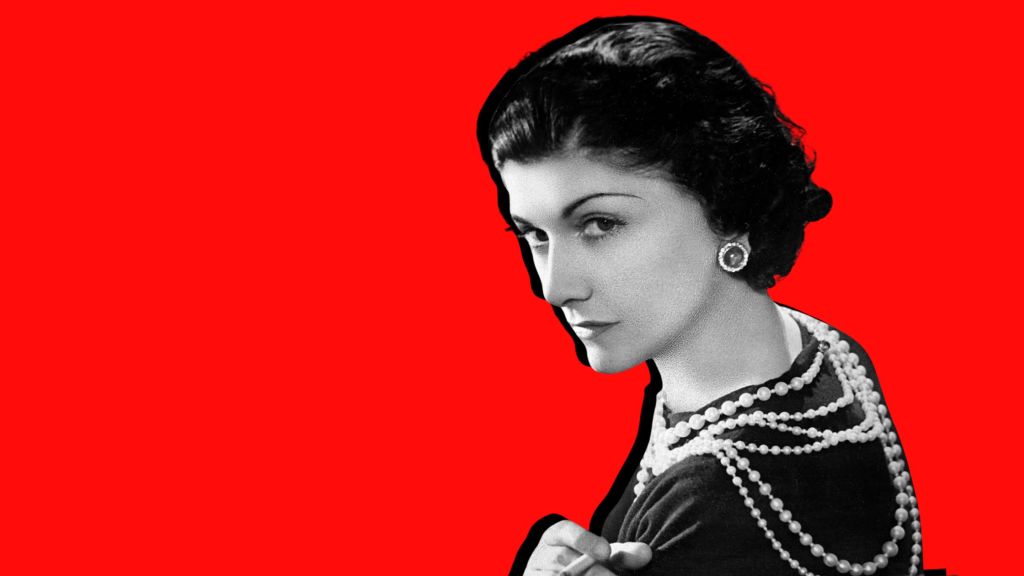
Coco Chanel: How She Changed the Way Women Dress
Birth Name, Origins, and Early Hardship
Gabrielle Bonheur Chanel was born on August 19, 1883, in Saumur, a small town in western France. Her parents were Albert Chanel, a traveling market vendor, and Jeanne Devolle, a laundry worker. The family lived a precarious, itinerant life, moving frequently as Albert followed seasonal work. Poverty shaped Chanel’s earliest years, not as a distant background detail but as a defining condition of her childhood.
When Gabrielle was twelve, her mother died of tuberculosis. Shortly afterward, her father abandoned Gabrielle and her siblings. She was sent to the convent orphanage of Aubazine in central France, run by Cistercian nuns. This period would later become central to the myths Chanel constructed about herself, but the reality was stark. The orphanage imposed discipline, silence, and austerity. The nuns dressed in simple black-and-white habits and lived according to strict routines.
These years left a lasting impression. Chanel learned to sew at Aubazine, a skill taught to prepare girls for domestic service. More importantly, she absorbed an aesthetic of restraint. Clean lines, monochrome palettes, and an emphasis on function over decoration would later define her design philosophy. While many designers drew inspiration from aristocratic excess, Chanel’s visual language was shaped by deprivation and control.
Chanel would later lie about her childhood, claiming her father had gone to America and that she was raised by aunts. These fabrications were part of a lifelong effort to rewrite her origins. Reinvention was not just a professional strategy for Chanel; it was a personal survival tactic.
From Gabrielle to “Coco”
In her late teens, Chanel left Aubazine and moved to Moulins, where she worked briefly as a seamstress by day and a café singer by night. It was during this period that she acquired the nickname “Coco.” The most common explanation is that it came from songs she performed, particularly “Qui qu’a vu Coco?” While the exact origin remains disputed, the name stuck and would eventually eclipse Gabrielle entirely.
Her singing career was modest at best. Chanel lacked the vocal strength to become a serious performer, but the cafés introduced her to wealthy patrons and officers. These connections would prove far more valuable than musical success. Chanel understood quickly that independence for a woman of her background required financial backing, and she was pragmatic about how to secure it.
Two men in particular shaped her early adult life. Étienne Balsan, a wealthy former cavalry officer, offered her entry into elite society. Through him, Chanel was exposed to horse racing, leisurewear, and a world in which women dressed for display rather than movement. Balsan supported her financially and allowed her to experiment with making hats, initially as a pastime.
Later came Arthur “Boy” Capel, an English businessman who would become both her lover and her most significant early patron. Capel believed in Chanel’s talent and ambition. He provided the capital for her first boutique and introduced her to British tailoring, tweed fabrics, and menswear silhouettes. His influence on her aesthetic cannot be overstated.
First Shops and the Hat Business
In 1910, Chanel opened her first shop at 21 rue Cambon in Paris. Initially, the business focused on hats, which were a crucial accessory for women at the time. Chanel’s designs stood out for their simplicity. While fashionable hats were often overloaded with feathers, ribbons, and artificial flowers, hers were restrained and wearable.
Her hats quickly gained attention, worn by actresses and society women who were looking for something modern. The success of the millinery business gave Chanel both income and credibility. More importantly, it allowed her to establish herself as a tastemaker rather than a decorative craftsperson.
Chanel expanded beyond hats almost immediately. In 1913, she opened a boutique in Deauville, a fashionable seaside resort. There, she began selling casual clothing made from jersey, a fabric previously associated with men’s underwear. This decision was radical. Jersey was inexpensive, comfortable, and easy to move in, all qualities dismissed by a fashion system obsessed with luxury and rigidity.
World War I created conditions that worked in Chanel’s favor. With materials scarce and women increasingly active outside the home, elaborate fashion became impractical. Chanel’s clean lines and functional garments aligned with the realities of wartime life.
Jersey, Freedom, and a New Silhouette
By 1915, Chanel had opened a couture house in Biarritz, serving wealthy clients from Spain and beyond. Her designs rejected corsetry and heavy ornamentation. Instead, she emphasized ease of movement, loose silhouettes, and garments that allowed women to breathe.
Chanel’s use of jersey was not only practical but symbolic. By elevating a humble material to fashionable status, she challenged entrenched hierarchies within fashion. Her clothes suggested a different way of living, one in which women were not decorative objects but active participants in modern life.
This was not feminism in an organized or ideological sense. Chanel famously distanced herself from feminist movements. Yet her designs had undeniably liberating effects. Shorter skirts, softer construction, and clothing that adapted to the body rather than constraining it reshaped how women dressed and moved.
Chanel’s personal style reinforced her message. She cut her hair short, wore minimal makeup, and favored trousers and knitwear. Her appearance became part of the brand, blurring the line between designer and design philosophy.
The Rise of Chanel in the 1920s
After the war, Chanel returned to Paris at a moment when the city was redefining itself as a cultural capital. The 1920s were marked by experimentation, excess, and a hunger for novelty. Chanel thrived in this environment.
She moved her operations fully to rue Cambon, expanding into multiple adjoining buildings. The address would become synonymous with her name. Her designs evolved but remained rooted in simplicity. Drop-waist dresses, relaxed tailoring, and neutral palettes dominated her collections.
Chanel’s influence extended beyond clothing. She cultivated friendships with artists, writers, and composers, including figures from the avant-garde circles of Paris. These relationships reinforced her image as a modern woman aligned with intellectual and cultural progress.
At the same time, Chanel was becoming increasingly wealthy and powerful. Unlike many couturiers, she retained control over her business. This autonomy allowed her to make bold decisions without deferring to backers or institutions.
Chanel No. 5 and the Reinvention of Perfume
In 1921, Chanel launched what would become one of the most famous fragrances in history: Chanel No. 5. At the time, perfumes were typically single-flower scents, marketed with romantic imagery and ornate bottles. Chanel wanted something different.
Working with perfumer Ernest Beaux, she developed a fragrance that used synthetic aldehydes to create an abstract, complex scent. It did not smell like any specific flower. The name was deliberately simple, chosen from a series of samples rather than poetic description.
The bottle was equally radical. Rectangular, spare, and unadorned, it resembled a laboratory flask more than a luxury object. Chanel insisted on this design, believing that the scent itself should be the focus.
Chanel No. 5 transformed the perfume industry. It reframed fragrance as a modern accessory rather than a romantic indulgence. Commercially, it became the foundation of Chanel’s financial empire, though not without controversy. A partnership with the Wertheimer family, who financed and distributed the perfume, left Chanel with limited control over profits. This arrangement would later fuel resentment and legal battles.
The Little Black Dress and Timelessness
In 1926, Chanel introduced what would later be known as the little black dress. Published in American Vogue as a simple black sheath, it was described as a kind of uniform for women of taste.
Black had traditionally been associated with mourning or service. Chanel redefined it as chic, versatile, and modern. The dress could be dressed up or down, adapted to different occasions, and worn across social classes.
The little black dress encapsulated Chanel’s approach to fashion. It was not about seasonal trends or elaborate decoration but about creating a foundation for personal expression. This idea of timelessness would become central to her legacy.
Personal Loss and Emotional Withdrawal
In 1919, Boy Capel died in a car accident. Chanel was devastated. Although their romantic relationship had ended years earlier, Capel remained emotionally significant to her. His death marked a turning point.
Chanel threw herself into work with renewed intensity. Some biographers argue that her later emotional reserve and increasing severity were shaped by this loss. Others note that her designs after Capel’s death became more austere, reflecting a deeper commitment to restraint.
Chanel never married and had no children. Her personal life was defined by relationships with powerful men, but she remained fiercely independent. She valued autonomy above stability and often sabotaged intimacy to preserve control.
The 1930s: Power, Wealth, and Tension
By the early 1930s, Chanel employed thousands of workers and dressed some of the most influential women in the world. She also expanded into costume jewelry, blending real and imitation materials in ways that challenged traditional luxury codes.
Despite her success, Chanel’s relationship with her workforce was strained. In 1936, when French labor strikes swept through the country, Chanel closed her couture house rather than negotiate with striking employees. This decision damaged her reputation and revealed her conservative attitudes toward labor and class.
Chanel also designed costumes for Hollywood films during this period, working briefly in the United States. The experience was largely unsatisfying for her. She found the studio system restrictive and disliked the American approach to glamour, which she felt prioritized spectacle over substance.
World War II and Moral Controversy
The outbreak of World War II marked the most controversial chapter of Chanel’s life. In 1939, she closed her couture house, citing wartime conditions, and dismissed most of her employees. She remained in Paris during the German occupation, living at the Ritz Hotel, which housed high-ranking Nazi officers.
Chanel became romantically involved with a German intelligence officer, Hans Günther von Dincklage. Evidence later emerged suggesting she was involved in intelligence activities on behalf of Nazi Germany. While the full extent of her collaboration remains debated, her actions during this period have permanently complicated her legacy.
Chanel also attempted to exploit Nazi laws to regain control of Chanel No. 5 from the Wertheimer family, who were Jewish and had fled France. The attempt failed, but it further damaged her moral standing.
After the liberation of Paris, Chanel was questioned by authorities but never formally charged. She left France shortly afterward, spending several years in Switzerland in self-imposed exile.
Exile and Reflection
Chanel’s years in Switzerland were marked by isolation and reflection. She lived comfortably but away from the center of fashion. During this time, the fashion world moved on without her.
Christian Dior’s 1947 “New Look” reintroduced corsetry, full skirts, and an idealized femininity that stood in stark contrast to Chanel’s earlier work. The style dominated postwar fashion and represented everything Chanel disliked about restrictive dressing.
Observers assumed Chanel’s career was over. She was in her seventies, politically tainted, and out of step with prevailing trends. But Chanel was not finished.
The 1954 Comeback
In 1954, Chanel reopened her couture house in Paris. Her comeback collection was initially met with harsh criticism in France. Reviewers described the clothes as outdated and irrelevant.
However, the response in the United States was markedly different. American buyers and journalists embraced the collection’s practicality and understated elegance. Chanel suits, with their soft jackets, braided trims, and comfortable skirts, resonated with women who wanted clothes they could actually live in.
Gradually, the tide turned. The Chanel suit became a symbol of professional femininity and modern elegance. It was worn by women in politics, business, and culture, reinforcing Chanel’s vision of clothing as a tool rather than an ornament.
Reinventing the Brand in Old Age
In her final decades, Chanel worked relentlessly. She oversaw every detail of her collections, from fabric selection to fittings. Her standards were exacting, and her temper was legendary.
Chanel refined her codes during this period. Quilted handbags, two-tone shoes, pearls, and tweed became brand signatures. These elements were not trends but systems, designed to be repeated, adapted, and recognized.
She also perfected the idea of a fashion house built on continuity rather than constant reinvention. This approach would later prove crucial to Chanel’s longevity after her death.
Death and Immediate Aftermath
Coco Chanel died on January 10, 1971, at the Ritz Hotel in Paris. She was 87 years old. Her funeral was held at the Church of the Madeleine, attended by figures from fashion and society. True to form, Chanel had dressed herself for burial in a white suit.
After her death, the future of the house was uncertain. Without its founder, Chanel risked becoming a relic. For more than a decade, the brand struggled to define itself, producing conservative collections that lacked cultural impact.
Legacy and Cultural Reassessment
Chanel’s influence on fashion is undeniable. She changed how women dressed, how luxury was defined, and how fashion intersected with modern life. Yet her legacy is inseparable from her contradictions.
She promoted freedom through clothing while holding conservative political views. She built an empire as a self-made woman while relying heavily on male patrons. She celebrated simplicity while amassing enormous wealth.
In recent decades, Chanel’s wartime actions have been more openly examined. This reassessment has complicated the narrative of her as a pure visionary. Instead, she is increasingly understood as a product of her time, shaped by ambition, fear, prejudice, and brilliance in equal measure.
Why Coco Chanel Still Matters
Chanel matters not because she was flawless, but because she was transformative. She shifted fashion away from decoration toward function, from fantasy toward lived reality. Her ideas about comfort, versatility, and personal style continue to shape how clothing is designed and worn.
Modern fashion’s obsession with timeless pieces, neutral palettes, and wearable luxury can be traced directly to Chanel’s philosophy. Even designers who reject her aesthetics operate in a landscape she helped create.
Coco Chanel remains one of the most influential figures in fashion history not because she followed the rules, but because she rewrote them. Her life, with all its achievements and failures, offers a lens through which to understand the cultural and social upheavals of the twentieth century.
 Ayerhs Magazine