
by Gia Shah
Shaykara began as a quiet insistence that garments could hold more than style. When I first sat down with Sharon, the designer and founder, what kept returning to me was how her practice refuses the easy oppositions people like to draw in fashion. It is not just about new versus old, or trend versus craft. It is about memory, material, community, and a patient kind of care that starts long before a garment becomes a headline.
Sharon’s roots are part of that care. She told me that “growing up in Lagos as a girl meant you had to be quick-witted and observant,” and you can feel that disposition in everything she makes. Those early lessons shaped the way she understands materials and people. Her mother and grandmother were seamstresses, and that upbringing left a practical, almost moral stance toward textiles. As she put it, reusing and adapting was a household rule, that “it was literally a crime to throw clothes away.” That line is small and honest, and it tells you more about her design philosophy than any manifesto ever could.
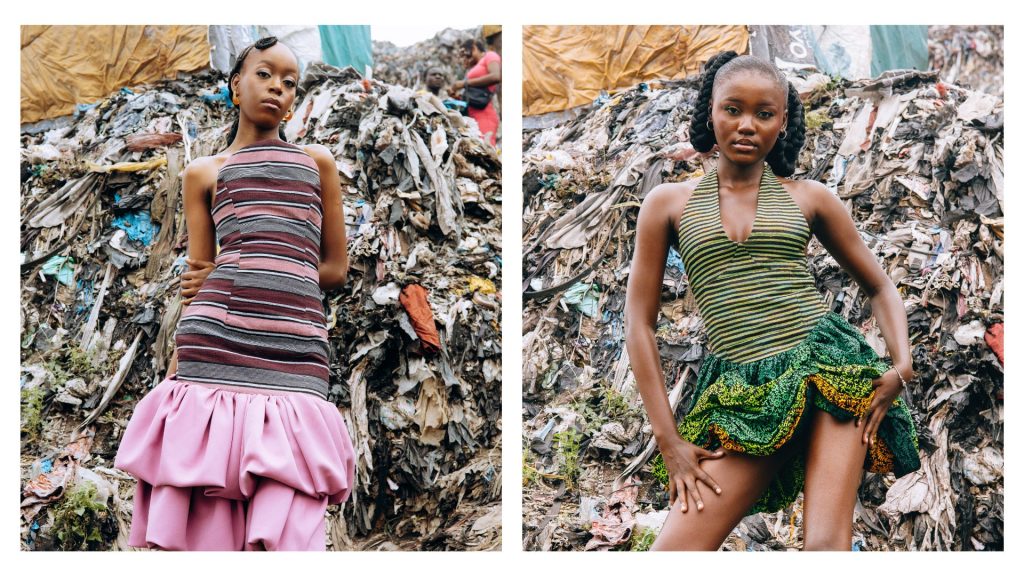
There is a humility to the work that reads as confidence. On first glance many Shaykara pieces look simple. They sit in a place where restraint meets intention. Sharon says she always starts a new piece by thinking about “versatility, longevity, eco-friendliness, and value.” That order matters. It signals that design choices are weighted by how an item lives across time and contexts, not only how it photographs on a runway. The obvious reference point in her work is aso oke, the handwoven cloth she uses in thoughtful ways. Where some designers reach for novelty, Sharon reaches for continuity. Aso oke is described in her answers as fabric that “demands attention” and that “speaks of ceremony, community, and continuity.”
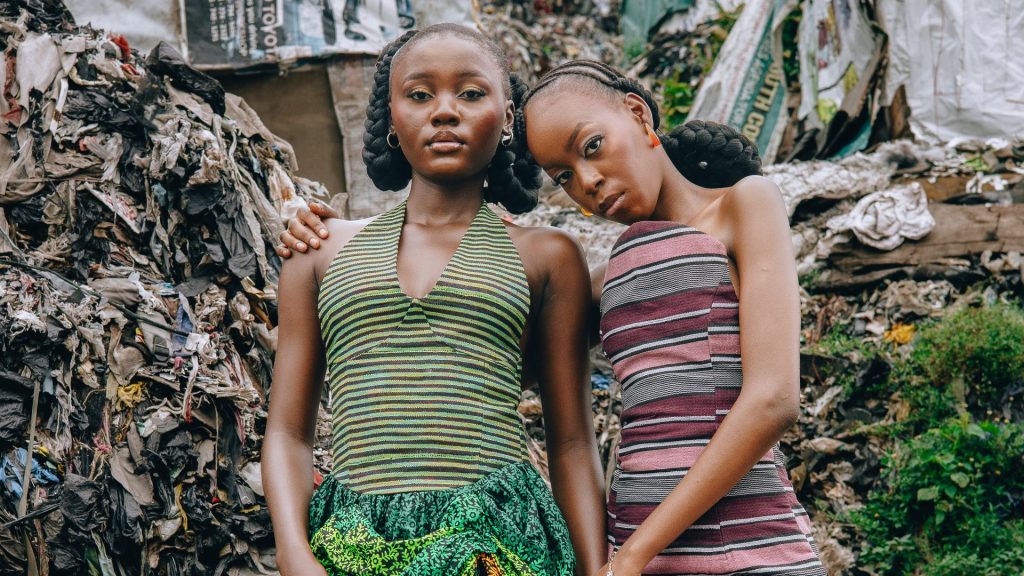
Upcycling and waste are central to her story, but the process is not presented as a gimmick. It is a practice that requires compromise and radical improvisation. She described designing with waste as a process of “letting go of control.” The materials arrive with their own histories, shapes, flaws, and constraints. That unpredictability is where the design becomes interesting. It forces you to think in fragments, to assemble instead of simply cut. It shifts the role of the designer from creator to collaborator with the materials at hand.
This perspective is at the heart of her documentary and project, Worn & Reborn. She tells us, “Worn & Reborn is a fashion documentary and design project that explores the afterlife of garments, uncovering the often untold realities of textile waste in Nigeria.” The film is not just an extension of the collection. It’s a piece of reporting, a form of visual storytelling that insists that clothes have lives after we stop wearing them. That the film was an official selection at the London Fashion Film Festival felt right. It gives the project a platform and, importantly, a wider audience for the questions it raises.
Talking to Sharon feels less like speaking to a designer and more like speaking to someone who has lived inside a set of practices that most of the industry now calls sustainable. She is careful to separate romantic language about sustainability from its mundane realities. “Sustainability is also deeply tied to education,” she reminded me, and then explained that understanding where materials come from and who makes the clothes is as important as the final design on a hanger. This is not just an ethical pitch. It is a call for consumer literacy and transparency from brands.

What struck me most in our conversation was how unglamorous many of her commitments are. She spoke about the parts of design that rarely get airtime: finishing, durability, how a garment sits, and how it ages. “What matters most to me is finishing, and durability,” she said. That focus on the technical, the invisible craft, is where she pushes back against a fashion system addicted to speed. She has learned to unlearn comparison. “I had to unlearn comparison and the idea that fashion has to be fast or perfect,” she told me. The admission is small and human and it explains why her collections feel steady instead of performative.
Her approach has a political edge that remains gentle. This is not about moralizing shoppers. It is about reconnecting clothes to contexts. She argues that sustainability is often framed as innovation when, in reality, a lot of it is remembering old practices. “Repair, reuse, handcraft practices, and resourcefulness aren’t new ideas,” she said. That observation helps reframe sustainable fashion as a cultural continuity rather than a boutique trend. For Sharon that continuity includes community and ceremony, which is why aso oke plays such a large role in her work. Using that fabric within a circular practice is a kind of dialogue between past and present.
The aesthetic outcomes are worth mentioning because they are graceful without being precious. Her garments suggest utility and celebration at once. She wants wearers to feel comfortable physically and confident emotionally. “Physically, I want the wearer to feel comfortable and not restricted or overly styled. Emotionally, I want them to feel confident, like the garment belongs to them rather than the other way around,” she said. That sentence nails the balance Shaykara aims for: clothes that carry personality without performing it for an audience.
Sharon does not pretend that the path is easy. There are structural pressures that make her choices difficult. She described moments when the industry felt misaligned with her values, when speed, visibility, and volume were prioritized over care. Her remedy is deceptively simple. “Anytime I feel that misalignment, I choose to slow down and become more intentional,” she told me. It is a mode of resistance that you can actually practice at scale only if more people and institutions value the same things.
That point leads to why designers like Sharon matter. The industry needs practitioners who can model alternatives that are both material and cultural. It is easy to celebrate the occasional sustainable capsule collection as proof of conscience. It is harder to sustain a practice that includes workshops, education, community engagement, and a documentary film that interrogates the afterlife of garments. Those wider actions make the work less of a product and more of an ecosystem. For the industry to change we need designers who are willing to do the slow work: to teach, to document, and to build local infrastructures that allow repair and reuse to be meaningful options for consumers.
There is a practical blueprint here for other designers who want to make climate-forward work without becoming isolated in an echo chamber. Begin with material constraints. Make durability and finishing non-negotiable. Build storytelling into the launch: let people see the process, the failures, and the craft. Partner with communities and teach repair and reuse techniques in public spaces. Use film and photography not as promotional tools but as forms of inquiry that raise questions about what happens after a garment leaves the store. Sharon is already doing this. Her work links Lagos and London in a way that balances local craft knowledge with global conversations about waste. The result is a practice that refuses simple export or appropriation. It honors origin stories and designs with them.

When I press Sharon about the future she talks about systems rather than collections. “A truly responsible fashion system would value people, process, and purpose as much as profit,” she told me. That sentence could sit in any sustainability briefing and be worth repeating. But the difference is that she does not stop at rhetoric. Her practice shows what that sentence looks like in action. It looks like workshops that teach mending. It looks like garments that are designed to be repaired. It looks like a film that makes visible the human stories behind textile waste. It looks like a brand that measures success by impact, not only by sales.
There is one more, quieter thing that I keep returning to. In a world that measures creative success by immediate visibility, the small steady moves matter. Sharon said fashion stopped feeling like something to win and became something to contribute to. That change in orientation is a radical form of care. It reframes design as service and as a form of cultural stewardship.
If I had to prescribe anything to editors, curators, and industry players it would be this. Stop rewarding showmanship alone. Invest in practices that sustain communities. Fund documentary work that shines a light on material flows. Support designers who choose constraints as a creative strategy. The industry has the resources to scale these practices. What it needs is the patience and the conviction to do so.

Shaykara is a demonstration of how culture, craft, and repair can be braided into design in ways that are legible, teachable, and transportable. That combination is what makes designers like Sharon essential in the industry. They do the work of translating old practices into contemporary forms. They make the case that sustainability is not sensational. It is slow, it is skilled, and it is stubborn.
I left this exploration with two simple impressions. One was of Sharon’s hands, confident from years of careful work. The second was how necessary it feels to go back to the basics. Not as a nostalgic gesture, but as a practical one. When everything is accelerated and overstimulated, returning to fundamentals is not regressive, it is the only way forward.
 Ayerhs Magazine