
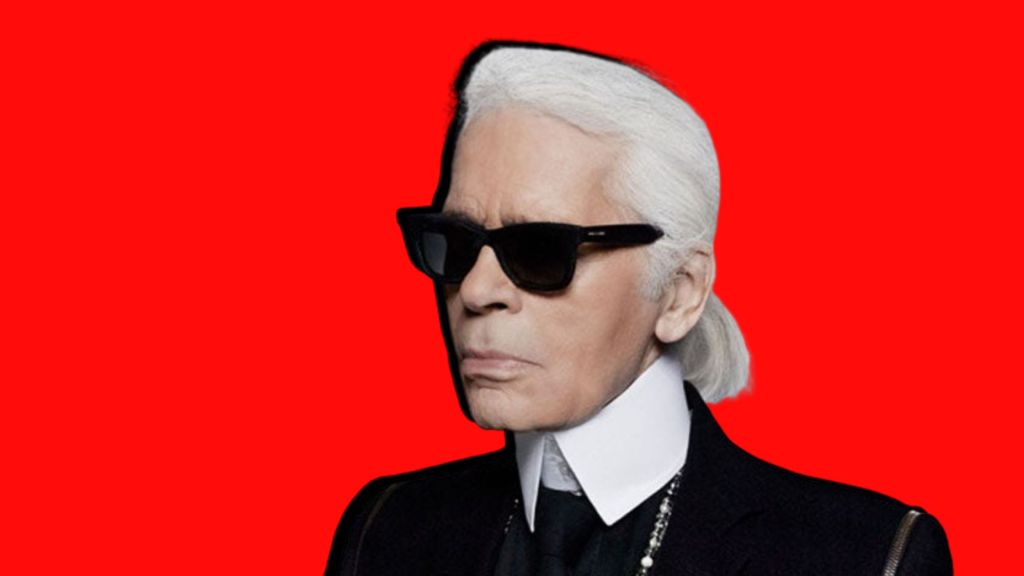
Karl Lagerfeld: How One Designer Shaped an Industry
Karl Lagerfeld arrived in the public imagination as a myth made real. He was the white ponytail, the dark glasses, the razor wit and the relentless output of ideas. He remade houses, reimagined archives, treated fur as fabric and runway shows as theatre. He also hoarded books, loved a cat, and kept people at arm’s length. This is the story of how a boy from Hamburg became one of fashion’s most durable architects, and why his work still matters.
Early life and the move to Paris
Karl Otto Lagerfeld was born in Hamburg on September 10, 1933. His childhood moved between Germany and an emerging interest in the visual arts. The young Karl drew constantly and spent hours at the Kunsthalle Hamburg museum, a habit that would shape his aesthetic education more than any classroom. His family background gave him dignity and distance: he came from a household with business connections and, later, international ties that made Paris both plausible and magnetic. (Encyclopedia Britannica)
He relocated to Paris as a teenager and enrolled in Lycée Montaigne, learning French and absorbing Parisian culture. Paris in the 1940s and 1950s felt like a center of possibility to Lagerfeld; it was where haute couture still reigned, where tailoring and taste mattered, and where a visual sensibility could become a profession.
First steps in fashion
Apprenticeship in a world of ateliers
Lagerfeld’s entry into the fashion world was not slick or immediate. He worked as an assistant and freelancer, developing skills across drawing, pattern-making, and illustration. The 1950s were years of apprenticeship. He freelanced for several Paris houses and slowly built a reputation as a designer who could sketch with economy and invention.
His early network included names that mattered: Balmain and Patou were part of the landscape he passed through as he learned how Parisian couture worked, how clients were courted, and how a signature could be shaped.
Breaking out in the 1960s
By the early 1960s Lagerfeld had begun freelancing for Chloé and other labels. That decade was a turning point for him and for ready-to-wear fashion in general. Couture’s dominance was softening and new shapes and sensibilities were emerging. Lagerfeld’s eye—sharp, modern and not slavish to precedent—fit the moment.
In 1965 he accepted a major, steady role with Fendi in Rome, where he would begin the long collaboration that made him an authority on fur and texture. Over time he also took on creative roles at Chloé and other houses, proving he could move between the playful and the formal without losing clarity of taste. (British GQ)
Fendi, fur, and the idea of reinvention
Redefining fur
At Fendi, Lagerfeld treated fur as a material with infinite possibilities rather than as a static sign of luxury. He experimented with cutting, layering and dyeing, turning pelts into tactile, tailored garments. Part of his genius was making craftsmanship feel contemporary. Where some designers preserved technique as museum pieces, Lagerfeld applied it like an instrument—to be tuned, updated and used.
His decades-long collaboration with Fendi became a laboratory. It allowed him to explore direction, technique and the scale of fashion production, and it kept him rooted in a brand identity even as he chased other projects.
The Chanel chapter: a revival and an empire
Walking into a sleeping giant
By 1983, Chanel was a legacy brand in need of a vision. Coco Chanel had died in 1971 and the house had drifted. Bringing Karl Lagerfeld on as chief artistic director was a gamble that changed fashion history. He arrived with a respect for Chanel’s codes—tweed, the camellia, the chain strap bag—and the appetite to modify them for a new generation. (British Vogue)
Modernizing without tearing down
Lagerfeld’s approach to Chanel was neither strict revivalism nor reckless reinvention. He respected the brand’s grammar while expanding its vocabulary. He played with proportions, updated silhouettes, and introduced unexpected references—sporting motifs, streetwear attitudes and rock culture—while keeping the house’s sense of femininity intact. The result was a Chanel that felt freshly relevant and commercially powerful.
He also changed how fashion shows worked. Runway presentations became theatrical events under his direction, with sets that have since become part of modern fashion myth: a full supermarket, a train station, a café, even a recreated Grand Palais. Those shows made headlines and broadened the audience for high fashion. The spectacle worked; it turned collections into culture moments and magazine spreads into viral images. (British Vogue)
Building the business
Beyond aesthetics, Lagerfeld was crucial in expanding Chanel’s reach. He oversaw licensing, accessories and collaborations that turned brand affinity into a global business. He was a shrewd interpreter of how luxury could be refreshed without losing its value.
The man behind the glasses
A signature uniform
Lagerfeld cultivated an unmistakable persona as surely as he designed clothing. The slick white hair pulled back into a ponytail, high-collared shirts, fingerless gloves, and black sunglasses were less a costume than a consistent public identity. He made a uniform for himself at a time when designers were becoming celebrities, and that uniform read like a promise: order, control, taste and a refusal to be ordinary.
Work speed and obsessive curiosity
He claimed to work at a pace others found impossible. He kept notebooks, sketched constantly, curated books and art, and moved between roles—designer, photographer, publisher, stylist—with a rare fluency. He opened a bookshop in Paris called 7L and launched a publishing imprint, both extensions of a lifelong appetite for images and texts. His collecting was encyclopedic; he loved reference, history, and the conversation between past and present.
Photography and other obsessions
Lagerfeld was a photographer with an eye trained by design. His fashion photography and portraits often emphasized texture and line. Later in life he displayed hundreds of photographic series and staged exhibitions that proved he was more than a clothesmaker. He also drew political cartoons for newspapers and engaged in other creative practices, treating visual culture as a field to work across rather than a single lane to stay in.
Creative method and collaborations
Archives as raw material
One consistent feature of Lagerfeld’s practice was his relationship with archives. He understood that a heritage brand’s archive is not a museum piece to protect, but a toolkit to be sampled. He would riff on Chanel codes, remixing them across decades.
Collaborations and commerce
He navigated the tension between high art and commerce with rare skill. Collaborations ranged from couture-worthy capsule lines to high-street partnerships. Notably, his 2004 H&M collaboration brought couture language to a mass audience in a way that felt like a public lesson in branding. He knew how to scale an idea while retaining authority.
Controversies and contradictions
Public remarks and apologies
Like many public figures with sharp tongues, Lagerfeld occasionally provoked criticism. He made remarks that some found insensitive or dismissive, which he at times defended and at other times softened with an apology. That abrasive public persona existed alongside deep friendships and professional generosity; people who worked with him often described both brilliance and a capacity to be cold.
His public comments sometimes distracted from his work, but they also emphasized the complex tradeoff of personality and power in fashion: the same directness that made him memorable could also be alienating. (Pitchfork)
Private life, public myth
Lagerfeld’s private life was tightly curated. He never married and maintained a small inner circle. His longtime relationship with Jacques de Bascher, who died in 1989, was meaningful and remained a defining emotional chapter. He surrounded himself with confidants, muses and collaborators, yet he protected his core with great care.
Personal tastes and the small obsessions
Books, jewelry and Choupette
Lagerfeld was a voracious collector of books. He amassed what is often described as one of the largest personal libraries in modern fashion. He loved jewelry, especially pieces by Suzanne Belperron, and he savored the small pleasures that fed his aesthetic life.
He also famously loved his Birman cat, Choupette. Choupette became something of a celebrity: adored, photographed and even imagined by Lagerfeld as a kind of companion in the long solitude of creative work. The cat’s public profile reflected Lagerfeld’s knack for turning personal devotion into cultural anecdote.
Running a house and mentoring talent
The extended role of the creative director
Lagerfeld’s job at Chanel and Fendi was not limited to sketching and show direction. He managed ateliers, approved craftsmen, hired designers and mentored talent. He set standards and insisted on quality. People who spent years under his wing recall a rigorous workshop culture that demanded precision and clarity.
A complicated mentorship
Mentorship under Lagerfeld could be intense. He inspired loyalty and produced apprentices who absorbed his aesthetic rigor. Yet his standards could be exacting. If you worked for Lagerfeld, you learned to make exemplary work under pressure.
Late career, retrospectives and cultural placement
Beyond clothes: museums and exhibitions
As his profile grew, museums and institutions began to look at Lagerfeld as a cultural figure, not merely a commercially successful designer. Exhibitions showcased his photography, costume design and the theatricality of his shows. These retrospectives were acknowledgements of an unusual career that crossed commercial success, cultural production and personal mythmaking.
A global memorial
When he died on February 19, 2019, the fashion world reacted with immediate and profound mourning. Tributes poured in from colleagues, models, and public figures who acknowledged his influence on a generation of designers and the global luxury market. (The Guardian)
A public memorial titled “Karl For Ever” later gathered thousands at Paris’s Grand Palais and became a spectacle in itself, showcasing the alliances and loyalties Lagerfeld had cultivated across his life. The event mixed high seriousness and performance, a fitting second act for a man who staged so many first acts on the runway. (TIME)
Death, estate, and how he arranged his life
Lagerfeld’s final months had been marked by recurring health issues. He was admitted to a Paris hospital in February 2019 and died there. He had requested privacy and minimal ceremony, and his wishes about memorialization reflected a lifetime of controlling the narrative around his work and image.
He left a complex estate and instructions that reflected his attachments; his will and the questions around inheritance later made headlines. These posthumous disputes reminded observers that a creative life also has legal and material consequences.
What Karl changed in fashion
Reviving brands and making them modern
Lagerfeld proved that a heritage brand could be renewed without breaking its identity. He threaded respect for founders’ codes with contemporary inflections. In doing so he helped luxury houses translate cultural change into commercially viable product.
He also reshaped the spectacle of fashion. The show was no longer a technical presentation for buyers; it became an event that clubs, magazines and the public could experience. That shift mattered. It changed marketing strategies and how designers imagined audiences.
Material curiosity and craft
He elevated the idea that technique could be playful and exploratory. The work he did with fur at Fendi and tailoring at Chanel made technical excellence a visible part of modern fashion discourse. He demonstrated that mastery of materials was still a central route to innovation.
Globalized luxury
Under Lagerfeld’s direction, Chanel grew into a modern global luxury powerhouse. His taste-making extended into bags, eyewear, perfumes and ready-to-wear in ways that allowed an icon to become an industry.
Reputation, criticism and the balance sheet
Lagerfeld’s legacy is neither uniformly heroic nor easily condemned. He advanced design, spectacle and the commercial architecture of luxury, but he also personified some of fashion’s excesses: a celebrity culture that sometimes foregrounded personality over humility, and commentary that could be brusque.
Still, the balance sheet of influence is large. He trained hands and eyes, he shepherded ateliers and archives, and he transformed shows into cultural events.
Final years and memorialization
In the years before his death Lagerfeld continued to work; his output slowed only slightly. He experimented with exhibitions, published books and remained an unmistakable presence at his houses.
After his death, Chanel, Fendi and the broader fashion world marked his contribution with exhibitions and tributes. The memorial at the Grand Palais captured the mixture of spectacle and sincerity that framed his career. (TIME)
Why his story still matters
A model for modern creative direction
Lagerfeld’s career provides a template for what a 20th and 21st century creative director can be: part historian, part marketer, part showrunner and part craftsman. He teaches how to steward a brand’s past while steering it into the future.
The limits of genius and the costs of celebrity
Equally important is what his life tells us about personality in public life. Influence can be generous and lonely. It can produce remarkable cultural goods and create interpersonal distance. His contradictions are part of the lesson.
Work, taste and legacy
His work remains in wardrobes, museums and textbooks. The Chanel silhouettes he refined persist. The spectacle he perfected is now conventional in big shows. The techniques he updated are taught in ateliers. Those are measurable, durable traces of a long career.
Closing: a nuanced inheritance
Karl Lagerfeld left behind an uneasy mixture of brilliance and controversy, of meticulous craft and theatrical excess. He was a prolific creator whose life was organized around taste and control. He was also a man who kept close those he trusted and kept private the parts of life that mattered most to him.
If we measure a legacy by the number of people who learned from him, the scale of the brands he transformed, and the way he reshaped fashion’s relationship to spectacle, then Karl Lagerfeld’s place in fashion history is secure. He made fashion larger than clothes. He made it cultural, cinematic and consequential.
For readers of fashion, culture and history, the story of Karl Lagerfeld is useful precisely because it resists a simple moral. He was an architect of elegance and a constant provocateur. He remade rules while often reminding us that rules can be rewritten. That duality is his most lasting lesson.
 Ayerhs Magazine