
A — Archives
Karl Lagerfeld never treated archives as untouchable history. At Chanel especially, he returned to Coco Chanel’s visual language every season, not to preserve it, but to reactivate it. Tweed, chains, camellias and pearls were constantly reshaped, resized, and reframed so the past felt present. For Lagerfeld, archives were a starting point, not a conclusion.
B — Books
Lagerfeld owned hundreds of thousands of books and considered reading essential to good design. He believed taste was built through reference, not instinct alone. His Paris bookstore, 7L, reflected this philosophy, functioning as both cultural hub and personal library. Books informed everything from his silhouettes to his photography, feeding a lifelong curiosity that extended far beyond fashion.
C — Chanel
When Lagerfeld joined Chanel in 1983, the house was respected but creatively stalled. He revived it by understanding its codes rather than copying its past. Chanel under Lagerfeld became modern, commercial, and culturally dominant, balancing heritage with constant reinvention. His tenure transformed Chanel into one of the most powerful luxury brands in the world.
D — Discipline
Lagerfeld’s productivity came from strict discipline rather than inspiration. He worked daily, sketched constantly, and avoided emotional attachment to ideas. This method allowed him to sustain creative output across multiple brands for decades. He believed consistency and structure, not spontaneity, were the foundations of long-term creative success.
E — Eyewear
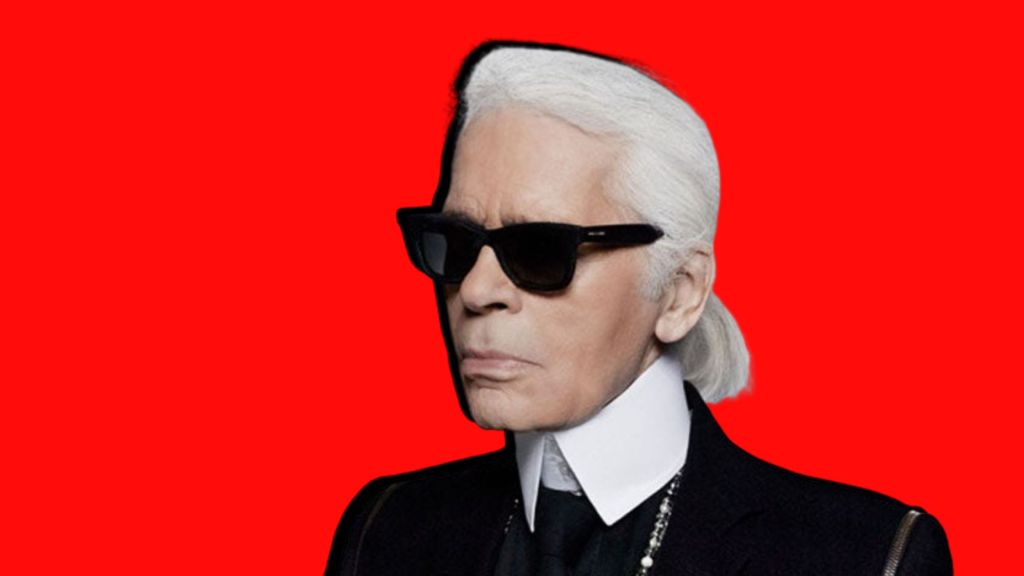
Dark sunglasses were central to Lagerfeld’s image. They functioned as both a style signature and a barrier. By obscuring his eyes, he maintained control over his public persona. The eyewear reinforced the idea of Karl Lagerfeld as a constructed figure, carefully managing visibility while remaining instantly recognizable.
F — Fendi
Lagerfeld joined Fendi in 1965 and remained there for over 50 years. His work transformed fur from a rigid luxury symbol into a flexible, experimental material. Through innovative cutting, dyeing, and treatment, he modernized the craft while respecting its technical demands. His partnership with Fendi became one of fashion’s longest and most influential collaborations.
G — Gloves
Fingerless leather gloves became part of Lagerfeld’s uniform. More than an accessory, they reinforced his carefully curated image. The gloves blended elegance with edge and emphasized his hands, tools of constant creation. Like much of his personal style, they were functional, symbolic, and instantly identifiable.
H — Hamburg
Born in Hamburg, Germany, Lagerfeld’s early environment was structured and formal. This upbringing influenced his disciplined approach to work and aesthetics. The contrast between his German roots and later Parisian life shaped his sharp sense of order, precision, and control, qualities that defined both his designs and his public persona.
I — Image
Lagerfeld understood the power of image long before designers became public brands. He controlled how he appeared, how his work was photographed, and how narratives formed around him. Image was not secondary to design; it was part of it. His mastery of visual identity helped him remain relevant across changing cultural landscapes.
J — Jacques de Bascher
Jacques de Bascher was one of the most significant relationships in Lagerfeld’s life. Their bond was complex and deeply personal. De Bascher’s death in 1989 profoundly affected Lagerfeld, reinforcing his emotional reserve and shaping his later life. Though rarely discussed publicly, the relationship marked a lasting emotional chapter.
K — Karl (the persona)
“Karl” functioned as a persona distinct from the private individual. Lagerfeld carefully separated the two, allowing the public figure to be sharp, provocative, and theatrical. This division protected his personal life and enabled him to operate comfortably under constant scrutiny while maintaining emotional distance.
L — Lagerfeld (the label)
His namesake label allowed Lagerfeld greater creative freedom beyond heritage houses. It became a platform for experimentation, collaborations, and commercial reach. The brand reflected his personal aesthetic and ability to navigate fashion at multiple levels, from luxury to accessible design.
M — Multitasking
Lagerfeld simultaneously led Chanel, Fendi, and his own brand for years. This level of multitasking was central to his identity. He believed creative energy increased with momentum, not rest. Managing multiple collections sharpened his focus and reinforced his reputation for relentless productivity.
N — Notebooks
Sketchbooks were essential tools in Lagerfeld’s process. He recorded ideas quickly and without sentimentality. Drawing was practical, not precious. His notebooks reflected a working mindset, where ideas were meant to move forward rather than linger.
O — Opinionated
Lagerfeld was outspoken and often controversial. He believed provocation was preferable to silence and rarely softened his views. While this attitude drew criticism, it also reinforced his reputation as a figure unwilling to dilute his opinions for approval.
P — Photography
Lagerfeld photographed campaigns and editorials himself, seeing photography as another extension of design. Controlling the lens allowed him to shape narratives around his collections. His photographic work emphasized texture, structure, and atmosphere, aligning closely with his fashion sensibility.
Q — Quilting
The Chanel quilted bag became a constant site of reinvention under Lagerfeld. He preserved its recognisability while adjusting scale, material, and styling. Quilting became a flexible design language rather than a fixed symbol.
R — Reinvention
Reinvention defined Lagerfeld’s career. He believed stagnation was fatal, both creatively and commercially. Each season was a chance to revise, rethink, and refresh. This mindset allowed him to stay relevant across decades of cultural change.
S — Shows
Lagerfeld transformed fashion shows into immersive cultural events. Elaborate sets turned runway presentations into global spectacles. These productions expanded fashion’s audience and reshaped how collections were consumed by media and the public.
T — Tailoring
Despite theatricality, tailoring remained central to his work. Structure, proportion, and construction anchored even the most dramatic designs. Craftsmanship was never secondary to spectacle.
U — Uniform
Lagerfeld wore the same silhouette for years. His uniform simplified daily choices and reinforced visual consistency. It was both practical and symbolic, reflecting control and clarity.
V — Volume
He constantly experimented with proportion. Oversized shapes and sharp contrasts refreshed classic forms. Volume allowed him to modernize silhouettes without abandoning their foundations.
W — Work Ethic
Lagerfeld worked until his final years. He believed work defined identity and resisted the idea of slowing down. Productivity was purpose.
X — X-Factor
His defining advantage was endurance. Longevity came from discipline, adaptability, and constant curiosity rather than isolated moments of brilliance.
Y — Youth
He designed for contemporary audiences regardless of his age. Youth, for Lagerfeld, was about relevance and awareness, not numbers.
Z — Zeitgeist
Lagerfeld had an instinct for reading cultural shifts. His ability to translate the zeitgeist into fashion kept his work influential and widely resonant.
 Ayerhs Magazine