
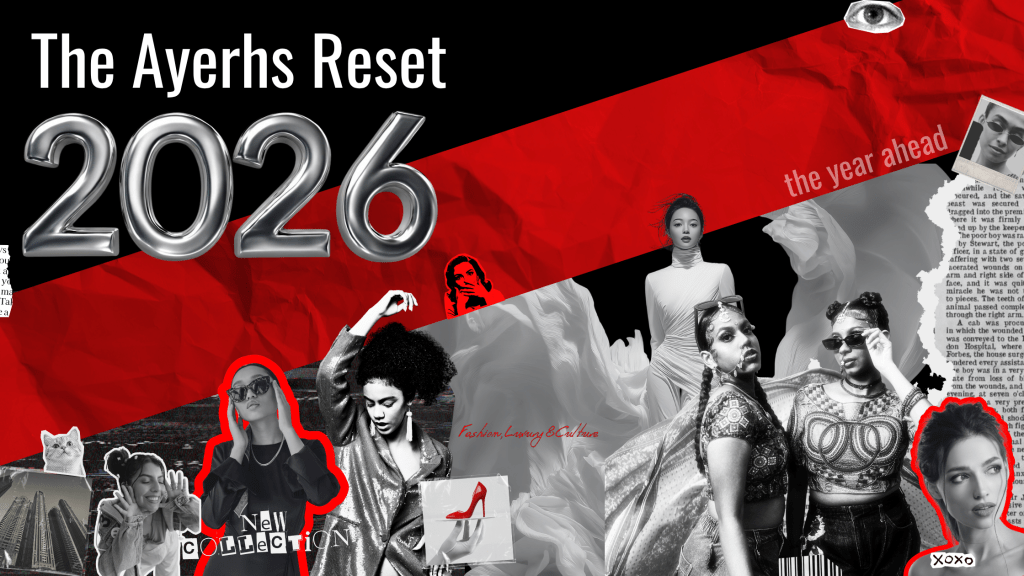
Being in your twenties has always come with confusion, pressure, and a little chaos. But the identity crisis that twenty somethings face in 2026 feels different. It is heavier and lighter at the same time. More public, more internal, and somehow more contradictory. You are supposed to be building a life that looks intentional while still figuring out what you even want. You are expected to know yourself deeply while also accepting the fact that you are a work in progress. This tension has created a strange paradox. You feel lost and self aware at the same time. You are stuck but still moving. You are growing while constantly questioning every direction.
This is the identity crisis that defines the twenties today. Not the dramatic collapse of everything you believe, but the slow and constant negotiation between who you are, who you want to be, and who you think you should be.
The Pressure to Have a Clear Story
Twenty somethings today live in a world where identity is expected to be clearly packaged. People have bios that define them in a sentence. They have portfolios that show a coherent creative voice. They share content that presents an aesthetic they are supposed to stick to. They talk about purpose in a way that feels almost branded.
It is not that younger people want to perform their lives, but the culture nudges them to. If you do not have a story, one will be assigned to you. If you do not describe who you are, people will fill in the gaps. This creates a subtle pressure to define yourself before you have had the time or experiences to figure it out. You feel like you need to choose your vibe, your career path, your creative lane, your relationship style, and your values all before you have even lived enough to know what fits.
The paradox is that the twenties are supposed to be the decade where you explore. Yet they are also the decade where you are judged most for not having it all figured out.
Choice Overload and the Myth of Infinite Possibilities
People love telling twenty somethings that they have endless possibilities. This is meant to sound inspiring, but it often feels like a set up. Having infinite choices does not free you. It traps you. If you choose one thing, you fear you are closing the door on ten others. If you wait too long to choose, you feel like you are falling behind.
Technology has made everything more accessible. You can study anything, be anyone, work anywhere, and change directions entirely. But access to everything can feel like freedom only on the surface. Under it, it feels like pressure. You start asking yourself if you are wasting your potential. You fear choosing something average. You wonder why everyone else seems to be moving faster.
This is the identity crisis of abundance. You are overwhelmed because the world tells you you can do so much, but does not tell you what matters. So you keep switching lanes, experimenting, and second guessing.
The Internet’s Role in Shaping Identity Confusion
The internet has become the main stage where identity plays out. You see versions of yourself that you could be. You see careers that seem more meaningful. You see lives that seem better curated. You see people your age who look like they have cracked the code. It is easy to feel like you are the only one stuck in uncertainty.
The online world accelerates comparison. You do not just compare achievements. You compare personality, lifestyle, style, interests, beliefs, and even mental health. Everything becomes performative, including vulnerability. If you share your struggles, you feel like you must package them in a way that is inspiring. If you stay private, you fear being unseen.
The irony is that while the internet gives you the language to articulate your identity, it also makes you doubt every part of it. You pick up micro trends, opinions, and aesthetics that feel right in the moment but fade quickly. You shift identities like tabs in a browser. It is not because you are trying to be fake. It is because you are trying to find a version of yourself that feels true and sustainable.
Trying to Stand Out While Wanting to Fit In
This is one of the most exhausting parts of the twenty something identity crisis. You want to be unique, but you also want community. You want to be authentic, but you also want to be understood. You want to express yourself freely, but you also want to avoid judgment.
Standing out and fitting in sound like opposite goals, but most twenty somethings are trying to do both. You want to be the friend with interesting ideas, the coworker with potential, the person who is passionate about something. But you also want to blend into conversations without feeling out of touch. You want to share your personality, but not too much. You want to be bold, but not in a way that risks discomfort.
This balancing act creates a lot of quiet anxiety. You feel like you need to monitor how you show up in every space. It is not that you are trying to impress people constantly. You are just trying to avoid being misunderstood.
The Rise of Fluid Identities
One of the most liberating parts of being a twenty something in 2026 is the acceptance of fluid identity. People are more open about exploring different versions of themselves. Careers are no longer linear. Relationships do not all follow traditional structures. Creativity is cross disciplinary. Cultural identity is more hybrid than ever.
Fluidity has made it easier to experiment without feeling judged. But it also means there is no fixed template to guide you. You can reinvent yourself anytime, but that also means you can lose yourself anytime. There are no clear benchmarks for where you should be or who you should be. The freedom feels exciting until you realize that stability is also something you crave.
This is why the identity crisis feels paradoxical. You want openness and structure at the same time.
The Fear of Making the Wrong Turns
In your twenties, every decision feels louder than it actually is. Choosing a job feels like choosing your lifetime trajectory. Ending a relationship feels like closing off the future you imagined. Moving cities feels like a make or break moment. Even small choices like deleting social media or picking a new major can feel irreversible.
This pressure is not because the stakes are truly that high, but because you do not want to disappoint yourself. You want to look back at your twenties and feel like you made thoughtful decisions. You want to feel proud of the risks you took. You want to believe that you followed your intuition and not the noise.
The identity crisis shows up as a quiet fear that you are not choosing right. It makes you overthink, pause, and doubt your instincts. But the reality is that your twenties are full of detours, and detours are part of the process. You do not become the person you want to be by making one perfect choice. You become that person by making many imperfect ones.
The Weight of Self Awareness
Twenty somethings today are incredibly self aware. Therapy culture, mental health conversations, and online discourse have given this generation vocabulary that older generations did not have. You know your patterns. You know your triggers. You know your attachment style, your burnout signs, your boundaries, and your flaws. This level of self insight is empowering, but it can also be overwhelming.
When you know so much about yourself, you are constantly analyzing. You reflect on every reaction, every doubt, every decision. You feel like you need to grow constantly. You set standards for emotional maturity that you sometimes cannot meet. You compare your progress to people who seem more healed.
Self awareness becomes another area where you can fall behind. And that is the paradox. The tools meant to help you become more grounded sometimes make your identity feel more complicated.
Career Identity and the Need for Meaning
Work has become one of the biggest sources of identity confusion. Twenty somethings do not want to work just for the sake of survival if they can help it. They want meaning, creativity, autonomy, and balance. But they also live in an economy where job markets shift constantly, income is uncertain, and career paths feel unstable.
You might like your job but still question if it is your purpose. You might be doing well but still feel uncertain. You might be following your passion but still be broke. The modern workplace does not provide long term clarity. So you end up questioning if you are wasting your twenties doing something that does not align with your values.
This makes the identity crisis sharper. You are building your skills while also trying to stay true to your inner compass. You are tired of hustle culture but also afraid of stagnation. You want work to matter, but you also want your life to be bigger than your job.
Relationships and the Search for Belonging
Relationships in your twenties are complicated. You are forming friendships based on shared growth rather than convenience. You are navigating dating with more emotional intelligence, but also more emotional caution. You are figuring out boundaries, communication, and compatibility while still becoming the person you want to be.
Romantic relationships can feel like both comfort and pressure. You want connection, but you fear losing your individuality. You want commitment, but you do not want to settle. You want intimacy, but you carry the anxiety of being misunderstood. This makes every relationship feel like part of your identity exploration rather than a stable separate chapter.
Friendships matter more than ever, yet friendships shift as people move, change priorities, and evolve. Losing friends or drifting apart feels like losing parts of yourself. Building new circles takes time and emotional energy.
Identity is relational. And when relationships shift often, your sense of self shifts with them.
The Quiet Grief of Outgrowing Old Versions of Yourself
One of the most underrated parts of a twenty something identity crisis is the internal grief of letting go. You outgrow beliefs, dreams, friendships, interests, and sometimes entire worlds you once lived in. Even when growth is good, it comes with nostalgia. You miss the version of yourself who was hopeful in a different way. You miss the simplicity of not knowing too much. You miss the energy you once had.
This grief is subtle. You feel it when you scroll through old photos or revisit old habits. You feel it when you realize you no longer relate to the things that once defined you. You feel it when you see people who stayed the same while you changed.
But this grief is also proof of evolution. Identity is not something you hold on to forever. It is something you shed, rebuild, and renegotiate.
Learning to Live with the Paradox
The identity crisis of the twenties does not disappear when you make the right choices. It does not end when you finally feel confident. It stays because the decade is meant to be transitional. You are not supposed to know everything. You are supposed to learn what you do not want, fail a little, grow unevenly, and stumble into clarity slowly.
The paradox is that you can be confused and still be on the right track. You can be lost and still be moving forward. You can be changing constantly while still becoming more yourself. The confusion is not evidence of failure. It is evidence that you are paying attention.
Twenty somethings today are navigating identity in a world that demands certainty but offers none. They are carrying expectations while questioning the systems that impose them. They are balancing individuality with community, ambition with rest, clarity with experimentation.
The identity crisis is not a glitch. It is a mirror. It shows you that growth is not linear and identity is not fixed. And maybe the point is not to figure out who you are fully, but to learn how to live honestly through every version of yourself.
That is the real paradox. You feel lost because you are changing. And you are changing because you are living.
 Ayerhs Magazine