
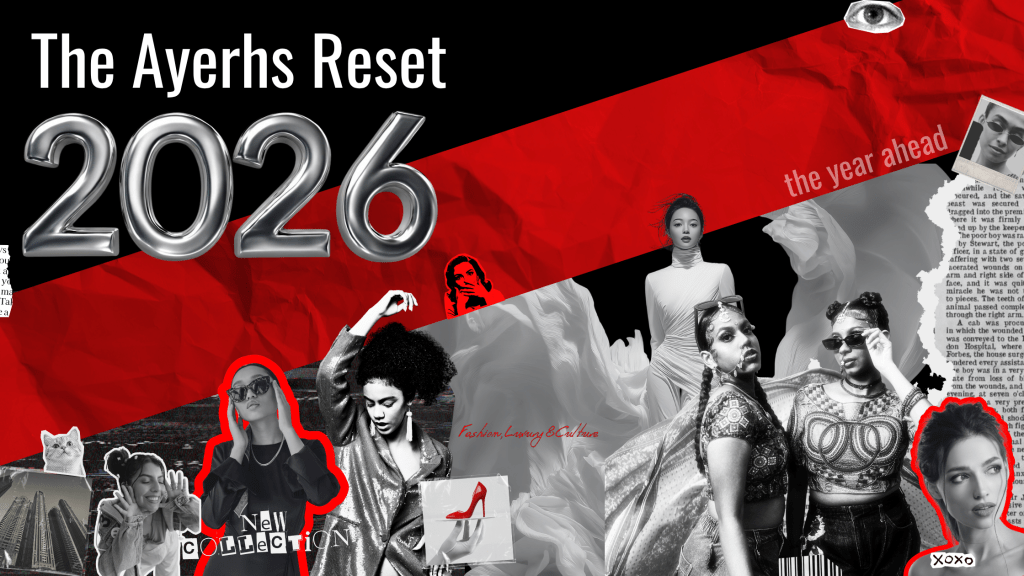
Fashion has always had a way of mirroring rebellion. From punk’s safety pins to grunge’s undone layers, the anti-establishment attitude has repeatedly surfaced when the world feels too controlled, too polished, too systemized. And right now, in 2026, fashion seems to be heading toward yet another anti-establishment revival — not just in aesthetics, but in ideology.
The rise of this sentiment isn’t about shock value or chaos anymore. It’s about reclaiming individuality in a system that has long monetized self-expression. The new generation of designers, stylists, and consumers is questioning authority — whether that’s traditional fashion houses, algorithm-driven aesthetics, or even the performative version of “woke” fashion.
Let’s unpack why 2026 might just be the year that anti-establishment fashion makes its strongest return yet — not as an underground movement, but as a cultural shift redefining what it means to be stylish.
The Rebellion Isn’t Loud — It’s Intentional
Unlike the overt rebellion of the past, today’s anti-establishment fashion doesn’t scream for attention. It whispers. It refuses. It subverts.
Think of it this way: the rebellion isn’t in ripped jeans or safety pins anymore — it’s in choosing to wear a piece from an unknown local designer instead of a logo-soaked drop. It’s in the quiet decision to thrift rather than buy new, or to rewear a look to a major event and proudly post about it.
Gen Z and Gen Alpha’s growing influence is steering this change. They’re tired of hype cycles that last three days, and even more tired of being told what’s “in.” Instead, there’s a craving for autonomy. The rebellion now lies in making choices that feel personal — not prescribed by an algorithm or dictated by luxury conglomerates.
2026’s anti-establishment mood, then, isn’t about creating chaos. It’s about clarity. It’s about saying no — no to overproduction, no to meaningless trends, no to the performance of originality.
Fashion’s Gatekeepers Are Losing Control
The industry once ran on exclusivity — the idea that only a select few got to decide what was cool. But 2026 is showing how that hierarchy is crumbling.
Platforms like TikTok and Depop democratized not just fashion access but taste-making. A 19-year-old in Seoul or Mumbai can influence the aesthetic direction of a global brand with a single viral post. Independent designers can bypass the need for press coverage or retail placement by connecting directly with niche communities online.
But now, there’s a deeper shift happening: people are rebelling against the democratization itself. The irony of “accessible fashion” becoming another marketing strategy isn’t lost on today’s consumers. When every brand claims to be “for everyone,” fashion starts to feel flatter — algorithmic, predictable, and commodified.
Anti-establishment fashion in 2026 is, therefore, pushing back against even that digital uniformity. It’s moving underground again — into micro-scenes, private Discords, invite-only pop-ups, and self-run archives. In this new rebellion, taste is personal currency, not public validation.
The New Uniform: Anti-Uniform
One of the most visible shifts in 2026 fashion is how the “anti-uniform” has become the new uniform. The anti-establishment aesthetic now looks like a refusal to fit any box — it’s eclectic, contradictory, and rooted in real life.
We’re seeing the resurgence of raw edges, unfinished hems, and layering that looks like it was put together in five minutes but somehow feels intentional. There’s a lot of unlearning happening: unlearning what luxury should look like, what femininity should feel like, or what counts as “put-together.”
Designers like Kiko Kostadinov, Vaquera, and Chopova Lowena have already been leading this direction — but the new wave in 2026 takes it further. Brands are experimenting with offbeat proportions, hand-dyed materials, and deconstructed tailoring that feels both intimate and defiant. It’s not about “ugly fashion” anymore — it’s about honesty.
And honesty is the ultimate rebellion in an era of curated perfection.
Asian Designers Are Redefining Rebellion
The epicenter of anti-establishment fashion isn’t just London or New York anymore — it’s also in Seoul, Bangkok, Mumbai, and Jakarta. Asian designers are leading the charge with collections that challenge Western notions of rebellion.
Instead of rejecting tradition, they’re remixing it. Heritage textiles, ancient craft techniques, and cultural silhouettes are being reinterpreted through a distinctly modern lens. The rebellion here is against erasure — against the assumption that Western minimalism is the pinnacle of taste.
This localized defiance reflects a global Gen Z sentiment: the refusal to conform to a single aesthetic ideal. Whether it’s young brands like AMBUSH in Japan, YCH in Korea, or the rising Indian label Bodice, there’s a shared sense of resistance against cultural homogenization.
2026 is showing us that anti-establishment fashion doesn’t need to look like punk or grunge — it can look like a reinterpretation of a sari, or a modern hanbok, or an upcycled school uniform turned streetwear.
The System Is the Enemy — Not the Style
The anti-establishment spirit of 2026 isn’t just about aesthetics. It’s about systems — and specifically, who they benefit.
Consumers are increasingly aware that “rebellious” fashion has been co-opted for profit for decades. The punk look, born from working-class anger, became a runway motif. The grunge look, born from anti-commercialism, became a high-fashion statement. Each act of rebellion got sanitized, repackaged, and sold back at luxury prices.
But the new generation is harder to fool. They understand that true rebellion in fashion today means questioning the supply chain, not just the silhouette. It means supporting independent brands, not just posting about them. It means investing in a single piece that aligns with your values instead of five that mimic someone else’s.
The anti-establishment fashion movement of 2026, therefore, isn’t anti-style — it’s anti-system.
From Performative to Personal
For years, fashion has encouraged self-expression — but only within certain limits. You could be “bold” as long as it photographed well, “different” as long as it was marketable, and “authentic” as long as it fit the aesthetic trend of the moment.
Now, that’s changing.
The anti-establishment energy of 2026 is deeply personal. It’s about dressing for how you feel, not how you’ll be perceived. It’s about rejecting the pressure to constantly be “on.” The revival of minimal wardrobes, the rise of anti-trend dressing, the love for archival pieces — these aren’t just style choices. They’re coping mechanisms in a world oversaturated with visual noise.
This new rebellion is less about visibility and more about integrity. It’s the quiet confidence of wearing something that doesn’t need to be understood by everyone else.
What Comes Next
If there’s one thing fashion history tells us, it’s that rebellion never really dies — it just evolves.
In 2026, anti-establishment fashion isn’t a niche subculture. It’s a collective awakening. A realization that maybe the most radical thing you can do in an industry built on trends is to stop chasing them altogether.
The next phase of fashion will likely continue this trajectory: slower, more localized, more intentional. We’ll see more designer co-ops, cross-border collaborations, and creative collectives that operate outside the system. Fashion weeks will feel less corporate, more experimental. And “influencer” may finally give way to “independent curator.”
Final Thought
To call 2026 the year of anti-establishment fashion isn’t just a catchy headline — it’s a cultural truth. The fashion world is in its reflective era, where rebellion isn’t loud or aggressive but thoughtful, rooted, and quietly radical.
This time, the revolution isn’t about tearing down the system with spikes and slogans. It’s about outgrowing it with clarity and self-awareness. It’s about building something new — where creativity isn’t controlled by commerce, and style isn’t dictated by status.
 Ayerhs Magazine