
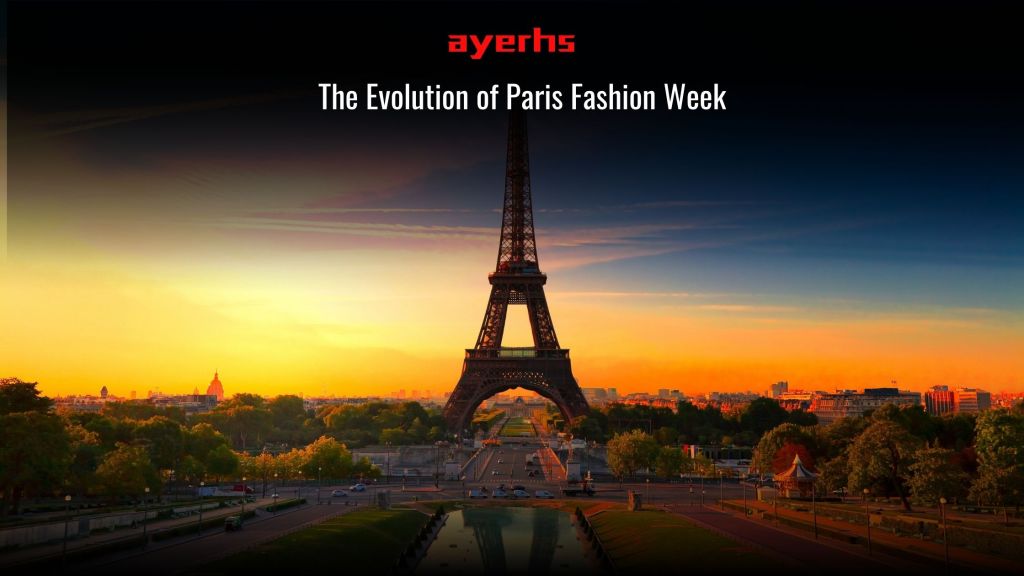
Paris Fashion Week. It is one of those cultural landmarks in fashion that needs no introduction. Even if you are not someone who follows trends or knows the difference between couture and ready-to-wear, chances are you have still heard of Paris Fashion Week. It is not just an event for fashion insiders. It is a celebration, a spectacle, and a marker of what is happening and what is coming in the world of fashion.
But Paris Fashion Week did not just show up fully formed and fabulous. It has taken time, experimentation, and a lot of behind-the-scenes transformation to become what it is today. From private showings in elegant salons to massive productions streamed live to millions of people across the globe, Paris Fashion Week has evolved into a global institution that reflects not only fashion’s best and boldest but also the values, trends, and tensions of the times.
So how did it all begin? And how did we get to the point where fashion week is less about seasons and more about storytelling, identity, activism, and innovation? Let’s rewind and walk through its evolution together.
The Beginnings: Paris as the Birthplace of Fashion
To understand Paris Fashion Week, we need to start way back in the 19th century. The Paris we know today as the fashion capital of the world did not earn that title overnight. In the mid-1800s, an Englishman named Charles Frederick Worth moved to Paris and started something that had never been done before. He created designs ahead of time, used live models to showcase them, and invited clients to view the collection before making purchases.
This was revolutionary. Until then, dressmakers made clothing based entirely on a client’s request. Worth flipped the script. He became the first designer to dictate fashion trends, not just respond to them. And he did this in the elegant salons of Paris, with exclusive guest lists and private presentations. This was the unofficial birth of the fashion show. And Paris became the stage.
What followed was the establishment of haute couture. The term itself means “high sewing” and refers to custom-fitted, high-end fashion that is made by hand from start to finish. In 1868, the Chambre Syndicale de la Haute Couture was established to regulate the standards of this elite art form. Designers had to meet specific criteria to be recognized as haute couture houses. Paris became known not just for fashion but for luxury, craftsmanship, and exclusivity.
Fashion Shows Go Public: From Salons to Runways
For a long time, fashion shows remained relatively small. They were held in private salons, and photography was strictly prohibited. Only invited clients and elite press attended. Artists were hired to sketch the looks because designers were afraid of copycats. It was a world shrouded in mystery, and that was part of its appeal.
But that began to change after World War II. In 1947, Christian Dior launched his debut collection and introduced what came to be known as the “New Look” — think cinched waists, full skirts, and an overt return to femininity after the austerity of wartime fashion. His show was not just a success, it was a cultural moment. People talked. Editors wrote about it. The world took notice.
This was the turning point. Fashion was no longer a whisper behind closed doors. It was becoming a conversation. Designers began holding bigger shows, and the fashion press grew in importance. Names like Coco Chanel, Pierre Balmain, and Hubert de Givenchy became household names. Paris was the place where fashion lived and breathed. And now, people wanted in.
Enter the Concept of Fashion Week
Interestingly, the concept of “fashion week” did not originate in Paris. It actually started in New York during the 1940s. With the war making it difficult for American editors to travel to Paris, publicist Eleanor Lambert organized “Press Week” to showcase American designers. This format caught on quickly.
London and Milan soon joined the party, and by the 1970s, Paris followed suit. The Fédération Française de la Couture, later renamed the Fédération de la Haute Couture et de la Mode, began organizing an official fashion calendar. This calendar included haute couture, menswear, and prêt-à-porter (ready-to-wear) collections. Suddenly, what had once been fragmented became structured.
Fashion week now had a format. There was a clear schedule, a dedicated group of designers, and a growing audience. Paris took its place as the final and most prestigious stop in the Big Four fashion weeks, following New York, London, and Milan.
The 1980s and 1990s: Fashion Becomes Spectacle
By the 1980s, Paris Fashion Week had entered its golden era. This was a time when fashion became bold, theatrical, and unapologetically extravagant. Designers like Jean-Paul Gaultier, Christian Lacroix, and Thierry Mugler turned the runway into a performance space. Their shows were dramatic, colorful, and designed to shock and awe.
This was also the era of the supermodel. Naomi Campbell, Linda Evangelista, Claudia Schiffer, Christy Turlington, and Cindy Crawford became not just faces, but global celebrities. The public started paying attention not just to the clothes but to who was wearing them.
Luxury houses like Chanel, Dior, and Louis Vuitton began investing in bigger productions. Karl Lagerfeld transformed the Grand Palais into everything from a supermarket to a winter wonderland. John Galliano brought drama and fantasy to Dior. Each show became more than a collection reveal — it was a carefully choreographed experience.
Paris was no longer just a fashion capital. It was a cultural epicenter, where fashion, art, celebrity, and commerce collided.
The Digital Turn: Fashion in the Age of the Internet
The 2000s marked another major shift. As the internet became more accessible, so did fashion. Where once runway images were reserved for glossy magazine pages, they were now available online within minutes. Blogs started popping up. Then came social media. Fashion shows were no longer just for the elite. Anyone with an internet connection could follow along.
This democratization changed the game. Street style became just as influential as runway looks. The people attending the shows were being photographed just as much as the models on stage. Paris Fashion Week was not just about what happened inside the venue anymore — it was about the scene outside, the Instagram posts, the viral moments.
The fashion industry had to adapt quickly. Designers began thinking about their digital audiences. Shows were livestreamed. Celebrities and influencers began sitting front row, not just editors and buyers. Collections were dissected online in real time, giving brands immediate feedback and global exposure.
The 2010s: Innovation, Identity, and Inclusivity
By the 2010s, Paris Fashion Week had become something more than just a showcase of clothes. It was a space where designers could speak to broader themes — identity, gender, politics, and sustainability. The industry was slowly acknowledging that fashion does not exist in a vacuum. It reflects the world around it.
Designers like Maria Grazia Chiuri at Dior used the runway to explore feminism, often opening her shows with bold statements like “We Should All Be Feminists.” At the same time, brands began facing calls for greater diversity and inclusivity. Audiences wanted to see more than just one type of body, one skin tone, one ideal.
The push for sustainability also began gaining serious momentum. The fashion industry was being scrutinized for its environmental impact. Paris, with its luxury legacy, found itself at the center of this conversation. Some brands began using upcycled materials. Others rethought the way they produced and presented collections. It was a time of reflection, resistance, and reinvention.
2020 and the Pandemic Shift
The COVID-19 pandemic turned everything upside down. Paris, usually buzzing with energy during fashion week, fell silent. Shows were canceled. Borders were closed. The entire system was paused.
But fashion is nothing if not creative. Designers found new ways to present their collections. Some released fashion films. Others opted for digital presentations. A few sent out lookbooks or hosted intimate showings with no audience. It was not ideal, but it was innovative.
This period forced the industry to slow down. It prompted questions about whether the traditional fashion calendar still made sense. Do we really need four fashion weeks a year? Do clothes need to be made that far in advance? Can digital fashion shows replace physical ones?
Even as restrictions eased and live shows returned, the lessons of the pandemic lingered. Some brands embraced smaller, more curated presentations. Others committed to more sustainable practices. The era of excess gave way — at least partially — to a new kind of intentionality.
Today’s Paris Fashion Week: A Blend of Tradition and Transformation
In 2025, Paris Fashion Week continues to evolve. It still holds the title of the most prestigious fashion week in the world, but it has learned to share space with younger, more experimental designers. Alongside the big names like Chanel, Saint Laurent, and Louis Vuitton, you will now find emerging labels like Marine Serre, Coperni, and Thebe Magugu making waves.
Fashion is no longer dictated from the top down. It is a conversation. It is about community. Designers are collaborating with artists, musicians, and activists. Shows are streamed, stories are shared, and feedback is instant. Fashion has become interactive, and Paris has kept up.
The calendar now includes gender-neutral shows, streetwear-inspired collections, and presentations held outside the traditional venues. One season, you might see a show held in an art gallery. Another, on a rooftop. Some designers are skipping the runway altogether and opting for immersive brand experiences.
Most importantly, there is a sense of urgency. The fashion world knows that the old ways are no longer sustainable — socially, environmentally, or emotionally. The future of Paris Fashion Week lies in adaptability, responsibility, and imagination.
The Lasting Legacy of Paris Fashion Week
So where do we go from here? That is still unfolding. But what remains clear is that Paris Fashion Week will continue to set the tone for what fashion is and what it can be. It has never just been about trends or clothes. It is about culture, art, emotion, and identity.
Every season, Paris Fashion Week offers a window into our collective mindset. It captures what we are celebrating, what we are anxious about, what we want to say but do not always have the words for. Through fabric, form, and function, it tells stories that resonate far beyond the runway.
The fashion world may be fickle. Styles change, creative directors come and go, and audiences are always chasing what is next. But Paris Fashion Week has proven, again and again, that it is more than a moment. It is a movement. It is a reflection of where we have been and where we are headed.
And no matter how digital, global, or experimental the future becomes, there will always be something special about Paris in the fall or spring. The lights, the crowds, the anticipation. The feeling that, once again, something magical is about to happen.
That is the evolution of Paris Fashion Week — not just a fashion show, but a living, breathing chronicle of style, culture, and creativity.
 Ayerhs Magazine