
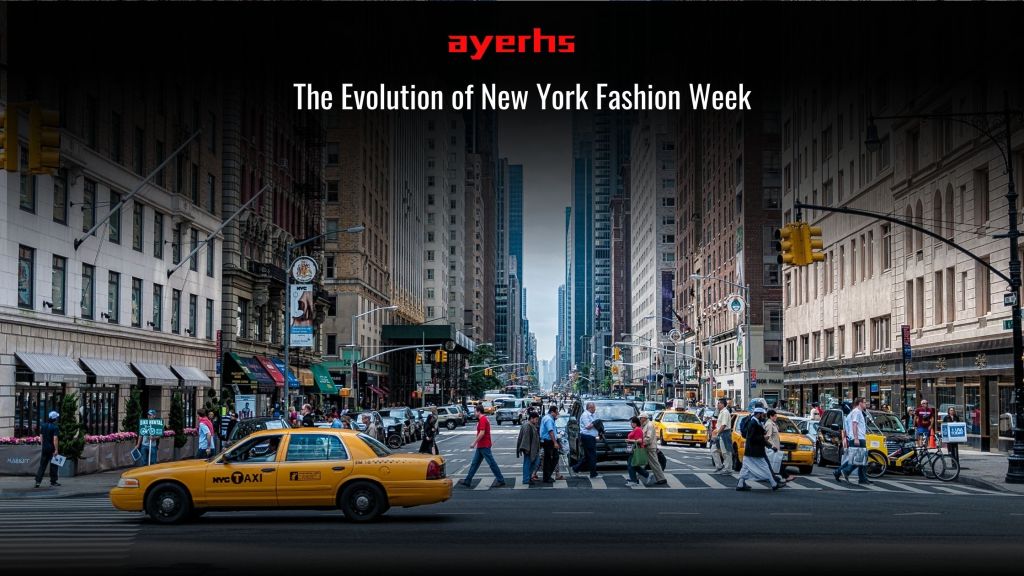
New York Fashion Week. Just hearing the name brings images of bright lights, bold designs, camera flashes, celebrities in the front row, and models strutting down the runway. But this glamorous event didn’t always look like what we know today. In fact, New York Fashion Week has had quite the evolution—from a wartime marketing strategy to one of the “Big Four” fashion capitals in the world.
If you’ve ever scrolled through Fashion Week content and wondered how it all started, how it became so influential, or why it’s still such a big deal, this deep dive into its history and transformation will give you all the answers. Let’s go back in time and trace the footsteps of New York Fashion Week from its humble beginnings to its high-profile present.
The Birth of a Concept: 1943
Let’s start in 1943, during World War II. Paris, long regarded as the epicenter of fashion, was occupied by Nazi Germany, and American designers couldn’t travel to the city to get inspiration or showcase their work. That posed a huge problem—fashion needed a new home, at least temporarily.
That’s when Eleanor Lambert, a legendary publicist and fashion powerhouse, stepped in. She organized what was called “Press Week” in New York City. The idea? To spotlight American designers and prove that the U.S. could hold its own in the global fashion conversation. Instead of European couture, fashion editors and journalists were invited to see what American designers had to offer.
It worked. Editors came. They watched. They wrote. Suddenly, names like Claire McCardell and Norman Norell were on the fashion map. Press Week gave American designers a platform, and New York began its journey toward becoming a fashion capital in its own right.
The Rise of American Style: 1950s–1970s
Following Press Week’s success, designers began organizing their own independent shows throughout New York. There wasn’t a centralized event like we see today—shows were scattered across hotels, showrooms, and department stores. It was a bit chaotic, but it also helped fuel creativity.
During the ’50s and ’60s, American fashion started to lean into its identity. It wasn’t trying to replicate French elegance anymore. Instead, designers like Halston, Bill Blass, and Oscar de la Renta brought forward a uniquely American sensibility—sporty, practical, and modern.
By the 1970s, things began to shift. Fashion wasn’t just about clothes anymore; it was about culture. Designers and brands started to understand the importance of storytelling, celebrity endorsements, and creating moments that transcended the runway. The shows became more elaborate, the audiences more diverse, and fashion began to merge with pop culture in a way it never had before.
The Tent Era: 1993 and Bryant Park
Fast forward to 1993—this was a defining moment in the history of New York Fashion Week. The Council of Fashion Designers of America (CFDA), led by Fern Mallis, launched the modern version of Fashion Week by consolidating shows into a single venue: Bryant Park.
Before that, shows were still being held in all sorts of places—lofts, galleries, hotel ballrooms—and logistical nightmares were common. Guests would have to rush across Manhattan to get from one show to the next. It wasn’t efficient, and it wasn’t sustainable for the growing number of attendees.
Bryant Park changed all that. White tents were erected in the middle of Manhattan, becoming a visual symbol of Fashion Week. It centralized the schedule, offered better production resources, and created a home base for the industry.
Designers loved it. Editors and buyers loved it. And the press? They couldn’t get enough. Suddenly, New York Fashion Week was more organized, more professional, and more prestigious. Everyone wanted to be there.
Fashion Meets Fame: 2000s Pop Culture Boom
By the early 2000s, New York Fashion Week had become more than just an industry event—it was a pop culture phenomenon. You didn’t have to be in fashion to know Fashion Week was happening.
Television played a huge role in that. “Sex and the City” featured Fashion Week episodes. “Project Runway” introduced millions of viewers to the world of design and catwalks. Celebrities became Fashion Week regulars, and front-row seating became an entirely new kind of status symbol.
Suddenly, Fashion Week wasn’t just about clothes—it was about who was wearing them, who was watching, and who was being photographed. Designers started tailoring their shows with this new visibility in mind, creating more elaborate experiences and statement moments designed to go viral before “viral” was even a buzzword.
This was also the era when fashion began to grapple with the internet. Bloggers emerged as real players in the space. While editors from Vogue and Harper’s Bazaar still held court, names like Susie Bubble and Bryanboy started carving out space alongside them, representing a new, digital-first fashion voice.
The Lincoln Center Era and the Move to Spring Studios
In 2010, New York Fashion Week said goodbye to Bryant Park and moved to Lincoln Center. The move was controversial—some loved the grandeur of Lincoln Center, while others felt it lacked the creative edge of earlier shows. Still, the event continued to grow in scale, audience, and influence.
But with growth came criticism. Many argued that Fashion Week was becoming too commercial, too crowded, and too focused on celebrity rather than creativity. Some independent designers began pulling out, choosing to show their collections in smaller, more intimate settings. Others skipped the season entirely, turning to digital lookbooks or off-calendar events instead.
By 2015, Lincoln Center was no longer viable. New York Fashion Week needed a new home. Enter Spring Studios—a more modern, flexible space in Tribeca that allowed for creativity without the massive footprint of previous venues. It marked a shift back toward innovation, intimacy, and storytelling.
The Rise of Digital Fashion and the Pandemic Pivot
Then came 2020—and everything changed.
The pandemic brought the fashion world to a grinding halt. Runways were canceled. Flights grounded. Factories closed. And New York Fashion Week, like every other major event, had to pivot overnight.
Suddenly, the runway was virtual. Designers embraced video presentations, digital lookbooks, and livestreamed shows. Some got creative—shooting films, staging socially distanced sets, or showcasing their collections via Instagram stories and TikTok clips. Others took a pause altogether, focusing on survival over spectacle.
It was a strange moment, but also a freeing one. Designers weren’t beholden to the traditional calendar. They could present when they were ready. And audiences? They were global, tuning in from their phones and laptops rather than lining up outside venues.
This moment fundamentally changed the DNA of Fashion Week. The question became: If we don’t need physical shows, what’s the purpose of Fashion Week? Is it for the press? The buyers? The brand? The public? The internet?
Post-Pandemic: A Hybrid Future
By 2021 and 2022, in-person shows began returning—but they looked different. Yes, there were still runways and photographers, but there was also a significant digital component. Brands began thinking hybrid: physical shows with livestreams, AR try-ons, social media integrations, and more inclusive access for audiences around the world.
Fashion Week also started reflecting the shifts in culture. Diversity became a bigger priority—on the runway, behind the scenes, and in terms of the designers themselves. There was more visibility for BIPOC and LGBTQ+ creators. There was a growing conversation around sustainability, gender fluidity, and ethical fashion.
Shows became less about exclusivity and more about community. Brands like Telfar, Collina Strada, and Chromat brought fresh energy, challenging outdated notions of what fashion should look like and who it’s for. The “cool kids” weren’t just celebrities anymore—they were activists, creatives, and boundary-pushers.
New York’s Identity: Constantly Evolving
One of the defining characteristics of New York Fashion Week is its identity. Unlike Paris, which leans into tradition and couture, or Milan, which celebrates heritage luxury, or London, which is known for risk-taking, New York is a bit of a chameleon. It’s democratic, commercial, edgy, and unpredictable—all at once.
That’s what makes it exciting. One season, you might see classic American sportswear from Ralph Lauren or Michael Kors, and the next, you’re watching a surreal, performance-art-style show from The Blonds or Puppets and Puppets. It holds space for the established and the emerging. The polished and the raw.
This variety reflects the spirit of New York City itself—fast-paced, diverse, experimental, and always pushing forward. And as the fashion world continues to reckon with changes in technology, sustainability, and culture, NYFW is evolving with it.
What’s Next for NYFW?
So, where is New York Fashion Week headed?
For starters, the future will likely be more hybrid than ever. Even as in-person shows continue, digital content is now non-negotiable. Livestreams, TikTok recaps, behind-the-scenes Instagram reels—these aren’t extras anymore; they’re essential.
We’re also seeing a shift in who Fashion Week is for. It’s no longer just for insiders. Gen Z audiences expect transparency and access. They want to see the process, not just the product. And brands that embrace that are thriving.
Sustainability is another huge factor. More designers are opting for smaller collections, slow fashion principles, recycled materials, and circular practices. The fast-paced fashion calendar is being questioned. Do we really need four shows a year? Or can we rethink the model entirely?
There’s also a return to storytelling. Instead of giant spectacles, many brands are focusing on narrative. Whether it’s a short film, a capsule collection rooted in heritage, or a show that speaks to identity and politics, fashion is increasingly about meaning, not just aesthetics.
In the End, It’s Still About the Clothes—And the People
Despite all the changes, the heart of Fashion Week remains the same: it’s about people making clothes, and people gathering to see and celebrate them. The venues may change. The tech may evolve. The audience may broaden. But that core idea—of fashion as expression, as community, as culture—still holds.
New York Fashion Week has had an incredible journey. From wartime necessity to pop culture juggernaut, from tents in Bryant Park to TikTok streams—it’s reinvented itself time and time again. And that’s what makes it so exciting.
It’s not perfect. It still has work to do. But it reflects the times we live in—and the people who shape them. And as long as fashion continues to be a mirror of the world around us, New York Fashion Week will continue to evolve, challenge, and inspire.
Because at the end of the day, New York doesn’t just follow trends—it starts them.
 Ayerhs Magazine