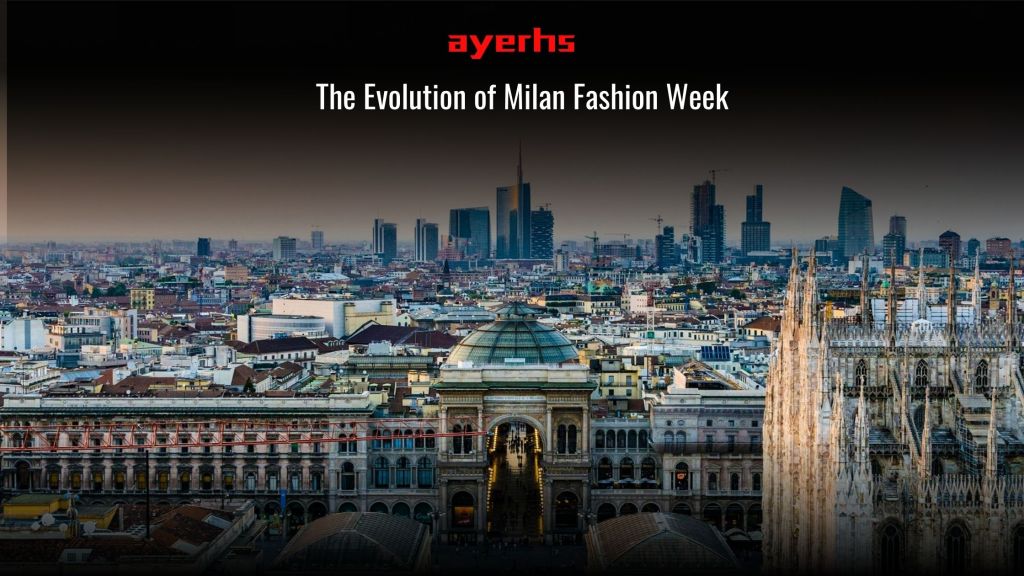
Milan Fashion Week. Just the name alone carries a certain kind of elegance. It conjures images of tailored suits, effortless glam, cobblestone streets filled with impeccably dressed people, and front rows lined with industry heavyweights. But it wasn’t always this polished and globally dominant. Milan Fashion Week has gone through an incredible transformation—from a relatively quiet event to one of the “Big Four” fashion capitals. And like fashion itself, Milan’s moment in the spotlight has been shaped by culture, politics, personalities, and the persistent pursuit of excellence.
So, how did Milan Fashion Week get to where it is today? Let’s take a look back—and forward—at how this iconic event has evolved.
The Humble Beginnings: Fashion in Post-War Italy
To understand Milan Fashion Week’s rise, we have to go back to Italy in the aftermath of World War II. Milan was still reeling from the devastation of the war. Resources were scarce, the economy was recovering, and Italy wasn’t yet considered a fashion destination. Paris was still the reigning queen of fashion, and even London and New York had more international visibility.
But Italian craftsmanship—especially in tailoring, leatherwork, and textiles—was quietly gaining traction. Designers in cities like Florence, Rome, and Milan started showing their work to select clients and buyers. It was less about glitz and more about quality, construction, and innovation.
Florence initially led the charge. Giovanni Battista Giorgini, a Florentine entrepreneur, is often credited with organizing Italy’s first major fashion show in 1951, inviting American buyers to come and see what Italian designers had to offer. These early shows were held in Florence’s grand palazzos and laid the groundwork for Italy’s fashion ascent.
But Milan? At that time, it was better known for business, finance, and industry than style. That, however, would soon change.
Milan Steps In: The 1970s Shift
While Florence was basking in the spotlight in the ’50s and ’60s, Milan was quietly positioning itself as a more practical alternative. The city’s infrastructure was better suited for hosting large-scale events, and it was closer to Italy’s industrial north—where fabrics, dyes, and factories operated. Slowly but surely, Milan started gaining the edge.
The turning point came in the 1970s. Rome and Florence had grown a bit too rooted in tradition, while Milan welcomed a new generation of designers eager to break the mold. Designers like Giorgio Armani, Gianni Versace, and Gianfranco Ferré began making waves with collections that were sleek, modern, and distinctly different from the couture-heavy styles of Paris or the romanticism of Florence.
And Milan’s vibe? It was different. Less aristocratic, more urban. It spoke to working women who wanted clothes that were stylish but wearable. The rise of prêt-à-porter (ready-to-wear) gave Milan a huge advantage, and it ran with it.
The Camera Nazionale della Moda Italiana (CNMI), the governing body for Italian fashion, began organizing Milan Fashion Week officially in the late 1970s. It brought structure and professionalism to what had previously been a scattered calendar of shows and presentations. That formal structure helped Milan attract international buyers and media, gradually earning it a spot among the elite fashion weeks.
The Big Names That Built Milan
Milan Fashion Week owes much of its success to its homegrown talent—designers who didn’t just follow trends but created them.
Giorgio Armani revolutionized menswear and redefined power dressing in the 1980s. His unstructured jackets, muted tones, and minimalist lines became the unofficial uniform of both Hollywood actors and Wall Street execs. When Richard Gere wore Armani in “American Gigolo,” it cemented the brand’s place in pop culture and Milan’s place on the fashion map.
Then came Gianni Versace, with his unapologetic opulence. Versace was loud, bold, and sexy. He introduced color and flash to Milan, embracing prints, leather, and gold like no one else. His shows were events—full of energy, celebrity, and sensuality. Naomi Campbell, Cindy Crawford, and Linda Evangelista walking his runway? That was Milan magic.
Gianfranco Ferré brought architecture to fashion. Known as the “architect of fashion,” his approach to design was technical yet poetic. His time at Dior also elevated Milan’s standing globally, proving Italian designers could lead even the most prestigious French houses.
These designers didn’t just shape Milan Fashion Week—they shaped fashion itself.
The Supermodel Era and International Spotlight
By the late ’80s and early ’90s, Milan Fashion Week was a full-blown spectacle. And just like in New York and Paris, supermodels reigned supreme. Naomi, Claudia, Linda, Christy—the holy trinity (and then some) of fashion were regular fixtures on Milan’s runways.
It wasn’t just about clothes anymore. It was about personality, charisma, and drama. Milan shows were some of the most theatrical of the season. Whether it was a dramatic finale at Versace or a serene, minimalist collection from Jil Sander, Milan delivered both ends of the spectrum.
And then there was the international press. With fashion media growing globally and the rise of fashion TV, glossy magazines, and eventually, the internet, Milan Fashion Week became a global event. The shows, the street style, the after-parties—they all made headlines.
Challenges and Reinvention in the 2000s
The early 2000s were a bit of a mixed bag for Milan. The fashion world was changing fast. The rise of fast fashion disrupted the traditional runway-to-store timeline. Young designers were being discovered via blogs and social media. New York was gaining cool-kid credibility with brands like Alexander Wang and Proenza Schouler, while Paris remained untouchable in the luxury space.
Milan, by comparison, was seen as slightly stuck in its ways. Too many legacy brands, not enough risk. Too much glamour, not enough edge.
But fashion loves a comeback—and Milan started plotting its own.
Designers like Miuccia Prada were already pushing boundaries. Prada’s subversive, intellectual approach to fashion brought a fresh lens to Milan. Miuccia didn’t just make clothes—she made statements. Political, ironic, unexpected.
Dsquared2, Marni, and later, brands like MSGM brought youthfulness and energy to the scene. Milan also started embracing digital innovation, livestreaming shows and tapping into the influencer economy before many others.
Slowly but surely, Milan began blending its classic DNA with a modern sensibility. The return of strong storytelling, diverse casting, and sustainability also gave the week a new purpose.
The Rise of New Voices and the Power of Diversity
Over the past decade, one of the most significant shifts at Milan Fashion Week has been the rise of new voices—especially from underrepresented communities.
Fashion weeks everywhere were being called out for lack of diversity, and Milan was no exception. But in recent years, the industry has seen a conscious shift. Designers like Stella Jean (of Haitian-Italian descent), Marco Rambaldi, and The Attico’s Gilda Ambrosio and Giorgia Tordini brought new perspectives to Milan’s traditionally homogenous runways.
Camera Moda also launched initiatives like We Are Made in Italy, spotlighting BIPOC designers working in Italy. It’s a recognition that talent comes from all backgrounds—and that fashion needs fresh voices if it wants to stay relevant.
The younger generation of Milan-based brands has also brought a more inclusive, experimental energy to the shows. There’s a growing celebration of gender fluidity, body diversity, and cultural cross-pollination that’s changing how Milan is perceived by the world.
Milan in the Pandemic Era: Innovation Meets Tradition
COVID-19 hit the fashion world hard, and Milan was deeply affected. With Italy as one of the early epicenters of the pandemic, Milan Fashion Week in 2020 was forced to rethink everything.
But the crisis also sparked creativity. Digital shows, fashion films, virtual reality presentations—Milan designers embraced technology in unexpected ways. Prada, now co-helmed by Raf Simons, led the charge with minimalist, thought-provoking digital experiences. Brands like Valentino and Sunnei also used this moment to pivot to more intimate, purpose-driven storytelling.
The pandemic made everyone—designers, media, and consumers alike—question what fashion was really for. Milan responded not just with resilience, but with vision. The hybrid format of shows (some physical, some digital) became the new norm, reflecting a more conscious, flexible future.
The 2020s and Beyond: Where Milan is Headed
Now, in the mid-2020s, Milan Fashion Week is experiencing something of a renaissance. The classic houses—Armani, Prada, Dolce & Gabbana, Fendi, Bottega Veneta—are still going strong, with many undergoing creative revivals.
Matthieu Blazy at Bottega Veneta, for example, has earned rave reviews for injecting quiet luxury and artisan-led storytelling back into the brand. His runway shows feel intimate and handcrafted, which resonates in a world that’s grown tired of excess.
Meanwhile, designers like Glenn Martens (guest designing for Diesel), Gilda and Giorgia at The Attico, and Andrea Adamo of Andreadamo are keeping things fresh and current. They’re not just making clothes—they’re creating culture.
Milan is also becoming a stronger player in sustainability conversations. Italian craftsmanship has always focused on quality over quantity, and now that value is being reframed as an eco-conscious choice. From regenerative fabrics to slow-fashion production, more Milanese brands are stepping up to meet the demands of a planet-first future.
And then there’s street style. Once the land of head-to-toe glamour, Milan’s sidewalks now reflect a mashup of high-low dressing, vintage inspiration, bold accessories, and gender-fluid fits. It’s less about showing off and more about self-expression. Fashion editors, influencers, locals—everyone is mixing it up, and it’s making Milan more relatable and fun.
Why Milan Still Matters
So, after all this evolution—why does Milan Fashion Week still matter?
Because it strikes a balance. It honors heritage while embracing change. It knows how to dress both the boardroom and the runway. It’s not afraid to be beautiful—but it’s also not afraid to get a little weird.
Milan has shown that reinvention doesn’t have to mean erasing the past. Instead, it can mean building on it—layering old with new, classic with cutting-edge.
And maybe most importantly, Milan Fashion Week reminds us that style is not just about clothes. It’s about context. About mood, moment, and memory. It’s about a city that turned its industrial roots into a fashion empire—and continues to evolve, one show at a time.
So, whether you’re a die-hard fashion lover or just someone who appreciates good design, Milan Fashion Week offers a little something for everyone. From iconic brands to breakout stars, from show-stopping runways to street style on the sidewalks, Milan continues to dress the world—and redefine what style means along the way.
 Ayerhs Magazine