
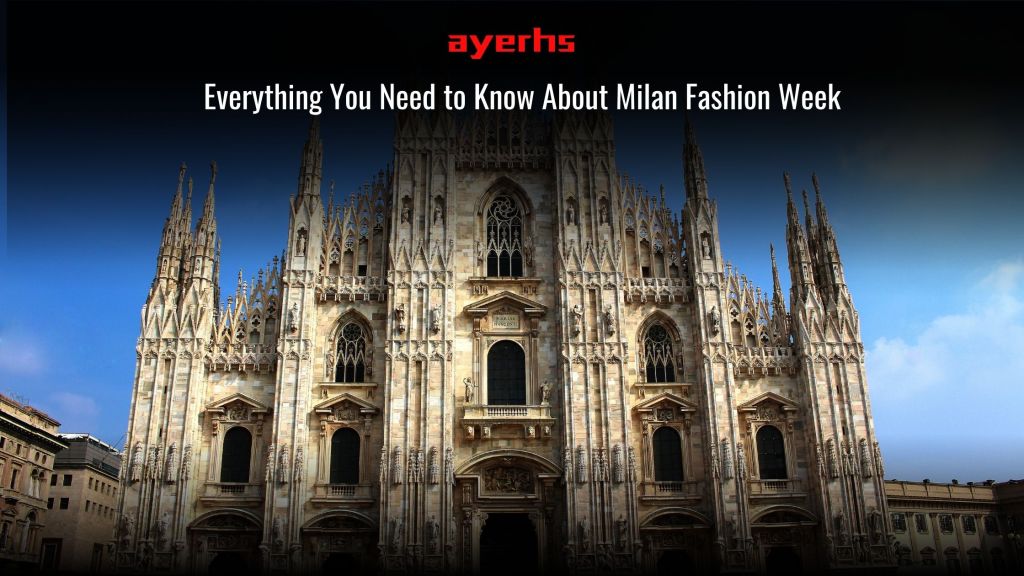
Milan Fashion Week is where classic elegance meets bold flair. It’s where precision tailoring, centuries of Italian craftsmanship, and pure drama come together to form one of the most iconic fashion events in the world. Every year, Milan Fashion Week reminds us that fashion can be both timeless and electric, sophisticated and outrageous, luxurious and wearable.
If Paris is the queen of haute couture and London the rebel of the runway, Milan is the power player that knows how to turn clothes into culture, identity, and business. From the legendary Italian houses to new voices shaking things up, Milan Fashion Week has become a major force in the global style conversation.
So whether you’re just starting to get into fashion or you’ve been following the shows for years, here’s everything you need to know about Milan Fashion Week.
How It All Started
Milan’s fashion story began long before the invention of fashion weeks. Italy has always had a deep-rooted history in textiles, tailoring, and artisanal production. Long before there were cameras and catwalks, Italian cities were known for their craftsmanship — especially in leather, silk, wool, and embroidery. Milan, being the country’s financial and industrial hub, became the natural capital of Italian fashion.
The modern version of Milan Fashion Week started in 1958 when the Camera Nazionale della Moda Italiana (the National Chamber for Italian Fashion) was founded. This organization has been responsible for coordinating and promoting Italian fashion events ever since. In the 1980s and 1990s, Milan Fashion Week exploded onto the international scene thanks to designers like Giorgio Armani, Gianni Versace, and Miuccia Prada. Their work not only changed the fashion landscape but redefined what luxury meant globally.
Since then, Milan has become one of the Big Four fashion capitals — alongside New York, London, and Paris — with its own distinct identity. It’s glamorous, confident, high-impact, and incredibly influential.
When It Happens and What to Expect
Milan Fashion Week takes place twice a year. The Women’s Ready-to-Wear shows are in February (Fall/Winter) and September (Spring/Summer), while the Men’s Fashion Week is held in January and June. These are the main events on the calendar, but there are also fashion presentations, trade fairs, and digital showcases happening around the same time.
The shows span about a week and follow a tightly packed schedule from morning to night. There are traditional runway shows, smaller presentations, showroom visits, afterparties, panel talks, and pop-up events across the city. Each day is filled with moments where fashion insiders, celebrities, press, buyers, and stylists cross paths and set the tone for what the world will be wearing next season.
Who Organizes It and Who’s Involved
The entire operation is overseen by the Camera Nazionale della Moda Italiana. They’re the ones responsible for organizing the official schedule, approving participants, supporting new designers, and making sure Milan stays at the center of the global fashion industry. They also partner with sustainability initiatives and emerging talent programs to keep the week evolving.
The schedule includes a mix of long-established luxury houses, mid-sized contemporary brands, and young designers. Think of it like a fashion pyramid. At the top are the legendary names — Prada, Versace, Armani, Dolce & Gabbana, Fendi, Bottega Veneta, Moschino, and Marni. These shows pull the biggest names, get the most press coverage, and often dictate the overall energy of the week.
Then there are the rising stars. Designers like Marco Rambaldi, GCDS, and Act N°1 represent a new wave of Italian talent, bringing fresh perspectives and experimental ideas. While they may not have the production budgets of the bigger houses, they often take more creative risks and represent a more diverse, inclusive vision for fashion.
The Milan Aesthetic
Milan is known for its polish. You’ll see refined silhouettes, impeccable tailoring, and clothes that are made to last — both literally and stylistically. But Milan also knows how to have fun. There’s a theatricality to many of the shows, whether it’s a bold print at Moschino or a jaw-dropping cutout dress at Versace. The mood is always luxurious, often sexy, and unapologetically bold.
What makes Milan stand out is how well it balances tradition and innovation. Brands like Prada are known for pushing fashion into new intellectual territory, while houses like Max Mara keep things grounded in timeless elegance. There’s always a play between the old and the new, the commercial and the conceptual.
Milan also champions fashion that works in the real world. Many collections are designed with the customer in mind — the Milanese woman who wants to look elegant but also powerful, chic but not too trendy. This blend of wearability and sophistication is part of what gives Milan Fashion Week such wide appeal.
How the Shows Feel
If you ever attend a Milan Fashion Week show — or even just watch the livestream — you’ll notice the energy is very different from other cities. There’s a sense of occasion, of confidence, of knowing you’re watching something that matters.
Shows are often held in breathtaking venues. Think centuries-old palazzos, modern museums, or industrial spaces transformed into art installations. The production quality is usually top-notch. Lights, music, sound design, and casting are carefully curated to create an immersive experience.
Then there’s the front row. Milan is full of celebrities, stylists, fashion editors, and influencers — not to mention loyal customers of the brands. It’s a major industry moment. The guest list is part of the show, and who’s sitting where can signal everything from business deals to cultural alliances.
Street Style in Milan
Outside the shows, the fashion doesn’t stop. Milan street style is its own spectacle. Here, you’ll see attendees dressed in sleek tailoring, structured coats, monochrome outfits, oversized sunglasses, and heels that somehow manage to walk on cobblestone streets. It’s not as eccentric as London or as polished as Paris, but it’s distinctly Italian — bold yet effortless, dramatic yet wearable.
Stylists and influencers are usually photographed on the move between shows, grabbing coffee in tailored blazers, wide-leg pants, statement bags, and bold jewelry. The vibe is confident, curated, and luxurious. You can often spot trends happening in real time just by looking at what people are wearing between venues.
Why Milan Fashion Week Matters
Beyond the buzz and the clothes, Milan Fashion Week is a huge moment for the fashion industry at large. For designers, it’s a chance to tell a story, present their vision, and shape the season’s conversation. For buyers, it’s when orders are placed and relationships are built. For press and influencers, it’s when content is created, reviews are written, and opinions are formed.
For brands, it’s also a major marketing moment. A viral show or celebrity appearance can lead to a surge in sales, media attention, and brand visibility. In the age of social media, what happens on that runway is instantly shared, memed, dissected, and reposted around the world.
Milan is also an important commercial center. Many of the major luxury groups, like Kering and LVMH, either own or partner with Italian brands. Fashion is a massive part of Italy’s economy, and Milan is the engine that keeps it running.
The Role of Craftsmanship
Italian fashion has always been deeply rooted in craftsmanship. Whether it’s the hand-sewn tailoring of a men’s suit or the intricate beading on a couture dress, the emphasis is always on quality. Milan Fashion Week celebrates that tradition.
Many brands take pride in showcasing the techniques behind their collections. You’ll see handmade accessories, custom fabrics, and artisanal finishes that reflect generations of skill. This focus on craftsmanship is part of what makes Milan Fashion Week so respected globally. It’s not just about the show — it’s about the substance behind it.
Inclusivity and Diversity in Milan
This is an area where Milan Fashion Week has faced criticism in the past. Historically, Milan has been slower to embrace diversity on its runways and behind the scenes. For years, shows were dominated by white models and eurocentric beauty standards.
But things have started to change. In recent seasons, there’s been a noticeable shift toward more inclusive casting. Brands like Etro, Versace, and Valentino (when showing in Milan) have made efforts to include models of different races, body types, and gender expressions. Newer designers in particular are leading the way when it comes to casting and storytelling that reflect a broader range of identities.
The Camera della Moda has also committed to promoting inclusion, launching diversity programs and panels to push the conversation forward. There’s still a long way to go, but the dialogue is happening.
Sustainability and the Future of Fashion Week
Like every major fashion capital, Milan is grappling with its role in an industry that’s under pressure to become more sustainable. Questions around overproduction, carbon emissions, textile waste, and ethical labor practices are more urgent than ever.
Some brands are starting to take real steps. Prada, for instance, has committed to shifting toward sustainable nylon made from recycled ocean plastics. Others are experimenting with upcycled materials, seasonless collections, or more thoughtful production cycles.
The Camera della Moda launched a Sustainability Manifesto in partnership with sustainability experts and environmental organizations. Their goal is to make Milan not just a fashion capital but a leader in sustainable innovation.
Digital presentations have also become part of the conversation. During the pandemic, Milan Fashion Week had to pivot to virtual shows, digital lookbooks, and filmed presentations. While physical shows have returned, many brands continue to include a digital component. It allows them to reach broader audiences and cut down on travel emissions, all while embracing the future.
How to Follow Milan Fashion Week from Anywhere
You don’t need to be in Milan to experience the excitement. Most major shows are now streamed live on Instagram, YouTube, or the Camera della Moda website. Vogue Runway and other fashion platforms upload full collections within hours. TikTok is filled with behind-the-scenes content, model vlogs, stylist prep, and front-row reactions.
If you want to keep up, follow:
- @cameramoda for official updates and livestreams
- @voguemagazine, @brownfashiongal, and @diet_prada for coverage and commentary
- Influencers and stylists who attend the shows and post recaps
- YouTube channels that break down collections and trends
Even if you’re watching from your phone, you’ll feel like you’re part of it.
What It’s Like to Attend
If you ever get the chance to go, here’s what to expect. The energy is intense. There’s traffic, packed venues, and people rushing between shows. You’ll want to dress up — but comfortably. You might be sitting front row or standing in the back depending on your invite, but every show feels like an event.
You might also spend hours between shows just hanging out in cafés, meeting new people, or waiting outside for street style shots. Milan is a city that lives fashion, and for that one week in February or September, the entire place feels like a runway.
Even if you don’t have tickets to the big shows, there are still plenty of events, pop-ups, and installations open to the public. Just being there is a vibe.
Final Thoughts
Milan Fashion Week is more than just a calendar event. It’s a moment where fashion, identity, culture, and business collide. It’s where heritage meets risk-taking, where brands dream bigger, and where every stitch has a story.
Whether you’re drawn to the big-name glamour of Versace, the minimal cool of Jil Sander, or the new wave of designers disrupting the old system, Milan Fashion Week has something for you.
It’s confident without being pretentious. It’s elegant but not boring. And it’s always worth watching — season after season.
Now you know why Milan Fashion Week matters. And if you didn’t before, you do now.
 Ayerhs Magazine