
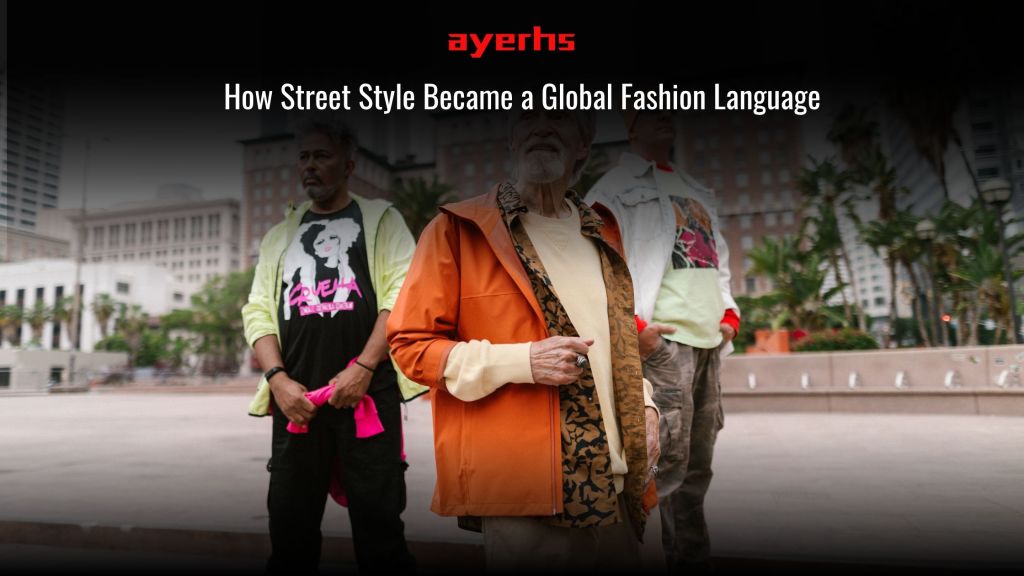
Once the rebellious cousin of high fashion, street style has evolved into a worldwide phenomenon that shapes runways, drives brand collaborations, and sets the tone for how people dress in everyday life. It’s no longer just about what celebrities wear at Fashion Week or what trends dominate Instagram. Street style has become a shared language — one that reflects the culture, politics, and personality of its wearers across the globe. But how did we get here? And what does it mean when fashion no longer flows top-down from couture to consumer, but rather from the sidewalk up?
From Subculture to Style Powerhouse
Street style began as an organic, grassroots movement. It wasn’t designed by luxury labels or dictated by trend forecasts. It grew out of necessity, rebellion, and self-expression — often in spaces where mainstream fashion didn’t have much presence or where communities couldn’t afford designer clothes but still wanted to express themselves.
In 1970s New York, hip-hop culture gave rise to a bold new aesthetic: Adidas sneakers, Kangol hats, gold chains, and oversized silhouettes. Around the same time in London, punk fashion exploded as a political statement. Leather jackets, ripped jeans, and safety pins were more than style choices — they were acts of defiance. Tokyo’s Harajuku scene brought another level of creativity, where layers, colors, and characters turned sidewalks into runways of imagination. These weren’t trends you’d find in Vogue back then. They were created by young people outside the fashion elite, forming visual identities rooted in culture, music, and social commentary.
The idea that style could be born on the street — outside of designer studios — was radical. But it started gaining traction.
The Rise of the Street Style Photographer
One major turning point came with the rise of street style photography. In the early 2000s, photographers like Scott Schuman (The Sartorialist) and Tommy Ton began documenting everyday people — often near Fashion Week venues — who had a unique sense of style. These weren’t necessarily celebrities. They were editors, models off-duty, fashion students, and creatives. What mattered wasn’t their name but how they dressed.
The internet played a huge role in amplifying these images. Suddenly, someone in Seoul could see what someone in Copenhagen was wearing. A thrifted look in Brooklyn could inspire a designer in Milan. Street style blogs and later Instagram turned global streetwear into a form of fashion journalism — democratizing who got to be seen, admired, and emulated.
Fashion weeks began to reflect this shift too. Outside the shows, crowds of stylish people created a spectacle that often rivaled the catwalks themselves. Some even argued that the real trends were happening outside the venues — not on the runway. Designers noticed. And street style moved from being an outsider’s game to a key player in fashion influence.
The Blending of High and Low
Another key moment in street style’s rise was the merging of luxury and casual wear. In the past, there was a clear line between streetwear and high fashion. But that changed in the 2010s when collaborations between streetwear labels and high-end brands started blurring the lines.
Supreme’s partnership with Louis Vuitton in 2017 was a watershed moment. Here was a skateboarding brand from New York, once known for its countercultural attitude, aligning with one of the oldest luxury houses in the world. It was both surprising and inevitable. Young consumers were more interested in sneakers than stilettos. Hype culture, limited drops, and logo-mania were the new currency of cool. Street style wasn’t just influencing luxury — it was becoming it.
Balenciaga’s oversized silhouettes, Off-White’s industrial belts, and Vetements’ DHL T-shirt all borrowed from street sensibilities. These weren’t just passing fads. They were signs that the center of fashion power was shifting.
Social Media and the Age of Virality
Street style’s evolution into a global fashion language can’t be separated from the rise of social media. Platforms like Instagram, TikTok, and Pinterest have become street style’s megaphones. They allow people to instantly share outfits, tag brands, and connect with others across countries and cultures.
What’s especially powerful about street style online is its relatability. It’s one thing to see a model wear a $10,000 gown on a Paris runway. It’s another to see someone your age, in your city, style the same pair of thrifted jeans five different ways. Street style thrives on personality, creativity, and authenticity — all values that resonate deeply with younger generations.
On TikTok, creators use hashtags like #fitcheck or #OOTD (outfit of the day) to showcase their personal style. You’ll find someone layering bold prints in Lagos, another styling quiet luxury in Stockholm, and yet another pairing traditional garments with modern pieces in Mumbai. The fashion might look different, but the language is the same — one of visual storytelling, confidence, and individuality.
Street Style as Cultural Expression
What makes street style so powerful is its ability to reflect culture in real time. Unlike traditional fashion, which is seasonal and often created months in advance, street style is immediate. It changes with the weather, the mood, the politics, and the music.
In Iran, for example, women have used street style as a form of protest — carefully styling their hijabs or removing them altogether in acts of quiet rebellion. In South Korea, street style draws heavily from K-pop and youth culture, with trends like oversized blazers, bucket hats, and colorful sneakers becoming global obsessions. In Nigeria, the Afro-streetwear scene blends local prints with global sportswear, creating a look that’s unmistakably local and globally relevant.
Street style is deeply personal, but it’s also political. What we wear on the street says something about who we are, where we come from, and what we believe in. It’s a visual statement — and often, a conversation starter.
Globalization Without Homogenization
One might worry that with so much global exposure, street style would become homogenized. That everyone would start dressing the same, wearing the same brands, and copying the same influencers. But interestingly, the opposite has happened.
Yes, there are shared aesthetics — think oversized silhouettes, chunky sneakers, Y2K throwbacks — but there’s also a renewed appreciation for local identity. In cities like Johannesburg, Manila, and Mexico City, street style is infused with regional culture, language, and tradition. People are remixing global trends with local flavor, creating hybrid styles that are fresh, exciting, and deeply rooted.
This balance of global and local is what keeps street style alive. It allows someone in Berlin to draw inspiration from Seoul while still keeping their own cultural lens. It’s not about copying — it’s about translating.
The Role of Street Style in Today’s Fashion Economy
From a business perspective, street style is a goldmine. It drives trends, boosts sales, and helps brands stay relevant. Fashion labels now study street style images to inform their collections. Retailers use street style data to understand what consumers actually wear. Even luxury brands scout for new talent through Instagram and TikTok.
Influencers — many of whom built their platforms by showcasing street style looks — now have more power than ever. They launch their own lines, consult for brands, and sometimes even take front row seats previously reserved for editors and celebrities. Street style has become a career path. Not just a personal choice.
But the commercialization of street style has its downsides too. There’s the risk of oversaturation, the pressure to constantly buy new things, and the performative aspect of dressing for the algorithm rather than oneself. Some argue that street style has lost its soul — that it’s no longer about self-expression but about visibility.
Still, many people continue to use street style as a form of creativity and resistance. As long as there are individuals using clothes to express who they are, street style will remain a powerful, evolving language.
What’s Next for Street Style?
As we look to the future, it’s clear that street style isn’t going anywhere. But it is evolving. Sustainability, for one, is becoming a key part of the conversation. Thrifted fits, upcycled pieces, and capsule wardrobes are being celebrated as much as designer labels. People are showing that you don’t need a huge budget to have great style — just imagination.
There’s also a growing desire for authenticity. Audiences are getting tired of overly curated content. They want to see real people wearing real clothes in real life. That rawness, which street style originally stood for, is making a comeback.
We’re also seeing more inclusivity. Street style doesn’t belong to one body type, one gender, or one city. It belongs to everyone. And that’s what makes it so powerful. Whether you’re in Lagos or Lisbon, Bangkok or Brooklyn, there’s space for your style.
Conclusion
Street style has come a long way — from a subcultural movement born out of rebellion to a global fashion language that connects people across borders. It’s shaped by the streets, not the studios. It reflects the here and now, the personal and political, the local and the global.
In a world that’s constantly changing, street style remains one of the most dynamic forms of self-expression. It’s proof that fashion doesn’t have to be exclusive or elitist to be meaningful. Sometimes, the most powerful style statements don’t happen on the runway — they happen on the sidewalk.
And maybe that’s the most beautiful part of it. You don’t need a designer label to speak this language. You just need the confidence to wear what feels like you.
 Ayerhs Magazine