
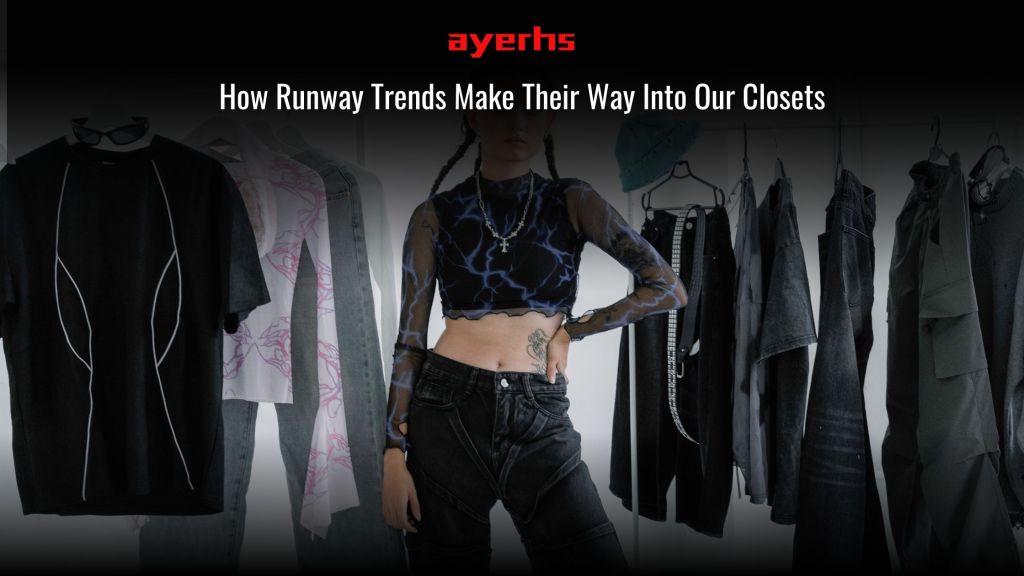
When we think of fashion runways, we often imagine extravagant looks — sculptural gowns, avant-garde silhouettes, or impossibly high heels that seem more suited to a museum than a closet. Yet somehow, those seemingly out-of-reach styles trickle down into what we wear every day. It’s the runway-to-retail pipeline at work, a fascinating chain reaction that takes high fashion ideas and transforms them into wearable trends that end up in our closets. But how exactly does that happen? How do bold statements on the catwalk evolve into mass-produced clothing at our favorite stores?
It’s not magic. It’s a mix of marketing, psychology, economics, and creativity — all working together behind the scenes to turn runway dreams into everyday reality.
The Runway: Where It All Begins
Twice a year, fashion weeks in cities like Paris, Milan, London, and New York set the tone for what’s next in fashion. These shows aren’t just for spectacle — they’re directional. Designers present collections that reflect their artistic vision, cultural moments, personal experiences, and predictions for what we’ll all be wearing in six months to a year. The runway isn’t just about showing off beautiful clothes — it’s about storytelling.
But it’s also a high-stakes business move. These shows are carefully planned marketing opportunities aimed at buyers, editors, influencers, and fashion insiders. What appears on the runway becomes a visual cue for the industry — and soon, for us.
Fashion Editors and Influencers: The First Translators
Once a collection is shown, fashion editors, journalists, and digital creators are among the first to break down what they see. They interpret the themes, highlight standout pieces, and write trend reports that shape public opinion.
Magazines and online platforms begin to spot patterns across different collections — maybe multiple designers are using lime green or reimagining the ‘80s power suit. These repeated ideas get labeled as trends. When Vogue, Harper’s Bazaar, or Business of Fashion tells us that cargo pants are back, they’re doing so because they’ve seen enough evidence on the runway to support that claim.
At the same time, influencers — especially those with front-row seats — post photos and videos of key pieces and emerging ideas. With social media’s immediate reach, runway looks are no longer behind closed doors. They’re dissected in real time on TikTok, Instagram, and YouTube. And the more they’re seen, the more likely they are to stick.
The Buyers: Turning Trends into Product
Once trends are identified, buyers from department stores, boutiques, and e-commerce giants make their move. They decide which pieces to order for their shelves. Buyers aren’t just choosing what looks good — they’re considering what their customers will actually want to wear and buy.
In this way, they serve as intermediaries between the artistic vision of designers and the practical needs of consumers. Maybe a designer sent down a sheer dress that wouldn’t be appropriate for daily life. A buyer might order a version with lining or suggest a similar silhouette in a more wearable fabric.
This is where trends begin to shift from art to product — from aspirational to accessible.
High-Street Brands and Fast Fashion: Mass Production Kicks In
While high-end buyers are placing orders, fast fashion brands are watching closely too — sometimes even closer. Brands like Zara, H&M, and Mango are known for their ability to turn runway ideas into in-store collections at lightning speed. Sometimes within just a few weeks, you’ll see watered-down versions of runway trends hit the racks.
This is where the trends really become mainstream. Maybe Miu Miu popularized micro-mini skirts, but you’re more likely to buy a $40 version from a high-street store than shell out for the original. That’s the power of fast fashion — it democratizes style, but not without ethical concerns about overproduction and sustainability.
Even more thoughtful mid-range brands get in on the action. Labels like & Other Stories, COS, or Aritzia might interpret trends in a more subtle or timeless way. Instead of going for obvious knockoffs, they infuse popular silhouettes, prints, or colors into pieces that feel fresh yet wearable.
Celebrities and Pop Culture: Trend Reinforcement
Once a trend has reached stores, celebrities and pop culture icons often give it the final push. Think about how many people started wearing ballet flats again after seeing them on Bella Hadid, or how quickly cowboy boots came back into the mainstream after making appearances at music festivals and on red carpets.
When familiar faces wear certain pieces, it signals to the public that it’s okay — even cool — to follow suit. This kind of cultural reinforcement can take a trend from niche to must-have overnight. Sometimes, a single paparazzi photo or viral post can ignite a fashion wildfire.
This is also where fashion stylists play a huge role. The stylists behind celebrity looks are often well-connected in the industry, aware of what’s hot on the runway and what’s about to take off. They bring these trends to their clients early, helping to set the tone for the rest of us.
The Consumer: The Final Decision Maker
And then there’s you. And me. And everyone who walks into a store or scrolls through an online shop and decides to buy something. We’re the last stop in this long fashion journey, and perhaps the most powerful. Trends don’t really take off unless we embrace them.
Sometimes, a trend falls flat. Maybe it’s too extreme, too niche, or just not practical. Other times, we latch on to it with gusto, wearing it across seasons and influencing what comes next.
Interestingly, this part of the cycle is where things have changed the most in recent years. Consumers today are more vocal and more aware. Thanks to social media, reviews, and resale platforms, we don’t just passively accept what’s handed to us. We critique, remix, and sometimes reject runway trends altogether.
Micro-Trends and the TikTok Effect
With platforms like TikTok, fashion moves faster than ever. What used to take six months now takes six days. Micro-trends like “coquettecore” or “blokecore” can explode overnight, driven by a viral video rather than a designer’s vision. And just as quickly, they can fade into the background.
In some cases, these digital-born trends loop back to influence designers, who incorporate them into their next collections. It’s a feedback loop — the runway influences the internet, the internet influences us, and then we influence the runway. The cycle is no longer top-down. It’s circular.
The Role of Trend Forecasting
Behind the scenes, there’s another group helping to steer the ship — trend forecasters. These are the people who predict what we’ll want to wear before we even know it ourselves. They work for brands, retailers, and fashion houses, analyzing data, culture, art, politics, and consumer behavior.
Companies like WGSN or Trend Union release seasonal forecasts that inform color palettes, fabric choices, and style direction. These forecasts are often used months before runway collections are even shown, giving designers and product developers a foundation to build from.
So in some ways, the trends we see on the runway are already a result of earlier forecasting work. It’s a domino effect — one that starts with research and ends with a sale.
From Trend to Personal Style
Eventually, a runway trend either becomes part of your personal style or it doesn’t. That’s the beauty of fashion today — we’re not obligated to follow everything. In fact, many of us are becoming more intentional about how and why we engage with trends. We ask questions like: Does this fit my lifestyle? Do I feel good in it? Can I see myself wearing this next year too?
The pressure to keep up has eased a bit. Thanks to the rise of slow fashion, thrifting, and capsule wardrobes, there’s a growing movement away from trend-chasing and toward thoughtful dressing. Still, trends have their place — they’re fun, expressive, and ever-evolving. They allow us to play with identity, adapt to cultural moments, and even connect with others.
Why It Still Matters
Despite all the changes in how fashion works — from tech advancements to shifting values — the runway still holds power. It’s the laboratory of style. It’s where fashion begins, whether or not we choose to follow it.
Even if you don’t consider yourself “into fashion,” the runway has likely influenced something you own. Maybe the wide-leg jeans you wear on weekends were sparked by a designer’s reinterpretation of 1970s silhouettes. Maybe the colors in your wardrobe align with a Pantone forecast or a Prada collection from two seasons ago. Fashion is everywhere — and the runway is often where the first domino falls.
In the End, It’s All About Translation
The process of turning runway trends into real-life fashion is ultimately about translation. Designers speak in big ideas, bold choices, and conceptual designs. The industry — editors, buyers, stylists, brands — translates those ideas into styles that fit our lives.
And then we do our own translation. We choose what to embrace, what to ignore, and how to make a trend our own. Fashion may start on the runway, but it comes alive in our closets — shaped by culture, community, and personal taste.
So the next time you put on a slouchy blazer or a sheer blouse, know that it probably had a long, winding journey to get to you. From the runway lights of Paris to your morning routine, fashion travels far — but it lands right where it belongs.
Ask ChatGPT
 Ayerhs Magazine