
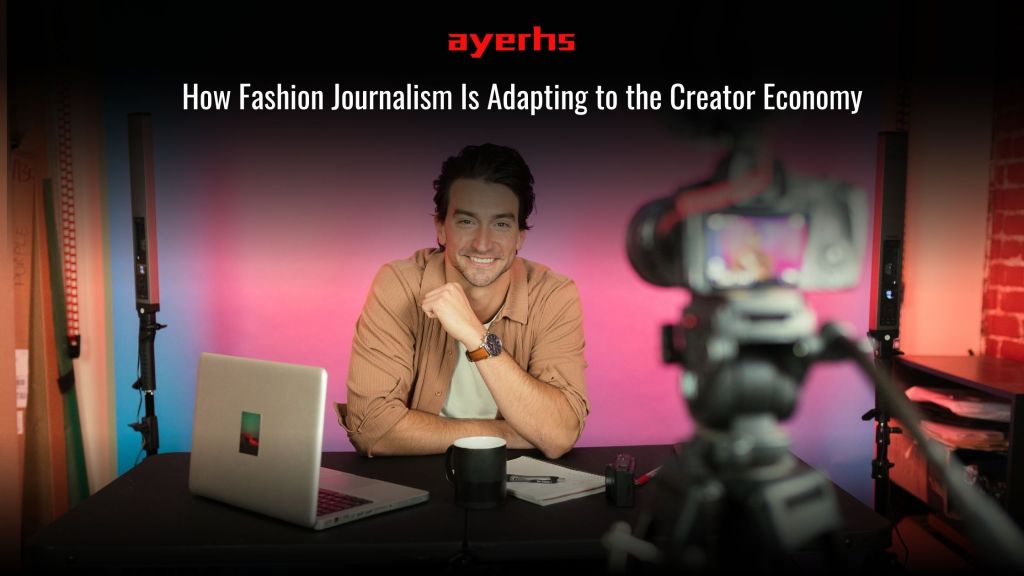
Not too long ago, fashion journalism was ruled by glossy print magazines, monthly issues, and a handful of seasoned editors whose words shaped public opinion on what was in and what was out. These editors had the final say. Trends were born within the pages of Vogue or Harper’s Bazaar and slowly trickled down to the streets. But in 2025, the landscape looks wildly different. Today, a 23-year-old TikTok creator can launch a microtrend overnight. A fashion blogger can spark global conversation with one viral Substack post. Independent voices are everywhere, and they’re loud. Welcome to the creator economy — and fashion journalism is being forced to adapt, evolve, and, in many ways, reinvent itself.
The rise of the creator economy has fundamentally changed how we consume fashion content. People don’t just want to be talked at anymore — they want to be part of the conversation. They want authenticity, speed, accessibility, and personal connection. This shift has blurred the lines between traditional fashion journalists and creators, raising questions about authority, credibility, and the future of storytelling in fashion.
So what does this new era look like? And how is fashion journalism keeping up?
From Gatekeepers to Collaborators
For decades, fashion journalism operated within a gatekeeping system. Editors-in-chief, creative directors, and fashion critics held elite power, often cultivated over years of experience. But today, that authority is being shared — and sometimes contested — by creators who build loyal followings not through pedigree, but through personality and consistency.
Fashion journalists are no longer just writers or critics. They’re now expected to be multi-hyphenates — storytellers who can shoot, edit, host, and engage on multiple platforms. Many are launching newsletters, hosting podcasts, and maintaining strong social media presences to stay relevant. Instead of treating creators as competition, many journalists are learning to collaborate with them. They’re quoting TikTokers in their articles, inviting influencers to guest edit digital issues, and even reshaping editorial strategies to mirror the cadence of creator content.
Take Vogue’s Open Casting project or Dazed’s frequent spotlights on digital style communities. These efforts acknowledge the shift — fashion no longer belongs to a select few. It’s co-created, crowd-sourced, and more democratic than ever.
The Newsletter Boom and the Rise of Independent Voices
In the age of the creator economy, personal branding is everything. That’s why so many fashion journalists have taken their expertise directly to their audience via newsletters. Platforms like Substack and Ghost are full of fashion insiders who’ve broken away from legacy publications to write with more freedom, voice, and intimacy.
Writers like Rachel Tashjian, who left traditional outlets to create her own space, have found a loyal readership that values unfiltered takes and behind-the-scenes knowledge. These newsletters often blend reporting with opinion, making readers feel like they’re getting the inside scoop from a friend who just happens to have a killer front-row seat at Fashion Week.
This trend reflects a bigger change in how audiences engage with fashion content. People are less interested in institutional authority and more interested in voices they trust. They want the real talk, not the press release. And independent newsletters deliver just that — unpolished, honest, and often quicker than the monthly magazine cycle allows.
Social Media: The New Front Row
The creator economy thrives on platforms like TikTok, Instagram, and YouTube — and so, increasingly, does fashion journalism. Whether it’s a reporter breaking down runway trends in a 90-second TikTok or a journalist doing live commentary on IG stories from Paris Fashion Week, social media has become the new front row seat.
This shift has changed both the tone and speed of fashion reporting. There’s less time for long lead editorial calendars and more pressure to deliver insights in real-time. Journalists have to be reactive, nimble, and visually compelling. And increasingly, they’re judged not by their byline but by their reach and engagement metrics.
Some might argue this waters down journalism. But others see it as an opportunity to connect more deeply with readers — to create content that feels alive, timely, and culturally plugged-in. Instead of reporting from a pedestal, fashion journalists are now reporting from the trenches, engaging with comments, DMs, and discourse in real time.
Redefining Authority in the Creator Era
One of the biggest tensions in the creator economy is the question of authority. In traditional fashion journalism, authority was earned through years of experience, insider access, and formal training. In the creator economy, authority often comes from relatability, speed, and virality.
This tension isn’t necessarily a bad thing. It’s forcing the industry to ask — what really makes someone an expert? Is it knowing the difference between Margiela eras or being able to predict the next viral trend before it hits the runway?
The smartest fashion journalists today are embracing both sides. They bring institutional knowledge to the table but also stay in tune with the internet’s fast-moving cycles. They know how to read a fashion show but also how to read a TikTok comment section. And perhaps most importantly, they’re learning to speak both languages — the formal and the colloquial — without compromising their values.
Visual Journalism in a Creator-Driven World
Another key adaptation is the rise of visual journalism. In a creator economy driven by images and short-form video, fashion journalists are having to rethink how they tell stories. It’s no longer just about crafting a compelling lede — it’s about creating content that’s visually engaging and easily shareable.
Slideshows, reels, carousels, mood boards, and interactive graphics are now part of the journalist’s toolkit. Even longform essays are being broken up into bite-sized content for Instagram or Twitter threads. This isn’t about dumbing things down — it’s about meeting audiences where they are, and delivering substance in a format they enjoy.
The shift also reflects a more inclusive approach to storytelling. Not everyone consumes fashion through written words. Some learn through visuals, video, or voice. And by embracing multimedia formats, fashion journalism becomes more accessible, inclusive, and aligned with how younger generations consume information.
Ethics, Sponsorships, and the Blurred Lines
With creators and journalists now sharing similar platforms, the line between editorial and advertorial is getting blurry. Influencers often promote brands for pay, while journalists are expected to maintain objectivity. But when journalists start monetizing their newsletters or social platforms, the waters get murky.
How do you disclose partnerships? What’s the difference between a sponsored post and a genuine recommendation? And how do readers know who to trust?
These are ongoing questions that fashion journalists must grapple with as they adapt to the creator economy. Transparency is key. So is drawing clear boundaries between personal branding and professional ethics. While the creator economy celebrates monetization, journalism still relies on a foundation of trust — and that trust must be protected at all costs.
Many forward-thinking journalists are now including disclaimers, working only with brands they genuinely support, or separating their paid work from their reporting altogether. The goal is to evolve with the times without sacrificing integrity.
Niche Audiences and Hyper-Personalization
Another hallmark of the creator economy is niche content. Instead of trying to appeal to everyone, successful creators often focus on a specific subculture or aesthetic — think “archival fashion TikTok” or “modest fashion on YouTube.”
Fashion journalists are beginning to adopt this mindset. Rather than chasing mass appeal, many are diving deep into niche communities and carving out loyal audiences that feel seen and understood. This might mean covering fashion through a queer lens, focusing on sustainable fashion, or writing exclusively about Black-owned brands.
The benefit of this approach is intimacy and depth. Niche audiences are often more engaged, more loyal, and more likely to support a journalist’s independent ventures. In the creator economy, it’s no longer about scale — it’s about connection.
Education, Access, and Fashion Literacy
With so much fashion content available, the role of the journalist as an educator is more important than ever. In the creator economy, misinformation can spread quickly — especially around complex topics like sustainability, cultural appropriation, or brand history.
Fashion journalists can step in as trusted guides, helping audiences make sense of the noise. Whether it’s explaining the politics behind a runway show or breaking down why a certain trend is problematic, good fashion journalism adds context, history, and depth.
And because so many journalists are now building direct relationships with their readers, they’re able to tailor that education to specific interests and knowledge levels. They can create content for both seasoned fashion fans and curious newcomers — democratizing access in a way that legacy media often failed to do.
The Future Is Hybrid
So where does this all leave fashion journalism? The answer is somewhere in between — in a hybrid space where old-school values meet new-school methods.
Fashion journalism isn’t dying. It’s evolving. The core of the craft — storytelling, critical thinking, aesthetic insight — still matters. But the platforms, formats, and business models are changing. And for those willing to adapt, this new era offers exciting possibilities.
Journalists can now own their audience relationships, monetize their work in new ways, and tell stories that reflect the full spectrum of fashion culture — not just the elite corners. At the same time, the creator economy challenges journalists to stay sharp, nimble, and humble. To remain curious, relevant, and accountable.
In this new world, fashion journalism is no longer just about reporting on the industry. It is the industry — shaping it, critiquing it, participating in it. Whether through an Instagram caption or a 3000-word essay, fashion journalists are finding new ways to speak, connect, and influence.
 Ayerhs Magazine