
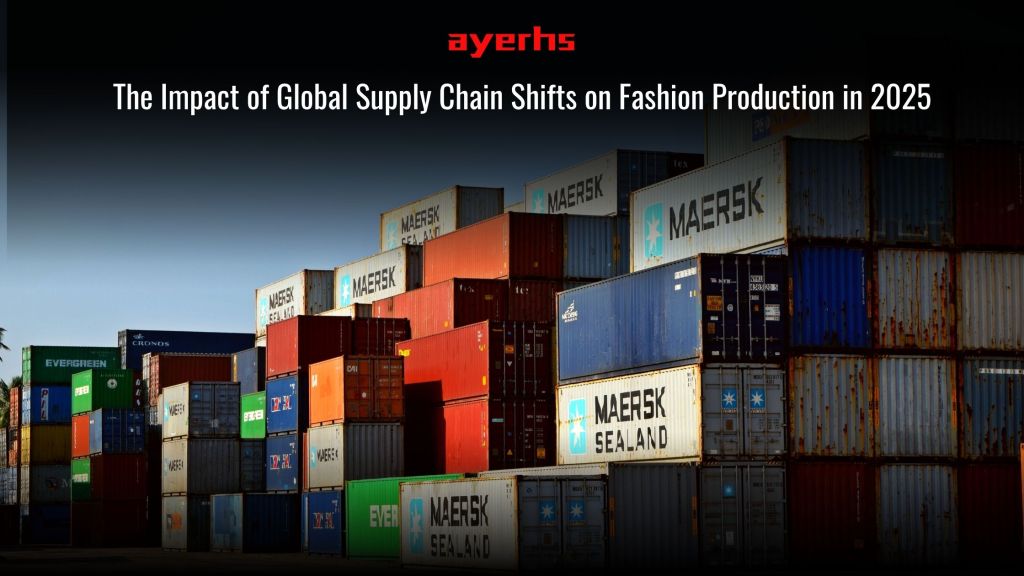
The fashion industry, perennially dynamic and responsive to trends, finds itself in 2025 at a pivotal juncture, profoundly shaped by seismic shifts in global supply chains. The once-stable paradigms of offshore manufacturing and just-in-time delivery have been upended by a confluence of geopolitical tensions, a heightened imperative for sustainability, rapid technological advancements, and evolving consumer demands. This article delves into the multifaceted impact of these global supply chain shifts on fashion production in 2025, exploring how the industry is adapting, innovating, and redefining its operational blueprint for a more resilient and responsible future.
The Great Unraveling and the Drive for Resilience
For decades, the fashion industry thrived on a globalized supply chain characterized by a heavy reliance on a few key manufacturing hubs, notably China and parts of Southeast Asia, due to lower labor costs and established infrastructure. However, the events of the early 2020s, including the COVID-19 pandemic, trade wars, and geopolitical instability, exposed the inherent fragilities of this extended network. Factory shutdowns, shipping delays, and soaring freight costs sent shockwaves through the industry, leading to inventory imbalances, missed trends, and significant financial losses.
In 2025, the primary lesson learned is the urgent need for supply chain resilience. Fashion companies are actively de-risking their operations by diversifying sourcing beyond single-country dependencies. This diversification is not merely about spreading risk but about building agility and responsiveness into the core of their production strategies. The emphasis has shifted from purely cost-driven decisions to a more balanced approach that considers reliability, speed to market, and geopolitical stability.
Reshoring and Nearshoring: Bringing Production Closer to Home
One of the most significant manifestations of this drive for resilience is the accelerated trend of reshoring and nearshoring. While full reshoring to high-cost Western markets remains challenging for many mass-market brands, the concept of bringing production closer to consumption markets is gaining substantial traction.
For North American brands, this means an increased focus on Mexico, Central America, and even parts of the Caribbean. These regions offer reduced lead times, lower transportation costs compared to Asia, and often benefit from trade agreements that can mitigate tariff impacts. Similarly, European brands are looking more closely at Turkey, Eastern Europe, and North Africa. The goal is to create more regionalized supply chains that can respond more quickly to market fluctuations and consumer demands, while also reducing the carbon footprint associated with long-distance shipping.
This shift is not without its hurdles. Infrastructure, skilled labor availability, and the capacity of these emerging production hubs are still developing. However, investments are pouring into these regions, fostering the growth of new manufacturing ecosystems. Brands are engaging in direct partnerships and long-term commitments to help build and stabilize these alternative sourcing locations.
Sustainability: From Buzzword to Business Imperative
The global supply chain shifts in 2025 are inextricably linked with the growing pressure for sustainability in the fashion industry. Consumers, regulators, and investors are demanding greater transparency and accountability regarding the environmental and social impact of clothing production. This is no longer a niche concern but a fundamental expectation.
The push for sustainability is driving a re-evaluation of every stage of the supply chain. From raw material sourcing to manufacturing processes and end-of-life solutions, brands are seeking more eco-friendly alternatives. In 2025, we are witnessing a surge in the adoption of:
- Eco-friendly Materials: There’s an accelerated move towards organic cotton, recycled polyester, Tencel, Lyocell, and innovative bio-based materials like mushroom leather (Mylo) and pineapple fibers (Piñatex). Research and development in this area are booming, with a focus on materials that are renewable, biodegradable, and require less water and energy to produce.
- Circular Economy Models: The traditional linear “take-make-dispose” model is being challenged by circularity. Brands are designing garments for longevity, repair, reuse, and ultimately, recycling. This includes implementing take-back programs, investing in textile-to-textile recycling technologies, and exploring rental and resale models. The goal is to minimize waste and keep resources in use for as long as possible.
- Transparent Supply Chains: Blockchain technology is becoming increasingly vital for achieving supply chain transparency. Brands are using blockchain to track the journey of a garment from fiber to finished product, providing consumers with verifiable information about its origin, ethical labor practices, and environmental footprint. This builds trust and combats greenwashing.
- Reduced Carbon Footprint: With increased scrutiny on carbon emissions, fashion companies are optimizing logistics to reduce transportation-related emissions. This reinforces the nearshoring trend and encourages the adoption of more fuel-efficient shipping methods. Investments in renewable energy sources for manufacturing facilities are also on the rise.
Digitalization and Automation: The Future of Fashion Production
Technological advancements are serving as powerful enablers for navigating the complexities of the evolving supply chain. In 2025, digitalization and automation are no longer optional but essential for competitiveness and efficiency in fashion production.
- 3D Design and Virtual Prototyping: The reliance on physical samples, which is both time-consuming and resource-intensive, is rapidly diminishing. 3D design software like CLO 3D, Browzwear, and Optitex allows designers to create hyper-realistic virtual garments, visualize fit and drape, and make design adjustments in real time. This dramatically reduces the need for multiple physical prototypes, saving materials, time, and shipping costs. It also facilitates faster approval processes and brings collections to market more swiftly.
- AI and Data Analytics: Artificial intelligence and advanced data analytics are revolutionizing demand forecasting, inventory management, and trend prediction. AI algorithms can analyze vast datasets, including social media trends, sales data, and even weather patterns, to provide more accurate forecasts, minimizing overproduction and optimizing stock levels. This data-driven approach is crucial for navigating volatile consumer preferences and unpredictable supply chain disruptions.
- Automation in Manufacturing: While not fully widespread, automation is steadily increasing in fashion manufacturing, particularly in tasks that are repetitive or hazardous. Robotics and automated sewing machines are improving efficiency, precision, and consistency. This is especially relevant in regions where labor costs are rising, making nearshoring more viable.
- IoT and Real-Time Visibility: The Internet of Things (IoT) is being integrated into supply chain management, providing real-time visibility into production processes, inventory levels, and shipments. Sensors and tracking devices allow brands to monitor goods as they move through the supply chain, enabling proactive problem-solving and improved responsiveness to disruptions.
Evolving Labor Practices and Ethical Sourcing
The global supply chain shifts also bring renewed attention to labor practices within the fashion industry. Instances of exploitative labor and modern slavery continue to plague certain regions, prompting stricter regulations and increased consumer awareness.
In 2025, there’s a heightened demand for ethical sourcing and fair labor conditions. Brands are under pressure to ensure transparency in their labor practices throughout their supply chains. This includes:
- Due Diligence: Implementing robust due diligence processes to identify and mitigate risks of forced labor, child labor, and unsafe working conditions.
- Certifications and Audits: Relying on independent certifications and third-party audits to verify compliance with international labor standards.
- Worker Empowerment: Supporting initiatives that empower garment workers, ensuring fair wages, safe working environments, and the right to organize.
- Traceability of Materials: Beyond finished garments, the focus extends to tracing the origin of raw materials to ensure they are not linked to unethical labor practices. The Uyghur Forced Labor Prevention Act, for instance, is impacting sourcing strategies for cotton and other materials from specific regions.
The shift towards nearshoring can also sometimes be linked to a desire for greater oversight and control over labor conditions, as geographic proximity allows for more direct engagement with manufacturing partners.
Consumer Demand: Value, Transparency, and Personalization
Ultimately, the global supply chain shifts are profoundly influenced by changing consumer demands. In 2025, consumers are more informed, values-driven, and discerning than ever before.
- Value for Money: Amidst economic uncertainties and inflation, consumers are prioritizing value for money. This doesn’t necessarily mean the cheapest option, but rather products that offer quality, durability, and a reasonable price point. The resale market, for example, is experiencing significant growth as consumers seek more affordable and sustainable ways to update their wardrobes.
- Sustainability and Ethics: A growing segment of consumers actively seeks out brands that demonstrate genuine commitment to sustainability and ethical practices. They are willing to pay a premium for products that align with their values and demand transparency about how and where their clothes are made. Greenwashing is increasingly met with skepticism and backlash.
- Personalization and Customization: The desire for unique and personalized products is on the rise. This fuels the growth of made-to-order models and brands that offer customization options. The digital tools and localized production capabilities discussed earlier are instrumental in fulfilling this demand efficiently.
- Omnichannel Experience: Consumers expect a seamless shopping experience across online and offline channels. Retailers are investing in digital tools like virtual try-ons and augmented reality to bridge the gap between physical and digital retail, enhancing convenience and engagement.
Geopolitical Realignment and Trade Dynamics
The geopolitical landscape continues to exert a significant influence on fashion production in 2025. Trade policies, tariffs, and international relations directly impact sourcing decisions and market access.
- Tariffs and Trade Agreements: The imposition of tariffs, particularly by the U.S. on goods from China, has prompted brands to re-evaluate their sourcing strategies. Companies are actively seeking alternative manufacturing locations that are not subject to these tariffs or that benefit from favorable trade agreements.
- Regional Economic Blocs: The strengthening of regional economic blocs and trade agreements influences sourcing patterns. For example, the development of manufacturing capabilities within the ASEAN region or the expansion of trade ties within the European Union can create new opportunities for localized production.
- Political Stability: Brands are increasingly factoring political stability into their sourcing decisions. Regions prone to unrest or sudden policy changes are viewed with greater caution, leading to a preference for more stable geopolitical environments.
- Emerging Markets as Growth Engines: While China remains a significant market, its economic deceleration and changing consumer habits are prompting brands to explore new growth engines in Asia, such as India, Indonesia, and Thailand, which offer both manufacturing potential and burgeoning consumer markets.
Challenges and the Road Ahead
Despite the significant strides in adapting to these global supply chain shifts, the fashion industry in 2025 still faces considerable challenges.
- Cost Pressures: While nearshoring and sustainable practices offer long-term benefits, they often come with higher initial costs compared to traditional offshore manufacturing. Brands must find ways to absorb or mitigate these costs without alienating price-sensitive consumers.
- Infrastructure Development: Building robust manufacturing infrastructure in new sourcing regions takes time and significant investment. This includes developing skilled labor pools, establishing reliable logistics networks, and ensuring access to sustainable energy.
- Scaling Sustainable Practices: While many brands are committed to sustainability, scaling these practices across entire collections and supply chains remains a complex undertaking. This requires collaboration across the industry, investment in new technologies, and a willingness to rethink established processes.
- Consumer Education and Demand: While consumer awareness of sustainable and ethical fashion is growing, there’s still a need for greater education to drive widespread demand and acceptance of new, more responsible production models.
- Data Security and Cybersecurity: As digitalization permeates every aspect of the supply chain, safeguarding sensitive data and protecting against cybersecurity threats becomes paramount.
Conclusion
The year 2025 marks a transformative period for fashion production, defined by the profound impact of global supply chain shifts. The era of unquestioning reliance on distant, low-cost manufacturing is giving way to a more nuanced approach centered on resilience, sustainability, and technological integration. Reshoring and nearshoring are reshaping geographical sourcing maps, while sustainability has evolved from a niche concern to a core business imperative, driving innovation in materials, circular models, and transparency. Digitalization and automation are not just enhancing efficiency but are fundamental to creating a more agile and responsive supply chain. Concurrently, evolving consumer demands for value, ethics, and personalization are exerting significant pressure on brands to adapt and innovate.
Navigating this complex landscape requires strategic foresight, substantial investment, and a collaborative spirit across the industry. While challenges persist, the ongoing shifts present an unprecedented opportunity for the fashion industry to reinvent itself as a more responsible, resilient, and forward-thinking sector, poised to meet the demands of a rapidly changing world. The future of fashion production in 2025 is not just about what is made, but how, where, and with what impact.
 Ayerhs Magazine