
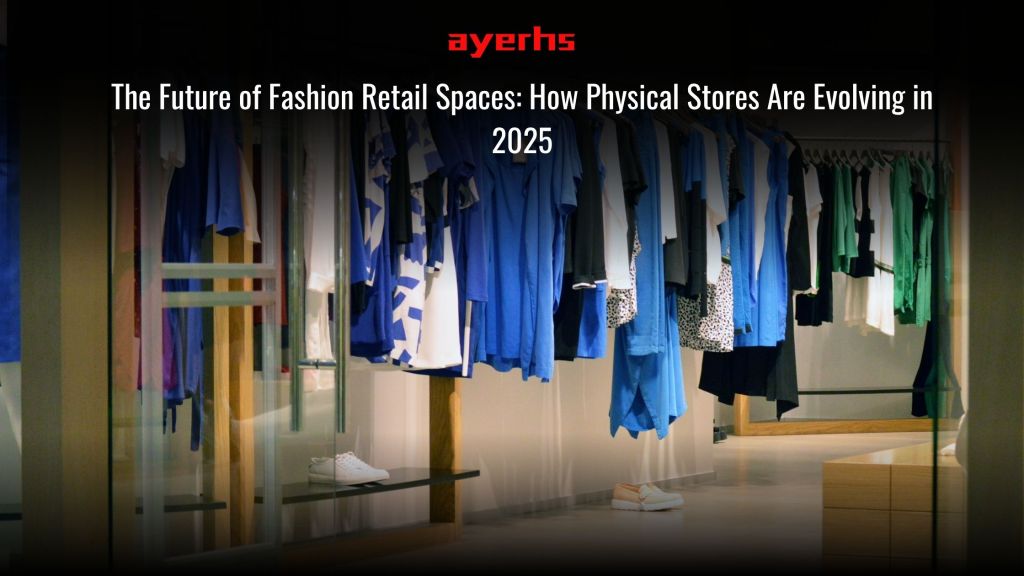
If there’s one thing that fashion retail has shown us in the past few years, it’s that change is constant. Once dominated by traditional department stores and brick-and-mortar chains, the landscape today is far more diverse, dynamic and, in many ways, unpredictable. In 2025, physical stores are no longer just about clothes on racks. They’re becoming immersive, tech-powered spaces designed to offer experiences, not just transactions. With online shopping growing stronger each year, physical retail has had to reimagine its purpose. And it’s doing so in surprisingly creative and innovative ways.
So what does the future look like for fashion retail spaces in 2025? Let’s walk through it.
Physical Stores Aren’t Dead — They’re Just Different
It’s easy to assume that online shopping would completely kill the need for physical stores. After all, why brave the traffic or long lines when you can buy the same dress or sneakers from your couch? But the truth is, while e-commerce continues to grow, it hasn’t replaced physical retail — it’s simply forced it to evolve.
People still crave human connection, touch and feel, and the instant gratification of walking out of a store with a purchase in hand. But they also want more from that trip. They want it to be worth their time. So brands are rethinking the purpose of their physical locations. Stores are no longer just points of sale — they’re becoming brand playgrounds, curated showrooms and spaces where community, creativity and commerce all intersect.
Experience Over Inventory
One of the biggest shifts happening right now is the idea that stores don’t need to stock every size, color or SKU. Instead of functioning as mini-warehouses, many stores in 2025 are designed to be experiential. They let customers try on pieces, interact with the brand and then order online if the exact item isn’t available in-store.
This “showrooming” model not only reduces storage and real estate costs, but also frees up space for more creative layouts. Some stores are using this extra room to host styling sessions, art installations, pop-up cafés or workshops. A visit to the store becomes an activity in itself, not just a shopping errand.
Brands like Nike, for example, have leaned into this by opening concept stores where customers can customize shoes on-site, test out gear in simulated workout environments and even book one-on-one consultations with stylists or trainers. It’s retail reimagined as an experience hub.
Tech Is Taking Center Stage
Technology is playing a huge role in reshaping retail spaces. In 2025, stores are smarter, faster and more responsive than ever before. Smart mirrors in fitting rooms let you try on different colors virtually, request another size with a tap or get product recommendations based on your outfit.
Augmented reality is helping customers visualize how pieces might look on them or in different settings. AI-powered stylists suggest looks based on your preferences or past purchases. And mobile checkout — often through your phone — means the days of waiting in line at a register are fading fast.
Some stores are even experimenting with RFID tags that automatically update inventory levels as items are picked up or tried on. This kind of real-time data helps both customers and brands. You can see what’s in stock without asking a sales associate, and the store knows what’s popular and what needs restocking.
Sustainability in Store Design
Another key shift is the move toward more sustainable retail spaces. Brands are under pressure not just to sell sustainable products, but to embody those values in how they operate. That includes store design.
In 2025, many stores are being built or renovated using recycled materials, energy-efficient lighting and modular furniture that can be reused across different campaigns. Temporary pop-ups are often designed to be zero-waste, with fixtures that can be disassembled and repurposed.
Brands like Ganni and Stella McCartney have experimented with fully recyclable or carbon-neutral retail formats. The goal is to reduce the environmental impact of physical retail without compromising on aesthetic or experience.
Some retailers are even incorporating circular fashion concepts directly into their stores — setting up repair bars, resale corners or swap sections. It’s a way to keep customers coming back while reinforcing sustainable habits.
Smaller Footprints, Bigger Impact
Gone are the days when size was everything. In 2025, many brands are downsizing their retail spaces but upgrading the quality of the experience. These smaller stores are often in prime locations and are designed to tell a brand story rather than stock endless product.
For emerging designers and DTC brands especially, the goal isn’t to have a huge store — it’s to have a meaningful one. A single, beautifully curated boutique in a fashion-forward neighborhood can do more for visibility and loyalty than ten generic outlets.
Think of brands like Glossier or Jacquemus. Their physical stores are extensions of their brand identity — minimalist, playful, immersive. They feel more like installations than shops. This approach turns casual shoppers into fans and fans into loyalists.
Pop-Ups and Flex Retail
Flexibility is another major trend. With consumer habits changing fast, many brands are choosing pop-ups or short-term leases over permanent stores. These flexible retail formats let them test out new cities, collaborate with artists or influencers and respond to trends without being tied down long-term.
Pop-ups in 2025 are more creative than ever. You might walk into a tiny floral shop that doubles as a fashion boutique or a mobile truck that brings limited-edition collections to your neighborhood for one weekend only. It’s all about surprise, scarcity and storytelling.
These spaces also blur the line between retail and marketing. A well-designed pop-up can go viral on social media, attracting foot traffic, press and online sales all at once.
Community-Led Retail
Many retailers are realizing that fashion isn’t just about selling clothes — it’s about belonging. That’s why community-driven spaces are becoming more common. In 2025, brands are inviting local artists, activists and creatives to co-create events, talks, performances or exhibits within the store.
These stores function like cultural hubs as much as commercial ones. They might host a book launch one weekend, a sustainability panel the next and a DJ set the weekend after. The idea is to give people a reason to keep coming back, even when they’re not buying anything.
This model also encourages inclusivity. By partnering with local communities, brands can spotlight diverse voices and reflect a wider range of styles, stories and identities.
The Rise of Phygital
“Phygital” — a blend of physical and digital — is a buzzword that’s actually living up to the hype. In 2025, most retail spaces are no longer purely analog or digital. They’re both.
You might scan a QR code in-store to learn about a garment’s sustainability story. You might try something on in real life but order it through the brand’s app for home delivery. Or you might attend a virtual event hosted by the store even if you’re in a different city.
The point is, the walls between online and offline are coming down. Brands aren’t choosing between e-commerce and brick-and-mortar — they’re merging them in smarter, more fluid ways.
Localism Is Making a Comeback
As global supply chains get more complex — and more fragile — there’s a growing interest in going local. In 2025, many fashion brands are designing store experiences that feel tailored to the community.
You’ll see more region-specific merchandise, local collaborations and design elements that reflect the cultural identity of a place. A Levi’s store in Tokyo might feel very different from one in Paris — and that’s the point.
This local-first approach fosters authenticity and makes customers feel seen. It’s a break from the cookie-cutter aesthetic of global chains, and it’s being welcomed with open arms.
Gen Z and the Store of the Future
Much of this evolution is being driven by younger consumers — particularly Gen Z. This generation is digital-native but craves in-person connection. They expect seamless tech integration, but they also want brands to stand for something real.
For Gen Z, shopping isn’t just about buying things. It’s about self-expression, social currency and shared values. The stores they love reflect that. They’re places where you can take a great selfie, discover an indie designer or talk to a store associate who actually gets your style.
In 2025, many retailers are building with this generation in mind. That means stores with strong visual identities, multi-functional spaces and a deep focus on community, sustainability and inclusion.
Challenges Ahead
Of course, this evolution doesn’t come without hurdles. Rents are high. Staffing can be difficult. And not every brand has the resources to design futuristic concept stores or experiment with AI-driven tech.
There’s also the risk of trying to do too much — turning retail into a performance that distracts from the clothes themselves. The key is to balance innovation with authenticity. Customers can tell when an experience feels forced or when it’s just a gimmick.
For physical retail to thrive, it needs to stay grounded in the core of what fashion is — a form of storytelling, identity and human connection.
Where We Go From Here
Looking ahead, the most successful fashion retail spaces will likely be the ones that feel human, dynamic and responsive. Stores that can pivot quickly, reflect their surroundings and give people something they can’t get online — a conversation, a memory, a moment.
Whether it’s through a sensory experience, a community event or a perfectly curated fitting room, physical retail in 2025 is proving that it still has something to say. It’s no longer just about what’s for sale. It’s about how it makes you feel when you walk through the door.
And if that feeling is excitement, curiosity or joy — well, that’s something no screen can replicate.
 Ayerhs Magazine