
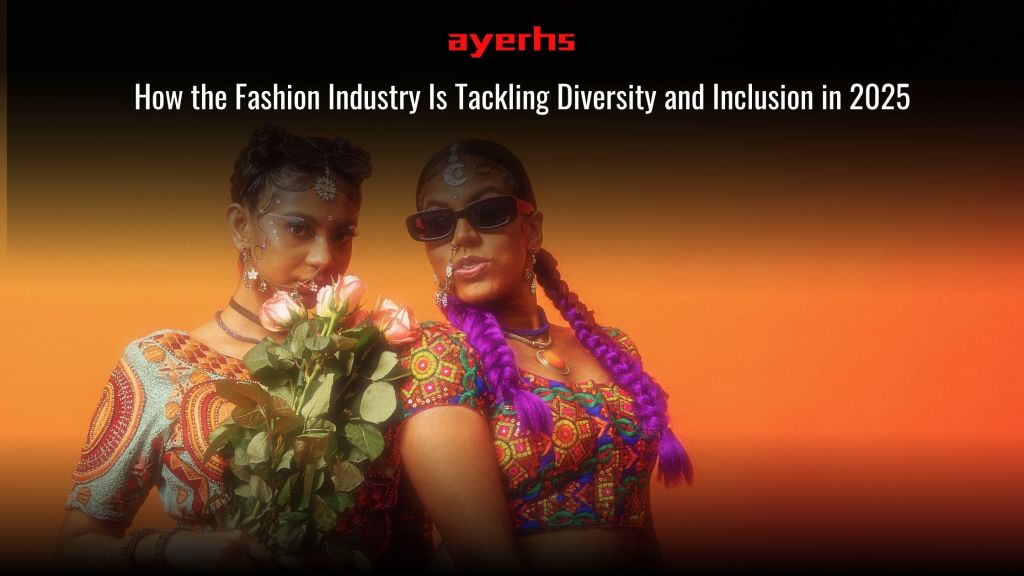
For decades, the fashion industry has been called out for its narrow beauty standards, lack of cultural representation, and exclusionary practices. Runways, magazines, and ad campaigns long favored one type of body, skin tone, gender, and story—leaving many people feeling unseen, unrepresented, and even unwelcome. But in recent years, something has started to shift. Fast forward to 2025, and the fashion world is more self-aware than ever. Diversity and inclusion are no longer optional buzzwords; they’re essential to how brands operate, design, and communicate.
So what exactly is changing—and how deep do these changes go? Is the industry genuinely evolving, or are we still dealing with performative progress?
Let’s dive into how fashion is addressing diversity and inclusion in 2025—where the wins are happening, where the gaps remain, and what the future might hold.
A Wake-Up Call: From Tokenism to Intentionality
The last few years have forced fashion to look in the mirror. From the global racial justice movements of 2020 to the rise of social media accountability, consumers started demanding more than curated diversity in campaigns—they wanted representation behind the scenes too.
In the early 2020s, many brands scrambled to include more models of color, plus-size bodies, and queer identities on runways or in marketing. But critics were quick to call out tokenism—the inclusion of marginalized identities just for optics. The message was clear: real inclusion isn’t about checking a box; it’s about changing the system.
By 2025, more brands are finally catching on. Diversity is being built into the core of creative direction, hiring practices, and company values—not just the campaign visuals. It’s slower work, yes, but it’s more meaningful.
Runway Representation: More Than a Trend
Runways have always been a symbolic space. What gets shown during fashion weeks often reflects what the industry prioritizes. And in 2025, the shows are more colorful, inclusive, and intersectional than ever before.
According to the Fashion Spot’s 2025 Diversity Report, 46% of models cast for the Fall/Winter 2025 season were models of color, compared to 41.5% the year prior. This includes Black, Asian, Latinx, Indigenous, and Middle Eastern models. Meanwhile, 19% of castings featured plus-size or mid-size models, and 7% included disabled models or models with visible differences, such as albinism, vitiligo, or limb differences.
Fashion houses like Collina Strada, Sinead O’Dwyer, and Gypsy Sport continue to lead the charge with radically inclusive casting, featuring models of all body types, genders, and abilities. At Paris Fashion Week, Marine Serre opened her Fall 2025 show with a 60-year-old model walking arm-in-arm with a younger trans model, sending a clear message: fashion is for everyone.
Behind the Scenes: Who’s Making the Decisions?
True diversity goes beyond what we see on runways. Who’s in the boardroom? Who’s leading design teams? Who’s directing campaigns?
One of the major shifts in 2025 is that more marginalized voices are being brought into positions of power. Fashion schools and mentorship programs have become intentional about nurturing talent from underrepresented backgrounds. Programs like the Black in Fashion Council’s mentorship initiative and the CFDA x PVH Inclusion Council have helped push hundreds of creatives into leadership pipelines.
This year, Priya Khanna, an Indian-British designer, was appointed Creative Director at a major Parisian fashion house—one of the first South Asian women to hold such a role in Europe. Meanwhile, Malik Thompson, a nonbinary Black stylist, led the creative direction of a major campaign for a global streetwear brand, showing how behind-the-scenes inclusion can shift entire aesthetics.
And it’s not just about race or gender anymore. More fashion houses are thinking about intersectionality—the way various forms of identity (race, gender, ability, class, religion) overlap and affect how people experience the industry.
Adaptive and Accessible Fashion: Designing for Everyone
One of the most promising areas of inclusive innovation in 2025 is adaptive fashion—clothing designed with people with disabilities in mind. Whether it’s magnetic closures for easier dressing, adjustable fits for wheelchair users, or sensory-friendly fabrics for people on the autism spectrum, adaptive design is finally stepping into the mainstream.
Tommy Hilfiger Adaptive has been around for several years, but now more brands—from luxury to fast fashion—are following suit. ZARA, ASOS, and even Balenciaga have launched capsule adaptive collections in 2025, not as one-off drops but as permanent product lines.
Meanwhile, models like Jillian Mercado, who uses a wheelchair, and Aaron Philip, a trans model with cerebral palsy, continue to reshape how disability is seen in fashion—not as a limitation but as a source of creativity and individuality.
Accessibility is also being considered beyond clothing. More runway shows now include ASL interpreters, audio descriptions, and step-free venues. Fashion websites are investing in alt-text, screen reader compatibility, and inclusive sizing tools. It’s no longer enough to be visually inclusive; access must be practical, too.
Body Diversity: Beyond the Plus-Size Debate
The body positivity movement has had a complicated journey in fashion. While we’ve seen more curve models in recent years, the industry has often treated body diversity as a trend—one that fades once it’s no longer “hot.”
But in 2025, body neutrality and body authenticity have taken the spotlight. Instead of romanticizing or commodifying certain body types, brands are embracing real bodies—cellulite, scars, body hair, and all. Campaigns are shifting from aspirational to relatable.
Savage X Fenty, long known for its inclusive casting, launched a new “Unretouched” campaign this year featuring models across a wide age and size range, photographed in natural light with no editing. Eileen Fisher and Girlfriend Collective continue to set standards for inclusive sizing, extending their lines from XXS to 6XL without dividing collections by category.
Importantly, many brands are working with fit models of different sizes to ensure the clothes are designed for larger bodies—not just scaled up versions of smaller patterns.
Cultural Inclusion: Honoring Rather Than Appropriating
Fashion has a long, messy history with cultural appropriation—plucking aesthetics from marginalized communities without giving credit or context. In 2025, the conversation around cultural inclusion vs. appropriation is more nuanced and ongoing.
Brands are increasingly partnering with artisans, designers, and creators from the communities they draw inspiration from. Stella Jean, known for her work with artisans from Haiti and Burkina Faso, launched a collaborative project in 2025 with Indigenous weavers from Mexico—giving them full credit, royalties, and platform visibility.
Similarly, Telfar continues to highlight Liberian identity in its collections, while brands like Wasi Clothing, founded by Bolivian-American designer Vanessa Acosta, center Andean culture from a lived perspective rather than a borrowed one.
Consumers are more vocal too. Social media doesn’t let brands get away with surface-level representation anymore. There’s a clear push toward cultural storytelling that is rooted in collaboration, context, and respect—not aesthetics for the sake of aesthetics.
Gender Inclusivity: Beyond the Binary
Gender norms in fashion have been breaking down for years, but 2025 feels like a full-fledged new era. More brands are rejecting gendered categories altogether, releasing gender-fluid, nonbinary, or ungendered collections.
Palomo Spain, Harris Reed, and No Sesso are pioneers in this space, showing how fluid fashion can be playful, political, and liberating. Meanwhile, major retailers like Nordstrom and Farfetch have introduced gender-inclusive shopping filters and style guides, letting consumers shop by silhouette or vibe rather than “men” or “women.”
There’s also a push to rethink sizing and tailoring. Rather than trying to make “women’s clothes” for men or vice versa, brands are designing garments that move with the body and respect all kinds of anatomies. This includes adjustable waists, built-in binders, or space for prosthetics.
Trans and nonbinary representation is also growing across the industry. In 2025, Valentina Sampaio, Richie Shazam, and Munroe Bergdorf are not only modeling—they’re consulting, directing, and designing too.
Global Representation: Centering the Global South
Fashion has long been dominated by Western voices, but 2025 sees a rising tide of designers and creatives from the Global South gaining global recognition.
Brands from Nigeria, India, South Korea, and Brazil are not only producing garments but shaping the industry narrative. Lagos Fashion Week is now considered a global fashion calendar staple, and Delhi-based designer Rahul Mishra’s sustainable couture is turning heads in Paris.
What’s different now is the redistribution of power. Instead of Western brands co-opting global aesthetics, designers from the Global South are being invited to lead—with their stories, traditions, and craft techniques at the center.
More fashion editors and stylists from underrepresented countries are taking up space in global publications, bringing with them perspectives that challenge Western-centric norms around luxury, style, and identity.
Where the Industry Still Falls Short
Despite all the progress, fashion’s reckoning with diversity is far from complete. Some challenges persist:
- Sustainability and Inclusion are Still Disconnected: Many sustainable brands lack diversity in their storytelling and staffing, while inclusive brands sometimes neglect eco-conscious production. The industry needs to bring these movements together—because sustainability without inclusion isn’t ethical, and inclusion without sustainability isn’t responsible.
- Pay Gaps and Labor Inequality: Marginalized workers—particularly garment workers in the Global South—still face unsafe conditions and unfair wages, even when brands tout inclusivity on the surface.
- Size Inclusivity Plateaus: Some brands still stop at XL or 1X, calling it “inclusive,” while ignoring the needs of larger-bodied people. Fit, quality, and availability continue to be major issues.
- Disability Inclusion Lags Behind: While visibility has improved, adaptive fashion is still a niche within most brands. Many designers don’t consider disabled bodies during the design phase, which makes the industry feel exclusionary, even if representation is growing.
What’s Next?
As we move deeper into 2025, one thing is clear: the demand for real, layered inclusion isn’t going away. Consumers are sharper, more informed, and less tolerant of superficial change. Gen Z and Gen Alpha, in particular, expect brands to reflect the world they live in—not just the fantasy version the industry once sold.
The next frontier of fashion will be about intersectionality, equity, and longevity—building systems that aren’t just inclusive on the outside, but equitable from the inside out. It’s not about who’s on the runway today; it’s about who gets to stay in the room tomorrow.
Ultimately, diversity and inclusion in fashion isn’t a final destination—it’s an ongoing practice. And in 2025, more brands are finally walking the walk.
 Ayerhs Magazine