
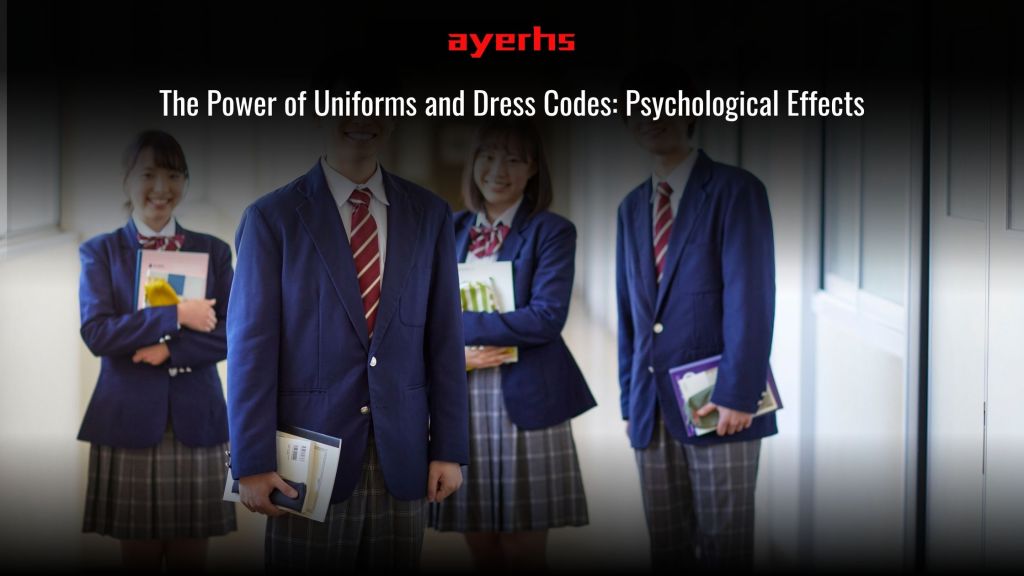
Imagine walking into a classroom on your first day of school. You look around and see your classmates wearing identical shirts and trousers or skirts, polished shoes lined up just so, matching backpacks slung over shoulders. In that moment, you’re comforted by the absence of fashion “one-upmanship” and relieved of the guessing game of “what am I supposed to wear?” Now, fast-forward to a corporate boardroom: executives in crisp suits, their ties and jackets a uniform testament to their professional culture. Whether it’s a neat blue polo at your local supermarket or a tailored blazer at your favorite coffee chain, uniforms and dress codes quietly wield enormous psychological power over how we think, feel, and behave.
What Exactly Are Uniforms and Dress Codes?
At first glance, a uniform is a prescribed set of clothing issued by an organization—think school blazers, hospital scrubs, or airline attendant outfits. A dress code, by contrast, tends to be more flexible, specifying guidelines rather than exact garments: “business casual,” “no ripped jeans,” or “closed-toe shoes required.” Both aim to standardize appearance. But beyond the surface, they tap into deeper currents in our social wiring, influencing everything from our mood to our performance.
A Walk Down History Lane
Humans have embraced uniforms for centuries. Soldiers in ancient Rome donned distinctive tunics and armor that instantly told friend from foe on the battlefield. In medieval guilds, apprentices wore aprons marking their trade, signaling both skill level and social role. By the 19th and 20th centuries, uniforms spread to schools, workplaces, and institutions, mirroring industrialization’s emphasis on order and efficiency. Today’s uniforms still carry that legacy, but with the added layers of brand identity, marketing, and group psychology that shape our modern world.
Belonging: The Comfort of “We”
One of the strongest draws of uniforms is the sense of belonging they create. When you slip into the same attire as your peers, you feel part of something larger than yourself. This shared identity isn’t just feel-good fluff—it’s rooted in our tribal past. Psychologists refer to it as social identity theory: by visually aligning ourselves with a group, we boost our self-esteem and quell the anxiety of standing out. Remember your first day at a new job? When you got that company logo tee or security badge, you likely felt an instant lift: “I belong here now.”
Equality: Leveling the Playing Field
In school hallways, uniforms can blunt glaring economic differences. Without designer logos or the latest sneaker drops, students are less inclined to judge each other by outward wealth. It doesn’t erase every social hierarchy, of course, but it smooths over one very visible status marker. Likewise, in workplaces with rigorous dress codes, the conversation shifts from “Who’s wearing what?” to “What can you do?” By minimizing visual disparities, uniforms and dress codes foster a baseline of equality—at least in terms of appearance.
Anchoring Focus and Performance
Wearing a uniform signals to your brain: “Time to switch into role mode.” A study of healthcare workers showed that nurses in professional attire reported higher confidence and a sense of competence compared to those in casual scrubs. In sports, teams in matching kits often exhibit greater cohesion and perform better on the field. Why? Because the uniform acts like a mental costume change, sharpening focus for the task ahead. Even remote-first companies mail new hires branded hoodies and coffee mugs—simple physical tokens that help bridge the digital divide and anchor a sense of belonging.
Branding, Trust, and Professionalism
For businesses, uniforms are a silent salesperson. A tailored uniform with carefully placed logos communicates reliability, expertise, and brand consistency. When you see a barista in the same branded polo and cap across multiple branches, it builds trust. You know exactly what to expect: your latte’s taste, the greeting’s warmth, the counter’s cleanliness. This reliability fosters customer loyalty and can directly boost a company’s bottom line. Conversely, a sloppy or inconsistent uniform can undermine credibility in the blink of an eye.
Creativity vs. Conformity: Finding Balance
The unity uniforms offer can be a double-edged sword. Strict dress codes can stifle individuality, especially in schools where personal style forms a core element of teenage identity. When every student looks identical, how do they explore self-expression? The challenge lies in crafting policies that maintain cohesion without quashing personal flair—allowing for accessorizing, seasonal colors, or “spirit days” that let people breathe while still honoring the collective brand.
Easing Decision Fatigue and Anxiety
For many, choosing an outfit each morning is a low-grade source of anxiety. Overdressed? Underprepared? Sending the wrong signal? Uniforms remove that daily decision fatigue and risk of social missteps. This reduction in mental load can translate into better well-being, particularly for young students prone to bullying or judgment over fashion choices. When the spotlight shifts from “how I look” to “what I’m learning,” classrooms become safer, more inclusive spaces.
School Dress Codes: More Than Just Blazers
School dress codes span the spectrum from rigid uniforms to flexible “modest attire” guidelines. Research suggests that policies designed with student input and cultural sensitivity yield the best outcomes. When students have a say, they feel respected—and compliance rises. In contrast, zero-tolerance rules that penalize cultural garments or criminalize minor infractions (think: leggings or hairstyles) breed resentment and distract from academic goals. The sweet spot? Codes that promote respect and safety without veering into authoritarianism.
Workplace Dress Codes: Elevating or Alienating?
In a professional setting, dress codes define expectations. “Business formal” usually means suits and ties; “business casual” opens the door to chinos and button-downs. Yet overly strict rules—like bans on visible tattoos or mandates on women’s heels—risk alienating employees and even triggering legal fights over discrimination. Progressive companies pivot to “smart casual” guidelines, emphasizing neatness and appropriateness while allowing personal identity to shine. This balance boosts morale, fuels creativity, and attracts a diverse talent pool.
Uniforms as Symbols of Mission
Beyond schools and offices, uniforms carry immense symbolic weight in fields like healthcare, military, and emergency services. A doctor’s white coat evokes healing; a firefighter’s turnout gear signals courage under fire. These garments transcend cloth and thread—they’re emblems that inspire trust in patients, civilians, and teammates alike. Wearing that uniform repeatedly reinforces the wearer’s own commitment to mission, creating a feedback loop: the uniform builds identity, and the identity honors the uniform.
The Dark Side: Control and Conformity
Yet uniforms and strict dress codes can slide into dangerous territory when they become instruments of control rather than cohesion. In authoritarian regimes, drab uniforms can quash individuality and broadcast the power of the state. Even in less extreme contexts, blind adherence to dress codes can foster a culture where questioning is discouraged and dissent is stifled. The antidote is clear: ensure any uniform or code serves to unify and empower, not to suppress.
Real-Life Stories: How Uniforms Make a Difference
- Mia’s Morning Relief: A shy high school junior named Mia dreaded getting dressed each day—until her school introduced a uniform policy. “Suddenly, I didn’t stress about matching shoes or whether my jeans were cool enough,” she says. “I looked forward to mornings; my focus shifted to my classes, not my closet.”
- Rashid’s Rookie Boost: As a new hire at a fintech startup, Rashid felt adrift in his first week. Then he received a branded hoodie on day one. “It was just a hoodie,” he laughs, “but wearing it made me feel like part of the crew before I even sat at my desk.”
- Nurse Elena’s Confidence: Elena, an ER nurse, recalls noticing that patients responded more positively when she switched from paper-thin scrubs to a more structured, professional uniform with her name embroidered. “It wasn’t vanity,” she explains, “it was about projecting competence and care.”
These anecdotes underscore how small sartorial shifts can ripple into real emotional and performance changes.
Crafting Effective Uniforms and Dress Codes
Wondering how to harness the power of uniforms without stumbling into pitfalls? Here are some friendly, actionable principles:
- Include Stakeholders
- Involve the people who’ll wear the uniform—students, employees, or volunteers—in crafting the policy. Their buy-in makes all the difference.
- Be Clear and Consistent
- Ambiguous rules breed frustration and loopholes. Spell out what’s acceptable—and why.
- Allow Personal Touches
- Accessories, color accents, seasonal variations, or cultural garments can coexist with the core uniform. A little self-expression goes a long way.
- Tie to Values and Mission
- Link the uniform’s design and rationale to your organization’s purpose, whether that’s learning, safety, or service.
- Review and Adapt Regularly
- Cultures evolve; so should your policies. Check in annually, solicit feedback, and adjust as needed.
- Balance Flexibility and Fairness
- Consider “dress down” or “spirit” days to mix things up. At the same time, uphold standards to avoid confusion.
The Future of Dress Norms
As the world shifts toward hybrid work models and blended learning environments, uniforms and dress codes will evolve too. We might see:
- Modular Uniforms: Mix-and-match pieces that adapt from a classroom to a virtual meeting.
- Digital Dress Codes: Branded Zoom backgrounds or personalized avatar outfits for online platforms.
- Sustainable Fabrics: Eco-friendly materials that reflect an organization’s green values.
- Tech-Enhanced Garments: Smart badges or fabrics that monitor well-being or provide real-time updates.
Despite these innovations, one truth remains constant: humans crave belonging and identity. Clothing will always be a potent shorthand for how we relate to groups, roles, and shared missions.
Pulling It All Together
At first glance, uniforms and dress codes might seem like trivial details—just shirts and rules. But look closer, and you’ll find their psychological power is profound. They shape our identities, influence our behaviors, and even affect our mental well-being. When thoughtfully designed, they foster unity, equity, confidence, and focus. When wielded carelessly, they can stifle creativity, breed resentment, and even suppress individual voices.
The real magic lies in striking the right balance: using uniforms and dress codes as tools to empower, not control—to unite, rather than to divide. After all, behind every uniform is a person seeking connection, purpose, and a little extra help navigating the day. And sometimes, the simple act of slipping into a shared garment is exactly the nudge we need to walk through the door with pride, confidence, and a sense of belonging.
 Ayerhs Magazine