
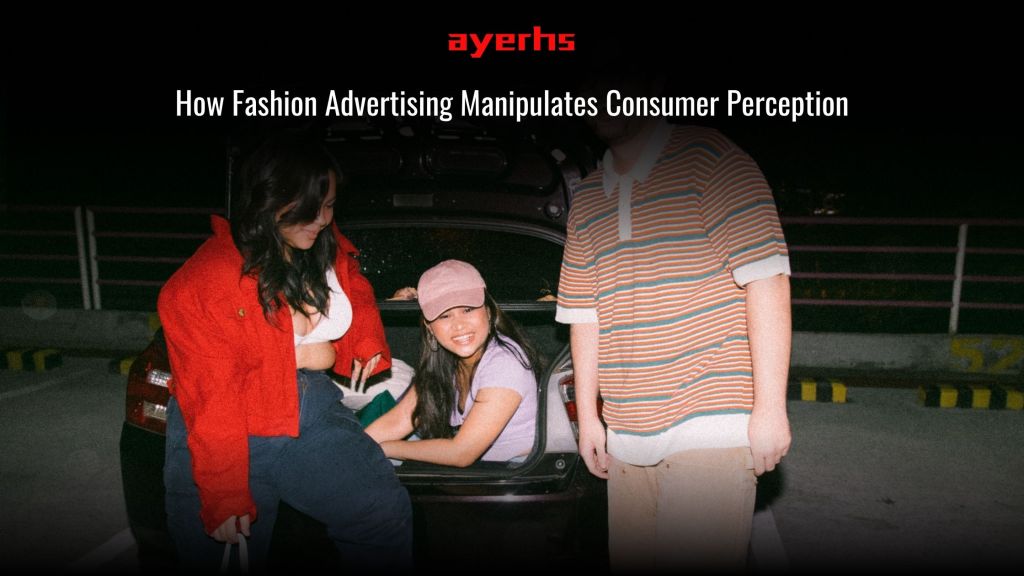
Imagine this: you’re scrolling through your social media feed, and a stunning image pops up. A model, impossibly chic, gazes out with an air of effortless cool, draped in a garment that seems to whisper luxury and sophistication. The caption hints at exclusivity, the promise of transformation. Before you know it, a tiny seed is planted in your mind: “Maybe if I wear that, I’ll feel that way too.”
This isn’t magic; it’s the masterful art of fashion advertising at play. And make no mistake, it’s not just about showcasing clothes. It’s about weaving narratives, stirring emotions, and subtly, yet powerfully, shaping our perceptions of ourselves, our desires, and ultimately, our spending habits. In a world saturated with visual information, fashion advertising has evolved into a highly sophisticated mechanism, often manipulating our consumer perception in ways we don’t even consciously register.
The Illusion of Aspiration: Selling a Lifestyle, Not Just a Scarf
Let’s be honest, how many of us have ever looked at an ad for a designer handbag and thought, “Wow, that’s a really well-stitched piece of leather”? Probably not many. What we’re more likely to think is, “That bag screams success,” or “That bag would complete my look and make me feel like I’m part of that exclusive club.” This is the cornerstone of fashion advertising: selling aspiration.
Fashion brands understand that they’re not just selling fabric and thread; they’re selling a dream, a lifestyle, a feeling. They associate their products with desirable traits – wealth, status, beauty, youth, rebelliousness, comfort, sustainability – and through clever imagery, evocative language, and strategic placement, they create an illusion. You buy the product, and you buy into the dream.
Think about the ubiquitous fragrance ads. Do they ever show you the chemical composition of the perfume? No. Instead, they depict scenarios of romance, adventure, sensuality, or power. The message is clear: wear this scent, and you too can experience these exhilarating emotions or embody these desirable characteristics. The product becomes a conduit to a desired identity.
The Power of Visuals: More Than Meets the Eye
Our brains are hardwired to process visual information quickly and effectively. Fashion advertisers leverage this to their full advantage. Every element in a fashion ad – from the lighting and location to the models’ expressions and poses – is meticulously chosen to evoke a specific feeling or convey a particular message.
- The “Perfect” Body: For decades, fashion advertising perpetuated a narrow and often unattainable ideal of beauty. Super-thin models, airbrushed to perfection, became the norm, leading to widespread body image issues and an unhealthy pursuit of an impossible standard. While there’s a growing movement towards more inclusive representation, the aspirational (and often Photoshopped) body still dominates many campaigns. This subtle manipulation tells us, “This is what beauty looks like, and if you want to be beautiful, you should aspire to look like this.”
- The Dreamy Setting: Ever notice how often fashion ads are set in exotic locations, luxurious apartments, or idyllic natural landscapes? These backdrops aren’t accidental. They transport us to a fantasy world, associating the clothing with a sense of escape, adventure, or opulence. A simple t-shirt suddenly feels more desirable when it’s showcased against a stunning Parisian skyline or a sun-drenched beach.
- The Emotional Connection: A model’s gaze can convey confidence, vulnerability, or defiance. The way they hold themselves can exude power or nonchalance. These subtle cues are designed to elicit an emotional response from the viewer. We don’t just see a dress; we see a woman embodying strength and independence while wearing it, and we internalize the idea that wearing that dress might make us feel the same way.
Scarcity and Exclusivity: The Allure of the Forbidden Fruit
Human psychology dictates that we often desire what we perceive as scarce or exclusive. Fashion brands exploit this beautifully. Limited edition drops, waiting lists, “VIP” access, and high price points all contribute to a sense of exclusivity.
- Limited Editions: Announcing a “limited edition” collection immediately creates a sense of urgency and desirability. We fear missing out on something unique, and this fear can override rational decision-making. The perceived rarity makes the item seem more valuable, even if its intrinsic worth hasn’t changed.
- High Price Points: While it might seem counterintuitive, high prices can sometimes increase perceived value. A luxury handbag costing thousands of dollars isn’t just about the quality of the materials; it’s about the status symbol it represents. The high price acts as a barrier, making it accessible only to a select few, thus reinforcing its exclusivity. We associate expensive with superior, even if the difference in quality isn’t always commensurate with the price jump.
- Celebrity Endorsements: When a celebrity – someone we admire or aspire to be like – is seen wearing a particular brand, it instantly elevates that brand’s status. We unconsciously think, “If it’s good enough for them, it’s good enough for me.” This creates a powerful association between the celebrity’s desirable attributes and the product itself.
The Illusion of Individuality: Be Unique, Just Like Everyone Else
Here’s a fascinating paradox in fashion advertising: while brands often promote the idea of individuality and self-expression, they simultaneously encourage conformity. We’re told to “find our own style,” but then presented with trends that dictate what that style should look like.
- Trend Cycles: Fashion advertising is a key driver of the relentless trend cycle. What’s “in” today might be “out” tomorrow, constantly pushing consumers to update their wardrobes. This creates a perpetual desire for novelty and a feeling that if we don’t keep up, we’ll be left behind.
- The “IT” Item: Every season, there’s an “it” bag, an “it” shoe, or an “it” coat. These items are heavily promoted and become ubiquitous, creating a desire to own them simply because everyone else does. The irony is, in trying to be unique by owning the “it” item, we often end up conforming.
- Personalized Experiences (within boundaries): Many brands now offer “personalized” shopping experiences or “curated” collections. While this seems to cater to individual tastes, it’s often within a predefined framework. You’re given choices, but those choices are still limited to the brand’s offerings and current trends, subtly guiding you towards their desired outcomes.
Emotional Resonance: Tugging at Our Heartstrings (and Wallets)
Beyond aspiration and exclusivity, fashion advertising often taps into our deeper emotional needs and vulnerabilities.
- Nostalgia: Brands frequently use retro aesthetics or tap into nostalgic themes to evoke a sense of warmth, familiarity, and comfort. This can be particularly effective during uncertain times, offering a comforting escape to a simpler past.
- Empowerment: Many campaigns now focus on themes of empowerment, self-love, and breaking barriers. While seemingly positive, these messages can also be a clever marketing tactic, suggesting that by purchasing their product, you too can achieve this sense of empowerment. The clothes become a tool for self-actualization.
- Fear of Missing Out (FOMO): Social media has amplified FOMO to an unprecedented level. Fashion ads strategically highlight new drops, flash sales, and influencer endorsements, creating a sense of urgency and fear that if you don’t act now, you’ll miss out on something desirable. This often leads to impulse purchases rather than thoughtful decisions.
The Digital Age: A New Frontier of Manipulation
The rise of digital media and social platforms has provided fashion advertisers with even more sophisticated tools for manipulating consumer perception.
- Influencer Marketing: Influencers, often seen as relatable and authentic, wield significant power. When an influencer raves about a product, it feels like a recommendation from a friend, rather than a paid advertisement. This blurs the line between genuine endorsement and marketing, making it harder for consumers to discern true value from promotional hype.
- Targeted Advertising: Our online behavior is meticulously tracked, allowing advertisers to create highly personalized and targeted ads. If you’ve been looking at sneakers, you’ll suddenly see sneaker ads everywhere. This constant exposure, tailored to our perceived interests, can be incredibly persuasive, reinforcing our desires and nudging us towards a purchase.
- User-Generated Content (UGC): Brands encourage consumers to share photos and videos of themselves wearing their products. This UGC acts as social proof, making the brand appear more authentic and desirable. Seeing “real” people wearing the clothes can be more convincing than highly polished professional shoots, even if those “real” people are often aspiring influencers themselves.
- Gamification and Interactive Ads: Some brands use quizzes, polls, and interactive elements in their ads, drawing consumers in and making them feel more engaged. This playful approach can mask the underlying persuasive intent, making the advertising feel less like a sales pitch and more like an entertaining experience.
Navigating the Labyrinth: How to Be a Savvy Consumer
Understanding how fashion advertising manipulates consumer perception isn’t about becoming cynical or boycotting all brands. It’s about becoming a more conscious and empowered consumer.
- Question the Narrative: When you see a fashion ad, pause and ask yourself: What are they really selling? Is it just a piece of clothing, or is it a lifestyle, an emotion, a status symbol?
- Look Beyond the Image: Try to separate the product from the aspirational imagery. Would you still want that item if it wasn’t presented in a glamorous setting or worn by a supermodel?
- Prioritize Your Values: Instead of succumbing to fleeting trends, identify what truly matters to you in clothing – comfort, durability, ethical production, personal style. Let these values guide your purchasing decisions.
- Do Your Research: Don’t rely solely on advertising. Look for independent reviews, research material composition, and understand a brand’s ethical practices before making a purchase.
- Cultivate Your Own Style: Resist the urge to constantly chase “what’s in.” Develop a sense of personal style that reflects who you are, rather than who advertisers tell you to be. This means understanding your body shape, what colors suit you, and what makes you feel comfortable and confident.
- Unfollow and Curate Your Feed: If certain influencers or brands make you feel inadequate or constantly desirous, unfollow them. Curate your social media feed to be a source of inspiration and positivity, not comparison and consumption.
- Practice Mindful Consumption: Before buying something, ask yourself: Do I truly need this? Will it add value to my life? Is it a thoughtful purchase or an impulse driven by advertising?
Empowering Ourselves in a World of Persuasion
Fashion advertising is a powerful force, a master of illusion that plays on our desires, insecurities, and aspirations. It skillfully crafts narratives that transcend mere clothing, selling us dreams, statuses, and identities. By understanding the tactics employed – from the allure of aspiration and exclusivity to the subtle power of visuals and emotional resonance – we can begin to deconstruct the carefully constructed illusions.
In an increasingly digital and visually driven world, the ability to discern genuine value from manufactured desire is more crucial than ever. It’s not about rejecting fashion or the creativity it embodies. It’s about empowering ourselves to make choices that align with our authentic selves, rather than being mere puppets of persuasive marketing. So, the next time you see a dazzling fashion ad, take a moment. Admire the artistry, appreciate the creativity, but then, critically ask yourself: Is this something I truly want, or is it just another beautifully packaged dream being sold? The power to choose, truly choose, lies within you.
 Ayerhs Magazine