
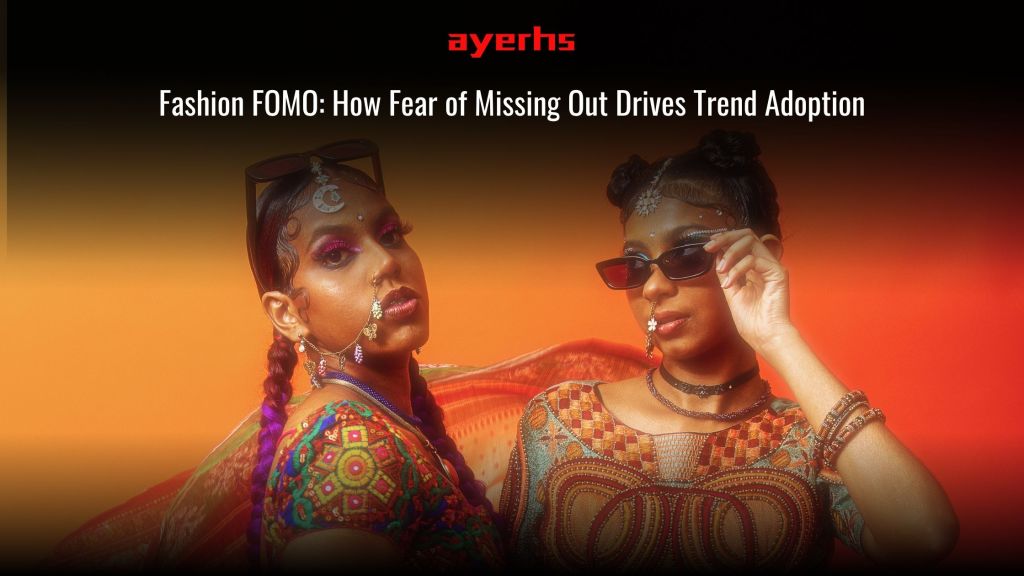
It starts with a scroll. A flash of neon green on your favorite influencer. A perfectly tailored blazer on a celebrity. Suddenly, that familiar pang hits you. A quiet, yet persistent whisper that your closet is… lacking. That you are, in some fundamental way, behind the curve. This, my friends, is the subtle, yet powerful hum of Fashion FOMO – the Fear of Missing Out, tailored to our wardrobes. It’s a feeling that has been meticulously crafted and amplified in our hyper-connected world, and it’s quietly driving our consumption habits, emptying our wallets, and filling our landfills.
But what if we told you that this feeling, this urgent need to keep up, isn’t really about the clothes at all? What if it’s a deeper, more human yearning that’s being exploited, and what if the key to breaking free has been hanging in your closet all along?
This is a conversation about more than just what you wear. It’s about why you wear it. It’s a deep dive into the psychology of our sartorial choices, a look at the societal and environmental price of our collective fashion anxiety, and a guide to rediscovering the joy of dressing for yourself.
The Dopamine Hit of the “Add to Cart” Button
Let’s be honest, we’ve all been there. You see a dress, a pair of shoes, a handbag that seems to be everywhere. It’s the sartorial equivalent of being the only one not in on an inside joke. Your brain, wired for social connection and acceptance, perceives this as a threat. The fear of being left out, of being deemed irrelevant or “out of touch,” is a primal one.
In the digital age, this fear is on steroids. Social media algorithms are designed to show you what’s popular, what’s trending, what everyone else is seemingly buying. This creates a powerful illusion of consensus. When you see the same “it” item repeatedly on your feed, it triggers a cognitive bias known as the “mere-exposure effect” – the more you see something, the more you like it.
Then comes the dopamine hit. The act of purchasing that coveted item provides a fleeting sense of relief, of belonging. That “add to cart” click, the arrival of the package – it’s a mini-high, a temporary salve for the anxiety of being left behind. Brands, especially in the fast fashion sector, have mastered the art of weaponizing this psychological loop. Limited-time offers, “selling fast” banners, and collaborations with influencers all create a sense of urgency, compelling you to buy now, think later.
This cycle, however, is a treadmill. The high is short-lived. The trend that felt so vital today is quickly replaced by another tomorrow. The dopamine rush fades, but the credit card bill and the overflowing closet remain. This constant chase for the next best thing doesn’t just impact our finances; it chips away at our sense of self.
From Trickle-Down to TikTok Tsunami: A Brief History of Trend Adoption
To understand the frenetic pace of today’s trend cycle, it’s helpful to look back. For centuries, fashion trends followed a relatively predictable path, often described by the “trickle-down” theory. A new style would emerge from the upper echelons of society – royalty, aristocracy, or haute couture houses in Paris – and gradually make its way down to the masses. Think of the influence of Queen Victoria’s mourning attire or the revolutionary designs of Coco Chanel. This was a slow, deliberate process, with trends lasting for seasons, sometimes even years.
The 20th century saw the emergence of “trickle-up” and “trickle-across” theories. Street style, youth cultures, and music scenes began to influence high fashion. The punk movement’s ripped denim and leather, the hippies’ embrace of bohemian silhouettes – these were trends born from the ground up. The “trickle-across” theory acknowledged that with the rise of mass media, trends could now move horizontally across different social groups simultaneously.
Enter the internet, and more specifically, social media. The neatly defined theories of the past have been blown out of the water, replaced by a chaotic, all-encompassing “TikTok Tsunami.” Trends now emerge, peak, and die within weeks, sometimes even days. An obscure vintage aesthetic can go viral overnight, creating a global demand that fast fashion giants are all too eager to meet. The gatekeepers of fashion have been decentralized. Anyone with a smartphone can become a trendsetter, and any item can become the next must-have.
This hyper-acceleration of the trend cycle is the engine of fashion FOMO. It creates a constant state of flux, where the ground is always shifting beneath our feet. The fear isn’t just about missing out on one trend, but on the endless stream of micro-trends that follow.
The Hidden Costs of Keeping Up
The relentless pressure to stay on-trend comes with a hefty price tag, one that extends far beyond the number on a receipt.
The Toll on Our Mental Well-being: The constant comparison culture fueled by social media can be detrimental to our self-esteem. When our feeds are filled with seemingly perfect people wearing the latest trends, it’s easy to feel inadequate. The message, whether overt or subliminal, is that our current selves, and our current wardrobes, are not enough. This can lead to a perpetual sense of dissatisfaction and a disconnect from our authentic personal style. We start dressing not for ourselves, but for a faceless online audience, seeking validation through likes and comments. The joy of self-expression through clothing is replaced by the anxiety of performance.
The Burden on Our Wallets: Impulsive, FOMO-driven purchases can quickly lead to financial strain. It’s not uncommon for young consumers to go into debt to keep up with fashion trends they see on social media. The “buy now, pay later” schemes offered by many online retailers further encourage this behavior, masking the true cost of our sartorial desires. The irony is that the cheap thrill of a fast-fashion haul often leaves us with a wardrobe full of ill-fitting, low-quality items that we barely wear, creating a cycle of waste and regret.
The Devastating Impact on Our Planet: The environmental consequences of fashion FOMO are staggering. The fast fashion industry, which thrives on rapid trend cycles and low prices, is one of the world’s largest polluters. Here are some sobering statistics:
- Textile Waste: The average consumer now buys 60% more clothing than they did 15 years ago, but keeps each garment for half as long. An estimated 92 million tons of textiles waste is created annually, with a garbage truck’s worth of clothing being burned or landfilled every second.
- Water Consumption: The fashion industry is a thirsty one. It takes approximately 2,700 liters of water to produce a single cotton t-shirt – enough for one person to drink for 900 days.
- Carbon Emissions: The industry is responsible for about 10% of global carbon emissions, more than all international flights and maritime shipping combined.
- Microplastic Pollution: Synthetic fabrics like polyester, which are prevalent in fast fashion, shed microplastics with every wash. These tiny plastic fibers pollute our oceans and have even been found in our food chain and our bodies.
The vibrant colors and trendy designs of fast fashion hide a dark reality of environmental degradation and unethical labor practices. The fear of missing out on a fleeting trend is directly contributing to a global crisis that we can no longer afford to ignore.
The Antidote: Cultivating Your Personal Style
So, how do we break free from the clutches of fashion FOMO? The answer lies not in a complete rejection of fashion, but in a radical act of self-love and conscious consumption: cultivating your personal style.
Personal style is not about following trends; it’s about discovering what makes you feel confident, comfortable, and authentically you. It’s a form of self-expression that is timeless and deeply personal. Here are some steps to help you on your journey:
1. Go on a Wardrobe Detox: The first step is to take stock of what you already own. Go through your closet and be honest with yourself. What items do you truly love and wear regularly? What have you bought on a whim and never touched? This process can be revealing, helping you to identify your purchasing patterns and the items that genuinely bring you joy. Consider a “fashion detox” – a period of time where you commit to not buying any new clothes. This can help you break the cycle of impulsive shopping and rediscover the gems already in your wardrobe.
2. Find Your Style Icons (the Real Kind): Look for inspiration beyond the endless scroll of influencers. Who are the people whose style you genuinely admire? They could be historical figures, artists, musicians, or even characters from your favorite films. Analyze what it is you love about their style. Is it their use of color, their mastery of silhouettes, or their fearless approach to accessorizing?
3. Create a Mood Board: A visual representation of your desired style can be a powerful tool. Collect images that resonate with you – textures, colors, silhouettes, and overall aesthetics. This will help you to hone in on your personal taste and create a cohesive vision for your wardrobe.
4. Understand Your Body and Your Lifestyle: Dress for the life you have, not the life you think you should have. Consider your daily activities, your profession, and your comfort level. Understanding your body shape and what silhouettes flatter you can also be empowering, but remember that these are guidelines, not rules. The most important thing is that you feel good in what you wear.
5. Embrace the Power of a Uniform: Having a go-to “uniform” – a combination of pieces that you know works for you – can be a game-changer. It takes the guesswork out of getting dressed and ensures you always feel put-together. This doesn’t have to be boring; your uniform can be as unique and creative as you are.
The Rise of Slow Fashion and Mindful Consumption
As awareness of the dark side of fast fashion grows, a powerful counter-movement is gaining momentum: slow fashion. Slow fashion is the antithesis of the instant gratification culture that fuels fashion FOMO. It’s a movement that champions quality over quantity, timeless design over fleeting trends, and ethical and sustainable production practices.
Embracing slow fashion doesn’t mean you have to stop shopping. It means shopping with intention. It means asking questions: Who made my clothes? What are they made of? Will I wear this for years to come? It’s about investing in well-made pieces that you will cherish, repairing and caring for your clothes to extend their lifespan, and exploring secondhand and vintage options.
Mindful consumption is about shifting your mindset from “I need more” to “I have enough.” It’s about finding joy in what you already own, getting creative with styling, and appreciating the stories behind your clothes.
The Future of Fashion is Personal
The fear of missing out is a powerful emotion, but it doesn’t have to dictate your life, or your wardrobe. By understanding the psychological triggers behind fashion FOMO and making a conscious choice to prioritize personal style and mindful consumption, you can reclaim your power as a consumer.
The next time you feel that familiar pang of sartorial anxiety, take a moment to pause. Ask yourself: Do I truly love this item, or am I just afraid of being left behind? The answer might surprise you.
The most stylish thing you can ever wear is confidence. And true confidence comes not from following the crowd, but from knowing and celebrating who you are. Your wardrobe should be a reflection of your unique journey, your passions, and your personality. It should tell your story, not the story of a fleeting trend.
So, let’s stop chasing and start creating. Let’s curate closets that are not just full of clothes, but full of joy, self-expression, and a deep sense of who we are. The future of fashion isn’t on a runway or a social media feed; it’s in the mirror, looking back at a person who is unapologetically, beautifully, and stylishly themselves. And that is a trend worth investing in.
 Ayerhs Magazine