
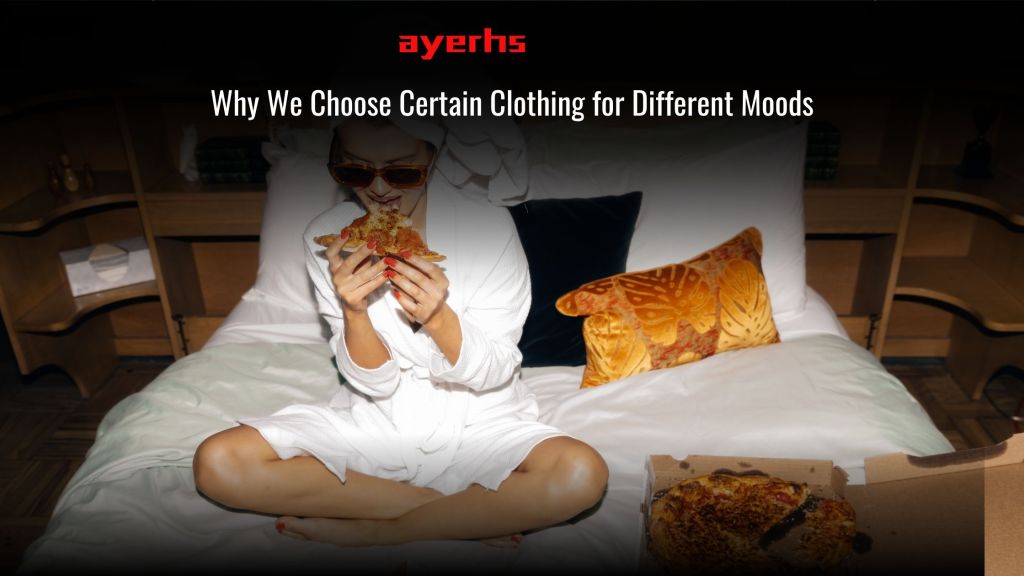
You know those days when you wake up and immediately reach for your softest hoodie and baggy joggers—no questions asked? Or the days you suddenly feel like wearing something bold and bright, even if you’re just going to the grocery store? That’s not a coincidence. The clothes we wear are often a direct reflection of how we feel, or how we want to feel.
Fashion isn’t just about trends or dressing to impress. Sometimes, it’s about comfort, confidence, nostalgia, escape, or even protection. What we choose to wear can say more about our internal world than we realize. So let’s talk about it—why do our moods influence what we wear?
Clothes as a Mirror of Our Emotions
We’ve all heard the phrase “dress how you want to feel.” But honestly? Most of us dress how we already feel. Clothing becomes this silent but visible expression of our mood. Feeling low-energy? We lean toward oversized, comfy clothes. Feeling powerful? Maybe it’s time for a tailored blazer or a bold red lip.
There’s actually science behind this. According to a concept called “enclothed cognition,” the clothes we wear don’t just affect how others perceive us—they also influence how we perceive ourselves. If you wear something associated with confidence, professionalism, or creativity, you’re more likely to take on those traits mentally.
But it’s not always intentional. Sometimes, it’s just emotional muscle memory. On bad days, we unconsciously reach for the sweater that saw us through hard times before. On good days, we might pick that fun, flirty dress that always makes us feel like we’re glowing.
Comfort Clothes for Low Days
Let’s start with the obvious: the comfort outfit. We all have one.
You know the type. Probably made of cotton. Maybe a little stretched out from too many washes. There might be a tear no one sees but you. And somehow, it always makes you feel better.
When we’re feeling anxious, overwhelmed, or just plain blah, these clothes become emotional support. They’re like a wearable version of a hug. Comfort clothes often serve two purposes: they don’t draw attention, and they physically feel good to wear.
There’s nothing vain or shallow about this. Choosing comfort is a form of self-care. It’s our way of saying, “Today might be rough, but I can at least give myself softness.”
Power Dressing for Confidence Boosts
Then there are the days we want to feel in charge—whether it’s for a job interview, a big date, or just needing to feel a little more “put together” than we actually feel inside.
That’s when power dressing steps in. Maybe it’s a crisp blazer, heeled boots, or that one dress that fits just right. It’s less about the clothes themselves and more about the energy they give us.
Studies have shown that dressing in a way that aligns with confidence—like wearing structured, high-quality pieces or bold colors—can actually increase confidence. It’s not magic. It’s psychology.
It’s also performance. Sometimes we don’t feel confident, but we dress the part because we want to. And weirdly, it works. That’s the beauty of clothing—it’s both armor and amplifier.
Dopamine Dressing: When We Dress to Feel Better
Ever heard of dopamine dressing? It’s the idea of wearing joyful, vibrant clothing to elevate your mood. Think loud prints, saturated colors, quirky accessories—basically the opposite of blending in.
This kind of dressing doesn’t come naturally to everyone. Some of us are all about neutrals, and that’s okay. But for those who lean toward expressive outfits, dopamine dressing can be a subtle form of emotional regulation. Even if the day isn’t great, putting on a colorful outfit feels like pushing back against the grey.
It’s especially common during seasonal changes or during difficult emotional seasons. After a breakup? New clothes. After months of burnout? Suddenly, you’re feeling that vintage yellow trench coat on Depop. Coincidence? Nope.
Nostalgia and Sentimental Dressing
We also dress based on memory—what we associate certain clothes with. Maybe you still wear your high school hoodie because it reminds you of simpler times. Or you keep that necklace your mom gave you and wear it when you need to feel close to her.
Clothing can be deeply sentimental. Even smells tied to clothes—like your partner’s shirt or your dad’s old jacket—can bring up waves of emotion. This kind of dressing isn’t about fashion at all. It’s about feeling rooted when everything else feels a little unstable.
Sometimes we even wear certain outfits on anniversaries or big days because they mark a version of ourselves we want to remember. In that sense, our wardrobe becomes a personal archive of the lives we’ve lived.
Dressing Up to Get Out of a Rut
There’s also the classic “fake it till you make it” move.
When you’re feeling unmotivated or stuck in a rut, sometimes putting on a full outfit—jeans, accessories, even a spritz of perfume—can be the nudge you need to feel more like yourself.
We tend to underestimate the link between routine and mood. Something as small as changing out of pajamas and into something intentional can create mental separation between “slump” and “action.” It’s not about productivity. It’s about reclaiming your day in small ways.
Getting dressed becomes a way of saying, “I still care—even if today is hard.”
The Mood Behind Minimalism
For some people, having a minimalist wardrobe isn’t just an aesthetic choice. It’s about mental clarity. When your mind feels cluttered, simplifying your closet can feel like a breath of fresh air.
Wearing neutral tones, basic pieces, or repeating outfits can reflect a desire for calm and control. It’s not boring—it’s soothing.
There’s a quiet kind of confidence in knowing exactly what works for you and not feeling the pressure to constantly change it up. These outfits might not scream for attention, but they reflect a grounded mood that values consistency over chaos.
Social Moods and the Influence of Environments
Our moods don’t exist in a vacuum. A lot of times, we dress based on social emotions—how we want to be seen, or how we want to fit in.
Going to a party? You might lean into something playful or edgy. Meeting the parents? Probably something more modest or neutral. Hanging out with your artsy friend? Maybe you reach for your most creative outfit.
These choices aren’t fake. They’re adaptive. Just like our moods shift based on who we’re around, our style shifts too. It doesn’t mean you’re not being “yourself.” It just means your wardrobe is flexible enough to reflect your full emotional spectrum.
Mood Swings and Style Changes
If your moods change a lot, it’s likely your style does too. That’s not a bad thing. In fact, it probably means your closet has range—and so do you.
You might have days where you’re all about soft, flowy silhouettes and others where you want something sharp and structured. Or some mornings you feel like dressing super femme, and others you want something more androgynous or laid-back.
Your closet becomes a toolbox rather than a fixed identity. You get to pick what version of yourself you want to bring forward that day.
The Influence of Hormones, Sleep, and Food
Let’s not ignore the physical stuff either. Sometimes our style choices have less to do with emotion and more to do with how our body feels.
Didn’t sleep well? You’ll likely reach for something soft and oversized. On your period? Bring on the stretchy waistbands. Just had coffee and a full night’s rest? You might actually feel like putting effort into your look.
We often think of style as this purely mental or creative thing, but it’s deeply physical too. Mood and body are connected. And honoring that connection through your clothing is a way of being kind to yourself.
When Fashion Becomes a Mood-Setting Tool
And sometimes, it goes the other way around. You’re not reflecting a mood—you’re creating one.
There’s something really powerful about using fashion to set an intention for the day. Wearing all white when you want a clean slate. Wearing red when you need energy. Dressing in layers because you feel like holding parts of yourself close.
This is where fashion becomes less about the outside world and more about your internal landscape. The outfit you choose might not make sense to anyone else—but it makes sense to you. And that’s enough.
Final Thoughts: Your Wardrobe Is an Emotional Language
At the end of the day, clothing is a language—a silent, everyday way we tell the world (and ourselves) how we’re feeling.
Some days we dress to hide. Some days we dress to shine. Some days we throw on the nearest T-shirt and call it a win. All of it is valid.
The more we pay attention to the link between mood and style, the more we can use our wardrobes to support our emotional wellbeing. Not as a solution—but as a tool.
So the next time you find yourself instinctively grabbing a certain sweater, or suddenly wanting to wear something bold and colorful, pause for a second. Ask yourself: “What am I feeling today?”
You might be surprised by how much your outfit already knows the answer.
 Ayerhs Magazine