
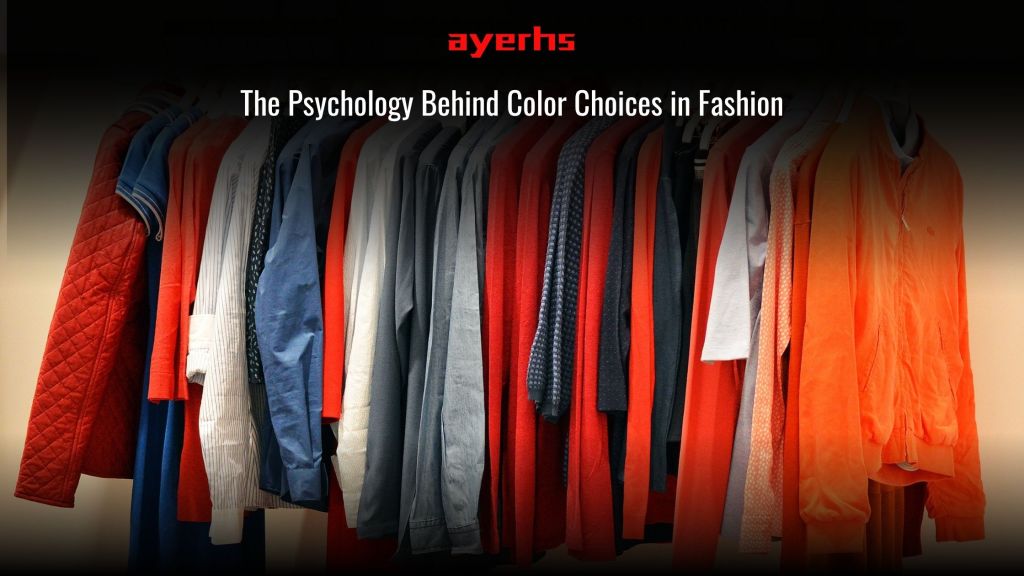
Have you ever noticed how you reach for black when you want to feel powerful, or maybe a soft blue sweater when you’re craving comfort? Whether we realize it or not, the colors we choose to wear say a lot—about our mood, our intentions, and even how we want the world to see us. There’s an entire psychology behind color choices in fashion, and once you understand it, you’ll start noticing patterns not only in your own wardrobe but in others too.
Let’s break it down.
Why Color Matters More Than You Think
Color is often one of the first things we notice about someone’s outfit. Before we even register the style or fabric, our brain processes the color. And that reaction? It’s emotional. Colors evoke feelings, and we associate them with certain memories, social meanings, or even cultural values.
In fashion, color isn’t just about aesthetics. It’s a communication tool. A silent language. When we put together an outfit, we’re not just dressing our bodies—we’re expressing our inner world.
Fashion psychologists and marketing experts have long studied this. Brands use it to shape identity (think Supreme red or Tiffany blue). Designers build entire collections around color themes. And individuals—whether consciously or not—use color to set the tone for the day.
The Big Players: What Common Colors Say About You
Let’s talk about the most commonly worn colors and what they typically communicate in fashion:
Black – Power, Sophistication, Protection
Black is the undisputed queen of the fashion world. It’s sleek, versatile, and always in style. But psychologically, black is a color of control. It creates a barrier, a kind of emotional armor. That’s why we often wear it when we want to feel in charge or undisturbed.
It’s also associated with elegance and mystery. Think about the classic little black dress or a sharply tailored black suit. People often turn to black when they want to look “put together,” even if they’re falling apart on the inside.
But black can also hint at sadness or introspection—why else would it be the color of mourning?
White – Cleanliness, Fresh Starts, Simplicity
White is a color of purity, but in fashion, it also signals freshness. That’s why so many people gravitate toward white in summer or during personal transformations. There’s something psychologically comforting about white—it’s like hitting the reset button.
It can also show confidence. Because let’s face it, wearing white without staining it takes boldness.
Red – Passion, Confidence, Boldness
Red is not for the faint-hearted. It’s one of the most emotionally intense colors. Wearing red often communicates energy, strength, and assertiveness. It can also suggest romance or sensuality. That’s why red dresses are so popular for date nights or events where you want to stand out.
Studies have shown that people wearing red are often perceived as more attractive and dominant. So if you’re looking to make a strong impression, red might be your go-to.
Blue – Calm, Trust, Intelligence
Blue is the color of stability. It evokes trustworthiness and competence—which is why so many corporate uniforms and brands incorporate it. In fashion, blue tends to be a favorite for days when we want to feel composed or emotionally balanced.
Lighter blues are calming and approachable, while darker blues like navy suggest authority without the harshness of black.
Green – Balance, Growth, Freshness
Green has a natural, calming quality. It reminds us of the outdoors, of growth and renewal. It’s not as common in everyday wardrobes, but when people wear green, it often reflects a desire for stability and peace—or sometimes, just a little uniqueness.
Emerald green, in particular, has become a popular fashion color in recent years, often linked to creativity and ambition.
Yellow – Optimism, Creativity, Warmth
Yellow is sunny, vibrant, and hard to ignore. It’s associated with happiness, positivity, and energy. But because it’s so bright, it can also be overstimulating—so many people use it as an accent rather than a base color.
Wearing yellow can lift your mood, but it also says, “I’m here, and I’m not afraid to be seen.”
Purple – Royalty, Luxury, Spirituality
Historically, purple has been the color of nobility, largely because purple dye was rare and expensive. Today, it still carries that sense of luxury and depth. It’s often linked to introspection, mystery, and imagination.
Wearing purple—especially deep tones like plum or violet—can project a sense of uniqueness or even a spiritual vibe.
Pink – Softness, Romance, Playfulness
Pink has evolved over time. While it used to be strictly associated with femininity, it’s now embraced as a gender-neutral expression of emotion and warmth. Soft pinks suggest tenderness and care, while bold magentas are playful and bold.
Millennial pink, for instance, became a generational symbol of modernity and self-expression—subtle but stylish.
Gray – Neutrality, Maturity, Balance
Gray is a middle ground—neither black nor white. It’s often worn by those who want to remain unnoticed or communicate a sense of calm and neutrality. It’s serious, but not dramatic.
In fashion, gray can be practical or chic, depending on how it’s styled. It’s the perfect background color—often used to support bolder accents.
Brown – Earthiness, Reliability, Warmth
Brown is grounding. It feels cozy and dependable. Often linked with nature, it has a down-to-earth vibe. In fashion, it’s seen in autumnal tones, giving off warmth and maturity.
Wearing brown often reflects a desire for comfort, tradition, or subtle sophistication.
Mood Dressing: How We Dress Based on Feelings
Let’s be real: most of us dress based on how we feel. If we’re feeling tired or emotionally drained, we reach for darker or looser clothing. If we’re excited about something, we might pick brighter or more structured outfits.
Psychologists call this “mood-congruent dressing.” It’s why you might find yourself avoiding red on a day when you’re feeling low-energy—or gravitating toward it when you need a boost.
But it works both ways. Just like your mood influences your clothes, your clothes can also influence your mood. Wearing a color that energizes you (like yellow or red) might actually shift your mindset for the better.
Cultural and Personal Influences
It’s also worth noting that the psychology of color isn’t universal. Cultural backgrounds can change how certain colors are perceived. For instance:
- In Western cultures, white is worn at weddings. In some Eastern cultures, white is associated with mourning.
- Red is seen as a warning color in many Western countries, but in China, it symbolizes good luck and celebration.
- Black is often seen as sleek and elegant, but in some contexts, it may signal grief or rebellion.
Your personal experiences matter too. If you had a favorite red sweater growing up, you might associate red with comfort rather than assertiveness. Our relationship with color is deeply personal and often tied to memory.
Color Trends and Social Influence
Fashion trends heavily influence color choices. Think of how pastels take over in spring, or how deep jewel tones dominate fall collections. Designers often forecast color trends based on global mood—yes, even color has its own kind of zeitgeist.
After the 2020 pandemic, for example, many people gravitated toward soothing, earthy tones like sage green, beige, and soft blues. It was a subconscious way of seeking calm and comfort in a chaotic time.
Social media also plays a massive role. We’re constantly seeing outfits on Instagram, Pinterest, and TikTok—and those visuals subtly influence our own style choices. If certain colors are trending online, we might feel more inclined to try them out ourselves.
Creating Your Own Color Story
Here’s the fun part: you don’t have to follow rules. Understanding the psychology behind color can help you make more intentional choices, but fashion is personal. Your wardrobe tells your story—and color is one of your most powerful tools.
Here are a few things to try:
- Track your mood and outfit choices for a week. Notice any patterns. Do you wear more gray when you’re tired? More blue when you’re confident?
- Experiment with new colors. If you usually stick to neutrals, add a pop of bold color and see how it makes you feel.
- Use color to manifest your mood. Want to feel more powerful? Try red or black. Need some calm? Go with blue or green.
- Play with contrast. Mix colors in unexpected ways—like mustard and lavender—or layer a soft tone under a bold jacket.
Final Thoughts: Color Is a Mirror
In the end, the colors we wear are a reflection—not just of fashion trends, but of our inner world. Our hopes, fears, intentions, and even our energy can show up in the hues we choose each day. And while it’s easy to overlook, your favorite hoodie or the dress you pull out for big moments carries more meaning than you might think.
So next time you’re standing in front of your closet, wondering what to wear, ask yourself: How do I want to feel today? Let color guide the answer.
 Ayerhs Magazine