
If you had told someone a decade ago that Artificial Intelligence would be helping to design clothes, predict style trends, and even act as a personal stylist, they might’ve laughed. Fast forward to 2025, and AI is not only embedded into the fashion world—it’s reshaping it completely.
We’re not just talking about robots on runways or flashy gimmicks. We’re talking real, behind-the-scenes transformation in how clothes are created, how we shop, and how brands understand what we want—sometimes even before we do. Let’s break down how AI is revolutionizing fashion this year, from design to delivery.
1. AI in Fashion Design: From Sketches to Smart Creations
Designers have always relied on intuition, trend forecasting, and market research to create collections. But in 2025, AI is part of the design team too.
AI-driven design tools like Adobe’s Sensei, Designify, and Fashwell now analyze massive amounts of data—from past runway trends and customer preferences to social media aesthetics—to help designers sketch smarter. These tools can predict what silhouettes, colors, or fabrics will likely resonate next season.
Let’s say a designer wants to create a capsule collection inspired by streetwear and 70s glam. Instead of starting from scratch, they can input these prompts into an AI design platform, which will generate mood boards, sample sketches, and even recommend sustainable fabrics that fit the brief. It’s not replacing creativity—it’s enhancing it.
Take The Fabricant, for instance—a digital-only fashion house using AI and 3D tech to design virtual garments. In 2025, brands like this are no longer niche—they’re shaping future collections without ever cutting physical fabric.
2. Predicting Trends in Real Time
Fashion has always followed a cycle, but in today’s world of TikTok trends and viral moments, things change faster than ever. AI helps brands stay ahead by analyzing what people are wearing, liking, and posting about in real-time.
Tools like Heuritech scan millions of images and videos across social platforms to identify emerging micro-trends. It’s no longer about waiting for Fashion Week to set the tone. If Gen Z starts wearing oversized belts again next month, brands using AI will already be adjusting their production plans.
This kind of insight is gold—especially for fast-fashion and DTC (direct-to-consumer) brands trying to meet demand without overproducing.
3. Personalized Shopping Experiences That Feel Almost Psychic
You know how sometimes it feels like your favorite shopping app knows exactly what you want—even before you do? That’s AI at work.
Today’s fashion consumers expect more than just a functional website. They want curated recommendations, real-time styling tips, and even virtual try-ons. AI is powering this shift.
- Virtual stylists like Stitch Fix’s AI system analyze your size, body shape, color preferences, and purchase history to recommend outfits tailored to you.
- Chatbots on retail websites help you find what you’re looking for faster, even suggesting complete outfits based on the occasion.
- Visual search tools let users upload a photo (say, of a celebrity look) and get similar product suggestions instantly.
It’s all about convenience, personalization, and making shopping feel less like a chore and more like a fun, curated experience.
4. AI-Powered Virtual Try-Ons & Fitting Rooms
One of the biggest challenges of online fashion shopping? Fit. The return rates for fashion e-commerce are notoriously high—up to 30-40%, often because clothes just don’t fit right.
Enter AI-powered virtual try-ons and smart fitting rooms. With tools like Zeekit (used by Walmart), shoppers can upload a photo of themselves and see how an outfit will look on their actual body shape. Not a 6-foot-tall size-0 model—a real person.
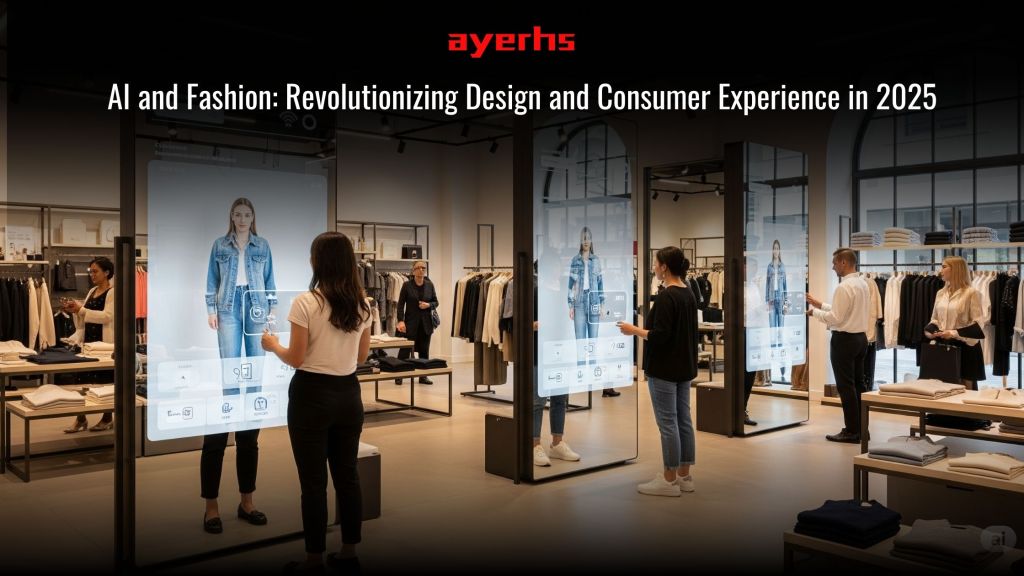
In physical stores, AI-powered mirrors let you “try on” clothes virtually without undressing, while body-scanning tech measures your dimensions to recommend your best size across brands.
It’s a win-win: less frustration for shoppers, fewer returns for brands, and a more inclusive, body-positive shopping experience overall.
5. Smarter Inventory and Supply Chain Management
Behind every outfit we wear is a complex supply chain. From raw materials to production, storage, and shipping—fashion logistics are a beast. AI is helping brands tame that beast.
- Demand forecasting tools analyze sales data, weather trends, social media, and more to predict which items will sell and how many should be produced.
- Inventory optimization systems ensure the right products are stocked at the right time, in the right places—reducing waste and deadstock.
- AI-powered logistics platforms streamline delivery routes, optimize warehouse layouts, and reduce shipping times.
For sustainable fashion brands especially, this is a game-changer. Producing just what’s needed, when it’s needed, helps cut down on overproduction—a major problem in traditional fashion cycles.
6. AI in Sustainable Fashion Efforts
Let’s be honest—fashion hasn’t always been kind to the planet. But AI is helping shift the industry toward more responsible practices.
- Material innovation: AI is being used to develop new sustainable textiles, analyzing properties and lifecycle impacts to create fabrics that are both eco-friendly and high-performance.
- Waste reduction: Platforms like Resonance use AI to produce garments on-demand, reducing excess inventory.
- Carbon tracking: AI-powered tools like CarbonCloud help brands track emissions across their supply chains and make data-driven decisions to reduce their footprint.
Consumers are paying more attention to sustainability, and in 2025, transparency matters. Brands using AI to optimize their environmental impact aren’t just doing the right thing—they’re also building trust.
7. Fashion Meets the Metaverse
While “metaverse fashion” felt buzzy and experimental a few years ago, in 2025 it’s matured. AI is driving this space, too.
Brands now design digital-only fashion—outfits for avatars, gaming platforms, and social profiles. AI helps create these garments quickly, using generative design and 3D modeling.
And people are actually buying them. Not just as collectibles, but as part of their online identity. Platforms like DressX, RTFKT, and MetaWear are helping users style their digital selves just as carefully as their real-world counterparts.
It may sound wild, but in a world where Zoom calls, AR glasses, and digital events are part of everyday life, virtual fashion is very real.
8. The Risks and Ethical Questions
Of course, with all this innovation come valid concerns. How much data is too much data? If AI is making decisions about what gets designed, who gets left out of the process?
Bias in algorithms is real. If the data sets used to train AI don’t reflect diverse body types, ethnicities, or cultures, the results can be exclusionary.
There’s also the question of creativity. Will designers lose their voice if AI becomes the dominant force behind trends and collections?
And let’s not forget about jobs. Automation might improve efficiency, but it can also lead to job displacement in areas like production, customer service, and logistics.
In 2025, the conversation is less about if AI belongs in fashion, and more about how we use it responsibly. The challenge is finding the balance between innovation and inclusion, efficiency and ethics.
9. Human Touch Still Matters
Despite all the AI tools and tech wizardry, there’s one thing fashion can’t lose: the human touch.
Style is personal. It’s emotional. It’s how we express who we are, what we believe, and where we’re going. AI can help us shop smarter, design faster, and reduce waste—but it can’t replace the creativity, culture, and emotion behind fashion.
The best use of AI in fashion is one that amplifies human creativity, not replaces it. That brings more people into the conversation, not fewer. That makes the industry more sustainable, more inclusive, and more connected.
Final Thoughts: What’s Next for AI and Fashion?
In 2025, we’re just scratching the surface of what’s possible when AI and fashion come together. We’re seeing smarter designs, better customer experiences, and a push toward more responsible practices.
But this is just the beginning.
Looking ahead, we might see AI co-designing with influencers in real time, or helping us build capsule wardrobes based on our calendars. Maybe AI will even help us rent our digital clothes for a day—just to wear them in a virtual meeting.
Whatever comes next, one thing’s clear: AI isn’t just a trend in fashion. It’s a revolution. And it’s one that’s reshaping the runway, the retail floor, and our wardrobes—one algorithm at a time.
 Ayerhs Magazine