
Fast fashion is everywhere—from the storefronts in the malls to the countless online shops offering trendy styles at unbelievably low prices. On the surface, it provides an affordable way to keep up with trends and refresh our wardrobes; however, when we scratch beneath the surface, fast fashion reveals a host of environmental and ethical concerns that are hard to ignore. This article critically examines the true cost of fast fashion, laying bare the hidden environmental toll, ethical dilemmas, and the responsibilities both industry players and consumers share in transforming the fashion landscape.
The Rise of Fast Fashion
Over the past few decades, the fashion industry has undergone a seismic shift. The traditional model—where clothing was designed for durability and longevity—is giving way to an era defined by cheap, disposable garments that can be quickly produced and just as swiftly discarded. Fast fashion brands like Zara, H&M, and Shein have revolutionized the industry by offering collections that update weekly, if not daily. This rapid turnover encourages consumers to view clothing as a temporary commodity rather than a long-term investment.
The result? An industry that thrives on making the latest look accessible, regardless of the environmental or social cost. But when we follow the threads back to their origins, we see a darker picture: one of overconsumption, exploitation of resources, and a substantial environmental footprint that affects us all.
The Environmental Toll of Fast Fashion
Water Consumption and Pollution
One of the most significant impacts of fast fashion is its enormous water footprint. It is hard to fathom that manufacturing just one cotton t-shirt can require as much as 2,700 liters of water—enough to sustain an average person for over two and a half years (hawthornintl.com). This figure is staggering when one considers that billions of cotton t-shirts are produced each year worldwide. The production process includes growing cotton, dyeing fabrics, and finishing garments—all of which consume water extensively.
In addition to the direct use of water, the process of dyeing and treating fabrics contributes enormously to water pollution. The fashion industry is responsible for approximately 20% of global wastewater, a figure that underlines the considerable burden placed on our water resources (earth.org). Harmful chemicals used in dyeing processes often end up in rivers and lakes, affecting aquatic life and contaminating drinking water supplies in many regions.
Carbon Emissions
Fast fashion not only strains our water resources but also plays a significant role in climate change. The entire lifecycle of a garment—from producing raw materials to manufacturing, transport, and disposal—emits greenhouse gases. Recent estimates suggest that the fashion industry contributes between 8% and 10% of global carbon emissions, surpassing the combined emissions of the aviation and shipping industries (thefword.ai).
Furthermore, projections indicate that if nothing changes, emissions from the apparel sector could increase by as much as 50% by 2030 (greenheartcollective.uk). In a world already grappling with the impacts of climate change, these figures provide a sobering reminder that the fast fashion model is simply not sustainable.
Textile Waste and Landfill Overflow
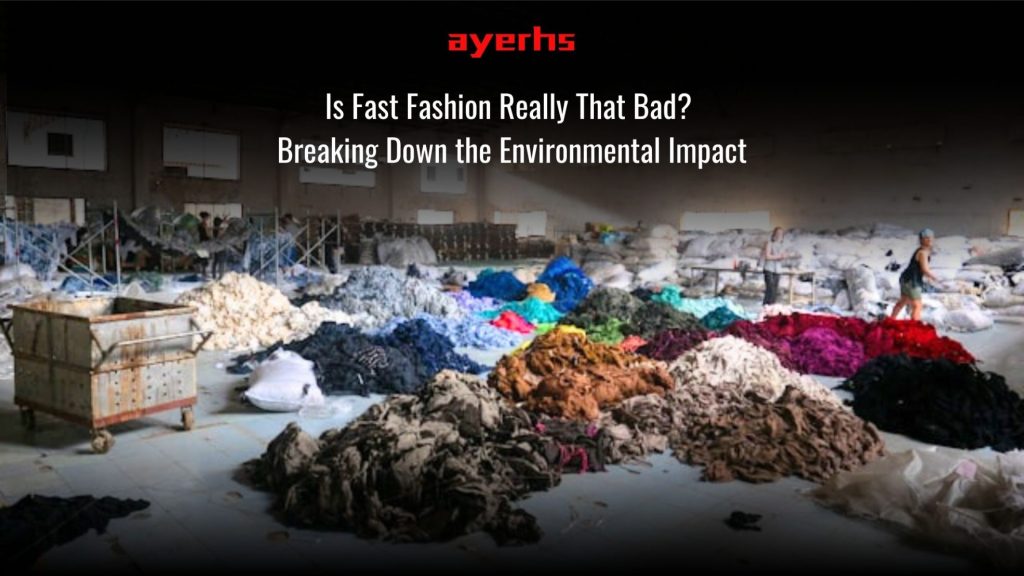
Fast fashion’s “disposable” nature means that garments are quickly discarded, leading to enormous amounts of textile waste. Globally, it is estimated that around 92 million tons of textile waste are generated each year (earth.org). In the United States alone, studies have shown that up to 85% of these discarded textiles end up in landfills (thefword.ai).
The problem is twofold. First, these mountains of wasted fabric contribute to greenhouse gas emissions as they decompose—often in anaerobic landfill conditions that release methane, a potent greenhouse gas. Second, the disposal of textiles represents a lost opportunity for recycling and reuse, further feeding into a cycle of overproduction and waste. The sheer scale of textile waste is a stark illustration of a linear economy that values consumption over conservation.
Microplastic Pollution: A Hidden Menace
Many fast fashion garments are made from synthetic fibers like polyester. While these materials offer durability and ease of care, they come with a hidden cost: microplastic pollution. Every time we wash synthetic clothing, tiny fibers break away and enter our waterways. Studies have shown that synthetic fibers contribute to 35% of primary microplastic pollution in the world’s oceans (thefword.ai).
Microplastics have been found in some of the most remote regions of the planet, from deep ocean trenches to Arctic ice. Not only do they pose serious risks to marine ecosystems by infiltrating the food chain, but they are also increasingly being detected in our drinking water. The accumulation of microplastics raises concerns about long-term environmental and health impacts, making it an urgent issue that demands immediate attention.
Ethical Concerns: More Than Just the Environment
While environmental issues dominate the narrative around fast fashion, ethical considerations also paint a grim picture. The race to produce cheap, trendy clothing has fostered an environment where labor rights and ethical working conditions are frequently overlooked.
Labor Exploitation and Worker Rights
In many parts of the world, fast fashion brands outsource their production to countries with lax labor laws and minimal worker protections. The consequence is a workforce that is often exploited, working in hazardous conditions for meager wages. Investigative reports have revealed that some workers in factories producing fast fashion apparel receive wages as low as $2.77 per hour, all while enduring long hours and unsafe working environments (hsdial.org).
The human cost of this production model is immense. Workers are exposed to toxic chemicals without proper protection, and the physical toll of repetitive, labor-intensive work often leads to long-term health problems. Despite being the backbone of the industry, these workers receive only a fraction of the profits generated by fast fashion. This stark inequality raises serious questions about the moral and social sustainability of the fast fashion model.
The Lack of Transparency
Another critical ethical issue surrounding fast fashion is the lack of transparency. Consumers are rarely given clear information about where their clothes come from, how they are made, or the conditions under which they were produced. This opacity makes it difficult for shoppers to make informed decisions that align with their values. Efforts to improve supply chain transparency have often been met with resistance from companies, which are reluctant to expose practices that might tarnish their brand image.
Without transparency, it becomes nearly impossible for consumers to hold companies accountable. This gap in accountability perpetuates a system where exploitation and environmental degradation go largely unchecked. In turn, consumers are left with little choice but to accept the status quo—or to seek out sustainable alternatives at higher costs.
Global Policy Responses: A Ray of Hope?
Recognizing the unsustainable trajectory of fast fashion, several countries and regions have taken bold steps to address its environmental and ethical impacts. While policy responses vary widely, these initiatives represent a move towards a more sustainable and accountable fashion industry.
France: Taxing Fast Fashion
In France, the government is looking at innovative ways to curb the harmful effects of fast fashion. The country has proposed penalties for brands that engage in the practice of frequently releasing low-cost, short-lived clothing collections. This strategy is intended to discourage overproduction and promote a shift towards quality over quantity (thetimes.co.uk). By targeting the economic incentives behind fast fashion, France aims to reduce the environmental toll while fostering a more sustainable retail landscape.
Chile: A Novel Approach to Waste Management
Chile is another country that has taken a proactive stance against the fast fashion crisis, though its focus has been more on the waste management side. Facing the challenge of vast clothing dumps in areas like the Atacama Desert, Chile introduced the “Law of Extended Responsibility of the Producer.” This law mandates that producers take responsibility for the end-of-life management of their products. However, it is important to note that currently, textiles are still excluded from this law—a gap that many critics argue must be addressed to tackle the root of the waste problem (theguardian.com). By imposing regulatory responsibilities, Chile is attempting to shift the burden of waste management from consumers and municipalities back to the producers who created the problem.
The European Union: Setting an Example with Sustainability
The European Union has been at the forefront of pushing for sustainability within the fashion industry. Initiatives such as extended producer responsibility, the right to repair, and stricter environmental regulations are gradually transforming how fashion is produced and consumed. By insisting that producers are responsible for the entire lifecycle of their products, the EU is promoting practices that minimize waste and reduce environmental harm (ft.com). While these measures face significant industry pushback, they set an important precedent for environmental accountability and could pave the way for broader reforms globally.
Consumer Behavior: A Critical Juncture
Consumers are at the heart of the fast fashion dilemma. Our buying habits not only drive demand but also influence the broader trends in the fashion industry. The appeal of fast fashion—affordability, variety, and convenience—is undeniable. However, this convenience comes at a hefty price.
The Psychology of Consumption
Humans are wired to seek novelty, and the ever-changing collections of fast fashion brands tap directly into that desire for something new. The low prices make it easy to justify purchasing on impulse, turning clothing into a disposable good rather than a durable investment. Yet, the psychological satisfaction gained from frequent new purchases is increasingly overshadowed by the emerging awareness of the environmental and ethical costs. As consumers learn more about the true impact of their fashion choices, a growing number are beginning to question whether the short-term gratification is worth the long-term damage.
Shifting Mindsets: The Slow Fashion Movement
In response to the excesses of fast fashion, a counter-movement known as “slow fashion” has been gaining traction. Slow fashion advocates for buying fewer, higher-quality items that are designed to last. This approach not only reduces waste but also tends to support more ethical manufacturing practices. The slow fashion movement emphasizes mindful consumption, encouraging us to invest in pieces that have a story and a life beyond fleeting trends.
However, the shift from fast to slow fashion is not without its challenges. For many consumers, the higher cost of sustainable clothing is a significant barrier. Fast fashion’s low prices are hard to compete with, and until sustainable options become more affordable, a full-scale transformation of consumer behavior may be slow. That said, even small changes—a few thoughtful purchases a year or extended care for existing garments—can have a meaningful impact when multiplied across millions of consumers.
Educating for Change
Awareness is the first step towards change. As information becomes more accessible through documentaries, social media, and investigative journalism, consumers are increasingly informed about the hidden costs of their clothing. Educated consumers are more likely to ask questions, demand accountability, and support brands that prioritize sustainability. Public awareness campaigns that highlight the environmental and ethical impacts of fast fashion are proving to be powerful tools in shifting consumer mindsets away from disposable trends and towards a more sustainable future.
The Corporate Perspective: Profit Over Planet?
From the perspective of fast fashion companies, the current business model is one that has been honed to maximize profits. By constantly churning out new collections and enticing customers with low prices, these brands have tapped into a global market that values immediacy and abundance over sustainability. However, this relentless focus on short-term gains raises important questions about corporate responsibility in an age where environmental degradation and social inequality are becoming untenable.
Cost-Cutting and Its Consequences
Behind the polished advertisements and trendy store displays lies an industry that frequently prioritizes cost-cutting above all else. Reducing production costs often means outsourcing to countries with lax environmental regulations and lower labor standards. This drive for lower production costs leads to hazardous working conditions, environmental pollution, and an unsustainable cycle of consumption and waste. While some companies have started to invest in sustainability initiatives and ethical sourcing, these efforts are often criticized as mere “greenwashing” if they do not address the fundamental issues within their supply chains.
Corporate Accountability and Transparency
One of the most significant challenges in addressing the fast fashion crisis is the lack of corporate transparency. Consumers rarely have a clear picture of how, where, or under what conditions their clothes are produced. Without this information, holding companies accountable for environmental degradation or labor abuses becomes exceedingly difficult. For real change to occur, brands must embrace full transparency—disclosing not only their sourcing practices but also the environmental footprint of their production processes. Only then can consumers make informed decisions that align with their values, and regulatory bodies implement measures that foster true accountability.
Looking Ahead: The Future of Fashion
The way forward for the fashion industry is not clear-cut, but several pathways offer hope for a more sustainable and ethical future. Here are some critical considerations and possible developments in the coming years:
Innovation in Sustainable Materials
One promising avenue is the development and adoption of sustainable materials. Innovations in biodegradable fabrics, recycled fibers, and environmentally friendly dyes are slowly transforming traditional production methods. These technological advancements have the potential to reduce water usage, minimize toxic waste, and cut down on the amount of non-biodegradable material entering our landfills. However, while the innovation is promising, scaling these alternatives to meet global demand remains a formidable challenge.
Circular Economy: Redesigning Fashion’s Lifecycle
Adopting a circular economy model in fashion is another vital step. Unlike the current linear system of production, consumption, and disposal, a circular model emphasizes reuse, repair, and recycling. Brands that adopt such models are already experimenting with garment take-back programs, repair services, and recycling initiatives to ensure that clothing never truly becomes waste. By retaining the value of materials for as long as possible, the circular economy approach promises to reduce the overall environmental impact of the industry significantly.
Policy and Regulation: A Mandate for Change
Government policies will play a crucial role in shaping the future of fashion. Legislative efforts aimed at increasing transparency, mandating sustainable practices, and holding companies accountable for their environmental footprints are essential. As seen in France, Chile, and the European Union, proactive policy measures can drive meaningful change. However, such measures require global cooperation, as the fashion supply chain is inherently international. It is only by uniting governmental, corporate, and consumer efforts that we can hope to usher in an era where fashion is both beautiful and sustainable.
The Role of Technology
Advances in technology could also help mitigate some of fast fashion’s negative impacts. From blockchain systems that provide transparency in the supply chain to new fabrication techniques that reduce waste, technology is poised to offer innovative solutions. These technological interventions have the potential to revolutionize the industry by ensuring that every step—from raw material extraction to the final sale—is conducted in an environmentally and socially responsible manner.
Conclusion: Time for a Change
The question, “Is fast fashion really that bad?” forces us to reckon with the hidden costs of our clothing. Beyond the convenience and affordability lies a trail of environmental degradation, water scarcity, massive carbon emissions, and ethical compromises that affect some of the world’s most vulnerable populations. Fast fashion, as it stands today, is unsustainable—a model built on overconsumption and underpaid labor that has far-reaching consequences for both the planet and its people.
Understanding the true cost of fast fashion is the first step toward real change. While the industry may continue to thrive on rapid, disposable trends for now, growing public awareness and mounting evidence of its environmental and ethical toll are pushing for a reassessment. Governments around the world are beginning to implement policies that hold companies accountable, and consumers are increasingly drawn toward sustainable alternatives. Yet, the challenge remains formidable.
For meaningful transformation, a cultural shift is needed—one that moves away from the immediate gratification of trendy, cheap clothing and towards a mindset that values durability, transparency, and responsibility. Whether it is through supporting the slow fashion movement, advocating for stricter industry regulations, or simply choosing to buy less but better, every action counts.
As we peer into the future, we must ask ourselves: What kind of world do we want to leave behind? One where the allure of fast fashion blinds us to its long-term consequences, or one where our choices and policies pave the way for a truly sustainable and equitable fashion industry? The responsibility lies with all of us—consumers, businesses, and governments alike—to drive the change needed for a healthier planet and a fairer society.
Taking Action: What Can You Do?
- Be a Conscious Consumer:
Invest in quality pieces that you really love and that are designed to last. Before making a purchase, consider the environmental footprint of the garment and the conditions under which it was made. - Educate Yourself and Others:
Stay informed about the realities of fast fashion by reading up on credible sources and sharing what you learn with friends, family, and on social media. Knowledge is a powerful tool for change. - Support Ethical Brands:
Look for companies that prioritize sustainable practices and fair labor conditions. While these items might cost a bit more, they represent investments in a future where fashion is not at the expense of the environment or human dignity. - Recycle and Upcycle:
Give your clothes a second life through recycling or upcycling projects. Donate items you no longer use instead of discarding them, and explore local initiatives that focus on clothing swaps and repairs. - Advocate for Policy Change:
Voice your concerns to local representatives and support policies that hold fast fashion companies accountable for their environmental and social impacts. Change at the policy level is crucial for fostering industry-wide reform.
Final Thoughts
It is clear that fast fashion is more than just a trend—it is a reflection of a broader cultural and economic system that emphasizes consumption over sustainability. The data we’ve looked at—from the water consumption required to produce a single t-shirt to the staggering levels of textile waste and carbon emissions—paints a troubling picture of an industry at odds with the needs of our planet. Fast fashion’s impact is not limited to statistics; it affects real lives and ecosystems, creating a legacy of pollution and exploitation that future generations will have to contend with.
The need for change is urgent. Every garment purchased is a vote for a particular production method and economic model. By critically examining and questioning the status quo, we can collectively shift towards a fashion industry that values both style and sustainability. The time has come to break free from the fast fashion paradigm and embrace a future where ethical production, environmental responsibility, and thoughtful consumption are the new norms.
As we navigate the complexities of modern fashion, let us remember that even the smallest choices can lead to significant change. Whether it is rethinking our shopping habits, supporting sustainable brands, or advocating for better policies, each action contributes to a larger movement—one that has the potential to reshape an entire industry for the better.
In the end, the question isn’t whether fast fashion is “bad” or “good”—it’s about whether we want a world where our clothes come at the expense of our planet and its people. The evidence is clear, the data is undeniable, and the need for change has never been more critical. Let this be the moment when we all take a stand for a more sustainable and ethical future in fashion.
By understanding the full impact of our clothing choices and demanding greater accountability from the brands we support, we can start to mend the environmental and ethical rifts caused by fast fashion. Every time we choose quality over quantity, every time we demand transparency from companies, and every time we advocate for more responsible practices, we contribute to a revolution in the way fashion is made and consumed. It’s a long road ahead, but with determined effort from all corners of society, a better, more sustainable future for fashion is within reach.
 Ayerhs Magazine