
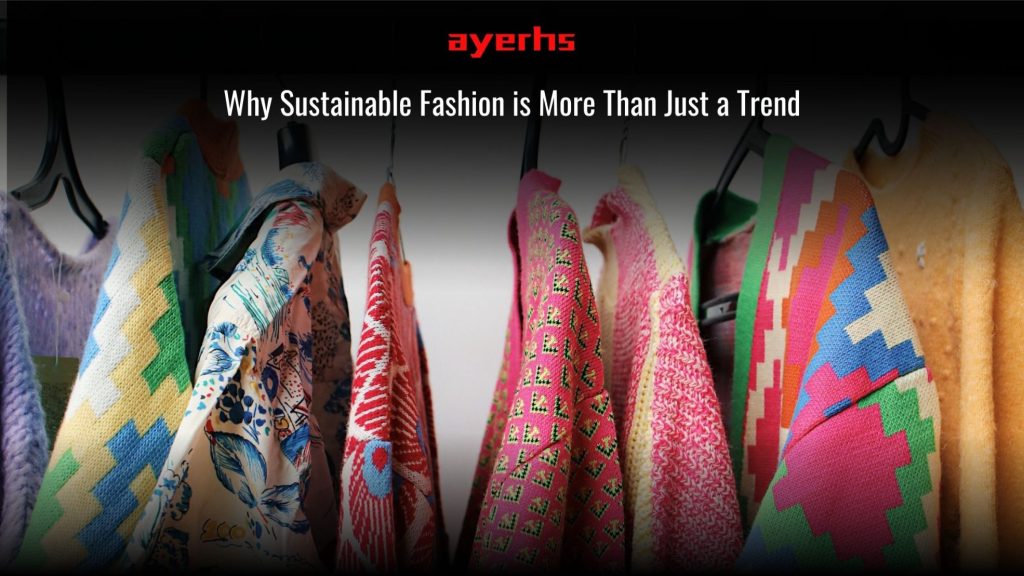
Let’s be honest—“sustainable fashion” sounds like one of those buzzwords that brands toss around to sound woke. And in a world where everything from coffee to toothbrushes comes with a “sustainable” label, it’s easy to roll your eyes and wonder if it’s all just clever marketing. But here’s the thing: sustainable fashion isn’t just a passing trend or a feel-good label. It’s a necessary shift in the way we think about clothing, shopping, and the planet we live on.
If you’ve ever bought a cheap t-shirt that lost its shape after two washes, or wondered what happens to the clothes you donate, you’ve already brushed up against the bigger story behind fast fashion—and why a more sustainable approach is long overdue.
The Fast Fashion Problem
Let’s start with the basics. Fast fashion is all about producing clothes quickly and cheaply to keep up with ever-changing trends. Think $5 shirts, weekly drops, and online hauls with 30 items for the price of one decent jacket.
It sounds great on the surface—more choice, lower prices—but it comes with a hidden cost.
According to the United Nations Environment Programme (UNEP), the fashion industry is responsible for 10% of global carbon emissions. That’s more than all international flights and maritime shipping combined. On top of that, the industry uses around 93 billion cubic meters of water every year—enough to meet the needs of five million people.
The environmental impact doesn’t stop there. The Ellen MacArthur Foundation reports that every second, the equivalent of one garbage truck of textiles is landfilled or burned. And only 1% of all clothing is actually recycled into new clothes.
It’s wild to think about, right? We’re buying clothes that are designed to fall apart—and we’re tossing them out just as fast.
But It’s Not Just About the Planet
The human cost is just as alarming. Most fast fashion items are made in countries where labor laws are weak, wages are low, and working conditions are often unsafe.
The 2013 Rana Plaza factory collapse in Bangladesh was a wake-up call for many. Over 1,100 garment workers died, and thousands were injured when the building—which housed several major fashion brands—collapsed due to structural failures. It was one of the deadliest industrial disasters in history, and it forced a lot of people to start questioning the true cost of their clothes.
Yet, years later, many of the same issues remain. The Clean Clothes Campaign regularly reports on unsafe factories, unfair wages, and a lack of accountability in supply chains. In short, fast fashion profits off of people who are underpaid, overworked, and often invisible to the end consumer.
So… What Exactly Is Sustainable Fashion?
Sustainable fashion is about doing better—by the planet and by the people making our clothes. It’s not just about buying things with a green label or switching to organic cotton. It’s about rethinking the entire system.
At its core, sustainable fashion means:
- Using environmentally friendly materials (like organic cotton, hemp, or recycled fabrics)
- Reducing water and energy use during production
- Ensuring fair wages and safe working conditions for garment workers
- Designing clothes to last longer
- Encouraging recycling, reselling, and rewearing instead of overconsumption
It’s a full-circle mindset shift—from “how cheap and trendy can I get this?” to “who made this, how was it made, and will I actually wear it 30 times?”
Why This Matters Now More Than Ever
Let’s not sugarcoat it—we’re in the middle of a climate crisis. And fashion is a part of that story, whether we like it or not.
The Intergovernmental Panel on Climate Change (IPCC) has warned that we need to cut global emissions nearly in half by 2030 to avoid the worst impacts of climate change. That’s less than five years from now.
Every industry needs to do better. And fashion, with its massive footprint and global reach, has a huge role to play.
Sustainable fashion might feel like a drop in the ocean when you look at the scale of the problem, but it’s also one of the most accessible places to start. We all wear clothes. We all make decisions about what we buy, how often we buy it, and what we do with it when we’re done.
Small shifts, multiplied across millions of people, do make a difference.
The Role of Consumers
Here’s the part where it gets personal. Because yes, the industry needs to change—but so do we.
We’ve gotten used to instant gratification and newness at our fingertips. And let’s be real: it’s tempting to fill up an online cart with cheap pieces and hit checkout without thinking twice.
But the truth is, we have more power than we realize. Every time we choose to buy less, buy better, or support a brand that’s actually trying to do the right thing, we’re casting a vote for a different kind of system.
Here are some ways to start making more sustainable fashion choices:
- Buy less, choose well: As the iconic designer Vivienne Westwood said, “Buy less, choose well, make it last.” Focus on timeless pieces you’ll actually wear, not just one-off impulse buys.
- Shop secondhand: Thrifting, vintage shopping, and clothing swaps are on the rise—and they’re way more fun than mall shopping, if you ask me.
- Support ethical brands: Do a little digging before you buy. Websites like Good On You rate brands based on their sustainability and ethics.
- Take care of your clothes: Washing less often, air-drying, and repairing instead of replacing can extend the life of your wardrobe (and save you money).
- Resell or donate mindfully: Instead of tossing clothes in the trash, try reselling, donating to local shelters, or even upcycling.
None of this is about guilt or perfection. It’s about being a little more mindful. And once you start asking questions—like “do I really need this?” or “who made this?”—you can’t really unsee the answers.
Brands Are Catching On—But We Need More Than Greenwashing
It’s worth noting that more and more brands are hopping on the sustainability bandwagon. From high-end designers to fast fashion giants, everyone’s launching “eco collections” and talking about their carbon footprint.
But not all that glitters is green.
Greenwashing—when companies make exaggerated or misleading claims about sustainability—is a real issue. A 2021 report from the Changing Markets Foundation found that 60% of sustainability claims made by fashion brands were misleading or unsubstantiated.
It’s frustrating, but it also shows that consumers are paying attention. Sustainability sells—and that pressure is forcing brands to at least start the conversation. The key is to stay curious, ask questions, and look for transparency over trends.
If a brand can’t tell you where their clothes are made, how much their workers are paid, or what their environmental goals are, it might be time to move on.
The Bigger Picture
Sustainable fashion isn’t just about clothes. It’s about values. It’s about slowing down in a world that’s always speeding up. It’s about choosing quality over quantity, and community over consumption.
It’s also about equity—because the people most affected by climate change and poor labor practices are often the ones with the least power in the system. Making fashion more sustainable is also about making it more just.
And yes, it’s about creativity, too. When you step outside the fast fashion cycle, you start to see clothes differently. You get more creative with styling, more intentional with purchases, and more connected to what you wear.
Real Talk: It’s Not Always Easy
Let’s not pretend that sustainable fashion is always affordable or convenient. It can be hard to resist sales or sift through a thrift store. It can feel overwhelming trying to figure out which brands are legit. And sustainable options aren’t always size-inclusive or widely available.
But it’s not about doing it all. It’s about doing what you can.
Maybe that means buying one less haul this month. Maybe it’s mending your favorite jeans instead of tossing them. Maybe it’s just learning more, talking about it, and spreading awareness.
That’s how change starts.
Wrapping It Up
Sustainable fashion isn’t just a trend. It’s a response to a system that’s out of balance. It’s a way of taking back some control—not just over what we wear, but how we live and what we stand for.
It asks us to be more thoughtful, more curious, and more connected—to our clothes, to the people who make them, and to the world we share.
Trends come and go. But this shift? It’s here to stay.
 Ayerhs Magazine