
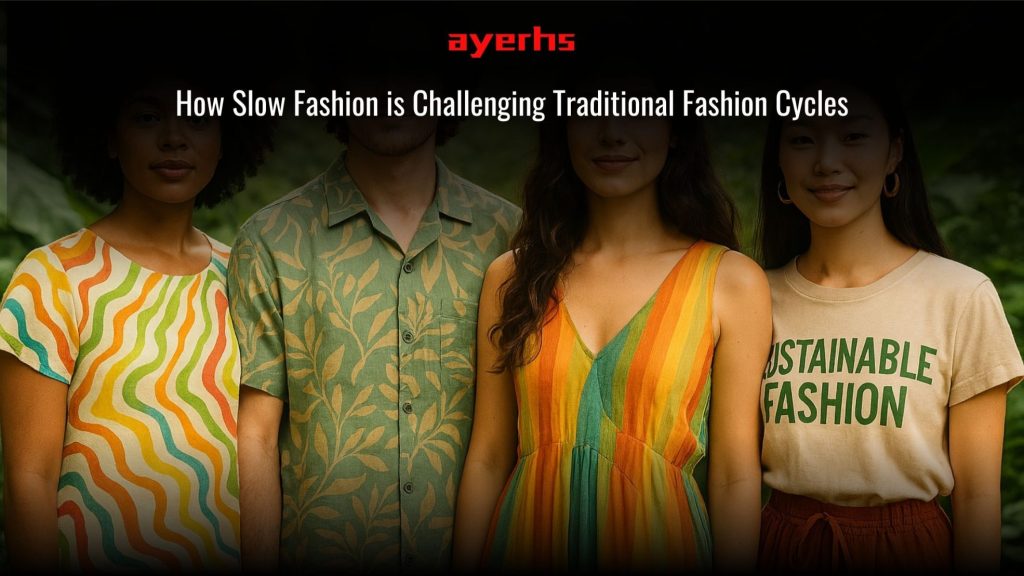
fashion used to be fun until it became overwhelming. Every few weeks, there’s a new “must-have” piece. Blink and the trends have shifted again. It feels like we’re constantly playing catch-up, trying to keep our closets updated with whatever social media or fashion giants tell us is “in.”
But lately, there’s been a quiet rebellion. Not loud, not flashy—but intentional. It’s called slow fashion, and it’s beginning to shake up everything we know about traditional fashion cycles.
What Even Is Slow Fashion?
At its core, slow fashion is about doing things differently. It’s the opposite of fast fashion—the industry model that churns out cheap, trendy clothes at lightning speed. Slow fashion says: Pause. Think. Choose better.
Instead of buying clothes just because they’re new or trending, slow fashion encourages us to buy pieces that are made to last, ethically produced, and thoughtfully designed. It’s about quality over quantity, timeless over trendy, and people over profits.
The Traditional Fashion Cycle: A Quick Recap
Before fast fashion came along, most brands followed the typical seasonal cycle—Spring/Summer and Fall/Winter. Designers had time to create collections, and shoppers had time to actually wear and enjoy them.
Then, fast fashion brands disrupted everything. Suddenly, we weren’t talking about four seasons a year—we were talking about 52 micro-seasons. That’s one new collection every week. No joke.
The goal? Keep people constantly buying. More clothes, more profits. But also, more waste, more stress, and more disconnection between people and their clothes.
Why Are People Turning to Slow Fashion?
There’s no single reason—it’s a mix of a lot of things coming to a head.
1. We’re Tired
Buying new clothes used to be exciting. Now it often feels exhausting. Scrolling through endless options, keeping up with ever-changing trends, feeling like we always need to “refresh” our wardrobe—it’s a lot. Slow fashion offers a kind of relief. It says: You don’t have to keep up. You just have to show up as you are.
It reminds us that our worth isn’t tied to how trendy we are. That comfort, personal style, and sustainability matter more than chasing every new drop.
2. The Planet Can’t Keep Up
Let’s get real: fast fashion is hurting the planet. According to the United Nations, the fashion industry is responsible for around 10% of global carbon emissions. That’s more than aviation and shipping combined. Every year, around 92 million tons of textile waste is created. And most of that ends up in landfills or gets burned.
Slow fashion pushes back. It champions natural materials, responsible production, and circular practices like repairing, rewearing, and recycling. It asks: What if we took care of our clothes—and the planet—like they actually mattered?
3. We Care About People
Behind every $5 t-shirt, there’s a human being. A garment worker who might be underpaid, overworked, and working in unsafe conditions. The 2013 Rana Plaza collapse in Bangladesh, which killed over 1,100 garment workers, was a wake-up call for many. It exposed the hidden costs of fast fashion and showed how dangerous the race for cheap, fast clothing can be.
Slow fashion supports brands that value transparency, fair wages, and safe working conditions. It reminds us that fashion isn’t just about looking good—it’s about doing good too.
So How Is Slow Fashion Challenging the Traditional Model?
It’s not just about fewer clothes. It’s about shifting the entire mindset around fashion—from how it’s made to how it’s consumed.
1. Shifting From “More” to “Mindful”
Slow fashion encourages us to ask better questions: Who made this? What’s it made of? Will I wear this 30 times or just once? It invites us to slow down and be more intentional—something that’s pretty radical in a world that thrives on instant gratification.
2. Smaller Drops, Bigger Impact
Slow fashion brands often release limited collections, sometimes just a few times a year. And that’s kind of the point. These pieces are made with care, not mass-produced. They don’t rely on urgency or scarcity tactics to get you to buy. Instead, they trust that the right people will connect with the clothes for the right reasons.
3. Championing Timeless Style
Trends fade fast, but style is forever. Slow fashion leans into pieces that stand the test of time—clean cuts, neutral palettes, versatile silhouettes. It’s not about dressing for likes on social media; it’s about dressing in a way that feels like you.
4. Redefining What “New” Means
In the slow fashion space, “new” doesn’t always mean freshly produced. It can mean new-to-you. Thrifting, swapping, upcycling, renting—all these practices are becoming more mainstream. It’s a sign that people are getting creative with how they engage with fashion, and that’s exciting.
The Role of Consumers: Yes, That Means Us
You don’t have to be a minimalist, an activist, or have a huge budget to support slow fashion. You just have to be willing to rethink your habits. Here’s what that can look like in everyday life:
- Buy less, choose better. Before you hit “add to cart,” ask yourself: Do I really need this?
- Support ethical brands. Look for transparency. Read about their values and supply chain.
- Take care of your clothes. Wash them less often, follow care labels, repair small damages.
- Normalize outfit repeating. It’s not just okay—it’s actually cool.
- Swap, thrift, rent. Fashion doesn’t have to be new to be exciting.
Even small shifts in our shopping habits can ripple out. Because every time we buy less fast fashion, we send a message. And every time we choose to support slow fashion, we help build a better system.
The Challenges (Because It’s Not All Perfect)
Let’s not romanticize it—slow fashion has its hurdles too.
- Price: Ethical clothing often costs more. That’s because people are being paid fairly, and materials are sourced responsibly. It’s not overpriced; fast fashion is underpriced.
- Accessibility: Not everyone has access to slow fashion brands or secondhand options. And for some, the time or energy to research better choices just isn’t there—and that’s okay.
- Pace of Change: The fast fashion machine is still massive. Change is happening, but it’s slow (ironically). And sometimes it feels like a drop in the ocean.
But movements don’t have to be perfect to be powerful. The slow fashion movement is growing not because it’s trendy, but because it makes sense. It connects the dots between people, planet, and personal style in a way that feels meaningful.
What’s Next?
The future of fashion doesn’t have to look like the past. And it certainly doesn’t have to look like the hyper-consumerism we’ve all been swept up in.
Maybe it looks like a closet full of clothes you actually love. Maybe it looks like fewer impulse buys and more intentional purchases. Maybe it’s finally feeling good in your clothes—not just because of how they look, but because of what they stand for.
Slow fashion isn’t a trend—it’s a mindset shift. One that asks us to be more conscious, more caring, and more creative.
And honestly? That sounds like a fashion revolution worth getting behind.
 Ayerhs Magazine