
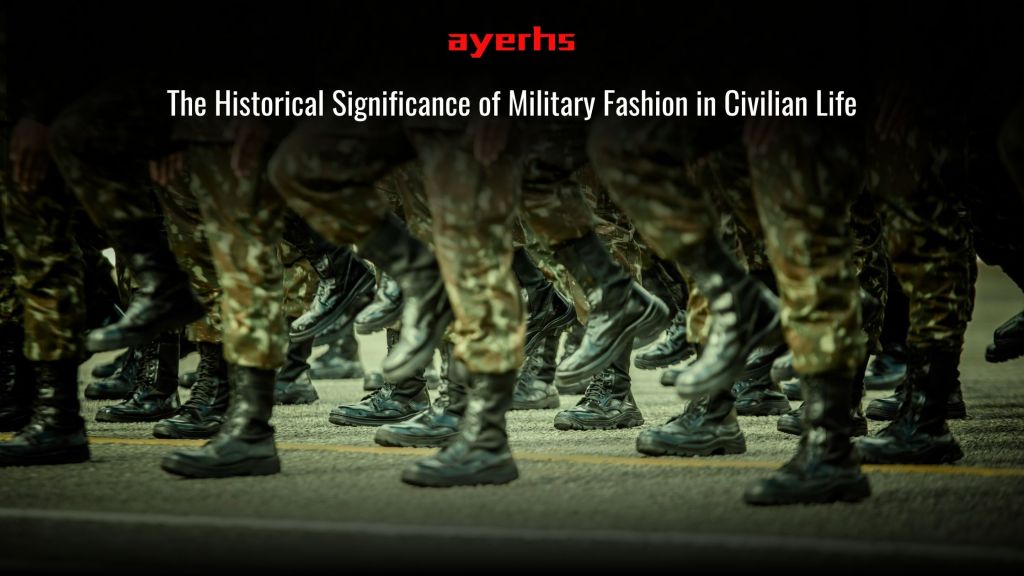
Military fashion has played a crucial role in shaping civilian style throughout history. From structured tailoring to utilitarian aesthetics, military uniforms and gear have often transcended their original purpose to leave a lasting mark on the broader fashion world. This dynamic interplay between military and civilian attire reflects a cultural exchange that highlights the practical, symbolic, and stylistic elements of military garb. Examining its evolution provides insight into how military fashion has influenced societal norms, trends, and identities over the centuries.
Origins of Military Fashion
The roots of military fashion lie in the practical needs of soldiers. Functionality was the primary concern, with designs focusing on protection, mobility, and durability. For example, the Roman legionaries’ uniforms, with their metal armor and sturdy sandals, were designed to endure long marches and provide defense in battle. These designs, while utilitarian, also carried symbolic significance, reflecting discipline, unity, and power.
As societies developed centralized armies, uniforms became essential for identification and hierarchy. The standardized attire of medieval knights, complete with crests and colors representing their allegiances, showcased the early fusion of utility and symbolism. These early military designs set the stage for the later integration of military elements into civilian clothing.
Military Influences on Civilian Fashion: The Early Modern Period
The Renaissance and early modern periods marked a turning point in the relationship between military and civilian fashion. Soldiers returning from campaigns often brought back elements of their uniforms, which were then adopted and adapted by civilian populations. For instance, the doublet and hose worn by 16th-century soldiers influenced civilian attire, blending martial and everyday styles.
One notable example is the widespread adoption of the tricorne hat in the 17th and 18th centuries. Initially a military staple, this three-cornered hat became a fashionable accessory for European civilians, symbolizing refinement and sophistication. Similarly, military-style frock coats with high collars and brass buttons transitioned into popular civilian wear, illustrating how military aesthetics often shaped mainstream trends.
The Napoleonic Era: Military Chic
The Napoleonic era (1803–1815) saw the rise of military-inspired fashion as a dominant force in civilian style. Napoleon Bonaparte’s meticulously designed uniforms set the standard for sartorial elegance, blending functionality with grandeur. His army’s use of epaulettes, gold braid, and tailored jackets influenced civilian fashion, with elements such as high-waisted trousers and military-style coats becoming hallmarks of the period.
This era also highlighted the aspirational aspect of military fashion. Wearing military-inspired garments allowed civilians to emulate the perceived heroism, discipline, and leadership associated with soldiers. The romanticized image of the soldier—brave, dashing, and honorable—was a powerful influence on civilian style.
The Victorian Era: Discipline and Structure
During the Victorian era (1837–1901), military influences became more subtle but equally significant. The Industrial Revolution brought advancements in textile production, making it easier to replicate the structured designs of military uniforms in civilian clothing. Tailoring became more precise, with fitted jackets and structured waistcoats reflecting the disciplined aesthetics of military attire.
One enduring legacy of this period is the pea coat, derived from naval uniforms. Its double-breasted design, broad lapels, and durable wool construction made it both practical and stylish, ensuring its continued popularity in civilian wardrobes.
The World Wars: Functionality Meets Fashion
The two World Wars of the 20th century profoundly impacted fashion, accelerating the adoption of military styles in civilian life. During World War I (1914–1918), trench coats became indispensable for soldiers, offering protection from the elements. After the war, the trench coat transitioned into civilian fashion, becoming a timeless symbol of practicality and elegance. Iconic brands like Burberry capitalized on this trend, cementing the trench coat’s place in fashion history.
World War II (1939–1945) further blurred the lines between military and civilian fashion. The scarcity of materials during wartime led to a focus on utility and simplicity, reflected in the popularity of military-inspired garments like bomber jackets and cargo pants. These items, initially designed for functionality, became staples of post-war civilian fashion, celebrated for their rugged aesthetic and versatility.
The military influence extended beyond clothing to accessories and hairstyles. Aviator sunglasses, designed for pilots, became a cultural phenomenon, symbolizing coolness and authority. Similarly, military hairstyles, such as the buzz cut, found their way into civilian life, emphasizing cleanliness and discipline.
Post-War Period: The Rise of Subcultures
The post-war era witnessed a surge in subcultures that embraced military fashion as a form of self-expression and rebellion. The 1950s and 1960s saw the emergence of the Teddy Boys in Britain, who adopted Edwardian-style jackets with military-inspired tailoring. In the United States, the leather jackets favored by biker gangs echoed the rugged aesthetic of military flight jackets.
The 1970s punk movement also drew heavily from military fashion. Camouflage patterns, combat boots, and surplus military jackets became symbols of anti-establishment attitudes. This appropriation of military attire highlighted its adaptability, as symbols of authority and order were repurposed to challenge societal norms.
High Fashion and the Military Aesthetic
In the latter half of the 20th century, high fashion began to incorporate military influences in more deliberate and artistic ways. Designers like Yves Saint Laurent and Jean-Paul Gaultier reimagined military garments, blending their structured designs with avant-garde elements. The power suit, inspired by military tailoring, became a defining look of the 1980s, symbolizing confidence and authority in the workplace.
Camouflage, once a purely functional pattern, gained popularity in streetwear and high fashion alike. Brands such as Supreme and Balenciaga reinterpreted military motifs, making them symbols of urban cool. This trend underscored the cyclical nature of fashion, as military elements continued to inspire new interpretations.
Modern Military Influences
In the 21st century, military fashion remains a powerful force in civilian style. The global popularity of athleisure and utility-focused fashion has further cemented the appeal of military-inspired designs. Cargo pants, bomber jackets, and tactical vests are now staples of modern wardrobes, valued for their practicality and edgy aesthetic.
Contemporary designers continue to draw inspiration from military attire, exploring its cultural and historical significance. Collections often feature reimagined versions of classic military garments, blending traditional elements with modern materials and techniques. This ongoing dialogue between military and civilian fashion reflects a broader societal fascination with the intersection of tradition and innovation.
The Symbolism of Military Fashion
Beyond its practical and stylistic contributions, military fashion carries deep symbolic meaning. For many, wearing military-inspired clothing evokes qualities such as strength, resilience, and discipline. These associations have made military fashion a powerful tool for self-expression, allowing individuals to convey their values and identities through their clothing choices.
At the same time, military fashion can be controversial, particularly when it is seen as trivializing the experiences of soldiers or appropriating cultural symbols. This tension underscores the complex relationship between military and civilian life, as fashion both celebrates and critiques the institutions it draws from.
The historical significance of military fashion in civilian life is a testament to its enduring influence. From its origins in practicality and symbolism to its modern reinventions, military attire has shaped the way we dress, challenging and redefining societal norms along the way. As fashion continues to evolve, the legacy of military style remains a vital thread in the fabric of global culture, reflecting our shared history and aspirations for the future.
 Ayerhs Magazine