
The Victorian era (1837–1901), spanning Queen Victoria’s reign, was an extraordinary period of cultural, social, and technological transformation. As industrialization revolutionized society and new scientific discoveries shaped the modern world, fashion too became a visual symbol of status, morality, and identity. Victorian clothing was more than just a necessity—it was a statement of individuality, a display of wealth, and a reflection of strict societal norms.
This blog takes an in-depth look at the rise and fall of Victorian fashion, exploring its origins, the major trends across the decades, and its eventual decline as modernity ushered in a new age of dress. From the voluminous crinolines to the advent of ready-to-wear clothing, Victorian fashion is a fascinating story of extravagance, innovation, and societal change.
Early Victorian Fashion: Tradition and Modesty
When Queen Victoria ascended the throne in 1837, she inherited a nation deeply rooted in traditional values. The early Victorian era emphasized modesty and femininity, drawing inspiration from the Romantic movement that celebrated grace, emotion, and purity. These ideals were evident in the clothing of both men and women, where each piece served a symbolic purpose.
Women’s Fashion
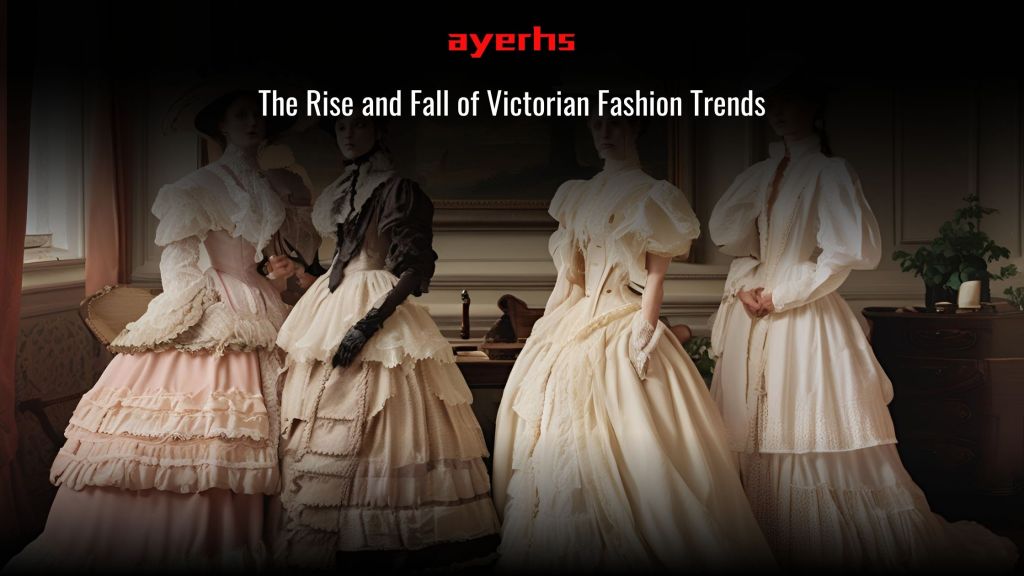
Women’s attire in the early Victorian period focused on creating an hourglass silhouette. This was achieved with tightly laced corsets, full skirts supported by multiple layers of petticoats, and fitted bodices. Gowns often featured low, sloping shoulders, puffed sleeves, and intricate embellishments such as lace, ribbons, and floral embroidery. Pastel shades and soft fabrics like muslin and silk were popular, reflecting the delicate and demure image of the ideal Victorian woman.
Even accessories played an essential role in signifying class and decorum. Gloves, bonnets, and parasols were not only fashion statements but also tools to shield women from the harsh realities of manual labor and the sun’s rays, maintaining the pale complexion associated with wealth and refinement.
Men’s Fashion
For Victorian men, fashion revolved around tailored elegance. Early Victorian menswear featured frock coats, waistcoats, and high-collared shirts paired with cravats. Dark colors like black, navy, and brown were preferred, symbolizing respectability and restraint. Accessories such as top hats, gloves, and pocket watches completed the polished look of the Victorian gentleman.
This emphasis on formal attire extended beyond the elite. Even middle-class men aspired to present themselves with dignity, often mirroring the styles of the aristocracy in simpler fabrics.
Mid-Victorian Fashion: Industrial Innovation and Social Flourishes
By the mid-19th century, the Victorian era was in full swing, and the Industrial Revolution was reshaping society. Technological advancements in textile production, sewing machines, and chemical dyes revolutionized the fashion industry, making elaborate garments more accessible to the middle classes. This period was marked by the emergence of distinctive trends, including the iconic crinoline.
The Crinoline Craze
One of the most recognizable symbols of Victorian fashion, the crinoline, emerged during the 1850s. This voluminous skirt was supported by a structured framework of steel hoops, replacing the layers of petticoats that women had previously worn. The crinoline allowed for an exaggerated bell-shaped silhouette, which became a marker of elegance and status.
However, the crinoline was not without its drawbacks. Its size made it cumbersome to navigate crowded spaces, and it posed safety hazards near open flames, leading to tragic accidents. Despite these challenges, the crinoline remained a dominant trend, reflecting the Victorian love for drama and spectacle in fashion.
Synthetic Dyes and Vibrant Colors
The discovery of synthetic dyes, beginning with William Henry Perkin’s accidental creation of mauveine in 1856, revolutionized fashion. Bright, bold colors such as mauve, magenta, and green became widely available, adding vibrancy to Victorian wardrobes. These dyes also marked a shift towards more experimental and personalized styles, as individuals could now affordably express themselves through color.
Menswear Evolves
During this period, men’s fashion leaned towards practicality and utility, especially for those in the burgeoning middle class. The sack suit, a more relaxed alternative to the frock coat, gained popularity for daywear. Accessories remained essential, with bowler hats and walking sticks joining the repertoire of Victorian gentlemen.
Late Victorian Fashion: Extravagance and Complexity
As Queen Victoria entered the later years of her reign, Victorian fashion reached new heights of complexity and opulence. The late Victorian era, also known as the Gilded Age, was characterized by extremes in both style and social disparity.
The Bustle Era
The crinoline fell out of favor by the 1870s, replaced by the bustle—a padded understructure that created a pronounced curve at the back of a woman’s skirt. This shift emphasized the contrast between the narrow waist and the dramatic posterior silhouette. Bustles came in various styles and sizes, evolving over the next two decades into more subdued designs.
Corsets became even more constrictive during this period, contributing to the “wasp waist” ideal. While the aesthetic was celebrated, the physical consequences of tight-lacing included discomfort, fainting spells, and health complications, highlighting the lengths to which Victorian women went to conform to beauty standards.
Evening Elegance
Eveningwear for women during the late Victorian era was a testament to luxury and craftsmanship. Dresses featured layers of rich fabrics such as velvet, satin, and taffeta, adorned with intricate beading, sequins, and lace. Trains, gloves, and elaborate hairstyles completed the ensemble, creating a look of regal splendor.
Men’s Eveningwear
The tuxedo, introduced in the 1880s, offered men a sophisticated yet slightly less rigid alternative to the traditional tailcoat. This innovation marked the beginning of modern formal menswear, blending tradition with comfort. Black tie and white tie attire became established norms for evening occasions, signaling the rise of a more codified approach to men’s fashion.
Fashion as Social Commentary
Throughout the Victorian era, fashion was a powerful symbol of societal norms and hierarchies. Every garment, accessory, and fabric choice carried meaning, shaping and reflecting the wearer’s identity.
Class Divisions
Clothing served as a visual marker of class distinctions. The aristocracy and wealthy upper classes showcased their affluence through opulent designs, imported fabrics, and custom tailoring. In contrast, the working class wore practical, durable garments made from cheaper materials, underscoring the stark economic divide of the era.
Gender Roles
Victorian fashion reinforced traditional gender roles. Women’s restrictive clothing emphasized their subservience and confinement to the domestic sphere, while men’s tailored suits signified professionalism, authority, and dominance in the public domain.
Mourning Fashion
Queen Victoria’s prolonged mourning for her husband, Prince Albert, in 1861 influenced an entire cultural phenomenon around mourning attire. Black clothing became synonymous with grief, and strict mourning protocols dictated the type, fabric, and duration of mourning dress. This trend exemplified how fashion was deeply tied to emotional and cultural expression.
The Decline of Victorian Fashion: The Dawn of Modernity
The end of the Victorian era brought sweeping changes to society and, with it, a transformation in fashion. By the early 20th century, Victorian styles were giving way to modern trends emphasizing simplicity and practicality.
The Rise of Women’s Rights
The women’s suffrage movement and growing calls for gender equality led to a rejection of the restrictive garments that had dominated Victorian fashion. Women began to favor more functional clothing, including looser dresses, shorter skirts, and tailored suits.
Technological and Industrial Advances
The invention of the sewing machine and the growth of department stores democratized fashion, making stylish clothing accessible to a broader audience. Ready-to-wear garments became a practical alternative to custom-made clothing, further eroding the exclusivity of Victorian styles.
The Influence of Modernism
Modernist ideals prioritized functionality and minimalism, which clashed with the ornate excesses of Victorian fashion. The early 20th century saw the emergence of cleaner lines, lighter fabrics, and more versatile designs, reflecting a shift towards a more dynamic and fast-paced lifestyle.
Victorian Fashion’s Enduring Legacy
Despite the decline of Victorian fashion, its influence persists in modern design. Corsetry, lace, and vintage-inspired silhouettes continue to captivate contemporary designers and consumers. The era’s emphasis on craftsmanship and detail serves as a reminder of the artistry involved in clothing design, inspiring a renewed appreciation for slow fashion and sustainable practices.
The rise and fall of Victorian fashion trends tell a compelling story of a society in transition. From the grandeur of crinolines to the elegance of bustles and the practicality of early modern styles, Victorian clothing was a mirror of its time—reflecting the values, innovations, and tensions of a rapidly changing world. While the era’s fashion trends have faded, their cultural significance endures, offering a fascinating glimpse into the complexities of 19th-century life. Victorian fashion was more than just a means of adornment—it was a canvas for art, a language of identity, and a legacy of style.
 Ayerhs Magazine