
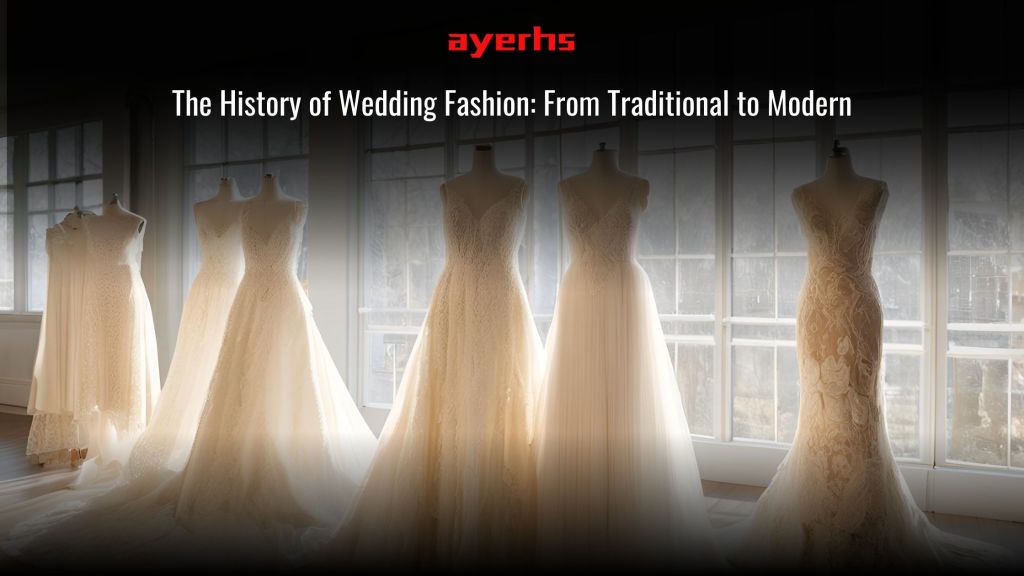
Weddings are among the most cherished celebrations worldwide, serving as a milestone in individuals’ lives and an opportunity for cultural and personal expression. A central aspect of this event is the attire, which carries symbolic meaning, aesthetic value, and cultural significance. Wedding fashion has evolved significantly over the centuries, influenced by societal norms, cultural traditions, and shifting trends in the world of fashion. This article explores the fascinating history of wedding attire, from ancient customs to contemporary designs, highlighting the transition from traditional to modern wedding fashion.
1. Ancient Beginnings: Early Wedding Attire
Wedding fashion traces its origins to ancient civilizations, where marriage ceremonies were deeply rooted in cultural and religious practices. In these societies, wedding attire symbolized status, wealth, and the merging of two families.
- Ancient Egypt:
In ancient Egypt, brides often wore simple yet elegant linen dresses adorned with jewelry made of gold and precious stones. The focus was on celebrating the bride’s fertility and beauty. Colors like white symbolized purity and were favored for ceremonial attire. - Ancient Greece and Rome:
Greek brides donned intricately draped tunics (chitons) tied with elaborate girdles, often in shades of white or saffron, symbolizing purity and youth. Roman brides, on the other hand, wore a long white tunic called a tunica recta, paired with an orange veil (flammeum), signifying warmth and fire. Wreaths of flowers or myrtle were worn as headpieces, highlighting the divine blessings sought for the union.
2. Medieval Wedding Fashion: Splendor and Symbolism
The medieval period marked a shift toward grand and ornate wedding attire, reflecting the importance of marriage as a social and economic alliance.
- Noble Weddings:
Among the nobility, wedding gowns were made of luxurious fabrics such as velvet, silk, and fur. Brides often wore dresses in bold colors like red, blue, or gold, embroidered with intricate designs and adorned with gemstones. These colors symbolized wealth and power, while the lavish details showcased the family’s social standing. - Peasant Weddings:
For commoners, practicality was key. Brides often wore their best dresses, which were typically made of wool or linen in neutral colors. Although less extravagant, these garments were well-maintained and occasionally embellished with simple embroidery or accessories.
3. Renaissance and Baroque Eras: The Rise of Opulence
The Renaissance period ushered in an age of artistic and cultural revival, and wedding fashion reflected this renewed emphasis on creativity and opulence.
- Extravagant Designs:
Renaissance bridal gowns became works of art, characterized by voluminous skirts, puffed sleeves, and intricate lacework. Fabrics like brocade, satin, and damask were widely used, often in shades of gold, silver, and deep jewel tones. Bridal attire mirrored the grandeur of the era, with an emphasis on displaying the bride’s family’s wealth. - Baroque Influence:
The Baroque era brought even more dramatic designs. Corsets became a staple, emphasizing the bride’s silhouette, while voluminous skirts, often supported by hoops or panniers, created striking shapes. The era’s fashion celebrated decadence, with wedding gowns adorned with pearls, lace, and embroidery.
4. The Victorian Era: The Dawn of the White Wedding Dress
The Victorian era revolutionized wedding fashion, popularizing the white wedding dress as the quintessential bridal attire.
- Queen Victoria’s Influence:
In 1840, Queen Victoria married Prince Albert in a white silk-satin gown adorned with Honiton lace. This bold choice broke away from the tradition of wearing colored gowns and set a precedent that would define wedding fashion for centuries. The color white came to symbolize purity and innocence, aligning with Victorian values. - Middle-Class Aspirations:
As industrialization advanced, the growing middle class began to emulate the aristocracy’s style. White wedding dresses became a symbol of aspiration, with brides incorporating lace and other luxurious details into their gowns. Bridal fashion during this period often featured modest necklines, long sleeves, and full skirts.
5. Early 20th Century: Simplicity and Elegance
The early 20th century witnessed significant changes in wedding fashion, influenced by global events and evolving societal norms.
- Edwardian Elegance:
The Edwardian era was characterized by sophisticated and romantic designs. Bridal gowns featured high necklines, lace overlays, and empire waistlines, often paired with long, flowing veils. Accessories such as gloves and tiaras added a touch of refinement. - 1920s and 1930s:
The Roaring Twenties brought a shift toward modernity and simplicity. Flapper-style wedding dresses, with dropped waistlines and intricate beadwork, became popular. During the Great Depression, economic constraints led to more practical bridal fashion. Many brides repurposed evening gowns or wore simpler designs made from affordable fabrics.
6. Mid-20th Century: Hollywood Glamour and Post-War Trends
The mid-20th century saw the influence of Hollywood and post-war optimism on bridal fashion.
- 1940s and Wartime Weddings:
During World War II, fabric rationing led to minimalist wedding dresses. Brides often wore suits or simple gowns, emphasizing practicality and resourcefulness. - 1950s and the New Look:
The post-war period brought a return to glamour and extravagance. Christian Dior’s “New Look” inspired wedding gowns with cinched waists, full skirts, and sweetheart necklines. Lace became a dominant feature, and bridal fashion embraced a romantic aesthetic.
7. The 1960s and 1970s: Breaking Tradition
The 1960s and 1970s were decades of social change, and bridal fashion reflected the era’s spirit of individuality and rebellion.
- 1960s:
Brides embraced shorter hemlines and modern silhouettes, influenced by the Mod movement. Wedding dresses featured clean lines, minimal embellishments, and fabrics like silk and chiffon. - 1970s:
The 1970s were marked by bohemian influences. Brides opted for flowing, ethereal gowns with lace details and floral accents. The countercultural movement encouraged unconventional choices, such as colored gowns or two-piece ensembles.
8. The 1980s and 1990s: Glamour and Personalization
The late 20th century saw a blend of extravagant trends and growing emphasis on individuality in wedding fashion.
- 1980s:
Extravagance defined the 1980s, with brides favoring voluminous skirts, puffed sleeves, and dramatic veils. Princess Diana’s iconic 1981 wedding gown, with its 25-foot train and intricate lace, epitomized the decade’s opulent aesthetic. - 1990s:
In contrast, the 1990s embraced simplicity and minimalism. Brides favored sleek silhouettes, clean lines, and understated details. Satin and silk became popular fabric choices, reflecting the decade’s pared-down elegance.
9. The 21st Century: Modern Wedding Fashion
The 21st century has brought unprecedented diversity and creativity to wedding fashion, with brides embracing styles that reflect their unique personalities and cultural identities.
- Customization and Inclusivity:
Modern brides prioritize individuality, often customizing their gowns to include personal touches. Designers have embraced inclusivity, offering gowns for diverse body types, cultural backgrounds, and gender identities. - Sustainable and Ethical Fashion:
Environmental awareness has influenced wedding fashion, with many brides opting for sustainable fabrics, vintage gowns, or rental services. Eco-conscious designers focus on creating timeless, high-quality pieces. - Alternative Trends:
From jumpsuits to pastel-colored dresses, contemporary bridal fashion celebrates non-traditional choices. Couples are increasingly opting for casual, destination, or themed weddings, allowing for more flexibility in attire.
The history of wedding fashion is a testament to humanity’s evolving values, tastes, and traditions. From ancient rituals to modern celebrations, bridal attire has served as a canvas for cultural expression and personal storytelling. As we look to the future, wedding fashion continues to innovate, reflecting the diversity and creativity of today’s couples while honoring the rich heritage of the past.
 Ayerhs Magazine