
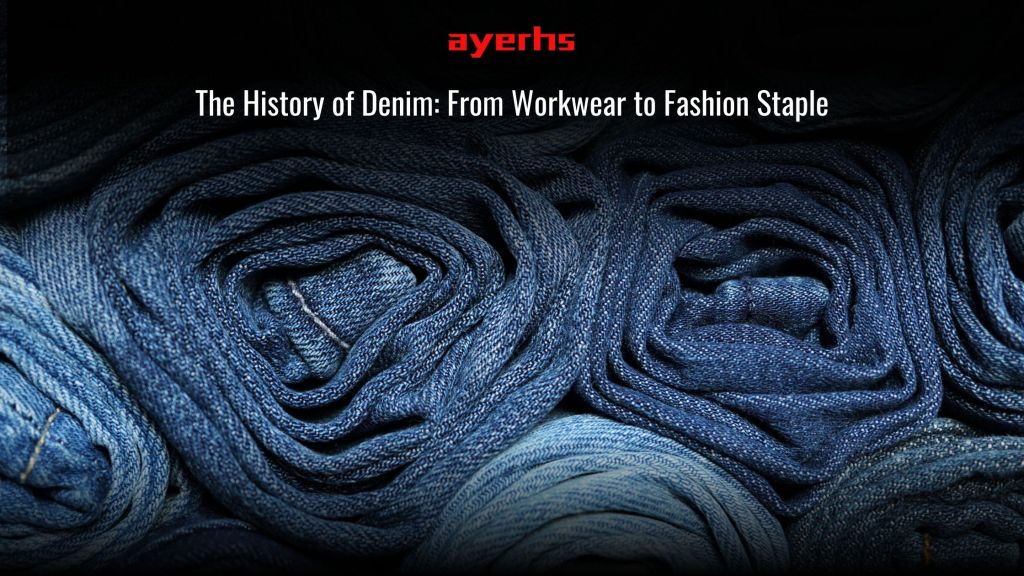
Denim is more than just a fabric; it’s a cultural phenomenon that transcends generations, continents, and social strata. The story of denim, woven with threads of practicality and style, is as rich and textured as the fabric itself. From its humble beginnings as rugged workwear to its ascension as a global fashion staple, denim has undergone a fascinating evolution. This blog delves deep into the history of denim, exploring its origins, cultural significance, and enduring appeal.
Origins of Denim: A Fabric Born of Necessity
Denim’s roots trace back to the 16th century in Europe. The word “denim” is derived from the French term “serge de Nîmes,” referring to a sturdy fabric produced in Nîmes, France. This early version of denim was made from a blend of wool and silk, and its durability made it a popular choice for work clothing. Around the same time, a similar fabric known as “jean” was being produced in Genoa, Italy, primarily for sailors.
The defining characteristic of denim as we know it today—its indigo dye—came from India, which had a rich tradition of indigo cultivation and dyeing. The deep blue hue became synonymous with denim, not just for its aesthetic appeal but also for its practicality. Indigo-dyed fabrics concealed stains and wear, making them ideal for labor-intensive jobs.
The Birth of Blue Jeans
Denim as a fabric found its true calling in the 19th century during the California Gold Rush. In 1853, Levi Strauss, a German immigrant, arrived in San Francisco to sell dry goods to miners. Recognizing the need for durable workwear, Strauss partnered with Jacob Davis, a tailor, to create trousers reinforced with copper rivets at stress points. In 1873, the duo patented this design, giving birth to the first pair of blue jeans.
These riveted jeans, originally called “waist overalls,” were an instant success among miners, cowboys, and laborers. They were tough enough to withstand grueling conditions and became synonymous with hard work and resilience.
Expansion Beyond Workwear
By the early 20th century, denim began to shed its strictly utilitarian image. During the 1930s, Hollywood Westerns popularized the rugged aesthetic of cowboys, who often wore denim jeans. Stars like John Wayne and Gary Cooper brought the allure of denim-clad masculinity to the silver screen, inspiring fans to adopt the look.
Denim also gained a foothold in rural America during the Great Depression. Workwear brands like Lee and Wrangler emerged, catering to farmers and laborers. Overalls and dungarees made from denim became staples for those working in agriculture and construction.
Denim in World War II
The Second World War marked a significant chapter in denim’s history. American soldiers wore denim uniforms and jackets, introducing the fabric to Europe and Asia. The rugged practicality of denim made it a favorite among military personnel and civilians alike.
After the war, denim began to symbolize American culture and lifestyle. Returning soldiers continued wearing their denim garments, and surplus military denim made its way into everyday wardrobes. At the same time, the booming post-war economy enabled Americans to embrace leisurewear, further propelling denim into the mainstream.
The Rebel Spirit of the 1950s
In the 1950s, denim underwent a dramatic transformation from practical workwear to a symbol of rebellion. Teenagers, inspired by Hollywood icons like James Dean in Rebel Without a Cause and Marlon Brando in The Wild One, adopted jeans as a statement of youthful defiance.
Denim became a battleground for generational conflict, with schools and establishments banning jeans as “inappropriate attire.” This only heightened their appeal among teenagers, cementing denim’s association with freedom, rebellion, and counterculture.
Counterculture and Customization in the 1960s
The 1960s saw denim embraced by the counterculture movement. Hippies and anti-establishment groups adopted denim as a rejection of mainstream norms and materialism. Jeans were often customized with patches, embroidery, and paint, turning them into wearable works of art and personal expression.
At the same time, denim began to diversify in terms of style. Bell-bottom jeans, popularized by rock stars like Jimi Hendrix and Janis Joplin, became iconic symbols of the era. The versatility of denim allowed it to seamlessly transition from workwear to fashion statement.
Designer Denim and the Fashion Boom of the 1970s and 1980s
The 1970s marked the birth of designer denim, signaling a shift in how the fabric was perceived. Brands like Calvin Klein and Gloria Vanderbilt introduced high-end jeans that were as much about status and style as they were about comfort and durability. These designer jeans, often accompanied by provocative advertising campaigns, elevated denim to a new level of desirability.
In the 1980s, denim took on an even glossier image. Acid-wash jeans, ripped styles, and high-waisted silhouettes dominated the fashion landscape. Denim jackets and skirts became wardrobe staples, reflecting the decade’s bold and eclectic aesthetic.
Pop culture also played a significant role in popularizing denim during this time. Music icons like Madonna, Michael Jackson, and Bruce Springsteen incorporated denim into their personas, further solidifying its place in the zeitgeist.
The Evolution of Denim in the 1990s
The 1990s brought a more casual approach to denim, mirroring the rise of grunge and streetwear. Baggy jeans, popularized by hip-hop culture, coexisted with distressed and vintage-inspired styles. Brands like Levi’s, Tommy Hilfiger, and Guess thrived, offering a range of fits and washes to cater to diverse tastes.
The decade also saw the emergence of premium denim brands like Diesel and 7 For All Mankind, which focused on quality craftsmanship and innovative designs. Denim began to appeal to a global audience, becoming a universal symbol of laid-back sophistication.
Sustainable Denim in the 21st Century
As denim entered the 21st century, sustainability became a key focus. The environmental impact of denim production, particularly water consumption and chemical usage, prompted brands to adopt eco-friendly practices. Innovations like organic cotton, recycled denim, and water-saving dyeing techniques have transformed the industry.
Fast fashion brands like Zara and H&M popularized affordable denim, while premium labels continued to innovate with unique fits, fabrics, and finishes. The rise of e-commerce and social media further democratized denim, making it accessible to people from all walks of life.
Denim Today: A Canvas for Creativity
Today, denim is more than just a fabric—it’s a canvas for creativity and self-expression. From skinny jeans to wide-leg silhouettes, raw denim to stretch blends, the options are virtually limitless. High-fashion houses like Gucci and Balenciaga continue to reinterpret denim, proving its enduring relevance on the runway.
Denim has also become a symbol of cultural and social movements. From Black Lives Matter protests to climate change demonstrations, denim is often worn as a statement of solidarity and resistance. Its ability to adapt to changing times while retaining its core identity is a testament to its timeless appeal.
Why Denim Endures
The story of denim is one of resilience, reinvention, and universal appeal. From its origins as workwear for miners and laborers to its status as a global fashion staple, denim has continually evolved to meet the needs and desires of its wearers.
What makes denim truly special is its versatility—it can be dressed up or down, worn by people of all ages and backgrounds, and adapted to any cultural or stylistic context. Its imperfections, from fading to fraying, only add to its character, making each piece uniquely personal.
In a world of fast-changing trends, denim stands as a symbol of enduring style and substance. It’s not just a fabric; it’s a legacy woven into the fabric of our lives. Whether you’re slipping into your favorite pair of jeans or donning a vintage denim jacket, you’re participating in a rich history that continues to unfold.
 Ayerhs Magazine