
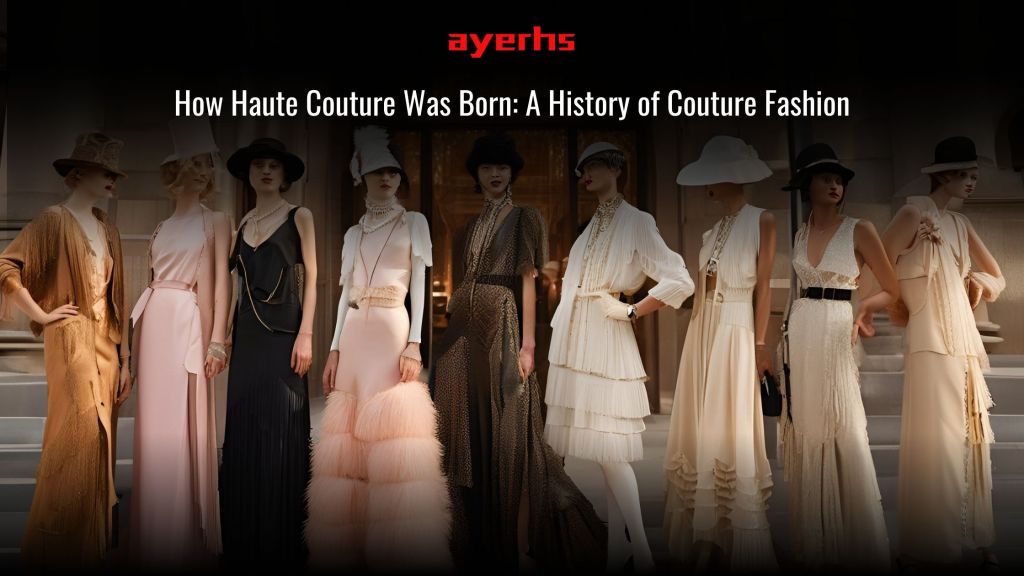
Haute couture, a term that translates to “high sewing” in French, represents the pinnacle of luxury fashion. It embodies exclusivity, artistry, and craftsmanship, creating garments that are not only wearable but also works of art. The evolution of haute couture is a fascinating journey that traces back to the mid-19th century in Paris, where it emerged as a distinct fashion movement. This blog delves into the origins, key figures, and significant milestones that shaped haute couture into what it is today.
The Birth of Haute Couture
The roots of haute couture can be traced back to 1858, when Charles Frederick Worth, an English designer, established the first true haute couture house in Paris. Worth is often referred to as the “father of haute couture” due to his revolutionary approach to fashion design. Before his time, dressmakers primarily created garments based on clients’ requests without any artistic input. Worth changed this by introducing the concept of designing collections and showcasing them on live models, allowing clients to select pieces from a portfolio of designs
125.Worth’s creations were characterized by their intricate craftsmanship and luxurious fabrics. He elevated the role of the dressmaker from a mere artisan to that of a fashion designer—an artist in his own right. His clientele included the elite of society, including Empress Eugénie, who became one of his most loyal patrons. This royal endorsement helped solidify Worth’s status and laid the foundation for haute couture as an exclusive domain for the wealthy24.
The Formation of Couture Houses
Following Worth’s success, other designers began to establish their own fashion houses, known as maisons de couture. This period marked the rise of several influential designers who contributed significantly to the evolution of haute couture:
- Paul Poiret: Known for liberating women from corsets and introducing more fluid silhouettes.
- Coco Chanel: Revolutionized women’s fashion in the 1920s with her emphasis on comfort and elegance, popularizing styles such as the little black dress and Chanel No. 5 perfume.
- Christian Dior: In 1947, Dior unveiled his iconic “New Look,” which redefined femininity with its cinched waists and voluminous skirts, marking a significant moment in post-war fashion148.
Establishing Standards: Le Chambre Syndicale de la Haute Couture
In 1868, the Chambre Syndicale de la Haute Couture was established in France to protect and regulate the burgeoning industry. This organization set strict criteria for what constituted haute couture, ensuring that only those who met specific standards could label themselves as such. By 1945, these regulations included requirements such as:
- Garments must be made-to-order for private clients with at least one fitting.
- Each couture house must employ at least 20 full-time staff members.
- A collection must consist of at least 35 designs presented twice a year during Paris Couture Week167.
These regulations helped maintain the integrity and exclusivity of haute couture while also fostering competition among designers.
The Impact of World Events on Haute Couture
The evolution of haute couture has often mirrored historical events. The Industrial Revolution brought advancements in textile manufacturing and sewing techniques, allowing designers to experiment with new fabrics and styles. However, it was during times of crisis that haute couture truly showcased its resilience.After World War II, Christian Dior’s “New Look” not only revitalized Parisian fashion but also symbolized hope and renewal for women emerging from wartime austerity. The opulence of Dior’s designs contrasted sharply with the utilitarian clothing worn during the war, marking a return to femininity and luxury
24.In contrast, during economic downturns—such as the recession in 2004—many couture houses faced significant challenges. Some brands had to halt their shows or scale back their operations due to decreased demand for high-end fashion1.
The Golden Age of Haute Couture
The mid-20th century is often regarded as the golden age of haute couture. Designers like Yves Saint Laurent emerged during this time, pushing boundaries by introducing ready-to-wear collections that made high fashion more accessible while still retaining an air of exclusivity. His Rive Gauche line blurred the lines between haute couture and everyday wear, appealing to a broader audience
- Pierre Balmain: Known for his elegant designs that epitomized French chic.
- Jean-Paul Gaultier: The “enfant terrible” who challenged conventions with his avant-garde designs.
These designers not only created stunning garments but also influenced cultural movements through their work.
Challenges Facing Haute Couture Today
As we entered the 21st century, haute couture faced new challenges from fast fashion and changing consumer preferences. The rise of ready-to-wear collections made high fashion more accessible but also diluted some aspects of exclusivity associated with haute couture.Despite these challenges, haute couture continues to thrive as a symbol of luxury and creativity. Designers like Karl Lagerfeld for Chanel and John Galliano for Dior have kept the spirit alive through innovative presentations and collaborations with contemporary artists
The Enduring Legacy of Haute Couture
Haute couture has come a long way since its inception in the mid-19th century. From Charles Frederick Worth’s pioneering vision to today’s innovative designers pushing boundaries, haute couture remains a vital part of the fashion landscape. It represents not just clothing but an art form that captures cultural shifts and societal changes.As we look toward the future, it is clear that while trends may evolve and consumer preferences may shift, the allure and artistry of haute couture will continue to inspire generations to come. Whether through breathtaking runway shows or bespoke creations for private clients, haute couture will always hold a special place in the world of fashion—a testament to human creativity and craftsmanship at its finest.
 Ayerhs Magazine